
Kirjahaku
Etsi kirjoja tekijän nimen, kirjan nimen tai ISBN:n perusteella.
1000 tulosta hakusanalla Asma Jan Muhammad
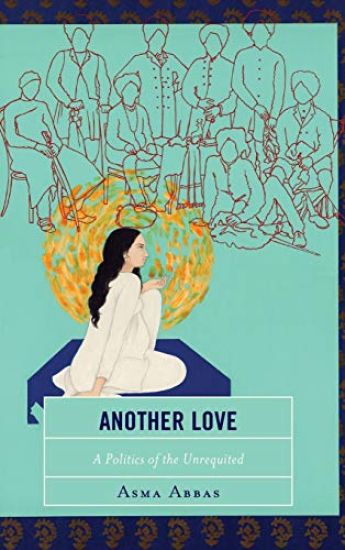
In a time when our loves feel conscripted and exhausted by what we often do not remember desiring, Another Love: A Politics of the Unrequited explores the form, method, imperatives, and inflections of love in the global post colony, and offers a way to re-apprehend and re-inscribe love in an anticolonial, materialist, and nonfascist politics and aesthetics. The figure of “the unrequited” is invoked as a symptom of a brutally loveless yet effusively sentimentalized era, and also as an ineluctable yet very concrete political location in the face of both the intensifying external realities of war, occupation, apartheid, austerity, and terror, as well as the increasingly normalized internalizations of ordinary imperialism, nationalism, neoliberalism, fascism, and colonialism—all of which seem bent on extinguishing the possibility of relation itself. The book asks that we look at practices of love and other material labors that yield and sustain these realities within complex lifeworlds; indeed, those which sustain entire systems of our subjection, extraction, and disposability—such as colonialism, capitalism, liberalism, and fascism—as lifeworlds, especially when given, dominant, forms of recognition, affection, embrace, and belonging are unacceptable or even repulsive. Distancing itself from shortcuts afforded by love’s abstract forms deployed in ethical and moral discourses that at once elevate it yet wholly reduce it to a timeless, apolitical, essence, Another Love sees love as a material and political relation to time and space, signaling willed and unwilled shifts in historical reality in societies juggling various wars and annihilations. It maintains that love is something in and with which we confess our complicities not only with but also against hegemonic notions of belonging, devotion, martyrdom, hospitality, publicity, collectivity, and solidarity nurtured and harvested under capital and colony. The longing and the love—missed by the pernicious and reactionary politics both of liberal democracy and the incidental fascisms that it claims to set out to fix—can give us clues into past, present, and future, moments of rebellion, resistance, rejection, and redemption that are crucial to a liberatory, anticolonial, and antifascist politic, and to rethinking attachment, desire, and relation itself.
In a time when our loves feel conscripted and exhausted by what we often do not remember desiring, Another Love: A Politics of the Unrequited explores the form, method, imperatives, and inflections of love in the global post colony, and offers a way to re-apprehend and re-inscribe love in an anticolonial, materialist, and nonfascist politics and aesthetics. The figure of “the unrequited” is invoked as a symptom of a brutally loveless yet effusively sentimentalized era, and also as an ineluctable yet very concrete political location in the face of both the intensifying external realities of war, occupation, apartheid, austerity, and terror, as well as the increasingly normalized internalizations of ordinary imperialism, nationalism, neoliberalism, fascism, and colonialism—all of which seem bent on extinguishing the possibility of relation itself. The book asks that we look at practices of love and other material labors that yield and sustain these realities within complex lifeworlds; indeed, those which sustain entire systems of our subjection, extraction, and disposability—such as colonialism, capitalism, liberalism, and fascism—as lifeworlds, especially when given, dominant, forms of recognition, affection, embrace, and belonging are unacceptable or even repulsive.Distancing itself from shortcuts afforded by love’s abstract forms deployed in ethical and moral discourses that at once elevate it yet wholly reduce it to a timeless, apolitical, essence, Another Love sees love as a material and political relation to time and space, signaling willed and unwilled shifts in historical reality in societies juggling various wars and annihilations. It maintains that love is something in and with which we confess our complicities not only with but also against hegemonic notions of belonging, devotion, martyrdom, hospitality, publicity, collectivity, and solidarity nurtured and harvested under capital and colony. The longing and the love—missed by the pernicious and reactionary politics both of liberal democracy and the incidental fascisms that it claims to set out to fix—can give us clues into past, present, and future, moments of rebellion, resistance, rejection, and redemption that are crucial to a liberatory, anticolonial, and antifascist politic, and to rethinking attachment, desire, and relation itself.

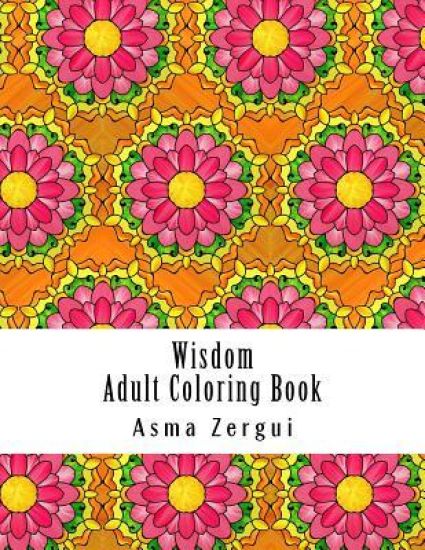
Wisdom: Adult Coloring Book: Coloring Book for Adults with quotes and pattern backgrounds
Asma Zergui
Createspace Independent Publishing Platform
2015
nidottu
Wisdom is an adult coloring book with 30 patterns and quotes to color. Printing is one sided to allow use of any medium for coloring. KINDLE users, PDF link is inside.
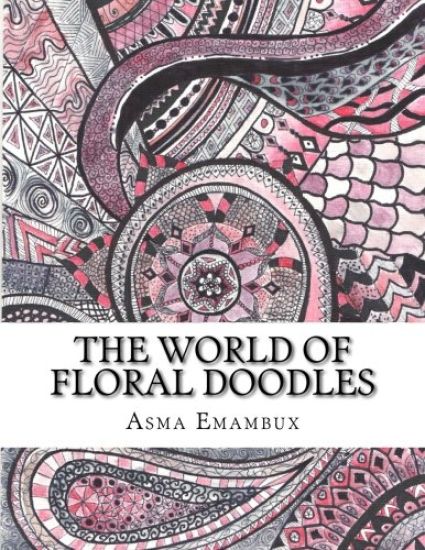
The world of floral doodles: Collection of floral doodles for coloring
Asma Emambux
Createspace Independent Publishing Platform
2015
nidottu
Unique floral motifs make a sophisticated coloring book for children and a luxurious, relaxing activity for adults. The 30 pages of Emambux's original designs include different floral designs such as bouquets, different silhouettes filled with flowers, few animals surrounded or filled with floral designs and much more. Are you often stressed? The world of floral doodles is also good for stress relief, by concentrating into the small details of the designs helps to take mind off from stressful things.Note: Pages are single sided, which means that in one page there is only one design, and the back of it is blank, which allows the usage of almost any coloring method, without the color ruining any other designs. To get a little look at few designs in the book, check www.facebook.com/asma.emambux.artAfter coloring, do share your colored pages for example in IG with @asma_e_artSingular printable coloring pages available in www.etsy.com/shop/asmaemambu
Research and popular culture illustrate that Bollywood cinema plays an essential role for Indian national and diasporic audiences across the globe, showing that such films shed light on the history and cultural politics of India. Over time, Bollywood filmmakers have played a key role in assisting Indian women with their evolutionary practices. Films that focus on important aspects such as culture, patriarchy, and gender politics within this context are analysed in this text. Karan Johar is internationally recognised as an auteur, especially because of the novel representations of the Indian diaspora in his films. His unique relationship with Shah Rukh Khan, a global icon with a worldwide following of some 3.5 billion fans, is explored here. This book's study of Bollywood films elucidates how Indian women have transformed over the years, from being subjugated to individuals with human rights. As such, it is a valuable source of information for cinema studies students and instructors, and an important resource for anyone interested in the history of the Bollywood industry and its impact on society as it evolves.
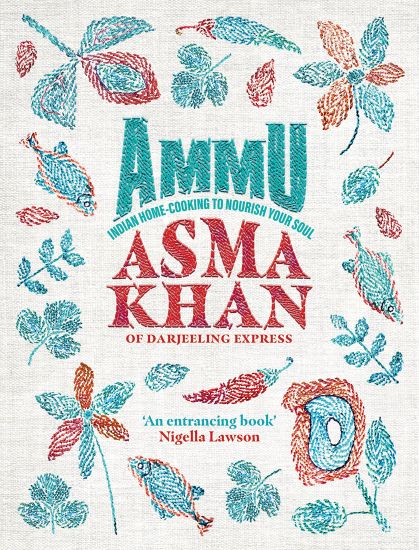
* The Times Cookbook of the Year 2022 *'Asma Khan... is one of the most articulate, powerful voices in the world of food, and this book is her masterpiece...More than a cookbook, this is a meditation on the power of food to nourish and heal.' - Bee Wilson, The Times'An entrancing book' - Nigella LawsonIndian family food with heart - the mouthwatering new cookbook from Asma Khan, founder of the iconic Darjeeling ExpressThis book is a joyful celebration of the universal power of food to restore, and to comfort. It is a tribute to Ammu, Asma's mother, to the simple home cooking from her kitchen in Calcutta, and an exploration of the inextricable link between food and love.These dishes will bring warmth to your kitchen when you need a meal or dish to share with your family and friends - from quick-and-easy Baghare Aloo and Shahi Paneer, a vegetarian staple all ages love, to Ammu's Chicken Biriyani the much-requested Darjeeling Express favourite.With over 100 recipes, easy-to-follow instructions and a photograph for every dish Ammu is an essential book for anyone wanting to make Indian comfort food at home.'This is the food I cook for my family every day, meals to restore and nourish. I give these recipes to you, with love.' - Asma
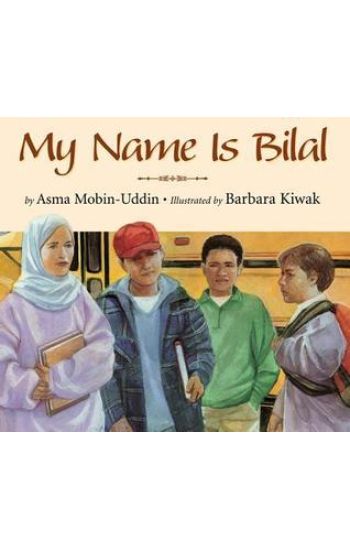
Featured in a New York Times article titled "Teach Your Kids to Resist Hatred Toward Asians"A young boy wrestles with his Muslim identify until a compassionate teacher helps him to understand more about his heritage. After a family move, Bilal and his sister Ayesha attend a new school where they find out that they may be the only Muslim students there. Bilal sees his sister bullied on their first day, so he worries about being teased himself, thinking it might be best if his classmates didn't know that he is Muslim. Maybe if he tells kids his name is Bill, rather than Bilal, then they will eave him alone. But when Bilal's teacher Mr. Ali, who is also Muslim, sees how Bilal is struggling. He gives Bilal a book about the first person to give the call to prayer during the time of the Prophet Muhammad. That person was another Bilal: Bilal Ibn Rabah. What Bilal learns from the book forms the compelling story of a young boy grappling with his identity.
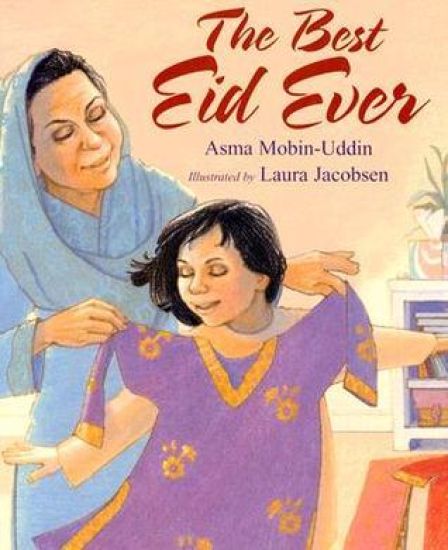
During Eid, Aneesa is sad that her parents are thousands of miles away for the Hajj pilgrimage until her grandmother gives her a beautiful gift that comes in handy when she meets two sisters who are refugees and in need of her help.

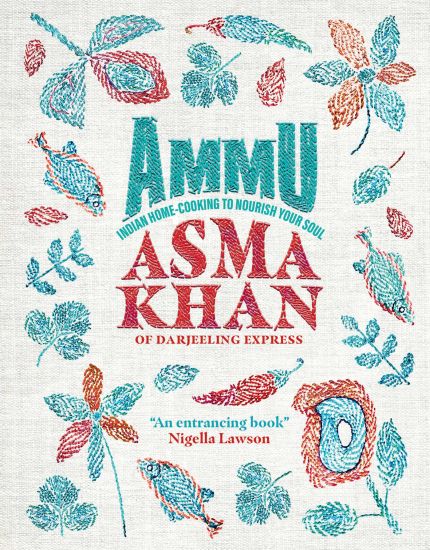
A new cookbook from the star of Netflix's Chef's Table and one of the world's most prominent female chefs Heart-warming and full of comforting aromatic Indian flavors: Indian food from home, cooked with heart Ammu is a collection of recipes from Asma Khan's childhood, her Indian family kitchen. It is a celebration of where she comes from, of home cooking, and the inextricable link between food and love. It is also a chance for Asma to honor her ammu--mother--and to share with us the recipes that made her and rooted her to home. This book is a joyful celebration of memories of food, and its power to heal, restore, and comfort. It includes her ammu's comfort food from childhood, the recipes with which she was taught to cook, celebratory food for special occasions, and slow-cooked recipes passed through the generations of her family. The recipes and the memories she shares all possess something that is universal: food is a way for us to have this conversation about how similar we all are--how it connects us and unites us beyond differing appearances, accents, races and backgrounds. With stunning food and family photos, this cookbook is a must-have for cooks and lovers of Indian food.
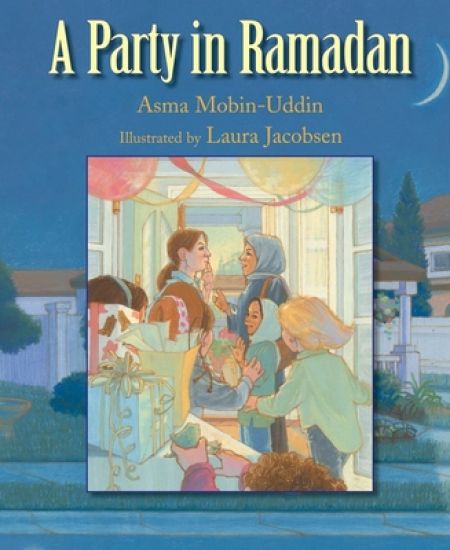
Here is a perfect story to introduce young readers to the holy month of Ramadan, observed by Muslims worldwide as a month of fasting, prayer, reflection, and community.Ramadan is coming, and Leena is excited. Although she is too young to fast every day during the Muslim religious festival, Leena decides to fast each Friday instead. When Leena receives an invitation to a party which happens to fall on Friday, she has a dilemma. She doesn't want to miss the party, but she doesn't want to miss fasting either. So Leena decides to go to the party, but not eat or drink anything at all. Later, she will join her family for the meal known as iftar, when the daily fast is broken. But when Leena, the only Muslim at the party, sees her friends enjoying fresh lemonade and chocolate cake, her stomach starts to growl and her head begins to hurt. Will she keep her Ramadan fast?
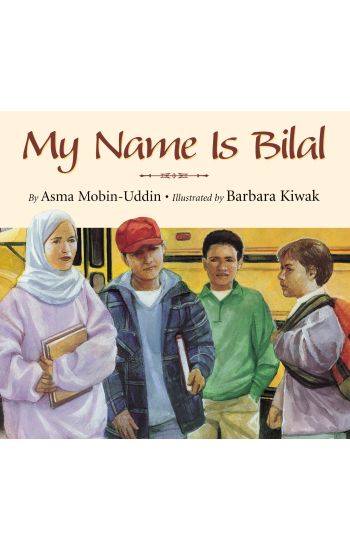
Featured in a New York Times article titled "Teach Your Kids to Resist Hatred Toward Asians"A young boy wrestles with his Muslim identify until a compassionate teacher helps him to understand more about his heritage. After a family move, Bilal and his sister Ayesha attend a new school where they find out that they may be the only Muslim students there. Bilal sees his sister bullied on their first day, so he worries about being teased himself, thinking it might be best if his classmates didn't know that he is Muslim. Maybe if he tells kids his name is Bill, rather than Bilal, then they will eave him alone. But when Bilal's teacher Mr. Ali, who is also Muslim, sees how Bilal is struggling. He gives Bilal a book about the first person to give the call to prayer during the time of the Prophet Muhammad. That person was another Bilal: Bilal Ibn Rabah. What Bilal learns from the book forms the compelling story of a young boy grappling with his identity.