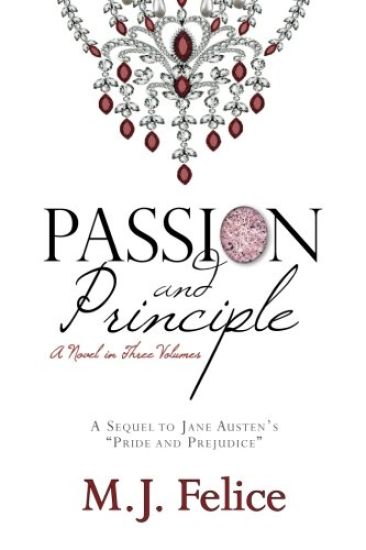
Mrs. Bennet has nothing more to wish for. With three daughters married, her business in life is very nearly complete: Mr. Bennet is merely relieved to finally reclaim the peace and quiet of his book-room.Their two eldest daughters, Elizabeth Darcy and Jane Bingley have certainly found felicity in marriage as the ladies of Pemberley and Netherfield, enjoying everything such positions in society command. But the marriage of the youngest Bennet daughter, Lydia, to the unscrupulous but charming George Wickham does not leave her parents or sisters entirely sanguine. If only the couple had not gone so far away - to Newcastle of all places - and Lydia in possession of such an unguarded and imprudent manner, certain only to worsen without her family's steadying influence.Step back inside the delightful world of Pride and Prejudice and Wickham's Wife and join your favorite characters as they continue with their lives and loves. Listen to the gossip; recognize the delights and vexations of early marriage; re-visit old relationships; experience country living, and the excitement of Regency London. The ending of Austen's famous novel is just the beginning
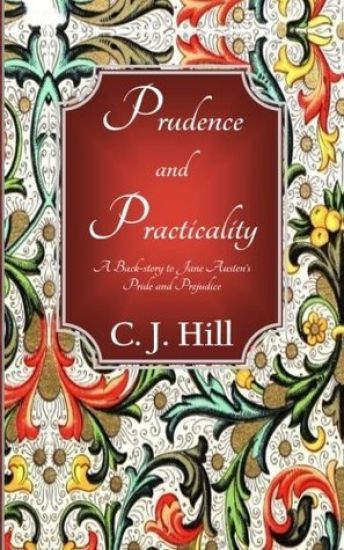
Netherfield Park is let at last And to a young man of good fortune Mrs. Bennet is not the only mother excited by the news, and the Bennet daughters are not the only ones being admonished to improve their appearance in order to be admired by the newcomer.Step back inside the delightful world of Pride and Prejudice and follow the year's events through the observations and actions of Eliza's sensible and clear-sighted friend, Miss Charlotte Lucas. Miss Lucas believes that happiness in marriage is entirely a matter of chance, and is under no delusion about men, marriage or money. She will accept whichever man can provide her with a comfortable home - but does entering into a practical marriage prove prudential for Miss Lucas?
All George Wickham has ever wanted, if he had the fortune he believes he ought to have, is to live the life of a gentleman with the woman he loves by his side, enjoying leisure, pleasure and prosperity together. Unfortunately, he has neither the means nor the talent to support such a lifestyle, and the independent lady he has fallen in love with is sensible. She knows and loves him for what he is, not what he pretends to be. Until he has some security of his own, she will never risk hers by marrying him.Step back inside the delightful world of Jane Austen's Pride and Prejudice and accompany Wickham along the twists and turns of his life from Cambridge, through London and Ramsgate, to the seemingly insignificant detour into Meryton.
Jane Austen's Sailor Brothers is a classic Jane Austen famiy biography by J.H. Hubback and Edith C. Hubback. PERHAPS some apology may be expected on behalf of a book about Jane Austen, having regard to the number which have already been put before the public in past years. My own membership of the family is my excuse for printing a book which contains little original matter, and which might be described as "a thing of shreds and patches," if that phrase were not already over-worked. To me it seems improbable that others will take a wholly adverse view of what is so much inwoven with all the traditions of my life. Jane Austen (16 December 1775 - 18 July 1817) was an English novelist known primarily for her six major novels, which interpret, critique and comment upon the British landed gentry at the end of the 18th century. Austen's plots often explore the dependence of women on marriage in the pursuit of favourable social standing and economic security. Her works critique the novels of sensibility of the second half of the 18th century and are part of the transition to 19th-century literary realism. Her use of biting irony, along with her realism and social commentary, have earned her acclaim among critics and scholars. With the publications of Sense and Sensibility (1811), Pride and Prejudice (1813), Mansfield Park (1814) and Emma (1816), she achieved success as a published writer. She wrote two additional novels, Northanger Abbey and Persuasion, both published posthumously in 1818, and began another, eventually titled Sanditon, but died before its completion. She also left behind three volumes of juvenile writings in manuscript and another unfinished novel, The Watsons. Her six full-length novels have rarely been out of print, although they were published anonymously and brought her moderate success and little fame during her lifetime. A significant transition in her posthumous reputation occurred in 1833, when her novels were republished in Richard Bentley's Standard Novels series, illustrated by Ferdinand Pickering, and sold as a set. 4] They gradually gained wider acclaim and popular readership. In 1869, fifty-two years after her death, her nephew's publication of A Memoir of Jane Austen introduced a compelling version of her writing career and supposedly uneventful life to an eager audience. Austen has inspired a large number of critical essays and literary anthologies. Her novels have inspired many films, from 1940's Pride and Prejudice to more recent productions like Sense and Sensibility (1995) and Love & Friendship (2016).
Postmodernism of Resistance in Roberto Bolaño's Fiction and Poetry examines the ways in which Bolaño employs a type of literary aesthetics that subverts traits traditionally associated with postmodernism. Pasten B. coins these aesthetics "postmodernism of resistance" and argues that this resistance stands in direct opposition to critical discourses that construe the presence of hopeless characters and marginal settings in Bolaño's works as signs of the writer's disillusionment with the political as a consequence of the defeat of the Left in Latin America. Rather, he contends, Bolaño creates a fictional world comprised of characters and situations that paradoxically refuse to accept defeat - even while displaying the scars of terrible historical events. In this work Pasten B. challenges some critical assumptions about Bolaño's fiction and poetry that led to decontextualized interpretations of his work and offers a singularly comprehensive investigation that synthesizes multiple perspectives of a complicated author into one text.
Whether you already enjoy this Jane Austen classic and want more, or you've yet to read it but love witty protagonists and regency era enemies-to-lovers, *this* is the collector's edition of Pride and Prejudice to grab What makes this edition special?-Beautiful Touches: Along with more than a dozen custom character illustrations, this edition features printed edges, an illustrated map, beautiful formatting, and an alternate cover design under the dust jacket.-New Epilogue: Author J. Houser uses details provided in the last chapter of the original story and other insights Jane Austen mentioned to family members before her death to write an extra special bonus epilogue that takes place approximately a year after the original version's ending.-Bonus Content: More than once, characters in Pride & Prejudice entertain themselves with a Regency favorite card game-Whist Along with fun facts about the game, instructions on how to play the game are included.
Whether you already enjoy this Jane Austen classic and want more, or you've yet to read it but love witty protagonists and regency era enemies-to-lovers, *this* is the collector's edition of Pride and Prejudice to grab What makes this edition special?-Beautiful Touches: Along with more than a dozen custom character illustrations, this edition features printed edges, an illustrated map, a beautiful cover and formatting, and hidden cover (duplex) character art.-New Epilogue: Author J. Houser uses details provided in the last chapter of the original story and other insights Jane Austen mentioned to family members before her death to write an extra special bonus epilogue that takes place approximately a year after the original version's ending.-Bonus Content: More than once, characters in Pride & Prejudice entertain themselves with a Regency favorite card game-Whist Along with fun facts about the game, instructions on how to play the game are included.
Praise for The Gender Gap in College "Linda Sax has produced an encyclopedic volume comparing women's and men's development during the undergraduate years. We believe it is destined to become a classic in the higher education literature." ?From the Foreword by Alexander W. Astin and Helen S. Astin "Using findings from an important national data set, Linda Sax has skillfully crafted a definitive work about the gender gap in college. It is a major scholarly achievement that will be influential for many years to come." ?Ernest Pascarella, Petersen Professor of Higher Education, University of Iowa "Linda Sax has produced a meticulously researched, carefully documented analysis that identifies many ways that college impacts men and women differently. This book will be an invaluable resource to researchers and practitioners seeking to better understand and serve traditional-age students at four-year colleges and universities." ?Jacqueline E. King, assistant vice president, Center for Policy Analysis, American Council on Education