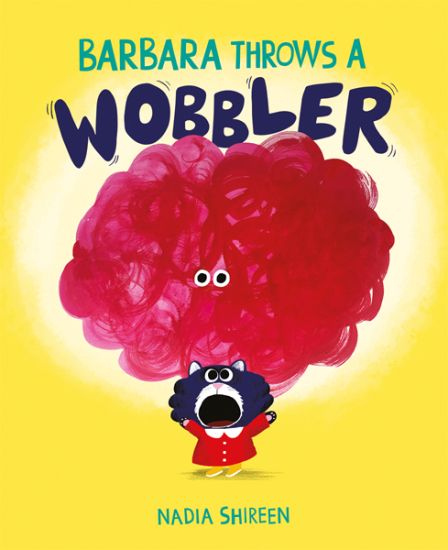
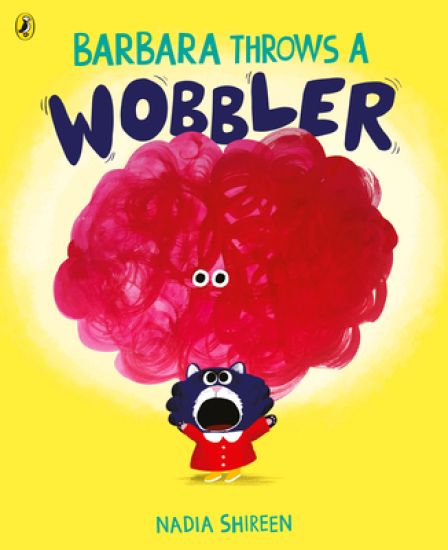
First she has a sock problem, and then there's a strange pea . . . Suddenly, Barbara's Wobbler is out of control A hilarious story of one big bad mood - and how to make it go away. Here's a funny, sensitive and helpful way to understand and deal with tantrums for both parents and children.
Barbara Janet Ainsleigh Baynton, Lady Headley (4 June 1857 - 28 May 1929) was an Australian writer, made famous by Bush Studies. Life: Baynton was born in 1857 at Scone, Hunter River district, New South Wales, the daughter of Irish bounty immigrants, John Lawrence and Elizabeth Ewart, although she claimed to be born in 1862 to Penelope Ewart and Captain Robert Kilpatrick, of the Bengal Light Cavalry.This fiction gave her "entr e to polite circles as a governess" and, in 1880, she married Alexander Frater, the son of her employers. They soon moved to the Coonamble district, and had two sons and a daughter. However, Alexander Frater ran off with her niece, Sarah Glover, in 1887, and Barbara moved to Sydney and commenced divorce proceedings. A decree absolute was granted 4 March 1890. On 5 March 1890 she married Dr Thomas Baynton, a retired surgeon aged 70 years who had literary friends. A few years later she began contributing short stories to the Bulletin. Six of these were published in 1902 in London by Gerald Duckworth and Company Ltd under the title of Bush Studies because Mrs Baynton had been unable to find a publisher for them in Sydney. Alfred Stephens, a close friend, reviewed the book in the Bulletin and stated: 'So precise, so complete, with such insight into detail and such force of statement, it ranks with the masterpieces of realism in any language. Percival Serle, however, found that The building up of detail, however, is at times overdone, and lacking humorous relief, the stories tend to give a distorted view of life in the back-blocks. Baynton's husband died on 10 June 1904 and left his entire estate to her. She invested in the stock market, bought and sold antiques, and collected black opals from Lightning Ridge. 2] In 1907, her only novel, Human Toll, was published, and in 1917 Cobbers, a reprint of Bush Studies with two additional stories, appeared. During World War I Mrs Baynton was living in England and in 1921 she married her third husband Baron Headley. Barbara Baynton died at Melbourne on 28 May 1929. She was survived by Lord Headley, and her two sons and daughter by the first marriage. Bush Studies is a short story collection by Barbara Baynton. Bush Studies was published in London in 1902. Baynton's short stories and novel display a grim realism and depiction of female suffering which represents an alternative view to the romanticism of the bush. Contents "A Dreamer" "Squeaker's Mate" "Scrammy 'And" "Billy Skywonkie" "Bush Church" "The Chosen Vessel"
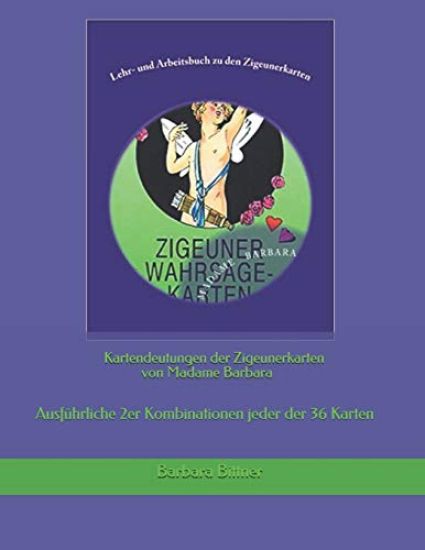
Ein Nachschlagebuch zum Deuten der Zigeunerkarten. F r Anf nger genauso wie f r Fortgeschrittene geeignet. Alle 36 Karten sind jeweils in einer bersicht mit s mtlichen Deutungen (2er Kombinationen). Bei diesem Buch handelt es sich ausschlie lich um die Bedeutungskombinationen, die Bestandteil des ausf hrlichen Buches Lehr- und Arbeitsbuch zu den Zigeunerkarten sind. Es ist wie ein Vokabelheft gearbeitet und somit gut als Nachschlagewerk nutzbar.
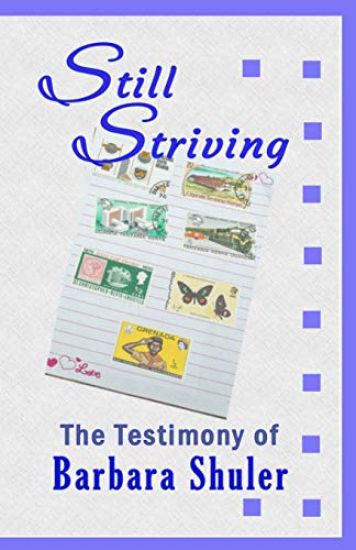
"Dear Diary, Today, Lacy B hugged me around my waist. Darius said he liked me. I like him." As a child, growing up in the 1950s and 60s, Barbara had dreams of what she wanted to become. Her dreams did not include tragedy. As Barbara Shuler reveals how she overcame tragedy, be encouraged to press on and strive to reach your dreams, in spite of hard times, as you read this timeline of Barbara's life. Walk with her through pivotal, historic times of her teenage and adult years and be strengthened by Barbara's testimony.
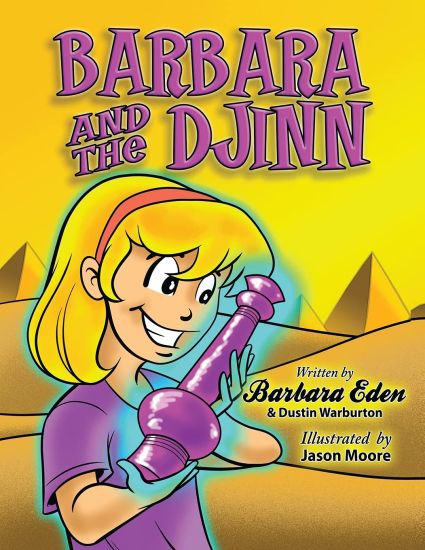
Barbara and the Djinn is an exciting story of a young girl's trip into a mysterious and magical book that transports her places her imagination could have only dreamed of. Throughout her journey, she meets a charming and wizardly Genie who brings her on an adventure filled with excitement. It is within that exhilaration, the young girl learns what is most important, kindness, and above all, understanding.
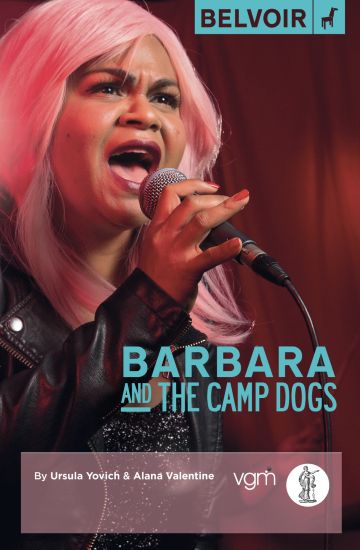
'I want to be extreme Unreasonably rude I like to spit and scream Inappropriately crude I drink St Agnes Brandy In a paper cup with ice And when I'm feeling randy Don't expect me to be nice High maintenance me Real piece of work you see A troublesome stunt Instincts of a ...'Wild, unpredictable, and deeply vulnerable, Barbara and her sister Rene are singing for their lives. Barbara's been trying to make it in Sydney, but when their mother's health deteriorates, the sisters embark on a pilgrimage back home to country. Full of painful, unfinished business for Barbara, their return sends her into a downward spiral. Can Barbara find a way to resolve the past in time to preserve love in the only family she has known?Through music that ranges from punk-inspired explosions of rage, to tender rock and soul ballads full of yearning, Barbara and the Camp Dogs is a gob-spit of fun, frenzy and family that finds beauty in honesty and hope in confronting the past.
An expert bridge coach’s guide for beginners who are looking to move their game up to the next level. This book is for readers who have finished their beginner lessons, and are trying to move their game up to the next level. The tips cover all aspects of bridge -- bidding, play and defence. Advice and examples are drawn from material Barbara Seagram has developed for her students over the last twenty years -- it's like having your own personal bridge coach sitting beside you!
Suddenly Barbara's WOBBLER is out of control! But what if Barbara and her Wobbler can work together, so she can be cheerful again? A brilliantly funny and sensitive way to understand and deal with tantrums. "These are the most brilliant, beautiful and silly picture-books out there at the moment.
A bittersweet and hilarious novel about a marriage whose decades-old routine is suddenly upended. Walter Schmidt has lived his whole life within the narrow, comfortable confines of traditional gender roles: he has made it to retirement without learning how to fry an egg or use a vacuum cleaner. After all, he could always count on his wife, Barbara. But, when one morning she can’t —or won’t! —get up from bed anymore, everything changes. With biting humour and great warmth, Alina Bronsky writes about how Walter, nearing the end of his life, is suddenly forced to reinvent himself as a caregiver and househusband, and become the caring partner he never was in all his years with Barbara. Little by little, Walter’s rough facade begins to crumble, and with it his old certainties about his life and family.
Learn to work with the Gypsy cards in self-study, explained simply and clearly. Many examples and laying techniques. Each individual card with each other card is described in detail in an overview, good as a reference book for practicing.
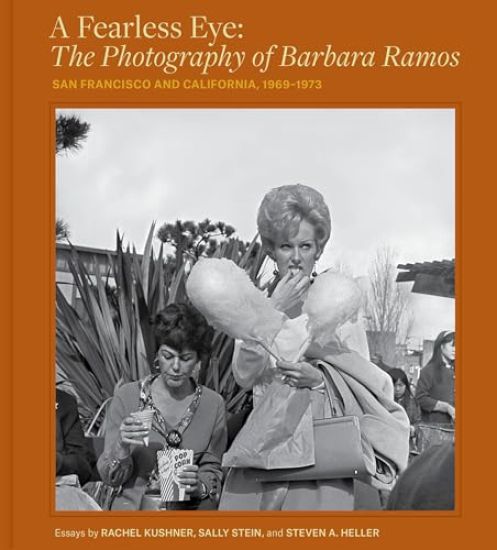
A captivating volume that transports us onto the San Francisco streets of the 1970s through the black-and-white images ofa previously unknown master of 20th-century photography, Barbara Ramos.Unearthed fifty years after they were originally taken, Ramos's photographs offer up stirring scenes from everyday life—a group of Hari Krishnas sing on Market Street, a window dresser changes a mannequin at the Union Square Macy’s, two men lean in for a kiss at a peace rally in Golden Gate Park. A Fearless Eye brings Ramos's images to print for the very first time, introducing audiences to a photographer whose work belongs alongside that of Robert Frank, Diane Arbus, and Vivian Maier. Featuring a preface by award-winning novelist and essayist Rachel Kushner, an essay by photography historian Sally Stein, and an interview with Ramos by photographer and writer Stephen A. Heller, this enthralling street photography book is a fascinating time capsule of a bygone moment in California history.Perfect for: Lovers of vintage, historical, and street photography San Francisco residents, visitors, and armchair historians Museum-goers and fans of such renowned American photographers as Diane Arbus, Vivian Maier, and Robert Frank Fans of Barbara Ramos's unconventional story and unparalleled work
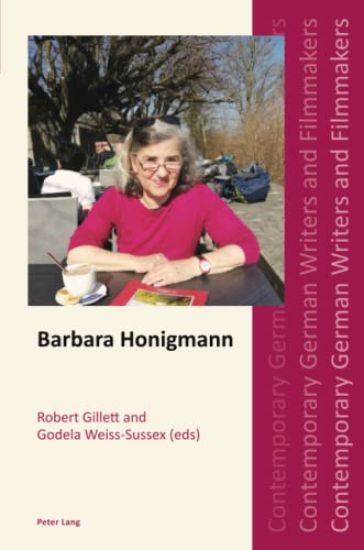
«Offering a range of insightful readings of texts by Honigmann, this volume is engaging and compelling. It will resonate strongly with those readers familiar with Honigmann, deepening their understanding of her work, and will constitute, for others, an urgent invitation to explore her challenging, affecting, and humane œuvre further.» (Professor Emily Jeremiah, Royal Holloway, University of London) «Barbara Honigmann is one of the most incisive and engaging Jewish authors writing in German today. This collection of original essays, many of which illuminate the Jewish dimension of her texts, offers a superb introduction to the writer and raises the analysis of her work to new levels.» (Katja Garloff, Professor of German and Humanities, Reed College) This is the first full-length book in English devoted to the work of one of the most widely read and intriguing contemporary German-language writers. Barbara Honigmann, born in East Berlin in 1949 and a resident of Strasbourg since 1986, treats the major themes of our time from the special perspective of a practising Jewish woman. Her seemingly simple language navigates and reveals hidden complexities, an effect mirrored in her masterly use of form. This book covers Honigmann’s entire œuvre, from her first breakthrough success to her most recent collection of essays and speeches. It includes detailed accounts of form and style, as well as wide-ranging discussions of themes and contexts. Approaching Honigmann’s work from a variety of angles, including aesthetic analysis, feminist and memory studies, the literary exploration of space, and the investigation of autofiction, the essays collected here discuss Honigmann’s unique voice and her treatment of identity and belonging, Jewishness across generations, migration and multiculturalism, postmemory and trauma, language and transcendence. The academic chapters in this volume are complemented by Honigmann’s translation of an installation text by Chantal Akerman, an interview the book’s editors conducted with the author in December 2021, and an extensive bibliography.
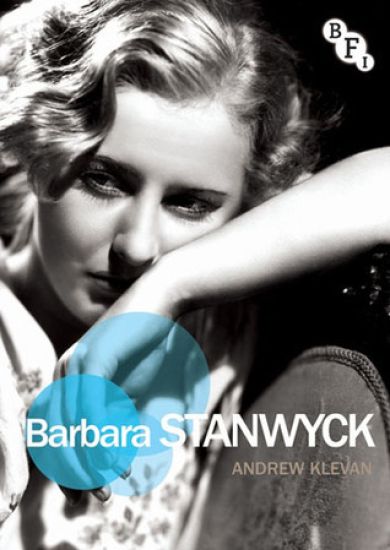
Devoting each chapter to a significant quality of Barbara Stanwyck's performances, Andrew Klevan foregrounds crucial scenes from her films, including Stella Dallas (1937), The Lady Eve (1941), and Double Indemnity (1944). Through the lens of her achievement, Klevan examines the wider concerns of these films while revisiting classic topics from Film Studies – psychoanalysis, medium reflexivity, and the representation of female roles such as the 'sacrificial mother' and the 'femme fatale'. In paying close attention to the various aspects of her skilfully executed performances, this book offers fresh insights into Stanwyck's career and star persona.
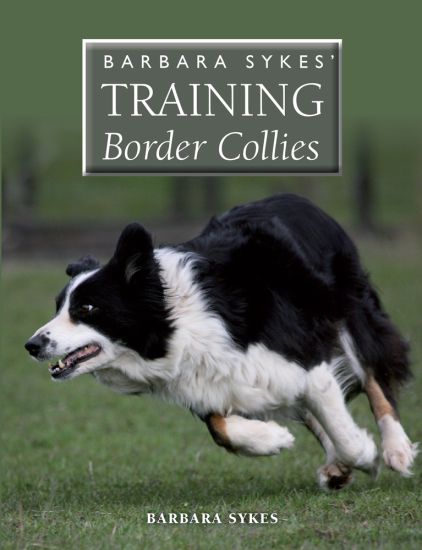
A new, practical guide to training your Border Collie, by esteemed trainer and author, Barbara Sykes. Drawing upon her popular 'Thinking Like Canines' (TLC) training method and other established approaches, Barbara Sykes' Training Border Collies is an essential resource for understanding and training this versatile and loyal breed. With step-by-step photography and training case studies throughout, the book covers: breed variants and temperaments; diet, puppy training and bringing new dogs home; simple commands, boundaries and socialization; the 'Chill Mat' - a safe territory to keep your collie calm; lead and recall training; rescue and problem dogs and, finally, common myths, facts and tips about the breed.
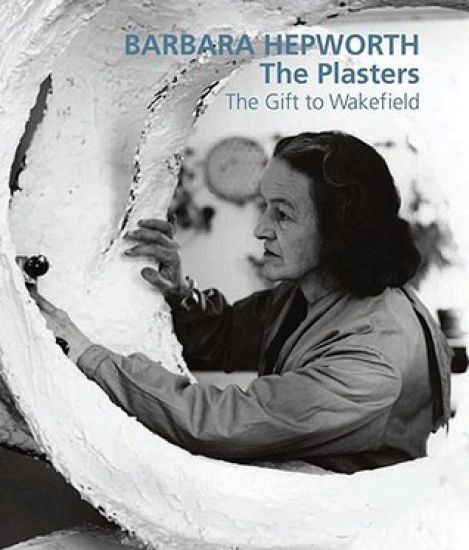
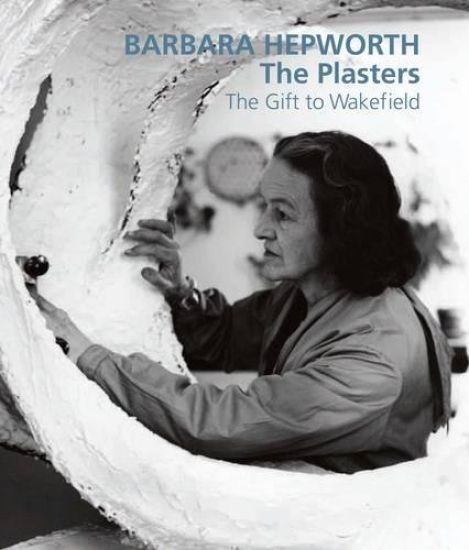
Celebrating the generous gift of Barbara Hepworth's plasters to The Hepworth Wakefield by the Hepworth Estate, this groundbreaking publication combines a fully illustrated catalogue of the sculptor's surviving prototypes in plaster, and occasionally aluminium, with a detailed analysis of her working methods and a comprehensive history of her work in bronze. In addition, insights into the building which will be home to the collection are provided through essays exploring the history of The Hepworth and, in a contribution by David Chipperfield, the design of the new museum by his architectural practice. A fascinating account of the sculptor's connections with Wakefield Art Gallery also features. The Hepworth's collection of over 40 unique, unknown sculptures are the surviving working models from which editions of bronzes were cast. They range in size from works that can be held in the hand to monumental sculptures, including the Winged Figure for John Lewis's Oxford Street headquarters. The majority are original plasters on which the artist worked with her own hands and to scale. Providing a unique insight into Hepworth's working processes, on which little has been written, Barbara Hepworth: The Plasters will enhance appreciation of her work as a whole. Drawing extensively on archival records and photographs, this publication is an important source for information about a significant collection of work, the gallery which houses it and Hepworth in general.
Newly published in paperback to coincide with the Barbara Hepworth retrospective exhibition at Tate Britain in 2015, this fascinating book combines a fully illustrated catalogue of the sculptor's surviving prototypes in plaster (and a number also in aluminium and wood), generously gifted to The Hepworth Wakefield by the Hepworth Estate, with a detailed analysis of her working methods and a comprehensive history of her work in bronze. The Hepworth's collection of over forty unique, unknown sculptures are the surviving working models from which editions of bronzes were cast. They range in size from works that can be held in the hand to monumental sculptures, including the Winged Figure for John Lewis's Oxford Street headquarters. The majority are original plasters on which the artist worked with her own hands and to scale. It was in plaster that Hepworth experimented most as she made the transition from stone and wood to bronze, testing the potential of her new material as she went. Sophie Bowness's illuminating text describes the different means by which this increasingly important artist made her plaster works, and why. Drawing extensively on archival records and photographs, this publication is an important source of information about a significant collection of work, the gallery which houses it and Hepworth in general. The catalogue illuminates the histories of Hepworth's sculptures through fascinating archival photographs, which demonstrate everything from the varied tools used by Hepworth to the logistical problems of transporting her monumental pieces through the narrow streets of St Ives. The book provides a much-needed account of Hepworth's studio practice, her relations with foundries, and the evolution of her public commissions.
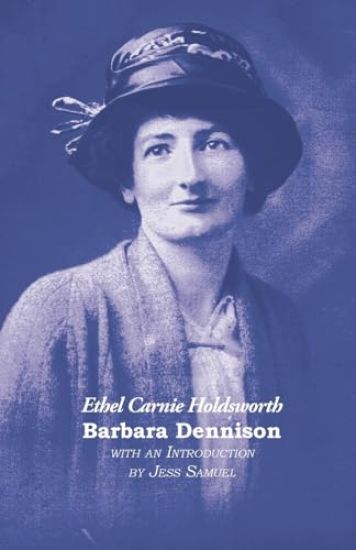
The London lives of Barbara and Crichie Dennison and their acquaintances Flora and Fred Peachley are juxtaposed with rural Rimton, where Barbara's long-time companion and village blacksmith Dave Reid resides with the pair's foster parents, Sarah and Dan Farmer. Book One introduces the Dennisons, who, despite being newly married are already aware of a widening chasm between them. Barely suppressed frictions are only exacerbated by the arrival of Dave in London, who is privately harbouring romantic feelings for Barbara. In Book Two, the reader meets the Peachleys, whose marriage is also in crisis following the loss of their savings in the collapse of Dinkermanns bank. At the behest of his wife, Fred takes on extra work as a translator to pay the rent on their house in the upmarket Hendon. When he leaves the house to post an advert for his services, the largely disparate lives of the Dennisons and Peachleys collide when Crichie calls by the house and is compelled by Flora's polished femininity and staunch conservatism. The pair begin having an affair ... - From the Introduction
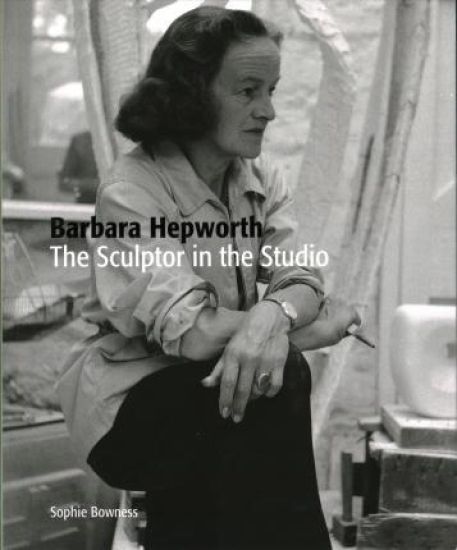
Barbara Hepworth: The Sculptor in the Studio is the first study devoted to Hepworth's St Ives studio in which the centrality of Trewyn Studio and garden to her art and life is brought to the fore. 'It affects my whole life & work most profoundly', she wrote to a friend in 1949 shortly before acquiring it. A history and a portrait of a unique place, the book illuminates the ways in which the place and the work are bound together. It explores Hepworth's working environment and the development of her practice over a period of 25 years. The studio, and especially the garden that Hepworth shaped, was the primary and ideal context in which her sculptures were viewed. Following Hepworth's death in 1975, Trewyn Studio was opened as the Barbara Hepworth Museum and Sculpture Garden, fulfilling the hopes she had expressed at the end of her life. The adaptation of Hepworth's studio-home to create the Museum is examined in detail. The Museum was given to the Tate Gallery in 1980, becoming the first of Tate's outstations and helping to lay the foundations for Tate St Ives. It contains the largest group of Hepworth's works, permanently on display in the place in which they were created. Here the visitor is closest to Hepworth's work and to the sources of her inspiration.