Kirjahaku
Etsi kirjoja tekijän nimen, kirjan nimen tai ISBN:n perusteella.
1000 tulosta hakusanalla Brigitte Finkiewicz
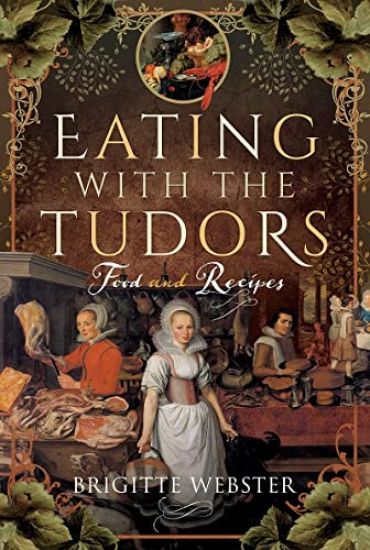
Eating with the Tudors is an extensive collection of authentic Tudor recipes that tell the story of a dramatically changing world in sixteenth-century England. This book highlights how religion, reformation and politics influenced what was served on a Tudor's dining table from the very beginning of Henry VII's reign to the final days of Elizabeth I's rule. Discover interesting little food snippets from Tudor society, carefully researched from household account books, manuscripts, letters, wills, diaries and varied works by Tudor physicians, herbalists and chronologists. Find out about the Tudor's obsession with food and uncover which key ingredients were the most popular choice. Rediscover old Tudor favourites that once again are being celebrated in trendy restaurants and learn about the new, exotic food that excited and those foods that failed to meet the Elizabethan expectations. Eating with the Tudors explains the whole concept of what a healthy balanced meal meant to the people of Tudor England and the significance and symbology of certain food and its availability throughout the year. Gain an insight into the world of Tudor food, its role to establish class, belonging and status and be tempted to re-create some iconic Tudor flavours and experience for yourself the many varied and delicious seasonal tastes that Tudor dishes have to offer. Spice up your culinary habits and step back in time to recreate a true Tudor feast by impressing your guests the Tudor way or prepare a New Year's culinary gift fit for a Tudor monarch.
Eating with the Tudors is an extensive collection of authentic Tudor recipes that tell the story of a dramatically changing world in sixteenth-century England. This book highlights how religion, reformation and politics influenced what was served on a Tudor’s dining table from the very beginning of Henry VII’s reign to the final days of Elizabeth I’s rule. Discover interesting little food snippets from Tudor society, carefully researched from household account books, manuscripts, letters, wills, diaries and varied works by Tudor physicians, herbalists and chronologists. Find out about the Tudor’s obsession with food and uncover which key ingredients were the most popular choice. Rediscover old Tudor favourites that once again are being celebrated in trendy restaurants and learn about the new, exotic food that excited and those foods that failed to meet the Elizabethan expectations. Eating with the Tudors explains the whole concept of what a healthy balanced meal meant to the people of Tudor England and the significance and symbology of certain food and its availability throughout the year. Gain an insight into the world of Tudor food, its role to establish class, belonging and status and be tempted to re-create some iconic Tudor flavours and experience for yourself the many varied and delicious seasonal tastes that Tudor dishes have to offer. Spice up your culinary habits and step back in time to recreate a true Tudor feast by impressing your guests the Tudor way or prepare a New Year’s culinary gift fit for a Tudor monarch.
Geometric Data Analysis (GDA) is the name suggested by P. Suppes (Stanford University) to designate the approach to Multivariate Statistics initiated by Benzécri as Correspondence Analysis, an approach that has become more and more used and appreciated over the years. This book presents the full formalization of GDA in terms of linear algebra - the most original and far-reaching consequential feature of the approach - and shows also how to integrate the standard statistical tools such as Analysis of Variance, including Bayesian methods. Chapter 9, Research Case Studies, is nearly a book in itself; it presents the methodology in action on three extensive applications, one for medicine, one from political science, and one from education (data borrowed from the Stanford computer-based Educational Program for Gifted Youth ). Thus the readership of the book concerns both mathematicians interested in the applications of mathematics, and researchers willing to master an exceptionally powerful approach of statistical data analysis.
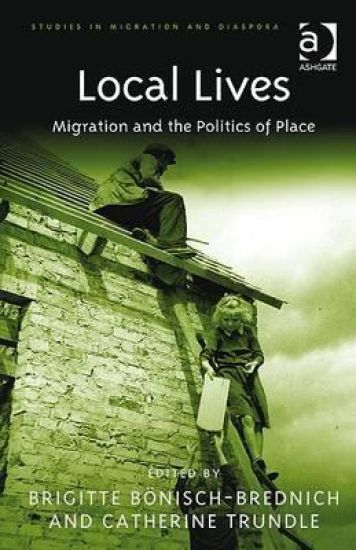
Local Lives contests dominant trends in migration theory, demonstrating that many migrant identities have not become entirely diasporic or cosmopolitan, but remain equally focused on emplaced belonging and the anxieties of being uprooted. By addressing the question of how migrants legally and symbolically lay claim to owning and belonging to place, it refocuses our attention on the micro-politics and everyday rituals of place-making, that are central to the construction of migrant identities. Exploring immigrants' interactions with house spaces, property rights, environmental conservation, landscape, historical knowledge of place, ideas of 'local community' and place-specific 'traditions', this volume shows how, in a fluid world of movement, locality remains a deeply contested and symbolically rich place to situate identity and to constitute the self. Thematically organised and presenting a diverse range of empirical studies dealing with migrant communities in Hawaii, Britain, France, Spain, Australia, New Zealand, the Dominican Republic and Albania, Local Lives reorients research in migration and transnational studies around locality. As such, it will appeal to social scientists working on questions relating to landscape, identity and belonging; race and ethnicity; and migration and transnationalism.
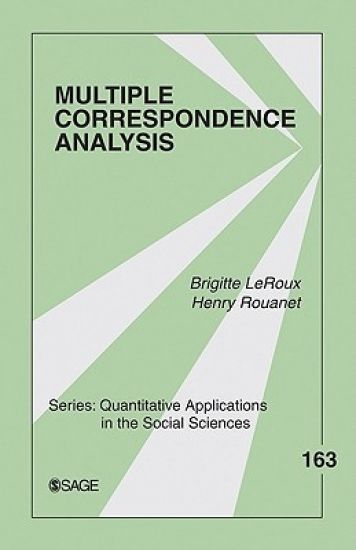
Requiring no prior knowledge of correspondence analysis, this text provides a nontechnical introduction to Multiple Correspondence Analysis (MCA) as a method in its own right. The authors, Brigitte LeRoux and Henry Rouanet, present thematerial in a practical manner, keeping the needs of researchers foremost in mind.Key FeaturesReaders learn how to construct geometric spaces from relevant data, formulate questions of interest, and link statistical interpretation to geometric representations.They also learn how to perform structured data analysis and to draw inferential conclusions from MCA.The text uses real examples to help explain concepts.The authors stress the distinctive capacity of MCA to handle full-scale research studies.This supplementary text is appropriate for any graduate-level, intermediate, or advanced statistics course across the social and behavioral sciences, as well as for individual researchers.

IS GOD DEAD?" "Plato - the Prophet for the Gentiles" is a written defense of metaphysical reality, which proves why God is real, and that the human intelligence is aware that the knowing of distinctions "precedes thinking" through the simultaneous intelligibility for intelligence that permeates the universe, called "Heaven and Nature" 400 years before Jesus Christ was born, the philosopher Plato, devoted his life to understanding and rationalizing Socrates'' demand to ''know thyself'', by analyzing ''recognized real objects'', known as timeless, and thus, eternal distinctions. They "have their stand" immediately in the mind, a fact that St. Augustine later called, the "Confrontation Theory of Knowing", which he distinguished from the "active theory of sense perceptions", that is intended and comparing, called "thinking". "Plato - the Prophet for the Gentiles" guides the reader through the meaning and the distinctions of Plato''s teaching, establishing universal, absolute truths, thereby affirming the ''objective'' quality of God as the ''Creator of Nature'' which is rooted in the quality of His ''Self-movement'', the ''auto-kinesis'' called ''psyche'', disproving Aristotle''s critique that Plato''s " 'Metaphysical Reality' is just Transcendental Moonshine " Nietzsche was wrong when he rejected the human certainty of distinctions, known simultaneously - called also 'immediately'. He disregarded the awareness of 'similarity' or 'likeness' of objects having their 'valid stand' in human intelligence named 'thoughts'. Bertrand Russell admitted this in his "Inquiry into Meaning and Truth". Nietzsche expected horrible consequences for society. But, "God has not died, since His characteristics belong to the intelligibility of eternal being named "reality"." The theologians did err to accept only the written books with which they disregarded the Intelligence of human thoughts to observe the conditions of the Earth with Astronomy. Plato's Academy
IS GOD DEAD?" "Plato - the Prophet for the Gentiles" is a written defense of metaphysical reality, which proves why God is real, and that the human intelligence is aware that the knowing of distinctions "precedes thinking" through the simultaneous intelligibility for intelligence that permeates the universe, called "Heaven and Nature" 400 years before Jesus Christ was born, the philosopher Plato, devoted his life to understanding and rationalizing Socrates'' demand to ''know thyself'', by analyzing ''recognized real objects'', known as timeless, and thus, eternal distinctions. They "have their stand" immediately in the mind, a fact that St. Augustine later called, the "Confrontation Theory of Knowing", which he distinguished from the "active theory of sense perceptions", that is intended and comparing, called "thinking". "Plato - the Prophet for the Gentiles" guides the reader through the meaning and the distinctions of Plato''s teaching, establishing universal, absolute truths, thereby affirming the ''objective'' quality of God as the ''Creator of Nature'' which is rooted in the quality of His ''Self-movement'', the ''auto-kinesis'' called ''psyche'', disproving Aristotle''s critique that Plato''s " 'Metaphysical Reality' is just Transcendental Moonshine " Nietzsche was wrong when he rejected the human certainty of distinctions, known simultaneously - called also 'immediately'. He disregarded the awareness of 'similarity' or 'likeness' of objects having their 'valid stand' in human intelligence named 'thoughts'. Bertrand Russell admitted this in his "Inquiry into Meaning and Truth". Nietzsche expected horrible consequences for society. But, "God has not died, since His characteristics belong to the intelligibility of eternal being named "reality"." The theologians did err to accept only the written books with which they disregarded the Intelligence of human thoughts to observe the conditions of the Earth with Astronomy. Plato's Academy

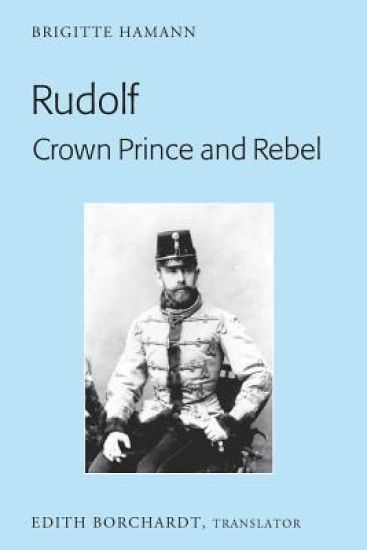
Brigitte Hamann portrays Rudolf von Habsburg, Crown Prince of Austria, as a liberal intellectual who stood in opposition to his father Emperor Franz Josef and the imperial establishment. Against the prevailing currents of his time, Rudolf wanted to modernize the Habsburg Empire by abolishing the privileges of the aristocracy. He vehemently opposed nationalism and anti-Semitism and fought for liberalism and democracy and the rights of the minorities within the multinational Empire. His political goal was a United Europe of liberal states. For a long time, Crown Prince Rudolf was known mainly in connection with his suicide at Mayerling with Baroness Mary Vetsera. However, the Mayerling tragedy may be seen as the last consequence of living without any prospect of realizing his ideals.