Did your readers know that the fluffy fur on a sheep is called wool? It's used to make some sweaters or blankets. Readers take a visit to the farm and learn about sheep with author Chana Stiefel.
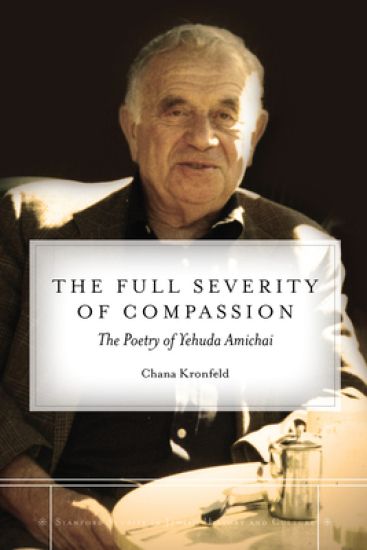
Yehuda Amichai (1924–2000) was the foremost Israeli poet of the twentieth century and an internationally influential literary figure whose poetry has been translated into some 40 languages. Hitherto, no comprehensive literary study of Amichai's poetry has appeared in English. This long-awaited book seeks to fill the gap. Widely considered one of the greatest poets of our time and the most important Jewish poet since Paul Celan, Amichai is beloved by readers the world over. Beneath the carefully crafted and accessible surface of Amichai's poetry lies a profound, complex, and often revolutionary poetic vision that deliberately disrupts traditional literary boundaries and distinctions. Chana Kronfeld focuses on the stylistic implications of Amichai's poetic philosophy and on what she describes as his "acerbic critique of ideology." She rescues Amichai's poetry from complacent appropriations, showing in the process how his work obliges us to rethink major issues in literary studies, including metaphor, intertextuality, translation, and the politics of poetic form. In spotlighting his deeply egalitarian outlook, this book makes the experimental, iconoclastic Amichai newly compelling.
Translation of Chana Blankshteyn's stories depicting the tumultuous interwar years in Europe.Fear and Other Stories is a translation from Yiddish to English of the collected stories of Chana Blankshteyn (1860?–1939), a woman who may be almost entirely forgotten now but was widely admired during her long and productive life. The mere existence of these stories is itself a remarkable feat as the collection was published in July 1939, just before the Nazis invaded Poland and two weeks before Blankshteyn's death. Anita Norich's introduction argues that antisemitism is palpable, as is the threat of war and its aftermath. What could it have felt like to live under these conditions? How might a woman who was a feminist, a Jew, and an activist understand the recent past of war and revolution through which she had lived and also confront the horror that was beginning to unfold?The nine stories in this volume take place primarily in Vilna, as well as various parts of Europe. As if presaging what was to come, World War I and Russian civil wars are the backdrops to these stories, as Jews and non-Jews find themselves under German occupation or caught up in the revolutionary fervor that promised them much and took away almost everything. The young women in Blankshteyn's stories insist on their independence, on equality with their lovers, and on meaningful work. Like the men in the stories, they study, work, and yearn for love. The situations in which these characters find themselves may be unfamiliar to a contemporary reader, but their reactions to the turmoil, the frighteningly changing times, and the desire for love and self-expression are deeply resonant with today's audience. The history may be specific, but the emotions are universal. Blankshteyn's stories are both a view of the final gasp of Eastern European Jewish culture and a compelling modern perspective on the broader world. Students and scholars of history and culture, women's literature, and translation studies will wonder how they've gone this long without reading Blankshteyn's work.
Translation of Chana Blankshteyn's stories depicting the tumultuous interwar years in Europe.Fear and Other Stories is a translation from Yiddish to English of the collected stories of Chana Blankshteyn (1860?–1939), a woman who may be almost entirely forgotten now but was widely admired during her long and productive life. The mere existence of these stories is itself a remarkable feat as the collection was published in July 1939, just before the Nazis invaded Poland and two weeks before Blankshteyn's death. Anita Norich's introduction argues that antisemitism is palpable, as is the threat of war and its aftermath. What could it have felt like to live under these conditions? How might a woman who was a feminist, a Jew, and an activist understand the recent past of war and revolution through which she had lived and also confront the horror that was beginning to unfold?The nine stories in this volume take place primarily in Vilna, as well as various parts of Europe. As if presaging what was to come, World War I and Russian civil wars are the backdrops to these stories, as Jews and non-Jews find themselves under German occupation or caught up in the revolutionary fervor that promised them much and took away almost everything. The young women in Blankshteyn's stories insist on their independence, on equality with their lovers, and on meaningful work. Like the men in the stories, they study, work, and yearn for love. The situations in which these characters find themselves may be unfamiliar to a contemporary reader, but their reactions to the turmoil, the frighteningly changing times, and the desire for love and self-expression are deeply resonant with today's audience. The history may be specific, but the emotions are universal. Blankshteyn's stories are both a view of the final gasp of Eastern European Jewish culture and a compelling modern perspective on the broader world. Students and scholars of history and culture, women's literature, and translation studies will wonder how they've gone this long without reading Blankshteyn's work.
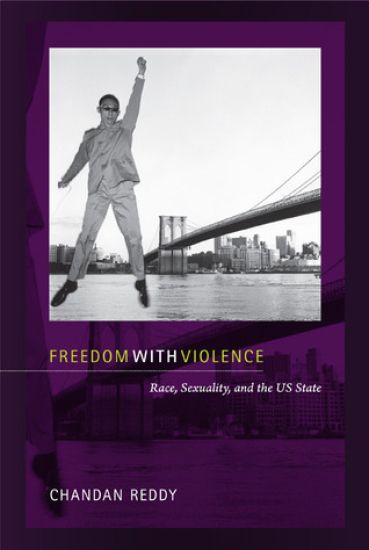
In Freedom with Violence, Chandan Reddy develops a new paradigm for understanding race, sexuality, and national citizenship. He examines a crucial contradiction at the heart of modernity: the nation-state’s claim to provide freedom from violence depends on its systematic deployment of violence against peoples perceived as nonnormative and irrational. Reddy argues that the modern liberal state is organized as a “counterviolence” to race even as, and precisely because, race persists as the condition of possibility for the modern subject. Rejecting liberal notions of modernity as freedom from violence or revolutionary ideas of freedom through violence, Reddy contends that liberal modernity is a structure for authorizing state violence. Contemporary neoliberal societies link freedom to the notion of legitimate (state) violence and produce narratives of liberty that tie rights and citizenship to institutionalized violence. To counter these formulations, Reddy proposes an alternative politics of knowledge grounded in queer of color critique and critical ethnic studies. He uses issues that include asylum law and the military’s “don’t ask, don’t tell” policy to illustrate this major rethinking of the terms of liberal modernity.
In Freedom with Violence, Chandan Reddy develops a new paradigm for understanding race, sexuality, and national citizenship. He examines a crucial contradiction at the heart of modernity: the nation-state’s claim to provide freedom from violence depends on its systematic deployment of violence against peoples perceived as nonnormative and irrational. Reddy argues that the modern liberal state is organized as a “counterviolence” to race even as, and precisely because, race persists as the condition of possibility for the modern subject. Rejecting liberal notions of modernity as freedom from violence or revolutionary ideas of freedom through violence, Reddy contends that liberal modernity is a structure for authorizing state violence. Contemporary neoliberal societies link freedom to the notion of legitimate (state) violence and produce narratives of liberty that tie rights and citizenship to institutionalized violence. To counter these formulations, Reddy proposes an alternative politics of knowledge grounded in queer of color critique and critical ethnic studies. He uses issues that include asylum law and the military’s “don’t ask, don’t tell” policy to illustrate this major rethinking of the terms of liberal modernity.
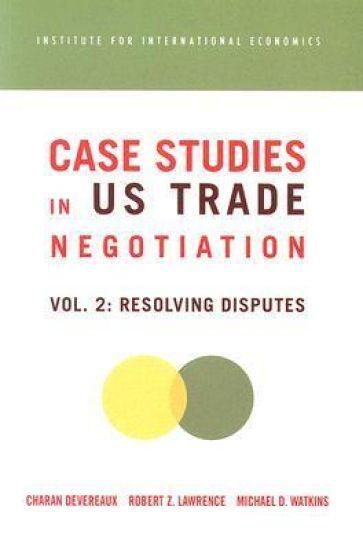
Trade policy has moved from the wings onto center stage. Between 1992 and 2000, US exports rose by 55 percent. By the year 2000, trade summed to 26 percent of US GDP, and the United States imported almost two-thirds of its oil and was the world's largest host country for foreign investors. America's interest in a more open and prosperous foreign market is now squarely economic. This volume presents cases on five important trade negotiations, all focused on "making the rules," or the process of establishing how the trade system would operate. The cases not only explore the changing substance of trade agreements but also delve into the negotiation process. They explore not just the what of trade, but the who, how, and why of decision-making. By examining some of the most important recent negotiations, the reader can come to understand not just the larger issues surrounding trade, but how players seek to exert influence and how the system is evolving on a day-to-day basis. This book presents a coherent description of the facts that will allow for discussion and independent conclusions about policies, politics, and processes.
Between 1992 and 2000, US exports rose by 55 percent. By the year 2000, trade summed to 26 percent of US GDP, and the United States imported almost two-thirds of its oil and was the world's largest host country for foreign investors. America's interest in a more open and prosperous foreign market is now squarely economic. These case studies in multilateral trade policymaking and dispute settlement explore the changing substance of trade agreements and also delve into the negotiation process-the who, how, and why of decision making. These books present a coherent description of the facts that will allow for discussion and independent conclusions about policies, politics, and processes. Volume 2 presents five cases on trade negotiations that have had important effects on trade policy rulemaking, as well as an analytic framework for evaluating these negotiations.
These case studies in multilateral trade policymaking and dispute settlement explore the changing substance of trade agreements and also delve into the negotiation process-the who, how, and why of decisionmaking. They allow the reader to see how trade policy actually works and are an ideal way to bring the reality of trade policy into the classroom. The books present a coherent description of the facts that will allow for discussion and independent conclusions about policies, politics, and processes. Volume 1 presents five cases on trade negotiations that have had important effects on trade policy rulemaking, as well as an analytic framework for evaluating these negotiations and introductions to the policy issues each case is concerned with. Volume 2 presents six case studies on key trade disputes at the WTO as well as an introductory essay dealing with dispute resolution in the trading system.
Este curso est dise ado para hacer que las matem ticas sean divertidas para su hijo peque o. Al igual que durante aprendizaje de la lectura, los ni os necesitan desarrollar un vocabulario b sico para la fluidez, los problemas verbales en este curso tambi n construyen un vocabulario matem tico b sico que su hijo necesita para progresar m s. Al igual que nuestro programa de lectura paso a paso, "La lecci n de lectura", La lecci n de matem tica verbal fortalece la capacidad de resolver problemas r pidamente.Las matem ticas escritas hacen que la aritm tica simple sea tediosa para los ni os peque os, particularmente para aquellos que no les gusta escribir. A menudo, si escribir requiere m s trabajo que completar las operaciones, puede ocasionar desinter s por las matem ticas en los ni os. Queremos que a su hijo le gusten las matem ticas, y aprender matem ticas como un juego ayuda a este proceso.Este libro est destinado a ni os en los grados K-1. Los problemas de estas lecciones se deben leer al ni o, por lo que todos los c lculos se realizan mentalmente y sin el uso de l piz o papel. Qu tan preciso y r pido debe ser su hijo? La respuesta es dif cil de dar. El cerebro humano, particularmente el cerebro de un ni o no es una m quina precisa y la memoria no es perfecta. Los ni os difieren en su capacidad para desarrollar un recuerdo preciso y r pido. Una gu a general de cuatro segundos se puede utilizar para la mayor a de los problemas como un indicador de habilidad.Su hijo debe ser capaz de hacer la mayor a de estos problemas correctamente la primera vez. Si no es as , repite la lecci n al d a siguiente. Antes de pasar a una nueva lecci n, aseg rese de que su hijo pueda hacer la mayor a de los problemas de la lecci n actual de manera f cil y r pida.La mayor a de los ni os pueden f cilmente hacer de 20 a 30 problemas al d a, pero los per odos cortos de pr ctica son mejores en el desarrollo de habilidades y mantener el inter s. Repite cada lecci n hasta que el ni o tenga casi todos los problemas resueltos.La mejor manera de hacer estos problemas es leyendo el problema al ni o y esperar la respuesta. Si tu hijo tiene dificultad para entender el problema, puedes volver a leer el problema una o m s veces hasta que se entienda bien.Puedes leer las explicaciones al principio de las lecciones en voz alta o leerlas y luego explicar los conceptos en sus propias palabras. Subordina la velocidad a la precisi n, pero no la descuides. La capacidad de responder a estos problemas simples r pidamente significa dominio. El tiempo excesivo en cada problema es un indicador de que el ni o no est listo para seguir adelante y que la lecci n podr a necesitar ser repetida. S creativo Comp n los problemas a lo largo del tema de la lecci n utilizando episodios divertidos de su vida diaria. P dele a su hijo que haga sus propios problemas para que los resuelvas.
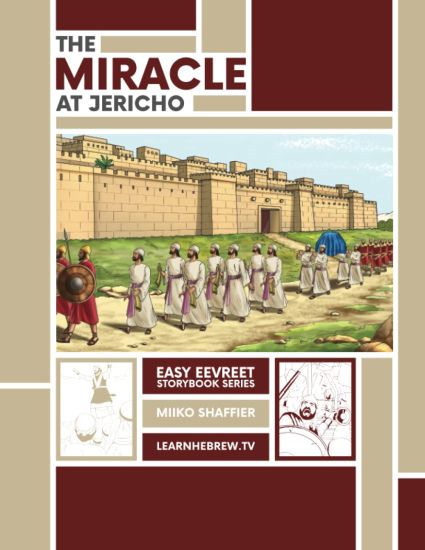
This story book uses a fun, proven new method to teach your child Hebrew vocabulary while reading fun Bible stories By the author of the bestselling books for Hebrew instruction - Miiko ShaffierHow it works: As you read the story in English, you will find Hebrew words embedded in the text. Sound out the words and try to guess their meaning from the context. Check the key in the back of the book to see if you were right.By the time you finish the book you will know several new Hebrew words that are used in both ancient and modern Hebrew The Miracle at Jericho tells the story of the miraculous entry of the People of Israel into the Land under the leadership of Joshua and how God caused the walls of Jericho to fall.
This work has been selected by scholars as being culturally important and is part of the knowledge base of civilization as we know it.This work is in the public domain in the United States of America, and possibly other nations. Within the United States, you may freely copy and distribute this work, as no entity (individual or corporate) has a copyright on the body of the work.Scholars believe, and we concur, that this work is important enough to be preserved, reproduced, and made generally available to the public. To ensure a quality reading experience, this work has been proofread and republished using a format that seamlessly blends the original graphical elements with text in an easy-to-read typeface.We appreciate your support of the preservation process, and thank you for being an important part of keeping this knowledge alive and relevant.
In this thought-provoking book, Chaman Lal explores the history of Hinduism and its relationship with America. From the early Indian immigrants to present-day Hindu American politicians, Lal examines the impact that Hinduism has had on American culture and society. With insights into the Hindu American experience, this book is a must-read for anyone interested in American religious history.This work has been selected by scholars as being culturally important, and is part of the knowledge base of civilization as we know it.This work is in the "public domain in the United States of America, and possibly other nations. Within the United States, you may freely copy and distribute this work, as no entity (individual or corporate) has a copyright on the body of the work.Scholars believe, and we concur, that this work is important enough to be preserved, reproduced, and made generally available to the public. We appreciate your support of the preservation process, and thank you for being an important part of keeping this knowledge alive and relevant.
Various Multiple Criteria Decision-Making (MCDM) techniques in one book: 13 MCDM techniques have been applied, namely, WSM, WPM, WASPAS, GRA, SMART, CRITIC, ENTROPY, EDAS, MOORA, AHP, TOPSIS, VIKOR, and new tools: MDEMATEL, Fuzzy MDEMATEL, Modified Fuzzy TOPSIS and Modified Fuzzy VIKOR. To date, no other book possesses this many tools.Various quantitative techniques: Different quantitative techniques have been applied, namely, Cronbach alpha, Chi-square and ANOVA (for demographic analysis), Percent Point Score and Central Tendency (response analysis), Factor Analysis, Correlation and Regression. To date, no other book possesses this many tools.Interpretive Structural Modelling: ISM has been applied for verifying MCDM results through MICMAC analysis and ISM model thus paving the way for model through SEM. Structural Equation Modelling: SEM using AMOS in PASW has been applied for model development.New MCDM techniques developed: In the process during qualitative analysis, new tools have been developed and their results have been compared with other existing MCDM tools and the results are encouraging. The new techniques are MDEMATEL, Fuzzy MDEMATEL, Modified Fuzzy TOPSIS and Modified Fuzzy VIKOR.Qualitative Model Developed: As the title says, Sustainable Green Development and Manufacturing Performance through Modern Production Techniques. It is a need-of-the-hour topic, as industries must maintain their performance (sustainable development) and, while sustaining, they have to keep in mind green issues (that is, environment-related issues, especially during the COVID-19 pandemic) and adopt advanced manufacturing and maintenance techniques. A model for this has been developed which will be helpful to both academicians and industrialists.Real-time Case Studies: Case studies in two industries of differing origins, different manufacturing sectors, different products, and comparing their units in the country of their origin and India.Dr. Chandan Deep Singh is an assistant professor in the Department of Mechanical Engineering, Punjabi University, Patiala, Punjab (India). He is a co-author of Adolescents, Family and Consumer Behaviour (Routledge, 2020) and of Manufacturing Competency and Strategic Success in the Automobile Industry (CRC Press, 2019).Dr. Harleen Kaur is a manager (HR) at DELBREC Industries, Pvt. Ltd., Chandigarh. She co-authored Adolescents, Family and Consumer Behaviour (Routledge, 2020).