Kirjojen hintavertailu. Mukana 11 717 486 kirjaa ja 12 kauppaa.

Kirjahaku

Etsi kirjoja tekijän nimen, kirjan nimen tai ISBN:n perusteella.

1000 tulosta hakusanalla Charles Laborde

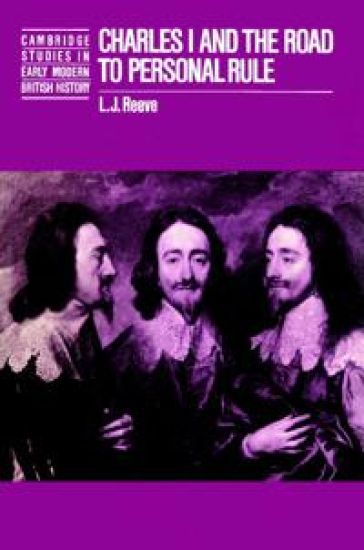
Charles I and the Road to Personal Rule

Charles I and the Road to Personal Rule

L. J. Reeve

Cambridge University Press
2003
pokkari
This study of the character and policies of Charles I provides an analysis of the political crisis leading to his personal rule in England during the years before the civil wars. It fills a gap in the historical literature of the period by integrating ideological with political developments and English with international affairs. It is also a contribution to the wider European history of a critical phase of the Thirty Years War. The book offers a new way of understanding Charles by demonstrating how ill-suited his personality was to the workings of the political world. It also argues that Charles’s innovatory rule created a new pattern of national politics deeply destructive in its effects. The book gives a gripping account of the king’s willingness to pervert the due process of law in dealing with his political opponents, as well as investigating his failures in religious and foreign policy.
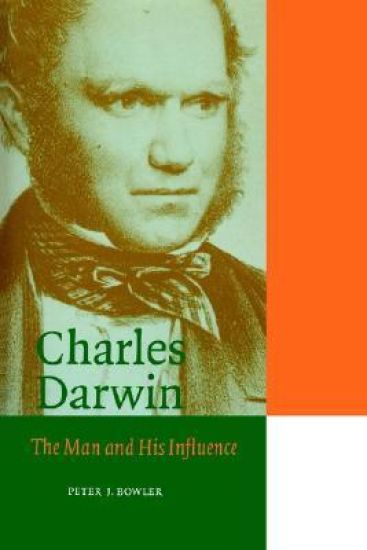
Charles Darwin

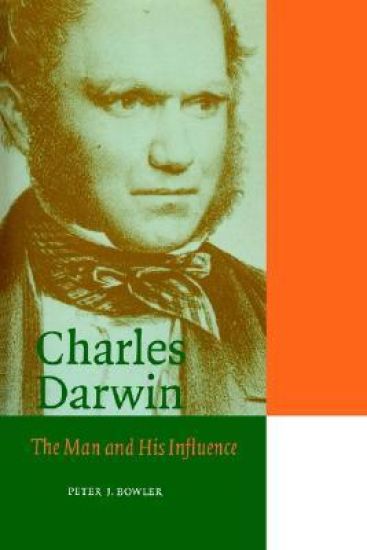
Charles Darwin

Peter J. Bowler

Cambridge University Press
1996
sidottu
Darwin’s enormous influence on science and culture, begun during his lifetime, is still very evident today. The Origin of Species excited much debate and controversy, challenging the foundations of Christianity, yet underpinning the Victorian concept of progress, and today still evokes powerful and contradictory responses. Yet he was not first to publish evolutionary ideas and his theory of natural selection was not accepted by many of his contemporaries. Peter Bowler’s study of Darwin’s life and influence combines biography and cultural history. He shows how Darwin’s contemporaries were unable to appreciate precisely those aspects of his thinking that are considered scientifically important today. Darwin was a product of his time, but he also transcended it, by creating an idea capable of being exploited by twentieth-century scientists and intellectuals who had very different values from his own.
Charles Darwin

Charles Darwin

Peter J. Bowler

Cambridge University Press
1996
pokkari
Darwin’s enormous influence on science and culture, begun during his lifetime, is still very evident today. The Origin of Species excited much debate and controversy, challenging the foundations of Christianity, yet underpinning the Victorian concept of progress, and today still evokes powerful and contradictory responses. Yet he was not first to publish evolutionary ideas and his theory of natural selection was not accepted by many of his contemporaries. Peter Bowler’s study of Darwin’s life and influence combines biography and cultural history. He shows how Darwin’s contemporaries were unable to appreciate precisely those aspects of his thinking that are considered scientifically important today. Darwin was a product of his time, but he also transcended it, by creating an idea capable of being exploited by twentieth-century scientists and intellectuals who had very different values from his own.
Charles XI and Swedish Absolutism, 1660–1697

Charles XI and Swedish Absolutism, 1660–1697

A. F. Upton

Cambridge University Press
1998
sidottu
The reading public outside Sweden knows little of that country's history, beyond the dramatic and short-lived era in the seventeenth century when Sweden under Gustavus Adolphus became a major European power by her intervention in the Thirty Years War. In the last decades of the seventeenth century another Swedish king, Charles XI, launched a less dramatic but remarkable bid to stabilize and secure Sweden's position as a major power in northern Europe and as master of the Baltic Sea. This project, which is almost unknown to students of history outside Sweden, involved a comprehensive overhaul of the government and institutions of the kingdom, on the basis of establishing Sweden as a model of absolute monarchy. This 1998 book gives an account of what was achieved under the absolutist direction of a distinctly unglamorous, but pious and conscientious ruler.
The Correspondence of Charles Darwin: Volume 10, 1862

The Correspondence of Charles Darwin: Volume 10, 1862

Charles Darwin

Cambridge University Press
1997
sidottu
As the sheer volume of his correspondence indicates, 1862 was a very productive year for Darwin. This was not only the case in his published output (two botanical papers and a book on the pollination mechanisms of orchids), but more particularly in the extent and breadth of the botanical experiments he carried out. The promotion of his theory of natural selection also continued: Darwin's own work on it expanded, Thomas Henry Huxley gave lectures about it, and Henry Walter Bates invoked it to explain mimicry in butterflies. As well as monitoring the progress of his scientific work, the correspondence also records the continuing effects of Darwin's ill-health. Serious illness in two of his children also disrupts his work.
The Correspondence of Charles Darwin: Volume 11, 1863

The Correspondence of Charles Darwin: Volume 11, 1863

Charles Darwin

Cambridge University Press
1999
sidottu
This volume includes many letters not previously published, and chronicles a year that was enlivened by scientific controversy and filled with scientific queries and discussions relating to Darwin’s transmutation theory. His love of botany and his expanding experimental programme is well depicted by correspondence with professional botanists, horticulturalists, and hobbyists. Nine appendixes complement the letters by providing additional information from the Darwin Archive and from nineteenth-century publications. The letters also provide glimpses of life among the Victorian gentry, and reveal the practical and emotional support Darwin received from his family. Awarded the Founder’s Medal of the Society of the History of Natural History, and the Modern Language Association of America’s first Morton N. Cohen Award for a distinguished edition of letters.
The Correspondence of Charles Darwin: Volume 12, 1864

The Correspondence of Charles Darwin: Volume 12, 1864

Charles Darwin

Cambridge University Press
2001
sidottu
The Correspondence of Charles Darwin provides, for the first time, the full, authoritative texts of all known and available letters to and from Charles Darwin, the originator of the theory of evolution by natural selection. The letters are accompanied by detailed explanatory footnotes and relevant supplementary materials, and offer unparalleled insight into Darwin's experiments, thoughts, friendships, and family life. Volume 12 of this continuing series contains letters for 1864, when Darwin, despite continuing illness, was carrying out botanical experiments and working on his book, The Variation of Plants and Animals under Domestication. The volume also sheds light on the worldwide reception of Darwin's theory, with letters from correspondents in the United States and Germany, and also on the continuing controversy in Britain, especially with the award of the Royal Society's prestigious Copley Medal to Darwin at the end of the year.
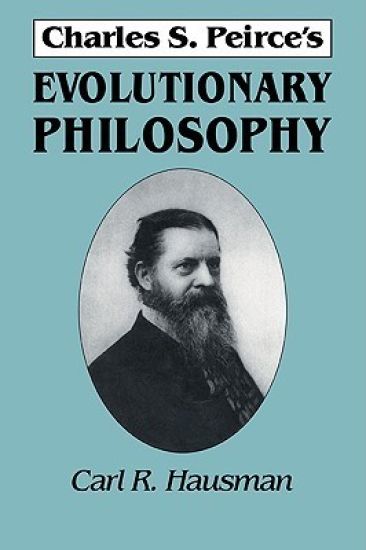
Charles S. Peirce's Evolutionary Philosophy

Charles S. Peirce's Evolutionary Philosophy

Hausman Carl R.

Cambridge University Press
1997
pokkari
In this systematic introduction to the philosophy of Charles S. Peirce, the author focuses on four of Peirce’s fundamental conceptions: pragmatism and Peirce's development of it into what he called ‘pragmaticism’; his theory of signs; his phenomenology; and his theory that continuity is of prime importance for philosophy. He argues that at the centre of Peirce's philosophical project is a unique form of metaphysical realism, whereby continuity and evolutionary change are both necessary for our understanding of experience. In his final chapter Professor Hausman applies this version of realism to contemporary controversies between anti-realists and anti–idealists. Peirce’s views are compared to those of such contemporary figures as Davidson, Putnam, and Rorty. The book will be of particular interest to philosophers concerned with American philosophy and current debates on realism as well as linguists working in semiotics.
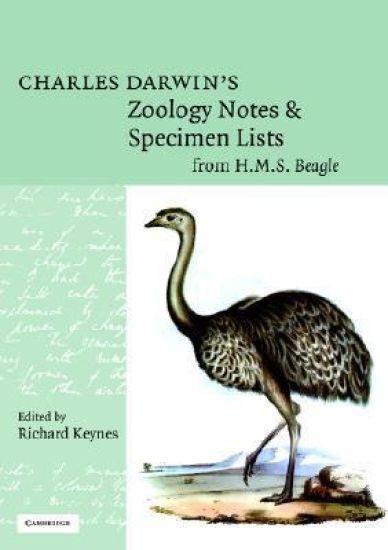
Charles Darwin's Zoology Notes and Specimen Lists from H. M. S. Beagle
This transcription of notes made by Charles Darwin during the voyage of H. M. S. Beagle records his observations of the animals and plants that he encountered, and provides a valuable insight into the intellectual development of one of our most influential scientists. Darwin drew on many of these notes for his well known Journal of Researches (1839), but the majority of them have remained unpublished. This volume provides numerous examples of his unimpeachable accuracy in describing the wide range of animals seen in the course of his travels, and of his closely analytical approach towards every one of his observations. Only at the very end of the voyage were his first doubts about the immutability of species expressed consciously, but here are to be found the initial seeds of his theory of evolution, and of the fields of behavioural and ecological study of which he was one of the founding fathers.
Charles Dickens and Other Victorians

Charles Dickens and Other Victorians

Arthur Quiller-Couch

Cambridge University Press
2008
pokkari
Sir Arthur Quiller-Couch (1863–1944), who often published under the pen-name of 'Q', was one of the giants of early twentieth-century literature and literary criticism. A novelist and poet who was also a Professor of English, he helped to form the literary tastes of generations of literary students and scholars who came after him. The freshness, enthusiasm and intellectual insight of his work is still evident in his writings nearly a century on. Cambridge University Press is delighted to reissue some of his key texts in this new edition. A collection of essays on Victorian writers of fiction: Charles Dickens, William Makepeace Thackeray, Benjamin Disraeli, Elizabeth Gaskell and - perhaps most surprisingly - Anthony Trollope, whom Quiller-Couch sees as 'one of our greatest English novelists'.
The Correspondence of Charles Darwin: Volume 18, 1870

The Correspondence of Charles Darwin: Volume 18, 1870

Charles Darwin

Cambridge University Press
2010
sidottu
This volume is part of the definitive edition of letters written by and to Charles Darwin, the most celebrated naturalist of the nineteenth century. It is already an important source for students and scholars in many academic disciplines. Notes and appendixes put these fascinating and wide-ranging letters in context, making the letters accessible to both scholars and general readers. Darwin depended on correspondence to collect data from all over the world, and to discuss his emerging ideas with scientific colleagues, many of whom he never met in person. The letters are published chronologically: Volume 18 includes letters from 1870, as well as a supplement of more than a hundred recently discovered or redated letters from before 1870. During 1870 Darwin was making final preparations for publication of Descent of Man, as well as continuing his research on expression in humans and animals.
Charles Taylor

Charles Taylor

Cambridge University Press
2004
sidottu
Charles Taylor is beyond question one of the most distinctive figures in the landscape of contemporary philosophy. In a time of increasing specialization Taylor's ability to contribute to philosophical conversations across a wide spectrum of ideas is distinctive and impressive. These areas include moral theory, theories of subjectivity, political theory, epistemology, hermeneutics, philosophy of mind, philosophy of language and aesthetics. His most recent writings have seen him branching into the study of religion. Written by a team of international authorities, this collection will be read primarily by students and professionals in philosophy, political science and religious studies, but will appeal to a broad swathe of professionals across the humanities and social sciences.
The Correspondence of Charles Darwin: Volume 13, 1865

The Correspondence of Charles Darwin: Volume 13, 1865

Charles Darwin

Cambridge University Press
2002
sidottu
The Correspondence of Charles Darwin provides, for the first time, full, authoritative texts of all known and available letters to and from Charles Darwin. The letters are accompanied by detailed explanatory footnotes and supplementary materials, and offer unparalleled insight into Darwin's experiments, thoughts, friendships, and family life. Volume 13 of this continuing series contains letters for 1865, when Darwin published his long paper on climbing plants and continued working on his book, The Variation of Plants and Animals under Domestication. In this year, Robert FitzRoy, former captain of HMS Beagle, committed suicide; Darwin's great friend Joseph Dalton Hooker became director of the Royal Botanic Gardens, Kew; and Charles Lyell and John Lubbock quarrelled over an alleged incident of plagiarism. The volume also contains a supplement of over 100 letters discovered or redated since the series began publication, including a fascinating collection of letters written when Darwin was 12.
The Correspondence of Charles Darwin: Volume 14, 1866

The Correspondence of Charles Darwin: Volume 14, 1866

Charles Darwin

Cambridge University Press
2004
sidottu
Charles Darwin's health improved substantially in 1866 under a dietary and exercise regime prescribed by his physician Henry Bence Jones. With renewed vigour, he worked steadily on his manuscript of Variation of Plants and Animals under Domestication, submitting all but the final chapter to his publisher in December. He also worked on the fourth, and much revised, edition of Origin which was delivered to printers in July, and preparations were begun for a third German edition of Origin. His improved health allowed him a more active social life. At Down, Darwin entertained a number of scientific colleagues whom he had known previously only through correspondence. He also made his first appearance in London scientific society in many years, touring the Zoological Gardens at Regent's Park, and appearing at a soirée at the Royal Society.
The Correspondence of Charles Darwin: Volume 15, 1867

The Correspondence of Charles Darwin: Volume 15, 1867

Charles Darwin

Cambridge University Press
2006
sidottu
During 1867 Darwin intensified lines of research that were to result in two important publications, Descent of Man and Selection in Relation to Sex and Expression of the Emotions in Man and Animals. Darwin circulated a questionnaire on human expression, asking his established contacts to pass it on to their acquaintances, with the result that he began to receive letters from an even more diverse and far-flung network of correspondents than had previously been the case. Convinced that human descent was strongly influenced by sexual selection, he also started to ask his correspondents about sexual differences in animals and birds. At the same time, he was working on the proof-sheets of another major work, Variation of Animals and Plants under Domestication, while negotiating almost weekly with French, German, and Russian translators. For information on the Charles Darwin Correspondence Project, see http://www.lib.cam.ac.uk/Departments/Darwin.
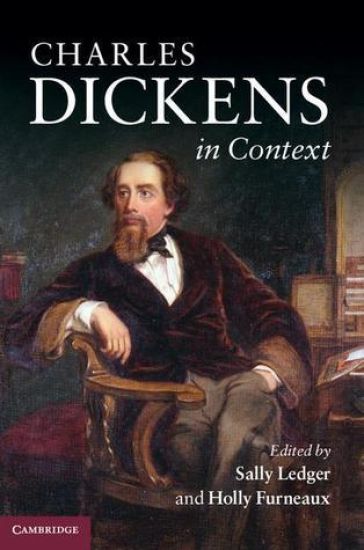
Charles Dickens in Context

Charles Dickens in Context

Cambridge University Press
2011
sidottu
Charles Dickens, a man so representative of his age as to have become considered synonymous with it, demands to be read in context. This book illuminates the worlds - social, political, economic and artistic - in which Dickens worked. Dickens's professional life encompassed work as a novelist, journalist, editor, public reader and passionate advocate of social reform. This volume offers a detailed treatment of Dickens in each of these roles, exploring the central features of Dickens's age, work and legacy, and uncovering sometimes surprising faces of the man and of the range of Dickens industries. Through 45 digestible short chapters written by a leading expert on each topic, a rounded picture emerges of Dickens's engagement with his time, the influence of his works and the ways he has been read, adapted and re-imagined from the nineteenth century to the present.
Charles Darwin's Shorter Publications, 1829–1883

Charles Darwin's Shorter Publications, 1829–1883

John Van Wyhe

Cambridge University Press
2009
sidottu
Charles Darwin's words first appeared in print as a student at Christ's College, Cambridge in 1829, and in almost every subsequent year of his life he published essays, articles, letters to editors, or other brief works. These shorter publications contain a wealth of valuable material. They represent an important part of the Darwin visible to the Victorian public, alongside his ever present sense of humour, and reveal an even wider variety of his scientific interests and abilities, which continued to his final days. This book brings together all known shorter publications and printed items Darwin wrote during his lifetime, including his first and his last publications, and the first publication, with A. R. Wallace, of Darwin's theory of evolution by natural selection. With over seventy newly discovered items, the book is fully edited and annotated, and contains original illustrations and a comprehensive bibliography.
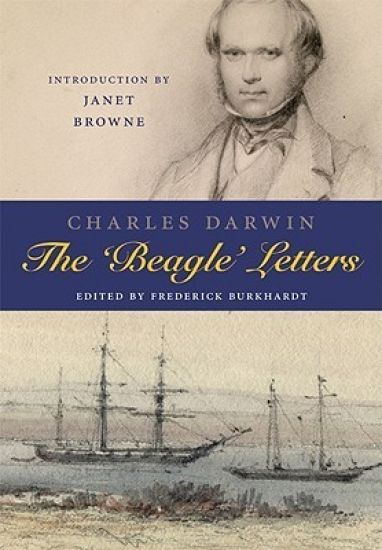
Charles Darwin: The Beagle Letters

Charles Darwin: The Beagle Letters

Cambridge University Press
2008
sidottu
Charles Darwin's voyage on the HMS Beagle is a gripping adventure story, and a turning point in the making of the modern world. Brought together here in chronological order, the letters he wrote and received during his trip provide a first-hand account of a voyage of discovery that was as much personal as intellectual. We follow Darwin's adventures as he prepares for his travels, lands on his first tropical island, watches an earthquake level a city, and learns how to catch ostriches from a running horse. We witness slavery, political revolution, and epidemic disease, and share the otherworldly experience of landing on the Galapagos Islands and collecting specimens. His letters are counterpoised by replies from family and friends that record a comfortable, intimate world back in England. Original watercolours by the ship's artist Conrad Martens vividly bring to life Darwin's descriptions of his travels.