Kirjojen hintavertailu. Mukana 11 244 527 kirjaa ja 12 kauppaa.

Kirjahaku

Etsi kirjoja tekijän nimen, kirjan nimen tai ISBN:n perusteella.

1000 tulosta hakusanalla Christopher Fifield

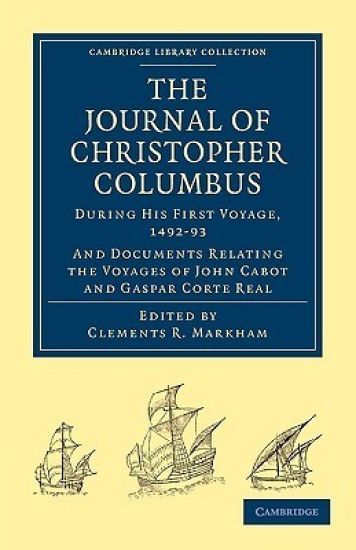
Journal of Christopher Columbus (During his First Voyage, 1492–93)

Journal of Christopher Columbus (During his First Voyage, 1492–93)

Christopher Columbus

Cambridge University Press
2010
pokkari
The publications of the Hakluyt Society (founded in 1846) made available edited (and sometimes translated) early accounts of exploration. The first series, which ran from 1847 to 1899, consists of 100 books containing published or previously unpublished works by authors from Christopher Columbus to Sir Francis Drake, and covering voyages to the New World, to China and Japan, to Russia and to Africa and India. Volume 86, published in 1893, contains a translation of the journal of Christopher Columbus during his first voyage, together with documents relating to the subsequent voyages of John and Sebastian Cabot and Gaspar Corte Real. Cabot was commissioned by Henry VII to explore in English interests. Less well known to most readers, Corte Real was a Portuguese who was sent by King Manuel I to look for a passage to Asia but seems to have reached only Greenland and north-east Canada before being lost.
Christopher Marlowe

Christopher Marlowe

Richard Wilson

Routledge
2017
sidottu
Christopher Marlowe has provoked some of the most radical criticism of recent years. There is an elective affinity, it seems, between this pre-modern dramatist and the post-modern critics whose best work has been inspired by his plays. The reason suggested by this collection of essays is that Marlowe shares the post-modern preoccupation with the language of power - and the power of language itself. As Richard Wilson shows in his introduction, it is no accident that the founding essays of New Historicism were on Marlowe; nor that current Queer Theorists focus so much on his images of gender and homosexuality. Marlowe staged both the birth of the modern author and the origin of modern sexual desire, and it is this unique conjunction that makes his drama a key to contemporary debates about the state and the self: from pornography to gays in the military. Gay Studies, Cultural Materialism, New Historicism and Reader Response Criticism are all represented in this selection, which the introduction places in the light not only of theorists like Althusser, Bataille and Bakhtin, but also of artists and writers such as Jean Genet and Robert Mapplethorpe. Many of the essays take off from Marlowe's extreme dramatisations of arson, cruelty and aggression, suggesting why it is that the thinker who has been most convincingly applied to his theatre is the philosopher of punishment and pain, Michel Foucault. Others explore the exclusiveness of this all-male universe, and reveal why it remains so offensive and impenetrable to feminism. For what they all make disturbingly clear is Marlowe's violent, untamed difference from the clichés and correctness of normative society.
Routledge Revivals: The Collected Poems of Christopher Smart (1949)
First published in 1949, this book presents the collected works of Christopher Smart, the eighteenth-century poet whose life has an attraction for the curioso of literature. There is the early marriage with Anne Vane, his secret marriage, eighteenth-century Cambridge life, the intrigues of Grub Street, and, finally, insanity and confinement in an asylum. Smart remains a strange, enigmatic figure, repulsive or attractive according to the temperament of the investigator. His poetry is not easy to disentangle from his character – egocentric, given to exhibitionism, childish, oscillating between the extremes of self-belittlement and self-glorification; but he has his own claim to fame. Few other poets match him in directness of expression. He is a poet with the eye of a painter, developed in an unusually high degree. He has a stereoscopic vision which makes the object leap to the eye, the painter’s sense of physical texture and his skill in composing a picture. Then again, there is his versatility. He practised almost every kind of poetry and gave to each kind his own personal inflection. It is the aim of this edition to present as complete a text as possible in the way that Smart himself would have seen it and, in giving some account of the poet’s life, to link his poetry with it. The book will be of interest to students of eighteenth-century literature and history.
Routledge Revivals: The Collected Poems of Christopher Smart (1949)
First published in 1949, this book presents the collected works of Christopher Smart, the eighteenth-century poet whose life has an attraction for the curioso of literature. There is the early marriage with Anne Vane, his secret marriage, eighteenth-century Cambridge life, the intrigues of Grub Street, and, finally, insanity and confinement in an asylum. Smart remains a strange, enigmatic figure, repulsive or attractive according to the temperament of the investigator. His poetry is not easy to disentangle from his character – egocentric, given to exhibitionism, childish, oscillating between the extremes of self-belittlement and self-glorification; but he has his own claim to fame. Few other poets match him in directness of expression. He is a poet with the eye of a painter, developed in an unusually high degree. He has a stereoscopic vision which makes the object leap to the eye, the painter’s sense of physical texture and his skill in composing a picture. Then again, there is his versatility. He practised almost every kind of poetry and gave to each kind his own personal inflection. It is the aim of this edition to present as complete a text as possible in the way that Smart himself would have seen it and, in giving some account of the poet’s life, to link his poetry with it. The book will be of interest to students of eighteenth-century literature and history.
Christopher Marlowe the Craftsman

Christopher Marlowe the Craftsman

M.L. Stapleton

Routledge
2018
nidottu
Contributions to this volume explore the idea of Marlowe as a working artist, in keeping with John Addington Symonds' characterization of him as a "sculptor-poet." Throughout the body of his work-including not only the poems and plays, but also his forays into translation and imitation-a distinguished company of established and emerging literary scholars traces how Marlowe conceives an idea, shapes and refines it, then remakes and remodels it, only to refashion it further in his writing process. These essays necessarily overlap with one another in the categories of lives, stage, and page, which signals their interdependent nature regarding questions of authorship, theater and performance history, as well as interpretive issues within the works themselves. The contributors interpret and analyze the disputed facts of Marlowe's life, the textual difficulties that emerge from the staging of his plays, the critical investigations arising from analyses of individual works, and their relationship to those of his contemporaries. The collection engages in new ways the controversies and complexities of its subject's life and art. It reflects the flourishing state of Marlowe studies as it shapes the twenty-first century conception of the poet and playwright as master craftsman.
Christopher Marlowe and English Renaissance Culture

Christopher Marlowe and English Renaissance Culture

Darryll Grantley; Peter Roberts

Routledge
2018
sidottu
First published in 1996, this volume asked the question: who – and what – was Christopher Marlowe? Dramatist, poet, atheist and possible spy, he was a man in contrast with his time. The authors here gather to explore Marlowe on the four hundredth anniversary of his death. They include significant interdisciplinary elements and focus on dramaturgy, textual criticism and biography. It is hoped that the diversity of approaches can further debates on both Marlowe and Renaissance culture.
Christopher Marlowe and English Renaissance Culture

Christopher Marlowe and English Renaissance Culture

Darryll Grantley; Peter Roberts

Routledge
2020
nidottu
First published in 1996, this volume asked the question: who – and what – was Christopher Marlowe? Dramatist, poet, atheist and possible spy, he was a man in contrast with his time. The authors here gather to explore Marlowe on the four hundredth anniversary of his death. They include significant interdisciplinary elements and focus on dramaturgy, textual criticism and biography. It is hoped that the diversity of approaches can further debates on both Marlowe and Renaissance culture.