

Kirjahaku
Etsi kirjoja tekijän nimen, kirjan nimen tai ISBN:n perusteella.
1000 tulosta hakusanalla Colette

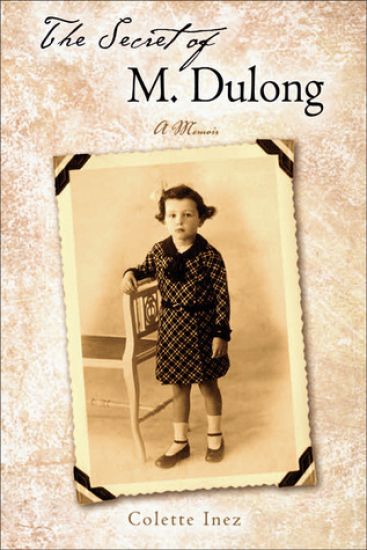
A search for roots and identity has rarely been captured with such irony, unusual insight, and surprising humor as in this memoir of heartbreak and hope. Today a distinguished American poet, Colette Inez first came to the United States when she was eight years old, as an apparent Belgian orphan escorted by two complete strangers. Growing up in post-World War II America, a stranger to her own past, she survived a harrowing adolescence and an increasingly menacing, abusive adoptive family by learning to define her single solace: a developing passion for literature. Facing possible deportation in the 1950s, Inez set out to prove her claim to U.S. citizenship. The result, as she recounts in this eloquent, wrenching memoir, would span two continents, a trail of discovery, and a buried secret: one that ultimately allowed Inez to reconcile her past and present and finally come of age as an artist.
Rachel Crothers had a fascinating and influential career as a woman playwright and director. She was a major part of Broadway history during the first half of the 20th century, when she wrote for leading actresses such as Tallulah Bankhead, Katharine Cornell, and Gertrude Lawrence. While she is primarily known for her plays, she also worked for a time in Hollywood, and many of her plays were filmed—some more than once.This volume presents a biographical and critical overview of Crothers's life and career, along with synopses of her plays, descriptions of the critics' responses to each play, and substantial primary and secondary bibliographies. This book makes suggestions about the criticism that Crothers's work has elicited in the past, as well as about the directions that criticism might and should take in the future. Because of Crothers's work on Broadway, the book is a valuable guide to theater history throughout the 1900s, particularly because of the detailed cast and production information provided in the entries.
Colette Bryce's The Heel of Bernadette was one of the most highly praised new collections of recent years, winning both the Aldeburgh Prize for best first collection, and the Strong Award for best new Irish poet. Her second, The Full Indian Rope Trick – the title poem already the winner of the 2003 National Poetry Competition – sees a leap forward in confidence and range, with Bryce's dark lyric and darker wit finding many different voices. Whatever subject the poet takes – an Ulster childhood and the child's growing awareness of her divided community, the surreal life of the natural world, or the more disturbing shadows thrown by our love and desire – it is always addressed with both a compelling emotional candour and an astonishingly musical intelligence. Pillar Talk That magician/who stationed himself on a pillar/over Manhattan/for thirty-five hours/knows nothing whatever/of loneliness/or how it is/for people like us/who have no soft acre/of cardboard boxes/not even the eggshell/flashbulbs of the press/or the well-meant antics/of neighbours with a mattress/to temper the thought/of the hard, hard earth,/to break the fall./Nothing at all.

Medieval Drama is a textbook, designed to be used by A level and undergraduate students of theatre and drama. It is divided into two major areas, mystery cycles and morality plays, and it examines the plays from a performance perspective. The book makes special reference to those texts contained within selections of plays which can be readily obtained by students, including A.C.Cawley's Everyman and Medieval Miracle Plays (Dent). The staging conventions of pageant waggon performance, place and scaffold playing and the drama of the Hall are explored in relation to the cultural context of the medieval period.
This volume explores the socio-political dynamics, historical forces, and unequal power relationships which mediate language ideologies in Mexican higher education settings, shedding light on the processes by which minority students learn new languages in postcolonial contexts. Drawing on data from a critical ethnographic case study of a Mexican university over several years, the book turns a critical lens on language learning autonomy and the use of the Common European Framework of Reference for Languages (CEFR) in postcolonial higher education settings, and advocates for an approach to the language learning and teaching process which takes into account minority language learners’ cultural heritage and localized knowledge. Despagne also showcases this approach in the unique research methodology which underpins the data, integrating participatory methods such as Interpretative Focus Groups in an attempt to decolonize research by engaging and involving participants in the analysis of data. Highlighting the importance of critical approaches in encouraging the equitable treatment of diverse cultures and languages and the development of agency in minority language learners, this book will be key reading for researchers in sociolinguistics, educational linguistics, applied linguistics, ethnography of communication, and linguistic anthropology.
Since the breakup of the Soviet Union, the peoples of Central Asia (Tajikistan, Kazakhstan, Kyrgyzstan, Turkmenistan, and Uzbekistan) have been exposed to new, Western influences that stress individualism at the expense Central Asian traditions of family and communalism. Young men in particular are exposed to new ideas and lifestyles as they tra
The word 'transsexualism' was coined in 1953 and although transsexuals and intersexed people had existed for much longer, surgery to reassign one's sex is a relatively recent phenomenon. Transsexuals feel that the opposite sex to their biological one is their true identity - their true body and self. The idea of 'hormonal and surgical sex reassi
This book focuses on Lacan's revisions and renewals of psychoanalytic concepts, and shows the ways in which Lacan succeeded in the reinvention of psychoanalysis. It explores those steps that led him to assert an unprecedented formula that says against all expectation that the unconscious is real.

It is well known that Freud laid great emphasis on sexual matters. In the years that followed, a distinction was drawn between sex and gender, and the idea of gender identity was introduced. Human beings do not spend every minute of their lives copulating, but at every minute of their lives their gender identity is present. Sex Makes the World

Towards Identity in the Psychoanalytic Encounter addresses the theme of identification and identity in the psychoanalytic clinic as elaborated by Jacques Lacan over the course of his teaching.In psychoanalysis, the subject who is summoned “to speak himself” is by definition lacking in identity. His question is “What am I?” but, as he is only represented by his words, his being is “always elsewhere”, within other words that are yet to come. Thus a paradox: one seeks via speech the identity of a being who, through his speech, is not identifiable. Yet the fact remains, he has a body, and he is riveted to sufferings that psychoanalysis, from Freud to Lacan, identified, which are not accidental, which we call repetition and symptom, and which shift the question of identity because a One, real, is at play in them.Towards Identity in the Psychoanalytic Encounter will be key reading for the study and research of Lacanian psychoanalysis and all practitioners interested in Lacan’s teaching, as well as other discourses such as philosophy, art, literature and history.
Decolonizing Language Learning, Decolonizing Research
Colette Despagne
TAYLOR FRANCIS LTD
2022
nidottu
This volume explores the socio-political dynamics, historical forces, and unequal power relationships which mediate language ideologies in Mexican higher education settings, shedding light on the processes by which minority students learn new languages in postcolonial contexts. Drawing on data from a critical ethnographic case study of a Mexican university over several years, the book turns a critical lens on language learning autonomy and the use of the Common European Framework of Reference for Languages (CEFR) in postcolonial higher education settings, and advocates for an approach to the language learning and teaching process which takes into account minority language learners’ cultural heritage and localized knowledge. Despagne also showcases this approach in the unique research methodology which underpins the data, integrating participatory methods such as Interpretative Focus Groups in an attempt to decolonize research by engaging and involving participants in the analysis of data. Highlighting the importance of critical approaches in encouraging the equitable treatment of diverse cultures and languages and the development of agency in minority language learners, this book will be key reading for researchers in sociolinguistics, educational linguistics, applied linguistics, ethnography of communication, and linguistic anthropology.
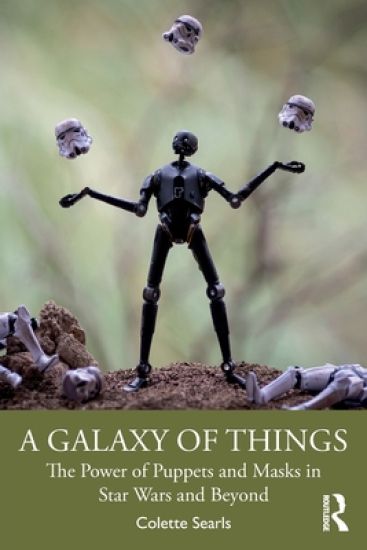
A Galaxy of Things explores the ways in which all puppets, masks, makeup-prosthetic figures are "material characters," using iconic Star Wars characters like Yoda and R2-D2 to illustrate what makes them so compelling.As an epic franchise, Star Wars has been defined by creatures, droids, and masked figures since the original 1977 movie. Author Colette Searls, a theatre director and expert in puppetry studies, uncovers how non-humans like Chewbacca, semi-humans like Darth Maul, and even concealed humans like Boba Fett tell meaningful stories that conventional human characters cannot. Searls defines three powers that puppets, masked figures, and other material characters wield—distance, distillation, and duality—and analyzes Star Wars’ most iconic robots and aliens to demonstrate how they work across nearly a half-century of live-action films. Yoda and "Baby Yoda"—two of popular culture’s greatest puppets—use these qualities to transform their human companions. Similarly, Darth Vader’s mask functions as a performing object driving mystery and suspense across three film trilogies. The power of material characters has also been wielded in problematic ways, such as stereotypes in the representation of service droids and controversial creatures like Jar Jar Binks. Bringing readers forward into the first Star Wars live-action streaming series, the book also explores how the early 2020s stories centered material characters in particularly meaningful, often redemptive ways.A Galaxy of Things is an accessible guide to puppets, masks, and other material characters for students and scholars of theatre, film, puppetry, and popular culture studies. It also offers useful perspectives on non-human representation for researchers in object-oriented ontology, posthumanism, ethnic studies, and material culture.
A Galaxy of Things explores the ways in which all puppets, masks, makeup-prosthetic figures are "material characters," using iconic Star Wars characters like Yoda and R2-D2 to illustrate what makes them so compelling.As an epic franchise, Star Wars has been defined by creatures, droids, and masked figures since the original 1977 movie. Author Colette Searls, a theatre director and expert in puppetry studies, uncovers how non-humans like Chewbacca, semi-humans like Darth Maul, and even concealed humans like Boba Fett tell meaningful stories that conventional human characters cannot. Searls defines three powers that puppets, masked figures, and other material characters wield—distance, distillation, and duality—and analyzes Star Wars’ most iconic robots and aliens to demonstrate how they work across nearly a half-century of live-action films. Yoda and "Baby Yoda"—two of popular culture’s greatest puppets—use these qualities to transform their human companions. Similarly, Darth Vader’s mask functions as a performing object driving mystery and suspense across three film trilogies. The power of material characters has also been wielded in problematic ways, such as stereotypes in the representation of service droids and controversial creatures like Jar Jar Binks. Bringing readers forward into the first Star Wars live-action streaming series, the book also explores how the early 2020s stories centered material characters in particularly meaningful, often redemptive ways.A Galaxy of Things is an accessible guide to puppets, masks, and other material characters for students and scholars of theatre, film, puppetry, and popular culture studies. It also offers useful perspectives on non-human representation for researchers in object-oriented ontology, posthumanism, ethnic studies, and material culture.

In "My Mother's House" and "Sido," Colette plays fictional variations on the themes of childhood, family, and, above all, her mother. Vividly alive, fond of cities, music, theater, and books, Sido devoted herself to her village, Saint-Saveur; to her garden, with its inhabitants and its animals; and, especially, to her children, particularly her youngest, whom she called Minet-Cheri. Unlike "Gigi" and "Cheri," which focus largely on sexual love and its repercussions, "My Mother's House" and "Sido "center on the compelling figure of a powerful, nurturing woman in late-nineteenth-century rural France, conveying the impact she had on her community and on her daughter -- who grew up to be a great writer.
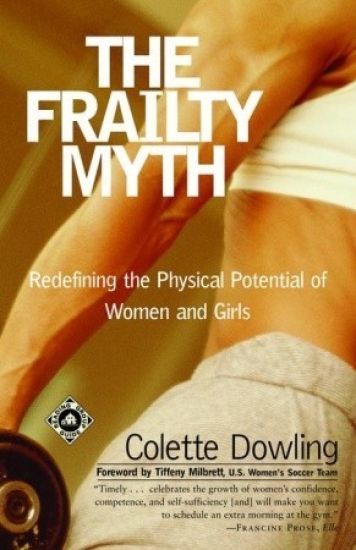
The Frailty Myth: Redefining the Physical Potential of Women and Girls
Colette Dowling
Random House Trade
2001
nidottu
Can women be equal to men as long as men are physically stronger? And are men, in fact, stronger?These are key questions that Colette Dowling, author of the bestselling The Cinderella Complex, raises in her provocative new book. The myth of female frailty, with its roots in nineteenth-century medicine and misogyny, has had a damaging effect on women's health, social status, and physical safety. It is Dowling's controversial thesis that women succumb to societal pressures to appear weak in order to seem more "feminine."The Frailty Myth presents new evidence that girls are weaned from the use of their bodies even before they begin school. By adolescence, their strength and aerobic powers have started to decline unless the girls are exercising vigorously--and most aren't. By sixteen, they have already lost bone density and turned themselves into prime candidates for osteoporosis. They have also been deprived of motor stimulation that is essential for brain growth.Yet as breakthroughs among elite women athletes grow more and more astounding, it begins to appear that strength and physical skill--for all women--is only a matter of learning and training. Men don't have a monopoly on physical prowess; when women and men are matched in size and level of training, the strength gap closes. In some areas, women are actually equipped to outperform men, due partly to differences in body structure, and partly to the newly discovered strengthening benefits of estrogen. Drawing on extensive research in motor development, performance assessment, sports physi-ology, and endocrinology, Dowling presents an astonishing picture of the new physical woman. And she creates a powerful argument that true equality isn't possible until women learn how to stand up for themselves--physically.

What kind of person is a city person? This is a question of increasing importance, Colette Brooks suggests, as the city begins to spread, inexorably, into the furthest reaches of the modern mind. One possibility: a city person is someone "who doesn't feel the need to finish a jigsaw puzzle, who relishes jagged edges and orphaned curves, stray bits of data, stories parsed from sentences half overheard on the streets." Someone who is willing, sometimes eager, to immerse herself in mystery. Winner of the PEN/Jerard Fund Award, In the City is an idiosyncratic, lyrical, edgy exploration of the urban experience. This daring, unpredictable work breathes new life into the nonfiction form. Chronicling the often haphazard lives of city dwellers and cities themselves, In the City is a window into the urban psyche. An unnamed narrator roams the streets of an unnamed city, practicing "random acts of awareness" as she gathers disjointed pieces of the puzzle. She is sometimes in a city that seems to be New York, and sometimes in cities halfway around the world. In her wanderings she collects bits of stories, some taken from the headlines, some from the streets, some from the distant past. She studies criminals, innocent bystanders, commuters; a renowned painter who fled to the country; a bomber who sends unsuspecting city dwellers lethal packages marked "personal"; a blind, deaf woman who loves to ride the subway; a young cabdriver who keeps an open dictionary at his side as he drives, struggling to learn a strange language; a perplexed explorer who finds himself, against all expectation, stranded at the very edge of the earth. All of these people, she discovers, are city people, whether they know it yet or not. Some will flourish, others will be lost, victims of chance and mischance: the woman who drinks by herself in a brownstone apartment; the ancient city dwellers who couldn't outrun fire or flood; the children whose faces end up on posters on a wall. Those who survive learn, sooner or later, that everyone keeps company with ghosts who walk alongside. In the City shows us that the city is a place where past and present are commingled, where questions rarely have answers, where danger, difficulty, and exhilaration are interwoven in ways we can hardly begin to explain. Welcome to the city, the place where all contrary indications hold true.
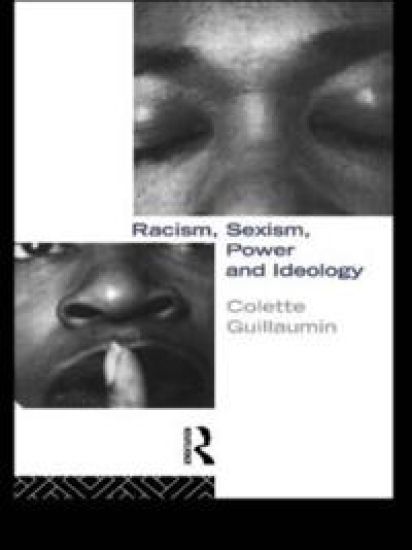
First Published in 2004. This text argues that there is nothing obvious or natural about our ideas of sex and race and looks at the evolution of these ideas. The author contends that the slow crystallization of ideas on human races over the last few centuries can be grasped through the study of signs and their systems. However, race and sex are in no way purely abstract or symbolic phenomena. They are the hard facts of society. To be a man or woman, black or white are matters of social reality. To be a member of a particular race or sex does not bring with it the same opportunities, the same rights or the same constraints. The author examines how these constraints operate and shape our life experience. From a more theoretical standpoint, the text tackles the particular links between the daily materiality of social relationships and mental conventions. Materiality and ideology (in the sense of the perception of things) are two sides of the same coin. Relationships of sex and race follow an ancient history of physical right of the one over the other. Slavery and patriarchy are defined by direct physical rights which is not without its consequences.
Women and European Employment
Colette Fagan; Damian Grimshaw; Jill Rubery; Mark Smith
Routledge
1997
sidottu
This is the first comprehensive and up-to-date study of the contribution of women and men to changing European economic activity patterns covering all fifteen member states. Based on the work of the European Commission's network of experts on women's employment, it draws on both national and European data sources. The book links trends in the structures of employment with new comparative data on the role of systems of welfare provision in order to explore economic activity patterns by gender. Participation patterns of women still vary widely within Europe, so much attention is paid to the institutions - both in the labour market and welfare - which help to explain these variations.