Kirjojen hintavertailu. Mukana 12 290 406 kirjaa ja 12 kauppaa.

Kirjahaku

Etsi kirjoja tekijän nimen, kirjan nimen tai ISBN:n perusteella.

306 tulosta hakusanalla Colm Toibin

The Culture of Conformism

The Culture of Conformism

Patrick Colm Hogan

Duke University Press
2001
pokkari
“[Hogan’s] goal is not merely to explain but to provide tools of understanding that will be of practical value to those who struggle for justice and freedom. Drawing from an impressive array of sources, his valuable study advances both ends considerably, no mean accomplishment.”-Noam ChomskyIn this wide-ranging and informative work, Patrick Colm Hogan draws on cognitive science, psychoanalysis, and social psychology to explore the cultural and psychological components of social consent. Focusing in particular on Americans’ acquiescence to a system that underpays and underrepresents the vast majority of the population, Hogan moves beyond typical studies of this phenomenon by stressing more than its political and economic dimensions.With new insights into particularly insideous forms of consent such as those manifest in racism, sexism, and homophobia, The Culture of Conformism considers the role of emotion as it works in conjunction with belief and with the formation of group identity. Arguing that coercion is far more pervasive in democratic societies than is commonly recognized, Hogan discusses the subtle ways in which economic and social pressures operate to complement the more obviously violent forces of the police and military. Addressing issues of narcissism, self-esteem, and empathy, he also explains the concept of “rational” conformity-that is, the degree to which our social consent is based on self-interest-and explores the cognitive factors that produce and sustain social ideology.Social activists, economic theorists, social psychologists, and political scientists will be intrigued and informed by this book.
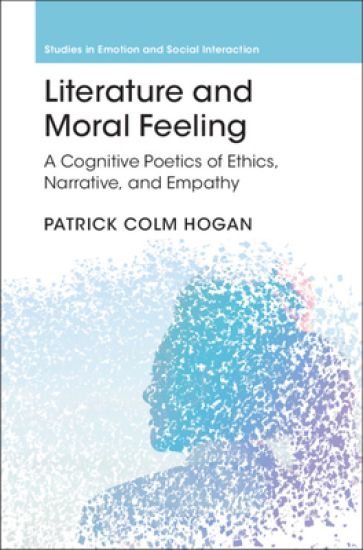
Literature and Moral Feeling

Literature and Moral Feeling

Patrick Colm Hogan

Cambridge University Press
2023
pokkari
An influential body of recent work on moral psychology has stressed the interconnections among ethics, narrative, and empathy. Yet as Patrick Colm Hogan argues, this work is so vague in its use of the term 'narrative' as to be almost substanceless, and this vagueness is in large part due to the neglect of literary study. Extending his previous work on universal story structures, Hogan argues that we can transform ill-defined intuitions about narrative and ethics into explicit and systematic accounts of the deep connections between moral attitudes and narratives. These connections are, in turn, inseparable from empathy, a concept that Hogan proceeds to clarify and defend against a number of widely read critiques. In the course of the book, Hogan develops and illustrates his arguments through analyses of global narratives, constructing illuminating ethical interpretations of literary works ranging from Shakespeare to Chinese drama and the Bhagavad Gita.
Literature and Moral Feeling

Literature and Moral Feeling

Patrick Colm Hogan

Cambridge University Press
2022
sidottu
An influential body of recent work on moral psychology has stressed the interconnections among ethics, narrative, and empathy. Yet as Patrick Colm Hogan argues, this work is so vague in its use of the term 'narrative' as to be almost substanceless, and this vagueness is in large part due to the neglect of literary study. Extending his previous work on universal story structures, Hogan argues that we can transform ill-defined intuitions about narrative and ethics into explicit and systematic accounts of the deep connections between moral attitudes and narratives. These connections are, in turn, inseparable from empathy, a concept that Hogan proceeds to clarify and defend against a number of widely read critiques. In the course of the book, Hogan develops and illustrates his arguments through analyses of global narratives, constructing illuminating ethical interpretations of literary works ranging from Shakespeare to Chinese drama and the Bhagavad Gita.
American Literature and American Identity

American Literature and American Identity

Patrick Colm Hogan

Taylor Francis Ltd
2021
sidottu
In recent years, cognitive and affective science have become increasingly important for interpretation and explanation in the social sciences and humanities. However, little of this work has addressed American literature, and virtually none has treated national identity formation in influential works since the Civil War. In this book, Hogan develops his earlier cognitive and affective analyses of national identity, further exploring the ways in which such identity is integrated with cross-culturally recurring patterns in story structure. Hogan examines how authors imagined American identity—understood as universal, democratic egalitarianism—in the face of the nation’s clear and often brutal inequalities of race, sex, and sexuality, exploring the complex and often ambivalent treatment of American identity in works by Charlotte Perkins Gilman, Eugene O’Neill, Lillian Hellman, Djuna Barnes, Amiri Baraka, Margaret Atwood, N. Scott Momaday, Spike Lee, Leslie Marmon Silko, Tony Kushner, and Heidi Schreck.
American Literature and American Identity

American Literature and American Identity

Patrick Colm Hogan

TAYLOR FRANCIS LTD
2023
nidottu
In recent years, cognitive and affective science have become increasingly important for interpretation and explanation in the social sciences and humanities. However, little of this work has addressed American literature, and virtually none has treated national identity formation in influential works since the Civil War. In this book, Hogan develops his earlier cognitive and affective analyses of national identity, further exploring the ways in which such identity is integrated with cross-culturally recurring patterns in story structure. Hogan examines how authors imagined American identity—understood as universal, democratic egalitarianism—in the face of the nation’s clear and often brutal inequalities of race, sex, and sexuality, exploring the complex and often ambivalent treatment of American identity in works by Charlotte Perkins Gilman, Eugene O’Neill, Lillian Hellman, Djuna Barnes, Amiri Baraka, Margaret Atwood, N. Scott Momaday, Spike Lee, Leslie Marmon Silko, Tony Kushner, and Heidi Schreck.
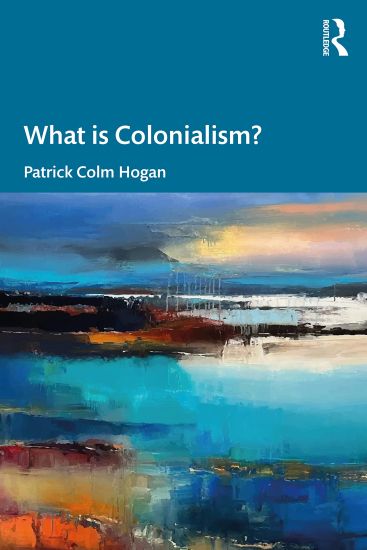
What is Colonialism?

What is Colonialism?

Patrick Colm Hogan

TAYLOR FRANCIS LTD
2023
sidottu
What is Colonialism? develops a clear and rigorous account of what colonialism is and how it works. It draws on and synthesizes recent work in cognitive science, affective science, and social psychology, along with Marxism and related forms of analysis.Hogan begins with some fundamental conceptual distinctions, such as the degree to which a group shares beliefs, dispositions, and skills versus the degree to which they share identification with a category. Building on these distinctions, he defines colonialism in terms of political, economic, and cultural autonomy, clarifying the nature of culture and autonomy particularly. He goes on to articulate an invaluable systematic account of the varieties of colonialism. The final chapters outline the motives of imperialists, differentiating these from their ideological rationalizations, and sketching the harms caused by colonialism. The book concludes by considering when, or if, one can achieve a genuinely postcolonial condition. Hogan illustrates these analyses by examining influential literary works—by European writers (such as Joseph Conrad) and by non-Europeans (such as Athol Fugard, Kamala Markandaya, and Wole Soyinka).This accessible and informative volume is the ideal resource for students and scholars interested in colonialism and empire.
What is Colonialism?

What is Colonialism?

Patrick Colm Hogan

TAYLOR FRANCIS LTD
2023
nidottu
What is Colonialism? develops a clear and rigorous account of what colonialism is and how it works. It draws on and synthesizes recent work in cognitive science, affective science, and social psychology, along with Marxism and related forms of analysis.Hogan begins with some fundamental conceptual distinctions, such as the degree to which a group shares beliefs, dispositions, and skills versus the degree to which they share identification with a category. Building on these distinctions, he defines colonialism in terms of political, economic, and cultural autonomy, clarifying the nature of culture and autonomy particularly. He goes on to articulate an invaluable systematic account of the varieties of colonialism. The final chapters outline the motives of imperialists, differentiating these from their ideological rationalizations, and sketching the harms caused by colonialism. The book concludes by considering when, or if, one can achieve a genuinely postcolonial condition. Hogan illustrates these analyses by examining influential literary works—by European writers (such as Joseph Conrad) and by non-Europeans (such as Athol Fugard, Kamala Markandaya, and Wole Soyinka).This accessible and informative volume is the ideal resource for students and scholars interested in colonialism and empire.
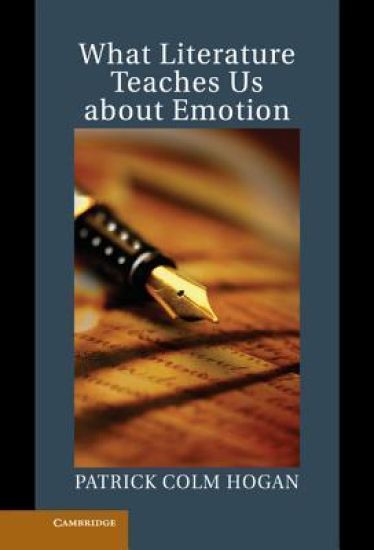
What Literature Teaches Us about Emotion

What Literature Teaches Us about Emotion

Patrick Colm Hogan

Cambridge University Press
2011
sidottu
Literature provides us with otherwise unavailable insights into the ways emotions are produced, experienced and enacted in human social life. It is particularly valuable because it deepens our comprehension of the mutual relations between emotional response and ethical judgment. These are the central claims of Hogan's study, which carefully examines a range of highly esteemed literary works in the context of current neurobiological, psychological, sociological and other empirical research. In this work, he explains the value of literary study for a cognitive science of emotion and outlines the emotional organization of the human mind. He explores the emotions of romantic love, grief, mirth, guilt, shame, jealousy, attachment, compassion and pity - in each case drawing on one work by Shakespeare and one or more works by writers from different historical periods or different cultural backgrounds, such as the eleventh-century Chinese poet Li Ch'ing-Chao and the contemporary Nigerian playwright Wole Soyinka.
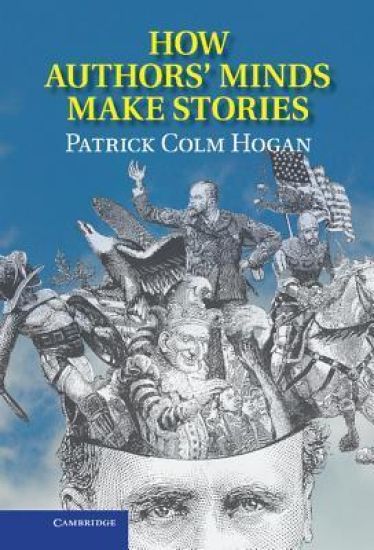
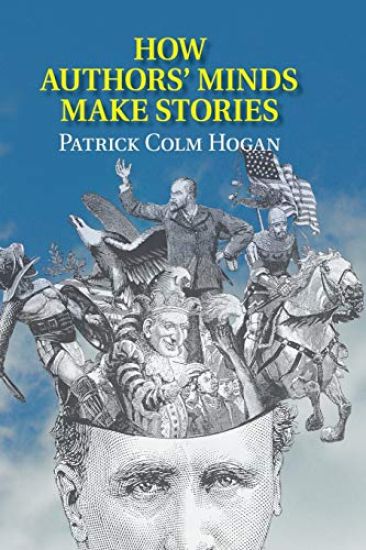
How Authors' Minds Make Stories

How Authors' Minds Make Stories

Patrick Colm Hogan

Cambridge University Press
2013
sidottu
This book explores how the creations of great authors result from the same operations as our everyday counterfactual and hypothetical imaginations, which cognitive scientists refer to as 'simulations'. Drawing on detailed literary analyses as well as recent research in neuroscience and related fields, Patrick Colm Hogan develops a rigorous theory of the principles governing simulation that goes beyond any existing framework. He examines the functions and mechanisms of narrative imagination, with particular attention to the role of theory of mind, and relates this analysis to narrative universals. In the course of this theoretical discussion, Hogan explores works by Austen, Faulkner, Shakespeare, Racine, Brecht, Kafka and Calvino. He pays particular attention to the principles and parameters defining an author's narrative idiolect, examining the cognitive and emotional continuities that span an individual author's body of work.
Beauty and Sublimity

Beauty and Sublimity

Patrick Colm Hogan

Cambridge University Press
2016
sidottu
Recent decades have witnessed an explosion in neuroscientific and related research treating aesthetic response. This book integrates this research with insights from philosophical aesthetics to propose new answers to longstanding questions about beauty and sublimity. Hogan begins by distinguishing what we respond to as beautiful from what we count socially as beautiful. He goes on to examine the former in terms of information processing (specifically, prototype approximation and non-habitual pattern recognition) and emotional involvement (especially of the endogenous reward and attachment systems). In the course of the book, Hogan examines such issues as how universal principles of aesthetic response may be reconciled with individual idiosyncrasy, how it is possible to argue rationally over aesthetic response, and what role personal beauty and sublimity might play in the definition of art. To treat these issues, the book considers works by Woolf, Wharton, Shakespeare, Arthur Miller, Beethoven, Matisse, and Kiran Rao, among others.
How Authors' Minds Make Stories

How Authors' Minds Make Stories

Patrick Colm Hogan

Cambridge University Press
2014
pokkari
This book explores how the creations of great authors result from the same operations as our everyday counterfactual and hypothetical imaginations, which cognitive scientists refer to as 'simulations'. Drawing on detailed literary analyses as well as recent research in neuroscience and related fields, Patrick Colm Hogan develops a rigorous theory of the principles governing simulation that goes beyond any existing framework. He examines the functions and mechanisms of narrative imagination, with particular attention to the role of theory of mind, and relates this analysis to narrative universals. In the course of this theoretical discussion, Hogan explores works by Austen, Faulkner, Shakespeare, Racine, Brecht, Kafka and Calvino. He pays particular attention to the principles and parameters defining an author's narrative idiolect, examining the cognitive and emotional continuities that span an individual author's body of work.
What Literature Teaches Us about Emotion

What Literature Teaches Us about Emotion

Patrick Colm Hogan

Cambridge University Press
2014
nidottu
Literature provides us with otherwise unavailable insights into the ways emotions are produced, experienced and enacted in human social life. It is particularly valuable because it deepens our comprehension of the mutual relations between emotional response and ethical judgment. These are the central claims of Hogan's study, which carefully examines a range of highly esteemed literary works in the context of current neurobiological, psychological, sociological and other empirical research. In this work, he explains the value of literary study for a cognitive science of emotion and outlines the emotional organization of the human mind. He explores the emotions of romantic love, grief, mirth, guilt, shame, jealousy, attachment, compassion and pity - in each case drawing on one work by Shakespeare and one or more works by writers from different historical periods or different cultural backgrounds, such as the eleventh-century Chinese poet Li Ch'ing-Chao and the contemporary Nigerian playwright Wole Soyinka.
Beauty and Sublimity

Beauty and Sublimity

Patrick Colm Hogan

Cambridge University Press
2017
pokkari
Recent decades have witnessed an explosion in neuroscientific and related research treating aesthetic response. This book integrates this research with insights from philosophical aesthetics to propose new answers to longstanding questions about beauty and sublimity. Hogan begins by distinguishing what we respond to as beautiful from what we count socially as beautiful. He goes on to examine the former in terms of information processing (specifically, prototype approximation and non-habitual pattern recognition) and emotional involvement (especially of the endogenous reward and attachment systems). In the course of the book, Hogan examines such issues as how universal principles of aesthetic response may be reconciled with individual idiosyncrasy, how it is possible to argue rationally over aesthetic response, and what role personal beauty and sublimity might play in the definition of art. To treat these issues, the book considers works by Woolf, Wharton, Shakespeare, Arthur Miller, Beethoven, Matisse, and Kiran Rao, among others.
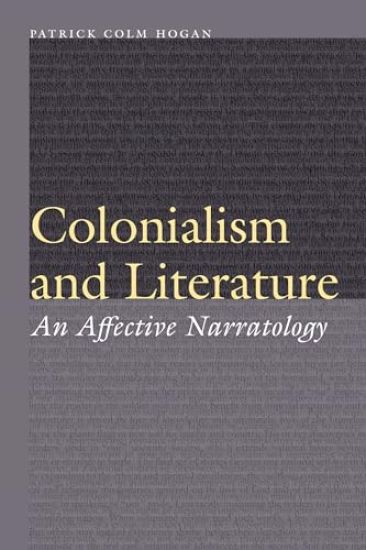
Colonialism and Literature

Colonialism and Literature

Patrick Colm Hogan

University of Nebraska Press
2025
sidottu
In earlier work Patrick Colm Hogan argued that a few story genres-heroic, romantic, sacrificial, and others-recur prominently across separate literary traditions. These structures recur because they derive from important emotion-motivation systems governing human social interaction, such as group pride and shame. In Colonialism and Literature Hogan extends this work to argue that these genres play a prominent role in the fashioning of postcolonization literature-literature encompassing both the colonial and postcolonial periods. Crucially, colonizers and colonized people commonly understand and explain their situation in terms of these narrative structures. In other words, the stories we tell to some degree simply reflect the facts. But we also tend to interpret our condition in terms of genre, with the genre guiding us about what to record and how to evaluate it. Hogan explores these consequential processes in theoretical and literary analysis, presenting extended, culturally and historically specified interpretations of works by PÁdraic Pearse (Ireland), Ngugi wa Thiong’o (Kenya), Yasujiro Ozu (Japan), J. M. Coetzee (South Africa), Margaret Atwood (Canada), Rabindranath Tagore (India), Abderrahmane Sissako (Mali), and Dinabandhu Mitra (India).
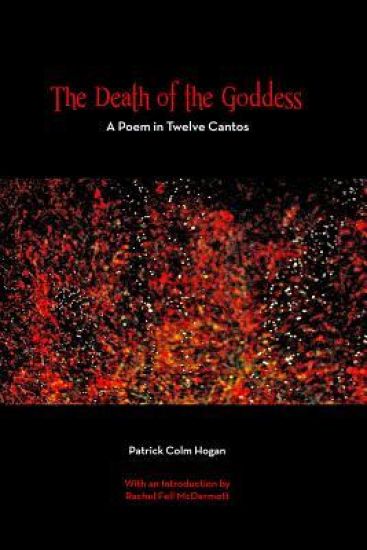
The Death of the Goddess – A Poem in Twelve Cantos
THE DEATH OF THE GODDESS is an epic, narrative poem that is a moving account of affection, personal loss, and grief. Inspired by Buddhism, Indic thought and Hogan's reading of the BHAGAVAD GITA, the central figures of THE DEATH OF THE GODDESS is two lovers who refuse to accept unjust social hierarchies and suffer separation and death for that choice. In this groundbreaking narrative, Patrick Colm Hogan sets out to re-synthesize ancient Indian philosophy and myth, with a beauty and literary feeling (called rasa in Sanskrit) that are the central aspects of this poem. THE DEATH OF THE GODDESS is an excellent literary achievement to be read by serious poetry lovers and students of mythology or epic literature alike.
Tagore's Best Short Stories

Tagore's Best Short Stories

Patrick Colm Hogan

FRONTPAGE PUBLICATIONS
2011
sidottu
In commemoration of Rabindranath Tagore's [1861-1941] 150 years anniversary, this new collection of English translation of his selected short stories opens up the possibility of an English reading global audience discovering relevance in Tagore's creations more than a century after they were penned in India.
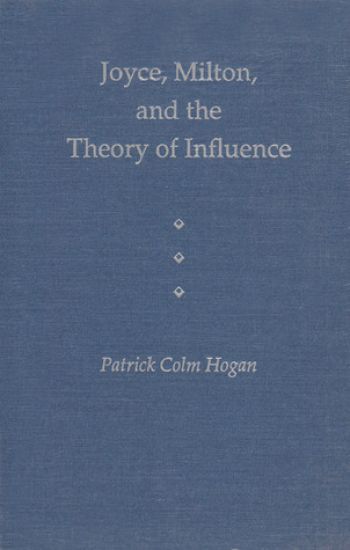
Joyce, Milton and the Theory of Influence

Joyce, Milton and the Theory of Influence

Hogan Patrick Colm; Benstock Bernard

University Press of Florida
1995
sidottu
Patrick Hogan examines the complex and conflicted relation of James Joyce's works - primarily the epic novels ""Ulysses"" and ""Finnegan's Wake"" - to one of the most important and influential epics in English, Milton's ""Paradise Lost"", and to other Milton works. Though Stephen Dedalus expresses his poetic ambition as ""rewriting Paradise Lost"", though he teaches ""Lycidas"" and though Milton is amply present in ""Finnegan's Wake"", virtually nothing has been written on this important literary relationship. Hogan traces the deep structural affinities that link the writers, arguing that Milton provided a crucial model for Joyce to create his great ""works of mourning"", ""Ulysses"" and ""Finnegan's Wake"". In addition, Hogan sets the novels in a larger tradition of European and Middle Eastern retellings of the fall of humankind, incuding 18th- and 19th-century revisions of ""Paradise Lost"". From this perspective, he analyses the structure and technique of ""Ulysses"" and of ""Finnegan's Wake"" and interprets key passages in a way that helps make these works comprehensible even to a novice reader. As part of his study Hogan draws on psychoanalysis, cognitive science, Sanskrit aesthetics, and cultural materialism to formulate a theory of influence with implications that reach beyond the study of Joyce and Milton.
The Economy of the American People;

The Economy of the American People;

Gerhard 1897-1968 Colm

Hassell Street Press
2021
sidottu
This work has been selected by scholars as being culturally important and is part of the knowledge base of civilization as we know it.This work is in the public domain in the United States of America, and possibly other nations. Within the United States, you may freely copy and distribute this work, as no entity (individual or corporate) has a copyright on the body of the work.Scholars believe, and we concur, that this work is important enough to be preserved, reproduced, and made generally available to the public. To ensure a quality reading experience, this work has been proofread and republished using a format that seamlessly blends the original graphical elements with text in an easy-to-read typeface.We appreciate your support of the preservation process, and thank you for being an important part of keeping this knowledge alive and relevant.