
Kirjahaku
Etsi kirjoja tekijän nimen, kirjan nimen tai ISBN:n perusteella.
1000 tulosta hakusanalla Daniel Bendix



Correspondence Of Daniel O'Connell, The Liberator
Daniel O'Connell; William J. (EDT) Fitzpatrick
Kessinger Pub
2007
pokkari




Daniel Defoe V1: His Life And Recently Discovered Writings, Extending From 1716-1729 (1869)
William Lee
KESSINGER PUBLISHING, LLC
2008
sidottu
The Twisted Mind of Daniel Guyton (Poetry and Plays in the Dark Comedy Vein)
Daniel Guyton
Lulu.com
2009
pokkari
A collection of Dark Comedy Plays and Poetry by Daniel Guyton. Includes: SPAT!; MILO AND BARBARA; GEORGIE GETS A FACELIFT; ATTIC* (Winner of the Kennedy Center/ACTF New Play Award in 2004); I'M NOT GAY!; ROMANCE IS DEAD; A FRIEND TO ALL THE LITTLE GUYS; IN THE SHADOW OF A WAR; YOU TRIPPIN?; FATHER AND SON; HALF-WIT; BOYS NIGHT IN; and GOT CHANGE FOR A TWO? (co-written with Spencer Temkin); Also includes the following poems: COLD; ABANDONED; WAKING UP ABANDONED; HERE, YOU LAUGHING; BLACK DEATH AND PUPPY LOVE; UNRELENTING; WAKING UP; MAN OF WAR; FINDING THE IGNITION; ODE TO SAMANTHA; CONSOLATION PRIZE; BEAUTY; GOOD TIMES GO; and MARY'S SONG. www.danguyton.com
Lester argues here that the book of Daniel contains a complex but poetically unified narrative. This can be identified through certain narrative qualities, including the allusion to Isaiah throughout, which uniquely contributes to the narrative arc. The narrative begins with the inauguration of foreign rule over Israel, and concludes with that rule’s end. Each stage of the book's composition casts that foreign rule in terms ever-more-reminiscent of Isaiah's depiction of Assyria. That enemy is first conscripted by God to punish Israel, but then arrogates punitive authority to itself until ultimately punished in its turn and destroyed. Each apocalypse in the book of Daniel carries forward, in its own way, that allusive characterization.Lester thus argues that an allusive poetics can be investigated as an intentional rhetorical trope in a work for which the concept of “author” is complex; that a narrative criticism can incorporate a critical understanding of composition history. The “Daniel” resulting from this inquiry depicts Daniel’s 2nd-century Jewish reader not as suffering punishment for breaking covenant with God, but as enduring in covenant faithfulness the last days of the “Assyrian” arrogator’s violent excesses. This narrative problematizes any simplistic narrative conceptions of biblical Israel as ceaselessly rebellious, lending a unique note to conversations about suffering and theodicy in the Hebrew Bible, and about anti-Judaic habits in Christian reading of the Hebrew Bible.

Ian Young provides a commentary on the Masoretic Text of the book of Daniel, focusing on issues of language and text and presenting an investigation of the Masoretic Text as a product of scribal art. Young uses an contrastive approach in order to outline the specific scribal characteristics of the book, looking at both text and language. With respect to the former, Young looks at the many textual versions and minor variations of other textual traditions in addition to the Masoretic Text, asking not only what variations exist, but what difference these formulations make to the interpretation and understanding of a text. With respect to language, Young introduces the reader to the richness of the use of language in Daniel in two ways. First, by presenting the essential linguistic data of the book in a manner accessible to all readers with more than beginners’ Hebrew and Aramaic, and with a focus on what makes Daniel’s Hebrew distinctive. Second, Young uses linguistic contrasts to describe how Daniel’s Hebrew fits in with other Biblical Hebrew books.
Lester argues here that the book of Daniel contains a complex but poetically unified narrative. This can be identified through certain narrative qualities, including the allusion to Isaiah throughout, which uniquely contributes to the narrative arc. The narrative begins with the inauguration of foreign rule over Israel, and concludes with that rule’s end. Each stage of the book's composition casts that foreign rule in terms ever-more-reminiscent of Isaiah's depiction of Assyria. That enemy is first conscripted by God to punish Israel, but then arrogates punitive authority to itself until ultimately punished in its turn and destroyed. Each apocalypse in the book of Daniel carries forward, in its own way, that allusive characterization.Lester thus argues that an allusive poetics can be investigated as an intentional rhetorical trope in a work for which the concept of “author” is complex; that a narrative criticism can incorporate a critical understanding of composition history. The “Daniel” resulting from this inquiry depicts Daniel’s 2nd-century Jewish reader not as suffering punishment for breaking covenant with God, but as enduring in covenant faithfulness the last days of the “Assyrian” arrogator’s violent excesses. This narrative problematizes any simplistic narrative conceptions of biblical Israel as ceaselessly rebellious, lending a unique note to conversations about suffering and theodicy in the Hebrew Bible, and about anti-Judaic habits in Christian reading of the Hebrew Bible.

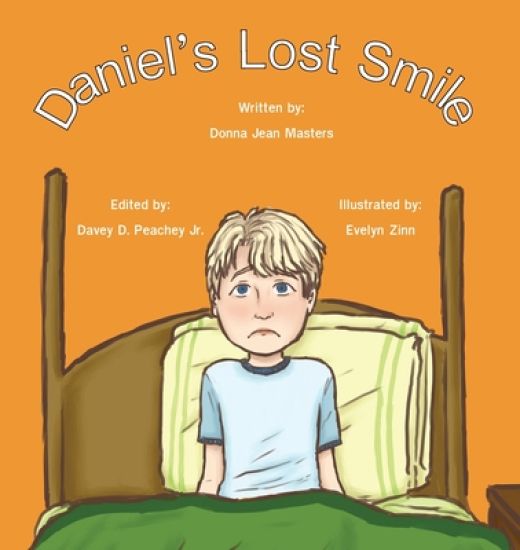
Daniel's Lost Smile is a story about a boy who wakes up unable to smile and does everything he can think of to find it. He enlists the help of his siblings and his parents to help him. The artwork is modern, exciting and vibrant. The ending is bound to make all children laugh and fall in love with this touching story. They'll be asking to read it every night