Kirjojen hintavertailu. Mukana 12 390 323 kirjaa ja 12 kauppaa.

Kirjahaku

Etsi kirjoja tekijän nimen, kirjan nimen tai ISBN:n perusteella.

1000 tulosta hakusanalla Daniel P

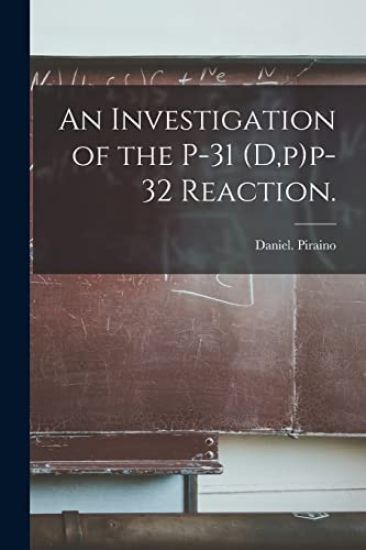
An Investigation of the P-31 (d, p)p-32 Reaction.

An Investigation of the P-31 (d, p)p-32 Reaction.

Daniel Piraino

Hassell Street Press
2021
nidottu
This work has been selected by scholars as being culturally important and is part of the knowledge base of civilization as we know it.This work is in the public domain in the United States of America, and possibly other nations. Within the United States, you may freely copy and distribute this work, as no entity (individual or corporate) has a copyright on the body of the work.Scholars believe, and we concur, that this work is important enough to be preserved, reproduced, and made generally available to the public. To ensure a quality reading experience, this work has been proofread and republished using a format that seamlessly blends the original graphical elements with text in an easy-to-read typeface.We appreciate your support of the preservation process, and thank you for being an important part of keeping this knowledge alive and relevant.
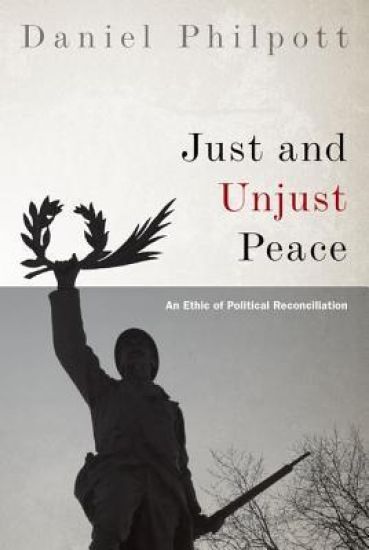
Just and Unjust Peace

Just and Unjust Peace

Daniel Philpott

Oxford University Press Inc
2015
nidottu
Winner of the 2013 Christianity Today Book Award in Missions / Global Affairs Winner of the Aldersgate Prize Honorable Mention Winner of the 2014 International Studies Association International Ethics Section Book Award In the wake of massive injustice, how can justice be achieved and peace restored? Is it possible to find a universal standard that will work for people of diverse and often conflicting religious, cultural, and philosophical backgrounds? In Just and Unjust Peace, Daniel Philpott offers an innovative and hopeful response to these questions. He challenges the approach to peace-building that dominates the United Nations, western governments, and the human rights community. While he shares their commitments to human rights and democracy, Philpott argues that these values alone cannot redress the wounds caused by war, genocide, and dictatorship. Both justice and the effective restoration of political order call for a more holistic, restorative approach. Philpott answers that call by proposing a form of political reconciliation that is deeply rooted in three religious traditions--Christianity, Islam, and Judaism--as well as the restorative justice movement. These traditions offer the fullest expressions of the core concepts of justice, mercy, and peace. By adapting these ancient concepts to modern constitutional democracy and international norms, Philpott crafts an ethic that has widespread appeal and offers real hope for the restoration of justice in fractured communities. From the roots of these traditions, Philpott develops six practices--building just institutions and relations between states, acknowledgment, reparations, restorative punishment, apology and, most important, forgiveness--which he then applies to real cases, identifying how each practice redresses a unique set of wounds. Focusing on places as varied as Bosnia, Iraq, South Africa, Germany, Sierra Leone, Timor-Leste, Chile and many others--and drawing upon the actual experience of victims and perpetrators--Just and Unjust Peace offers a fresh approach to the age-old problem of restoring justice in the aftermath of widespread injustice.
Memory in a Time of Prose

Memory in a Time of Prose

Daniel Pioske

Oxford University Press Inc
2018
sidottu
Memory in a Time of Prose investigates a deceptively straightforward question: what did the biblical scribes know about a past that consumed so many of their writings? Daniel D. Pioske attempts to answer this question by studying the sources, limits, and conditions of knowing that would have shaped biblical stories told about a time that preceded the composition of these writings by a generation or more. This book is comprised of a series of case studies that compare biblical references to an early Iron Age world (ca. 1175-830 BCE) with a wide range of archaeological and historical evidence from the era in which these stories are set. Pioske examines the relationship between the past disclosed through these historical traces and the past represented within the biblical narrative. He discovers that the biblical scribes drew the knowledge of the past that they used to create their prose narratives from memory and word of mouth, rather than from a corpus of older narrative documents. For those Hebrew scribes who first set down these stories in prose writing, the means for knowing a past and the significance attached to it were primarily wed to the faculty of memory. Memory in a Time of Prose reveals how the past was preserved, transformed, or forgotten in the ancient world of oral, living speech that informed biblical storytelling.
Strategies of Peace

Strategies of Peace

Daniel Philpott; Gerard Powers

Oxford University Press Inc
2010
nidottu
How can a just peace be built in sites of genocide, massive civil war, dictatorship, terrorism, and poverty? In Strategies of Peace, the first volume in the Studies in Strategic Peacebuilding series, fifteen leading scholars propose an imaginative and provocative approach to peacebuilding. Today the dominant thinking is the "liberal peace," which stresses cease fires, elections, and short run peace operations carried out by international institutions, western states, and local political elites. But the liberal peace is not enough, the authors argue. A just and sustainable peace requires a far more holistic vision that links together activities, actors, and institutions at all levels. By exploring innovative models for building lasting peace-a United Nations counter-terrorism policy that also promotes good governance; coordination of the international prosecution of war criminals with local efforts to settle civil wars; increasing the involvement of religious leaders, who have a unique ability to elicit peace settlements; and many others--the authors advance a bold new vision for peacebuilding.
Strategies of Peace

Strategies of Peace

Daniel Philpott; Gerard Powers

Oxford University Press Inc
2010
sidottu
How can a just peace be built in sites of genocide, massive civil war, dictatorship, terrorism, and poverty? In Strategies of Peace, the first volume in the Studies in Strategic Peacebuilding series, fifteen leading scholars propose an imaginative and provocative approach to peacebuilding. Today the dominant thinking is the "liberal peace," which stresses cease fires, elections, and short run peace operations carried out by international institutions, western states, and local political elites. But the liberal peace is not enough, the authors argue. A just and sustainable peace requires a far more holistic vision that links together activities, actors, and institutions at all levels. By exploring innovative models for building lasting peace-a United Nations counter-terrorism policy that also promotes good governance; coordination of the international prosecution of war criminals with local efforts to settle civil wars; increasing the involvement of religious leaders, who have a unique ability to elicit peace settlements; and many others-the authors advance a bold new vision for peacebuilding.
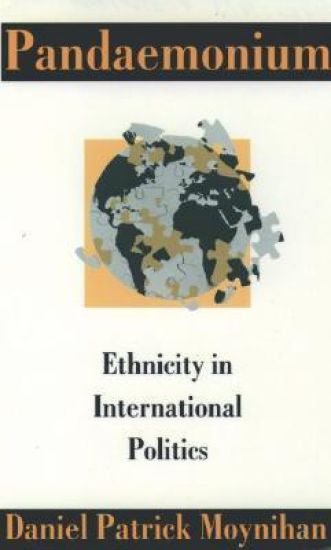
Pandaemonium

Pandaemonium

Daniel Patrick Moynihan; Adam Roberts

Oxford University Press
1993
sidottu
Responsible for the collapse of empires ranging from the Ottoman to the Soviet, self-determination has been one of the key factors in the history of the entire twentieth century. Surprisingly, scholars have been slow to appreciate the value of ethnicity as a way of understanding the key political developments of our times. In this challenging new book, Senator Daniel Patrick Moynihan draws on a rich and diverse fund of historical and contemporary examples to trace the history and illustrate the considerable predictive powers of ethnic studies. In particular, he shows how ethnicity confounded Marx's hopes for an international proletariat and reveals how an inability to grasp the importance of ethnic diversity left the West unprepared for the disintegration of the Communist bloc. About the author: Daniel Patrick Moynihan has been been the senior US Senator from New York since 1976 and is the only man in American history to have served in the cabinet or sub-cabinet of four successive presidents. He is also a highly distinguished academic, having taught at Harvard, Yale, Columbia, Syracuse, Cornell, and New York Universities and been lauded with an astonishing 55 honorary degrees.
Folk Physics for Apes

Folk Physics for Apes

Daniel Povinelli

Oxford University Press
2003
nidottu
From an early age, humans know a surprising amount about basic physical principles, such as gravity, force, mass, and shape. We can see this in the way that young children play, and manipulate objects around them. The same behaviour has long been observed in primates - chimpanzees have been shown to possess a remarkable ability to make and use simple tools. But what does this tell us about their inner mental state - do they therefore share the same understanding to that of a young child? Do they understand the simple, underlying physical principles involved? Though some people would say that they do, this book reports groundbreaking research that questions whether this really is the case. Folk Physics for Apes challenges the assumptions so often made about apes. It offers us a rare glimpse into the workings of another mind, examining how apes perceive and understand the physical world - an understanding that appears to be both similar to, and yet profoundly different from our own. The book will have broad appeal to evolutionary psychologists, developmental psychologists, and those interested in the sub-disciplines of cognitive science (philosophy, anthropology). The book additionally offers for developmental psychologists some valuable new non-verbal techniques for assessing causal understanding in young children.
Last Chance for Life: Clemency in Southeast Asian Death Penalty Cases
All five contemporary practitioners of the death penalty in the Association of Southeast Asian Nations (ASEAN)— Indonesia, Malaysia, Thailand, Singapore and Vietnam-- have performed executions on a regular basis over the past few decades. NGO Amnesty International currently classifies each of these nations as death penalty 'retentionists'. However, notwithstanding a common willingness to execute, the number of death sentences passed by courts that are reduced to a term of imprisonment, or where the prisoner is released from custody altogether, through grants of clemency by the executive branch of government, varies remarkably among these neighbouring political allies. Last Chance for Life: Clemency in Southeast Asian Death Penalty Cases explores the patterns which explain why some countries in the region award clemency far more often than others in death penalty cases. Over the period under analysis from 1991 to 2016, the regional outliers were Thailand (with more than 95% of condemned prisoners receiving clemency after exhausting judicial appeals) and Singapore (with fewer than 1% of condemned prisoners receiving clemency). Malaysia, Indonesia and Vietnam fall at points in between these two extremes. What results is the first research monograph, anywhere in the world, to compare death penalty clemency across national borders using empirical methodology, the latter a systematic collection of clemency data in multiple jurisdictions using archival and 'elite' interview sources. Last Chance for Life is an authoritative resource for legal practitioners, criminal justice policy makers, scholars and activists throughout the ASEAN region and around the retentionist world.
Psychoanalysis

Psychoanalysis

Daniel Pick

Oxford University Press
2015
nidottu
Since its inception, psychoanalysis has been hailed as a revolutionary theory of how the mind works, whilst some of its ideas such as the Oedipus complex have become part of everyday conversation. In Psychoanalysis: A Very Short Introduction, Daniel Pick offers a lucid, lively, and wide-ranging survey of psychoanalysis. This book offers the reader a flavour of what it might be like to enter treatment, and suggests the possible surprises that can await both analyst and patient, as well as the potential benefits. Yet whilst Freud's writings have shaped the way many of us understand dreams, desires, and destructiveness, as well as anxieties, blunders, and guilt, numerous critics have warned of the dangerous methods and time-bound assumptions of psychoanalysis, doubted the efficacy of its drawn-out methods, and dismissed its core claims as pseudo-science. Looking at modern ideas of the self, exploring the nature of unconscious aspects of relationships, and considering how psychoanalysis has evolved, Pick ponders the particular challenges now facing the analytic profession, and shows why psychoanalysis remains an important resource for investigating the mind, its creative functioning and many afflictions. ABOUT THE SERIES: The Very Short Introductions series from Oxford University Press contains hundreds of titles in almost every subject area. These pocket-sized books are the perfect way to get ahead in a new subject quickly. Our expert authors combine facts, analysis, perspective, new ideas, and enthusiasm to make interesting and challenging topics highly readable.
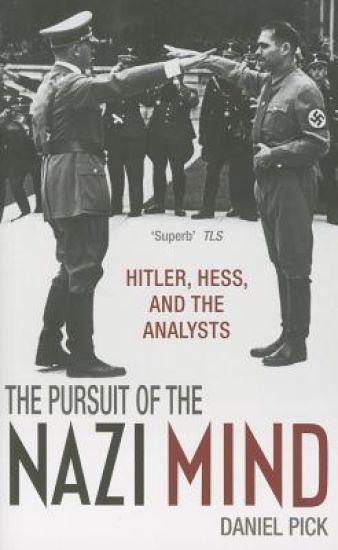
The Pursuit of the Nazi Mind

The Pursuit of the Nazi Mind

Daniel Pick

Oxford University Press
2014
nidottu
The story of how psychoanalysis was used in the war against Nazi Germany - in the crucial quest to understand the Nazi mind. Daniel Pick brings both the skills of the historian and the trained psychoanalyst to weave together the story of clinical encounters with leading Nazis and the Allies' broader interpretations of the Nazi high command and the mentality of the wider German public who supported them. Following the bizarre capture of Hitler's deputy Rudolf Hess in 1941, Pick follows closely the story of how leading British psychiatrists assessed their new charge, in an attempt to understand both the man himself and the psychological bases of his Nazi convictions. At the same time, he uncovers the story of how a team of American officers working for the OSS, the forerunner of the CIA, were engaged in an attempt to understand Hitler's personality from afar, using the theories and techniques of Sigmund Freud. Drawing upon a large cache of archives on both sides of the Atlantic, Pick asks what such psychoanalytical and psychiatric investigations set out to do, showing how Freud's famous 'talking cure' was harnessed to the particular needs of military intelligence during the war and the task of post-war reconstruction that followed. Looking beyond this, he then shows just how deeply post-war Western understandings of how minds work and groups operate were influenced by these wartime attempts to interpret the pychopathology of Nazism.
Just and Unjust Peace

Just and Unjust Peace

Daniel Philpott

Oxford University Press Inc
2012
sidottu
In the wake of massive injustice, how can justice be achieved and peace restored? Is it possible to find a universal standard that will work for people of diverse and often conflicting religious, cultural, and philosophical backgrounds? In Just and Unjust Peace, Daniel Philpott offers an innovative and hopeful response to these questions. He challenges the approach to peace-building that dominates the United Nations, western governments, and the human rights community. While he shares their commitments to human rights and democracy, Philpott argues that these values alone cannot redress the wounds caused by war, genocide, and dictatorship. Both justice and the effective restoration of political order call for a more holistic, restorative approach. Philpott answers that call by proposing a form of political reconciliation that is deeply rooted in three religious traditions--Christianity, Islam, and Judaism--as well as the restorative justice movement. These traditions offer the fullest expressions of the core concepts of justice, mercy, and peace. By adapting these ancient concepts to modern constitutional democracy and international norms, Philpott crafts an ethic that has widespread appeal and offers real hope for the restoration of justice in fractured communities. From the roots of these traditions, Philpott develops six practices--building just institutions and relations between states, acknowledgment, reparations, restorative punishment, apology and, most important, forgiveness--which he then applies to real cases, identifying how each practice redresses a unique set of wounds. Focusing on places as varied as Bosnia, Iraq, South Africa, Germany, Sierra Leone, Timor-Leste, Chile and many others--and drawing upon the actual experience of victims and perpetrators--Just and Unjust Peace offers a fresh approach to the age-old problem of restoring justice in the aftermath of widespread injustice.
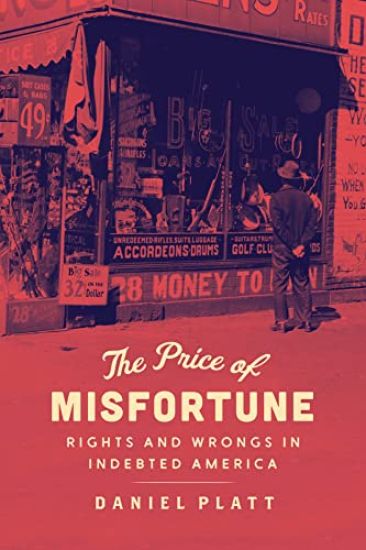
The Price of Misfortune

The Price of Misfortune

Daniel Platt

THE UNIVERSITY OF CHICAGO PRESS
2023
sidottu
A history of the struggle for debtors’ rights from the Civil War to the Great Depression What can be taken from someone who has borrowed money and cannot repay? What do the victims of misfortune owe to their lenders, and what can they keep for themselves? The answers to those questions, immensely important for debtors, creditors, and society at large, have changed over time. The Price of Misfortune examines the cause of debtors’ rights in the modern United States and the struggles of reformers who fought to establish financial freedoms in law. Daniel Platt shows how, in the wake of the Civil War, a range of advocates drew potent analogies between slavery, imprisonment for debt, and the experiences of wage garnishment and property foreclosure. He traces the ways those analogies were used to campaign for bold new protections for debtors, keeping them secure in their labor, property, and personhood. Yet, as Platt demonstrates, those reforms tended to assume as their ideal borrower someone who was white, propertied, and male. In subsequent decades, the emancipatory promise of debtors’ rights would be tested as women, wage earners, and African Americans seized on their language to challenge other structural inequalities: the dependency of marriage, the exploitation of industrial capitalism, and the oppression of Jim Crow. By reconstructing these forgotten developments—and recovering the experiences of indebted farmwives, sharecroppers, and wage workers—The Price of Misfortune narrates a new history of inequality, coercion, and law amid the early financialization of American capitalism.
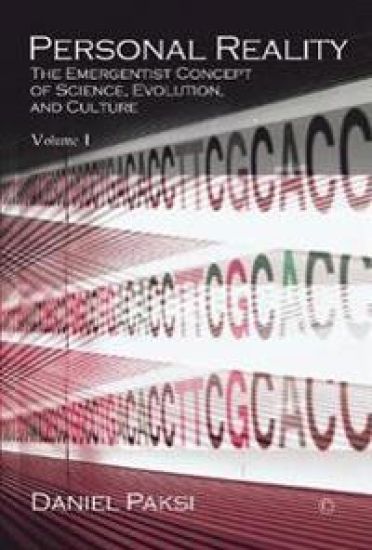
Personal Reality, Volume 1

Personal Reality, Volume 1

Daniel Paksi Paksi

James Clarke Co Ltd
2020
nidottu
Western civilization was built on the concept of God. Today modern science, based on the critical method and so-called objective facts, denies even the existence of our soul. There is only matter: atoms, molecules, and DNA sequences. There is no freedom; there are no well-grounded beliefs. The decline of Western civilization is not the simple consequence of decadence, hedonism, and malevolence. Modern critical science has liberated us from the old dogmas but failed to establish our freedoms, values, and beliefs. However, human knowledge is not objective but personal. We are the children of evolution. Everybody sees the world from his own personal point of view anchored into his/her body. We use our billions-of-years-old evolutionary skills and thousands-of-years-old cultural heritage to recognize and acknowledge the personal facts of our reality, freedom, and most important natural beliefs: respect and speak the truth. In reality, even science itself is based on our personal knowledge. Only our false conceptual dichotomies paralyze our thinking. God or matter? There is a third choice: the emergence of life and human persons. This is the only way to defend our freedoms and the Christian moral dynamism of free Western societies.
Personal Reality, Volume 2

Personal Reality, Volume 2

Daniel Paksi Paksi

James Clarke Co Ltd
2020
nidottu
Western civilization was built on the concept of God. Today modern science, based on the critical method and so-called objective facts, denies even the existence of our soul. There is only matter: atoms, molecules, and DNA sequences. There is no freedom; there are no well-grounded beliefs. The decline of Western civilization is not the simple consequence of decadence, hedonism, and malevolence. Modern critical science has liberated us from the old dogmas but failed to establish our freedoms, values, and beliefs. However, human knowledge is not objective but personal. We are the children of evolution. Everybody sees the world from his own personal point of view anchored into his/her body. We use our billions-of-years-old evolutionary skills and thousands-of-years-old cultural heritage to recognize and acknowledge the personal facts of our reality, freedom, and most important natural beliefs: respect and speak the truth. In reality, even science itself is based on our personal knowledge. Only our false conceptual dichotomies paralyze our thinking. God or matter?-there is a third choice: the emergence of life and human persons. This is the only way to defend our freedoms and the Christian moral dynamism of free Western societies.
The Papers of James Monroe

The Papers of James Monroe

Daniel Preston

Greenwood Press
2006
sidottu
This volume examines letters, newspaper articles, and eyewitness accounts from 1776-1794, documenting James Monroe's time in the Continental Army, in state and national government, and as an attorney, while also revealing aspects of his personal life. These rarely seen documents provide great insight into both Monroe's public activities and his private life. Read letters he wrote from the battlefield to George Washington. Better understand his political views by reading the correspondence he had with Thomas Jefferson and Patrick Henry. Read a letter Monroe wrote to his wife—the only letter he did not destroy after her death. This extraordinary collection is ideal for undergraduate students, as well as for scholars interested in learning more about James Monroe's personal life.
Global Markets For Processed Foods
This book is based on the proceedings of a conference held in June 1996 under co-sponsorship of the International Agricultural Trade Consortium and The Retail Food Industry Center. The International Agricultural Trade Research Consortium (lA TRC) is a group of 160 economists from 16 countries who are interested in fostering research relating to international trade of agricultural products and commodities and providing a forum for the exchange of ideas. Each summer the IATRC sponsors a symposium on a topic relating to trade and trade policy from which proceedings are published. A list of past symposia and related publications may be obtained from Laura Bipes, IATRC Executive Director, Department of Applied Economics, University of Minnesota, St. Paul, Minnesota 55108.
Global Markets For Processed Foods
This book focuses on theoretical, methodological, and empirical issues arising from inconsistencies between neoclassical trade theory and actual international commerce in processed food and beverages. It explores some international implications of vertical markets in the processed food sector.