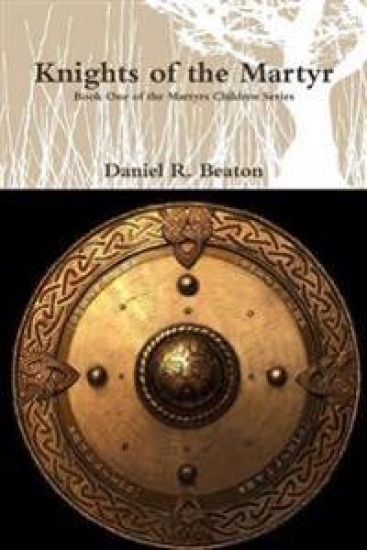
The Northern Kingdom was founded on pain and battle. Pain from years of persecution for their religious beliefs at the hands of the Justican Empire. Then Battle when they followed a lone Elve back through uncharted mountains to a harsh land populated by the fecund Barrow Kin where they had to win their place in the world through 25 years of hard fought war. But win it they did. For 50 years they have known peace, and Justice was handed down by the Knights of the Martyr. However, with the end of the centuries of wars in the South their former masters, the Justican Empire with their God like Emperors have once again set their eyes on them. A giant of a knight who has grown jaded in his faith. A young boy with powers he can't explain. A young girl who has more secrets than dreams. And a novice Duke trying to fill the shoes of his murdered father. These are the people ready to do what they think is best for the Northern Kingdom.
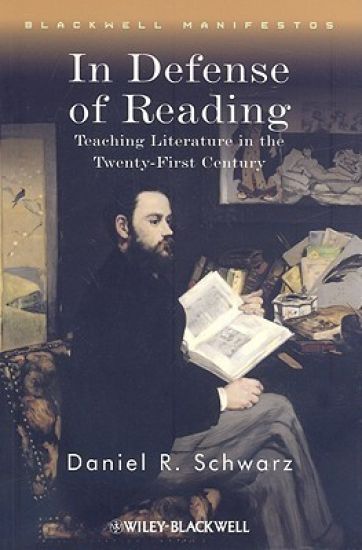
In Defense of Reading What happens when we read imaginative literature? What do we learn from reading such texts? Reading complements our experience, sharpens our perceptions, gives us insight into how other humans live, enables us to understand other cultures and periods, and gives us aesthetic pleasure. In Defense of Reading: Teaching Literature in the Twenty-First Century is a passionate and beautifully written defense of the pleasures of reading. With clarity and eloquence, the author, influential literary critic, and award-winning Daniel R. Schwarz shares his insights on why we read, how we read, and what transpires when we undertake what he calls “the odyssey of reading.” Other topics covered include the ethics of reading, humanistic criticism, and the history and future of studying literature. The author explores various forms of resistant readings and discusses changes in reading, writing, and teaching in the electronic age. In Defense of Reading concludes with an optimistic look into the future of literary studies. In Defense of Reading: Teaching Literature in the Twenty-First Century embraces the joys of the written word while teaching us to be better readers and imparting wisdom that will resonate with teachers and lovers of literature everywhere.
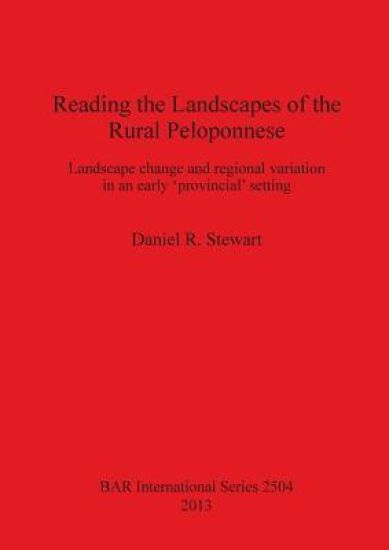
The extent, nature and causes of settlement change in the rural Peloponnese (Greece) in the last centuries of the Hellenistic period and the early centuries of Roman rule (c.200 BC to c.AD 200) are the focus of this study. Understanding the rural landscape has implications for our readings of certain aspects of cultural change and land use, and can help bridge the gap between necessarily elite-driven historiographical studies and related stratified deposits. This study is not meant to be either an historical narrative on the 'decline and depopulation' of Greece or a treatise on survey archaeology. Rather, it is meant to elucidate the complex nature of the rural landscape of the Peloponnese in these periods, and to identify some of the behaviours of the inhabitants of that landscape.
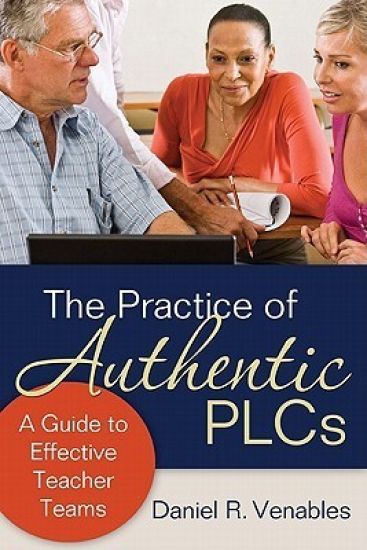
This book for school leaders details how to implement authentic PLCs in schools and districts. Its aim is not to sell the work of PLCs, but rather to assist school leaders and teachers in developing the knowledge and tools necessary to do the work of building and sustaining real PLCs. Grounded in Venables' foundational training and work with the Coalition for Essential Schools, this book unites collaboration, facilitation, data inquiry, using protocols for student and teacher work, designing common formative assessments (CFAs) and planning data-based instructional intervention into one cohesive handbook. In a step-by-step manner, this book lays out how to establish and do the work of PLCs right the first time. And for schools already dabbling with teacher collaboration and who have instituted a version of PLCs-lite, this work can help existing groups go deeper in the doing the work of authentic, effective PLCs.
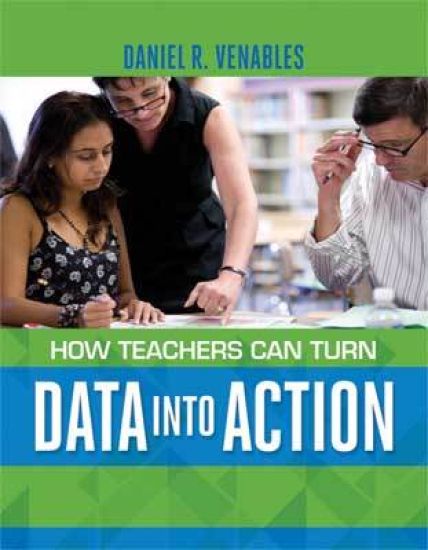
From state and Common Core tests to formative and summative assessments in the classroom, teachers are awash in data. Reviewing the data can be time-consuming, and the work of translating data into real change can seem overwhelming.Tapping more than 30 years' experience as an award-winning teacher and a trainer of PLC coaches, Daniel R. Venables, author of The Practice of Authentic PLCs: A Guide to Effective Teacher Teams, soothes the trepidation of even the biggest ""dataphobes"" in this essential resource. Field-tested and fine-tuned with professional learning communities around the United States, the Data Action Model is a teacher-friendly, systematic process for reviewing and responding to data in cycles of two to nine weeks. This powerful tool enables you and your teacher team to:Identify critical gaps in learning and corresponding instructional gaps.Collaborate on solutions and develop a goal-driven action plan.Evaluate the plan's effectiveness after implementation and determine the next course of action.With easy-to-use templates and protocols to focus and deepen data conversations, this indispensable guide delineates exactly what should be accomplished in each team meeting to translate data into practice. In the modern sea of data, this book is your life preserver!
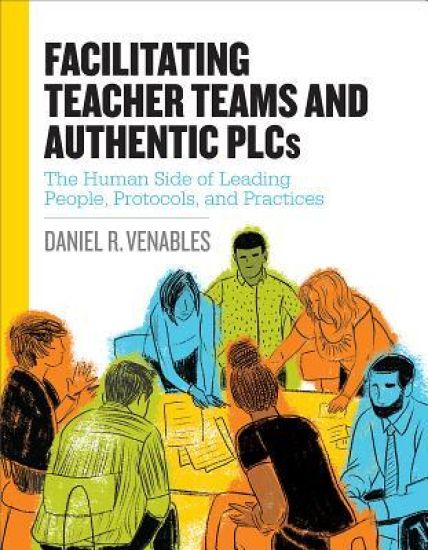
As professional learning communities become more widespread, educators have learned that they can’t simply form grade-level or subject-area teams and call it a day. To profoundly affect teacher practice and student learning, PLCs need strong and knowledgeable leadership.In Facilitating Teacher Teams and Authentic PLCs, Daniel R. Venables draws on his extensive experience helping schools and districts implement effective PLCs to explore this crucial but often-overlooked need. Taking a two-pronged approach to PLC facilitation, Venables offers targeted guidance both for leading the people in teacher teams and for facilitating their work. This practical resource provides:Strategies for facilitating interactions among colleagues in PLCs and building trust and buy-in.Field-tested, user-friendly protocols to focus and deepen team discussions around texts, data, teacher and student work, teacher dilemmas, and collaborative planning time.Tips for anticipating and addressing interpersonal conflicts and obstacles that commonly arise during use of protocols.Current and prospective PLC facilitators at every grade level will find this book an essential guide to navigating the challenging and rewarding endeavor of leading authentic PLCs. Build your skills, and help your team rise to the next level.
In the 1400s, a sadistic murderer stalks an English city. When Duke Timothy's daughter is found murdered in her bed, he enlists the help of a wizard's apprentice to solve the mystery. What the apprentice finds is a horror that will haunt the ages. In the 1690s, two apparitions visit a New England woman and tell her that she must kill a murderous judge before he can kill again. In the 1960s, a high school senior has found a bodyguard to protect him from the bully who has terrorized him for years-but at what price? These stories and more are all connected by a lovely red jewel.
An important examination of the foundational American ideal of economic equality—and how we lost it.Winner of the Missouri Conference on History Book Award for 2021The United States has some of the highest levels of both wealth and income inequality in the world. Although modern-day Americans are increasingly concerned about this growing inequality, many nonetheless believe that the country was founded on a person's right to acquire and control property. But in The Lost Tradition of Economic Equality in America, 1600–1870, Daniel R. Mandell argues that, in fact, the United States was originally deeply influenced by the belief that maintaining a "rough" or relative equality of wealth is essential to the cultivation of a successful republican government.Mandell explores the origins and evolution of this ideal. He shows how, during the Revolutionary War, concerns about economic equality helped drive wage and price controls, while after its end Americans sought ways to maintain their beloved "rough" equality against the danger of individuals amassing excessive wealth. He also examines how, after 1800, this tradition was increasingly marginalized by the growth of the liberal ideal of individual property ownership without limits. This politically evenhanded book takes a sweeping, detailed view of economic, social, and cultural developments up to the time of Reconstruction, when Congress refused to redistribute plantation lands to the former slaves who had worked it, insisting instead that they required only civil and political rights. Informing current discussions about the growing gap between rich and poor in the United States, The Lost Tradition of Economic Equality in America is surprising and enlightening.
Have the social safety nets, environmental protections, and policies to redress wealth and income inequality enacted after World War II contributed to declining rates of dementia today—and how do we improve brain health in the future?Winner of the American Book Fest Health: Aging/50+ by the American Book Fest, Living Now Book Award: Mature Living/Aging by the Living Now Book AwardsFor decades, researchers have chased a pharmaceutical cure for memory loss. But despite the fact that no disease-modifying biotech treatments have emerged, new research suggests that dementia rates have actually declined in the United States and Western Europe over the last decade. Why is this happening? And what does it mean for brain health in the future?In American Dementia, Daniel R. George, PhD, MSc, and Peter J. Whitehouse, MD, PhD, argue that the current decline of dementia may be strongly linked to mid–twentieth century policies that reduced inequality, provided widespread access to education and healthcare, and brought about cleaner air, soil, and water. They also• explain why Alzheimer's disease, an obscure clinical label until the 1970s, is the hallmark illness of our current hyper-capitalist era;• reveal how the soaring inequalities of the twenty-first century—which are sowing poverty, barriers to healthcare and education, loneliness, lack of sleep, stressful life events, environmental exposures, and climate change—are reversing the gains of the twentieth century and damaging our brains;• tackle the ageist tendencies in our culture, which disadvantage both vulnerable youth and elders;• make an evidence-based argument that policies like single-payer healthcare, a living wage, and universal access to free higher education and technical training programs will build collective resilience to dementia;• promote strategies that show how local communities can rise above the disconnection and loneliness that define our present moment and come together to care for our struggling neighbors.Ultimately, American Dementia asserts that actively remembering lessons from the twentieth century which help us become a healthier, wiser, and more compassionate society represents our most powerful intervention for preventing Alzheimer's and protecting human dignity. Exposing the inconvenient truths that confound market-based approaches to memory enhancement as well as broader social organization, the book imagines how we can act as citizens to protect our brains, build the cognitive resilience of younger generations, and rise to the moral challenge of caring for the cognitively frail.
How colleges can foster growth mindsets among students—and why this approach matters.We live in an era of escalating, tech-fueled change. Our jobs and the skills we need to work and thrive are constantly evolving, and those who can't keep up risk falling behind. That's where college comes in. In Mindset Matters, Daniel R. Porterfield advances a powerful new argument about the value of residential undergraduate education and its role in developing growth mindsets among students.The growth mindset, according to Porterfield, is the belief that we can enhance our core qualities or talents through our efforts, strategies, and education, and with assistance from others. People with growth mindsets have faith in self-improvement. They tend to be goal oriented and optimistic, confident that they can master new challenges because they've done so in the past. Feedback is their friend, errors their opportunities to begin again. For students like this, college is a multiyear process of self-creation and self-emergence, a becoming that unfolds because they are applying themselves in a place rich with stimulating people, happenings, resources, and ideas.America's colleges and universities help students build the skills and self-confidence they need for lifelong discovery, creativity, mentorship, teamwork, and striving. These five mindsets, the book argues, are critical for thriving in disruptive times, and students who develop them will reap the rewards long after they graduate. To show how college activates these mindsets and why it matters, Porterfield shares the personal stories of thirty recent graduates—many the first in their families to attend college. Their growth was both self-powered and supported by involved faculty, engaged peers, and opportunity-rich campuses. Porterfield also outlines how colleges and universities can do more to foster cultures of mentoring and personalized learning that help students become leaders of their own learning.
The second edition of What Schools Teach Us About Religious Life continues to explore the ways in which private education in the United States mirrors the growing complexity and fluidity of religious life in the United States. Through the study of ten different private schools—representing a wide variety of religious traditions as well as some secular institutions—a picture of contemporary culture, and the place of religious belief within the culture, emerges. Each chapter of this second edition of What Schools Teach Us About Religious Life contains a different picture of how individual schools then address that culture.