Kirjojen hintavertailu. Mukana 11 342 296 kirjaa ja 12 kauppaa.

Kirjahaku

Etsi kirjoja tekijän nimen, kirjan nimen tai ISBN:n perusteella.

1000 tulosta hakusanalla Darrell Max Craig

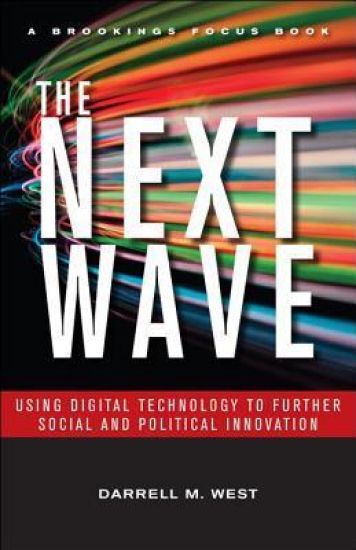
The Next Wave

The Next Wave

Darrell M. West

Brookings Institution
2011
nidottu
"The digital revolution is in full force but many public and private sector leaders are stymied: How can they maximize the full potential of digital technology? This hesitancy puts a brake on the transformational power of digital technology and means private companies and governmental bodies fall well behind other digital pioneers.Darrell West focuses on the next wave of technologies and how they can further enhance U.S. social and political innovation. West champions exploiting technological advances to help organizations become faster, smarter, and more efficient. Consumers can deploy new digital technology to improve health care, gain access to education, learn from the news media, and check public sector performance. New storage platforms such as high-speed broadband, mobile communications, and cloud computing enable and improve both social and economic development. However, to gain these benefits, policymakers must recognize the legitimacy of public fears about technology and the privacy and security dangers posed by the Internet. Their goal must be to further innovation and investment while also protecting basic social and individual values.West argues that digital technology innovation is consistent in many ways with personal and social values; people can deploy digital technology to improve participation and collaboration, and political leaders can work with the private sector to stimulate a flowering of innovation in a variety of policy areas."
Digital Schools

Digital Schools

Darrell M. West

Brookings Institution
2013
nidottu
"Nearly a century ago, famed educator John Dewey said that ""if we teach today's students as we taught yesterday's, we rob them of tomorrow."" That wisdom resonates more strongly than ever today, and that maxim underlies this insightful look at the present and future of education in the digital age.As Darrell West makes clear, today's educational institutions must reinvent themselves to engage students successfully and provide them with the skills needed to compete in an increasingly global, technological, and online world. Otherwise the American education system will continue to fall woefully short in its mission to prepare the population to survive and thrive in a rapidly changing world.West examines new models of education made possible by enhanced information technology, new approaches that will make public education in the post-industrial age more relevant, efficient, and ultimately more productive. Innovative pilot programs are popping up all over the nation, experimenting with different forms of organization and delivery systems. Digital Schools surveys this promising new landscape, examining in particular personalized learning; realtime student assessment; ways to enhance teacher evaluation; the untapped potential of distance learning; and the ways in which technology can improve the effectiveness of special education and foreign language instruction. West illustrates the potential contributions of blogs, wikis, social media, and video games and augmented reality in K–12 and higher education.Technology by itself will not remake education. But if today's schools combine increased digitization with needed improvements in organization, operations, and culture, we can overcome current barriers, produce better results, and improve the manner in which schools function. And we can get back to teaching for tomorrow, rather than for yesterday."
Billionaires

Billionaires

Darrell M. West

Brookings Institution
2014
sidottu
The top one percent own about one-third of the assets in America and 40 percent of assets around the world. This concentration of financial resources in many countries gives the ultra-rich extraordinary influence over elections, public policy, and governance.In his new book, Darrell M. West analyzes the growing political activism of billionaires and how they have created more activist forms of politics and philanthropy based on their net worth. With this “wealthification” of politics and society, it is important to understand how this concentration of wealth affects system performance as well as social and economic opportunity.Through personal interactions and rich anecdotes, West takes us inside the world of the super-wealthy through a balanced and insightful analysis of U.S. billionaires such as Sheldon Adelson, David and Charles Koch, George Soros, Michael Bloomberg, Bill Gates, Peter Thiel, Donald Trump and Tom Steyer. And looking abroad, West analyzes the billionaires who have run for office in nations such as Austria, Australia, France, Georgia, India, Italy, Russia, Thailand, and the Ukraine. From oligarchs in Russia and Eastern Europe to princelings in China, tycoons raise important questions about political influence, transparency, accountability, and government performance. This book argues that countries need policies that promote better transparency, governance, and opportunity.
Billionaires

Billionaires

Darrell M. West

Brookings Institution
2014
nidottu
"Meet the Billionaires: the 1,645 men and women who control a massive share of global assets worth $6.5 trillion. Darrell West reveals what the other 99.99998% of us need to know.With rich anecdotes and personal narratives, West goes inside the world of the ultra wealthy. Meet U.S. billionaires such as Sheldon Adelson, Michael Bloomberg, David and Charles Koch, George Soros, Tom Steyer, and Donald Trump—as well as international billionaires from around the globe.The growing political engagement of this small supra-wealthy group raises important questions about influence, transparency, and government performance, and West lays bare the wealthification of politics, including:• How billionaires can block appointments and legislation they don't like• Why the supra-wealthy moved into policy advocacy and referenda at the state level• Why billionaires run for office in more than a dozen countries around the world"
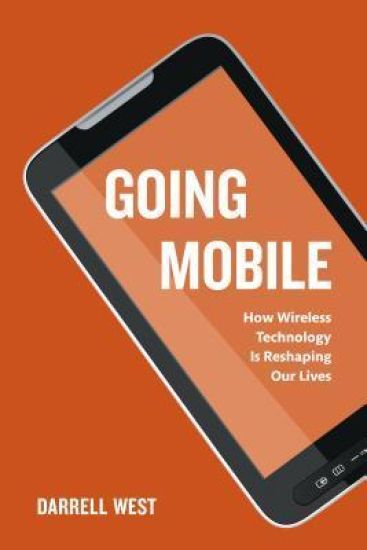
Going Mobile

Going Mobile

Darrell M. West

Brookings Institution
2014
nidottu
"The world is going mobile at an astounding pace. Estimates show 80 percent of global Internet access will take place through mobile devices by 2016. Smartphones, tablets, and handheld devices have reshaped communications, the global economy, and the very way in which we live. The revolution is an electronic nirvana: for the first time in human history we have sophisticated digital applications to help us learn, access financial and health care records, connect with others, and build businesses. But the one trillion dollar mobile industry is still relatively young. Leaders in both the public and private sectors need to figure out how to apply mobile technologies or mobile devices to optimize education, health care, public safety, disaster preparedness, and economic development. And the ever-expanding mobile frontier presents new challenges to law, policy, and regulations and introduces new tensions; one person's idea of cautious deliberation can be another's idea of a barrier to innovation.In Going Mobile, Darrell M. West breaks down the mobile revolution and shows how to maximize its overall benefits in both developed and emerging markets.Contents1. The Emergence of Mobile Technology2. Driving Global Entrepreneurship3. Alleviating Poverty4. Invention and the Mobile Economy5. Mobile Learning6. Improving Health Care7. Medical Devices and Sensors8. Shaping Campaigns and Public Outreach9. Disaster Relief and Public Safety10. Looking Ahead"
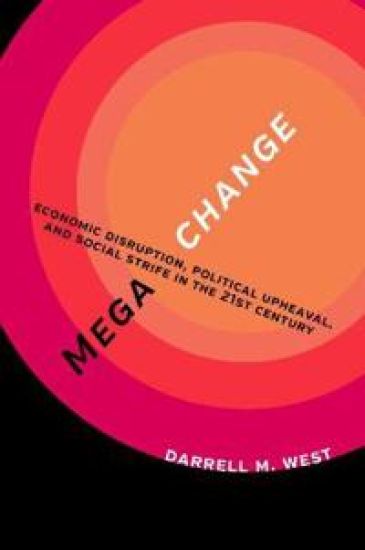
MegaChange

MegaChange

Darrell M. West

Brookings Institution
2016
nidottu
Big, unexpected changes are here to staySlow, incremental change has become a relic of the past. Today's shifts come fast and big. They are what Darrell West calls megachanges, in which dramatic disruptions in trends and policies occur on a regular basis.Domestically, we can see megachange at work in the new attitudes and policies toward same-sex marriage, health care, smoking, and even the widespread legalization of marijuana use. Globally, we have seen the extraordinary rise and then collapse of the Arab Spring, the emergence of religious zealotry, the growing influence of non-state actors, the spread of ISIS-fomented terrorism, the rise of new economic and political powers in Asia, and the fracturing of once-stable international alliances.Long-held assumptions have been shattered, and the proliferation of unexpected events is confounding experts in the United States and around the globe. Many of the social and political institutions that used to anchor domestic and international politics have grown weak or are in need to dramatic reform. What to do? West says that we should alter our expectations about the speed and magnitude of political and social change. We also need to recognize that many of our current governing processes are geared to slow deliberation and promote incremental change, not large-scale transformation. With megachange becoming the new normal, our domestic and global institutions must develop the ability to tackle the massive economic, political, and social shifts that we face.
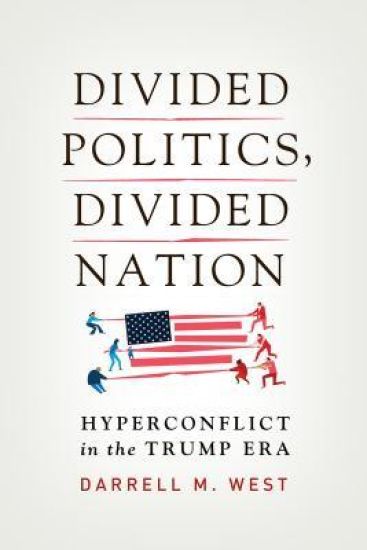
Divided Politics, Divided Nation

Divided Politics, Divided Nation

Darrell M. West

Brookings Institution
2019
sidottu
Why are Americans so angry with each other?The United States is caught in a partisan hyperconflict that divides politicians, communities—and even families. Politicians from the president to state and local office-holders play to strongly-held beliefs and sometimes even pour fuel on the resulting inferno. This polarization has become so intense that many people no longer trust anyone from a differing perspective.Drawing on his personal story of growing up as a fundamentalist Christian on a dairy farm in rural Ohio, then as an academic in the heart of the liberal East Coast establishment, Darrell West analyzes the economic, cultural, and political aspects of polarization. He takes advantage of his experiences inside both conservative and liberal camps to explain the views of each side and offer insights into why each is angry with the other.West argues that societal tensions have metastasized into a dangerous tribalism that seriously threatens U.S. democracy. Unless people can bridge these divisions and forge a new path forward, it will be impossible to work together, maintain a functioning democracy, and solve the country's pressing policy problems.
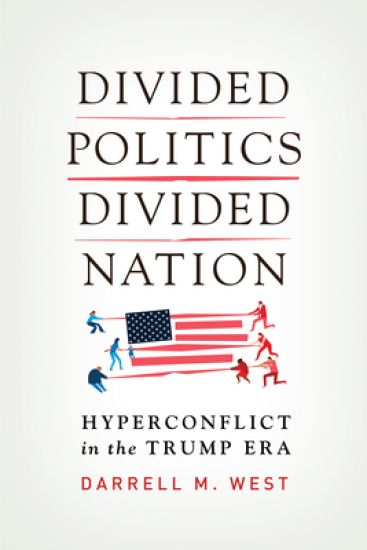
Divided Politics, Divided Nation

Divided Politics, Divided Nation

Darrell M. West

Brookings Institution
2020
nidottu
Why are Americans so angry with each other?The United States is caught in a partisan hyperconflict that divides politicians, communities—and even families. Politicians from the president to state and local office-holders play to strongly-held beliefs and sometimes even pour fuel on the resulting inferno. This polarization has become so intense that many people no longer trust anyone from a differing perspective.Drawing on his personal story of growing up as a fundamentalist Christian on a dairy farm in rural Ohio, then as an academic in the heart of the liberal East Coast establishment, Darrell West analyzes the economic, cultural, and political aspects of polarization. He takes advantage of his experiences inside both conservative and liberal camps to explain the views of each side and offer insights into why each is angry with the other.West argues that societal tensions have metastasized into a dangerous tribalism that seriously threatens U.S. democracy. Unless people can bridge these divisions and forge a new path forward, it will be impossible to work together, maintain a functioning democracy, and solve the country's pressing policy problems.
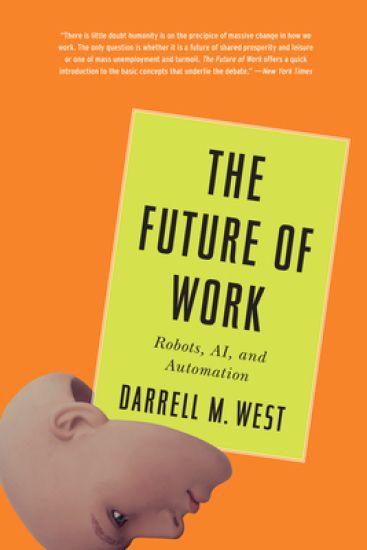
The Future of Work

The Future of Work

Darrell M. West

Brookings Institution
2019
pokkari
Looking for ways to handle the transition to a digital economy.Robots, artificial intelligence, and driverless cars are no longer things of the distant future. They are with us today and will become increasingly common in coming years, along with virtual reality and digital personal assistants.As these tools advance deeper into everyday use, they raise the question—how will they transform society, the economy, and politics? If companies need fewer workers due to automation and robotics, what happens to those who once held those jobs and don't have the skills for new jobs? And since many social benefits are delivered through jobs, how are people outside the workforce for a lengthy period of time going to earn a living and get health care and social benefits?Looking past today's headlines, political scientist and cultural observer Darrell M. West argues that society needs to rethink the concept of jobs, reconfigure the social contract, move toward a system of lifetime learning, and develop a new kind of politics that can deal with economic dislocations. With the U.S. governance system in shambles because of political polarization and hyper-partisanship, dealing creatively with the transition to a fully digital economy will vex political leaders and complicate the adoption of remedies that could ease the transition pain. It is imperative that we make major adjustments in how we think about work and the social contract in order to prevent society from spiraling out of control.This book presents a number of proposals to help people deal with the transition from an industrial to a digital economy. We must broaden the concept of employment to include volunteering and parenting and pay greater attention to the opportunities for leisure time. New forms of identity will be possible when the "job" no longer defines people's sense of personal meaning, and they engage in a broader range of activities. Workers will need help throughout their lifetimes to acquire new skills and develop new job capabilities. Political reforms will be necessary to reduce polarization and restore civility so there can be open and healthy debate about where responsibility lies for economic well-being.This book is an important contribution to a discussion about tomorrow—one that needs to take place today.
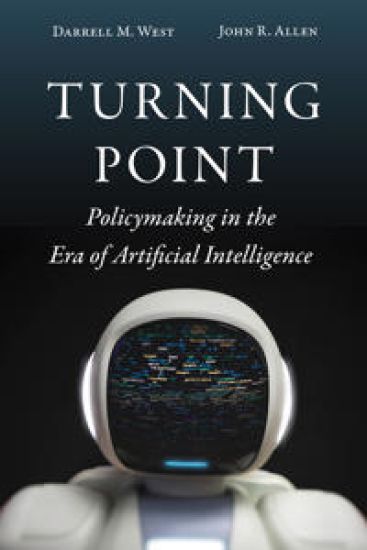
Turning Point

Turning Point

Darrell M. West; John R. Allen

Brookings Institution
2020
sidottu
Artificial Intelligence is here, today. How can society make the best use of it?Until recently, “artificial intelligence” sounded like something out of science fiction. But the technology of artificial intelligence, AI, is becoming increasingly common, from self-driving cars to e-commerce algorithms that seem to know what you want to buy before you do. Throughout the economy and many aspects of daily life, artificial intelligence has become the transformative technology of our time.Despite its current and potential benefits, AI is little understood by the larger public and widely feared. The rapid growth of artificial intelligence has given rise to concerns that hidden technology will create a dystopian world of increased income inequality, a total lack of privacy, and perhaps a broad threat to humanity itself.In their compelling and readable book, two experts at Brookings discuss both the opportunities and risks posed by artificial intelligence—and how near-term policy decisions could determine whether the technology leads to utopia or dystopia.Drawing on in-depth studies of major uses of AI, the authors detail how the technology actually works. They outline a policy and governance blueprint for gaining the benefits of artificial intelligence while minimizing its potential downsides.The book offers major recommendations for actions that governments, businesses, and individuals can take to promote trustworthy and responsible artificial intelligence. Their recommendations include: creation of ethical principles, strengthening government oversight, defining corporate culpability, establishment of advisory boards at federal agencies, using third-party audits to reduce biases inherent in algorithms, tightening personal privacy requirements, using insurance to mitigate exposure to AI risks, broadening decision-making about AI uses and procedures, penalizing malicious uses of new technologies, and taking pro-active steps to address how artificial intelligence affects the workforce.Turning Point is essential reading for anyone concerned about how artificial intelligence works and what can be done to ensure its benefits outweigh its harm.
Turning Point

Turning Point

Darrell M. West; John R. Allen

BLOOMSBURY PUBLISHING PLC
2021
pokkari
Artificial Intelligence is here, today. How can society make the best use of it?Until recently, ?artificial intelligence? sounded like something out of science fiction. But the technology of artificial intelligence, AI, is becoming increasingly common, from self-driving cars to e-commerce algorithms that seem to know what you want to buy before you do. Throughout the economy and many aspects of daily life, artificial intelligence has become the transformative technology of our time.Despite its current and potential benefits, AI is little understood by the larger public and widely feared. The rapid growth of artificial intelligence has given rise to concerns that hidden technology will create a dystopian world of increased income inequality, a total lack of privacy, and perhaps a broad threat to humanity itself.In their compelling and readable book, two experts at Brookings discuss both the opportunities and risks posed by artificial intelligence?and how near-term policy decisions could determine whether the technology leads to utopia or dystopia.Drawing on in-depth studies of major uses of AI, the authors detail how the technology actually works. They outline a policy and governance blueprint for gaining the benefits of artificial intelligence while minimizing its potential downsides.The book offers major recommendations for actions that governments, businesses, and individuals can take to promote trustworthy and responsible artificial intelligence. Their recommendations include: creation of ethical principles, strengthening government oversight, defining corporate culpability, establishment of advisory boards at federal agencies, using third-party audits to reduce biases inherent in algorithms, tightening personal privacy requirements, using insurance to mitigate exposure to AI risks, broadening decision-making about AI uses and procedures, penalizing malicious uses of new technologies, and taking pro-active steps to address how artificial intelligence affects the workforce.Turning Point is essential reading for anyone concerned about how artificial intelligence works and what can be done to ensure its benefits outweigh its harm.
Power Politics

Power Politics

Darrell M. West

BLOOMSBURY PUBLISHING PLC
2022
sidottu
Curing the causes and consequences of TrumpismIt's no secret that the United States faces extraordinary political and societal challenges, even as it recovers from the COVID-19 pandemic. Political polarization and extremism are the most apparent symptoms, resulting from long-term economic and social inequities as well as a toxic information ecosystem.It is easy to blame Donald Trump for the sad state of American democracy. After all, he abused his executive authority, spread false claims, and even incited violence. But Trumpism is almost certain to outlast Trump himself. The grievances he exploited and the aggrieved to whom he appealed existed well before he became president and likely will endure after he is gone from the political scene.The current political atmosphere is poisonous for those who operate on the basis of facts, reason, and logic. It is time to step back from this dangerous precipice and reflect on the causes of the serious threats to American democracy, procedural justice, and a reason-based society. With polarization now entrenched and authoritarianism gaining strength, no one should assume that facts somehow will triumph over falsehoods and reason will prevail over emotion.Drawing on his personal experiences in the D.C. policy world, Darrell West offers advice for protecting people, organizations, and the country as a whole from our contemporary challenges. This book makes the risks to democracy understandable by explaining specific threats and offering concrete ideas for ameliorating them. It will appeal to anyone interested in American politics, democracy, elections, mass media, technology, and governance.
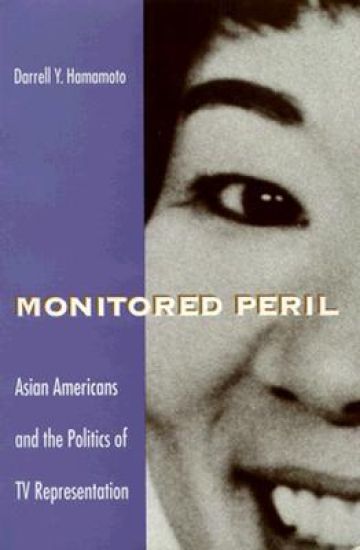
Monitored Peril

Monitored Peril

Darrell Y. Hamamoto

University of Minnesota Press
1994
nidottu
The first major study of Asian American representation on U.S. television.Early in the movement of Asian labor to the United States, immigrants from the Far East were viewed by the dominant Euro-American society as a peril to a white, Christian nation. How far have we come since then? This first comprehensive study of Asian American representation on network television supplies some unsettling answers. A meticulous work of history, cultural criticism, and political analysis, Monitored Peril illuminates the unstable relationship between the discursive practices of commercial television programs, liberal democratic values, and white supremacist ideology. The book clearly demonstrates the pervasiveness of racialized discourse throughout U.S. society, especially as it is reproduced by network television.In treating his topic, Darrell Hamamoto addresses a wide variety of issues facing diverse Asian American communities: interracial conflict, conservative politics, U.S.-Japan trade friction, and postcolonial Vietnam. Through an examination of selected programs from the 1950s to the present, he attempts to correct the consistently distorted optic of network television. Finally, he calls for an engaged independent Asian American media practice, and for the expansion of public sector television. Selected as a CHOICE Outstanding Academic Book for 1995ISBN 0-8166-2368-6 cloth$49.95xISBN 0-8166-2369-4 paper$18.95320 pages 6 x 9AugustContentsPreface1.White Christian Nation2.Asians in the American West3.War against Japanese America4.Asian Americans and U.S. Empire5.Southeast Asian America6.Contemporary Asian America7.CounterprogrammingEpilogueRelated BacklistThe Bronze Screen: Chicana and Chicano Film CultureRosa Linda FregosoExplores Chicana and Chicano popular culture in Hollywood commercial and independent cinema. (1993)
CAUTION Men in Trees

CAUTION Men in Trees

Darrell Spencer

University of Georgia Press
2010
pokkari
The nine stories of CAUTION Men in Trees capture the pressure, need, and frequent helplessness of people confronted with intractable reality. As suggested by the collection's epigraph from Superman—"Did you say kryptonite?"—the characters in these stories have reached a point where they realize that parts of their lives are coming undone, and that their own thoughts and actions—or, frequently, the failure to act soon enough—are the cause. Though settings and situations vary, the same sense of overwhelming urgency recurs throughout the collection. The stories reflect a world distressed by conflict and settings fraught with the occurrences of personal violence.Against the background of the O. J. Simpson trial, a man refuses to assist in a friend's suicide and realizes that he has been avoiding many unpleasant truths about himself and his life. A son faced with his father's debilitating stroke sees that he must ultimately confront the mortality and feelings of grief that he has been concealing. In the title story, the film Bugsy and talk about the disappointing reality of pop-culture heroes set the scene for a husband's frightening confrontation with his own limitations. The shock of stark revelation combines with tightly wound chains of suggestive events to create a collection of gripping, edgy stories about characters who, however battered, survive.
Bring Your Legs with You

Bring Your Legs with You

Darrell Spencer

University of Pittsburgh Press
2004
nidottu
A boxer who brings his legs with him comes to the ring with the strength and stamina to make it through every round of a tough fight. In this new collection, winner of the prestigious Drue Heinz Literature Prize, Darrell Spencer delivers fiction with just that kind of power.Bring Your Legs with You contains nine interconnected stories set in Las Vegas. Featuring various perspectives and narrators, they are filled with unforgettable characters, including Carl T. Plugg, a sharp-dressed, smooth-talking, non-hustling pool shark; Spinoza, the philosophical day laborer with "Department of Big Thoughts" lettered on the door of his pickup; Jacob, an arrogant lawyer who learns too late the dangers of swimming with the sharks; Gus, a man who has never seen his son fight despite his insatiable fascination with the sweet science; and Jane, a woman wary of her ex-husband, but still in love enough to share her bed with him.Above them all looms Tommy Rooke, retired prizefighter and self-employed roofer. Undefeated in the ring, Rooke walked away from boxing at the top of his game, to the confusion and consternation of his friends and family. As his father, former manager, and various other hangers-on encourage him to stage a comeback, Tommy moves through the gated communities and sun-blasted strip malls of Las Vegas, wrestling with personal choice, the caprices of fate, and the price the gods demand for our sins.More than a book about boxing, gambling, luck, and broken dreams, Bring Your Legs with You delves deeply into the life of its flawed but intelligent hero, a man deeply devoted to his friends but lost in a violent world. A writer unafraid to show the connections between people, Spencer delivers a hard-hitting collection filled with rich dialogue and spare prose.
The Gospel According to Isaiah 53

The Gospel According to Isaiah 53

Darrell L Bock

Kregel Publications,U.S.
2012
pokkari
The Gospel According to Isaiah 53 presents the redemptive work of the Messiah to the Jewish community, exploring issues of atonement and redemption in light of Isaiah chapter 53. It is clear that Jesus fulfills the specifications of the suffering servant of Isaiah 53. This book has many potential uses in its presentation of the gospel for Jewish people. Pastors who study it will find unparalleled help in preparing Bible studies and sermons, so that their listeners will become better equipped to tell Jewish people about Jesus. It will be beneficial as supplemental reading for classes on Isaiah, the Prophets, and Jewish evangelism. And believers will be trained to share Isaiah 53 with Jewish friends and family. Contributors include: - David L. Allen - Richard E. Averbeck - Darrell L. Bock - Michael L. Brown - Robert B. Chisholm Jr. - Craig A. Evans - John S. Feinberg - Mitch Glaser - Walter C. Kaiser Jr. - Donald R. Sunukjian
To the Jew First

To the Jew First

Darrell L Bock

Kregel Publications,U.S.
2008
pokkari
Based upon the biblical mandate to take the gospel "to the Jew first," there has been a renewed effort among Christians to bring the gospel of Jesus to the Jewish community. This comprehensive resource looks at the historical, theological, and biblical context for doing so, and provides encouragement for Christians and Messianic Jews engaged in evangelism. To the Jew First includes contributions by Richard A. Averbeck, Craig A. Blaising, Walter C. Kaiser, Richard L. Pratt Jr., and ten other evangelical scholars.
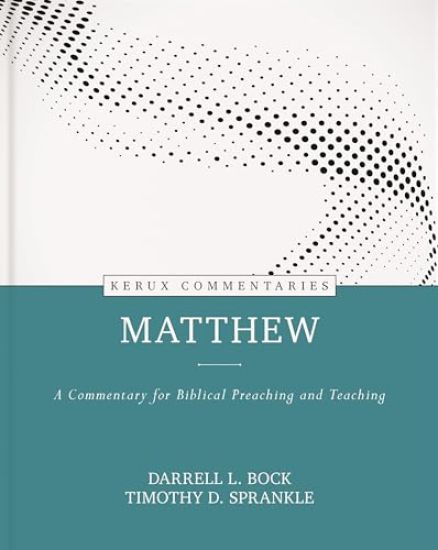
Matthew - Kerux: A Commentary for Biblical Preaching and Teaching

Matthew - Kerux: A Commentary for Biblical Preaching and Teaching

Darrell L. Bock; Timothy Sprankle

Kregel Publications
2025
sidottu
Kerux Commentaries enable pastors and teachers to understand and effectively present the main message in a biblical text. Each volume uniquely combines the insights of an experienced Bible exegete (trained in interpretation) and a homiletician (trained in preaching). These two authors work together to explain the essential message for the original listeners or readers, unpack its timeless truth, and then provide a contemporary restatement and communication insights for the key biblical concept. Every book is a resource designed and written with the real needs of the pastor and teacher always in sight, providing many ways to creatively express the principal thought in a biblical passage. Based on the Big Idea preaching model, Kerux enhances the reader's ability to deliver a message that is biblical, cohesive, and dynamic. The book of Matthew conveys the most important story of all time: God becoming man for the redemption of the world. While the story itself can appear clear, much is missed if we don't understand the symbolism, history, context, and language in which the book was written and initially dispersed. Through the pairing of exegetical analysis and pastoral application, authors Darrell L. Bock and Timothy D. Sprankle provide an accessible and comprehensive commentary for the teacher and preacher alike.
The Production and Distribution of Mimbres Pottery

The Production and Distribution of Mimbres Pottery

Darrell G. Creel

UNIVERSITY OF NEW MEXICO PRESS
2022
sidottu
The famous and highly sought-after Mimbres painted pottery in southwestern New Mexico continues to fascinate people today as much as it did when it first became known more than a century ago. Despite several publications promoting Mimbres archaeology and innumerable analyses of style, dating, iconography, meaning, identity, use wear, and trade and travel implications, however, there had been little interest in the actual production of Mimbres pottery. This changed with the professional investigations of the 1970s when petrographic analysis began, and then again, in the late 1980s and 1990s, when Instrumental Neutron Activation Analysis (INAA) was first employed in the study of Mimbres pottery production and distribution.The Production and Distribution of Mimbres Pottery assesses a much-expanded INAA data set and presents a new and more-informed interpretation of ceramic production and distribution in the Mimbres region. The results should guide future research in the region and will also serve as an example of how INAA data can help students and scholars understand many other interrelated aspects of prehistoric Mimbres society in addition to Mimbres pottery production.