Kirjojen hintavertailu. Mukana 11 627 220 kirjaa ja 12 kauppaa.

Kirjahaku

Etsi kirjoja tekijän nimen, kirjan nimen tai ISBN:n perusteella.

1000 tulosta hakusanalla David B. Chesebrough

Evolutionary Computation

Evolutionary Computation

David B. Fogel

SPIE Press
2000
nidottu
Evolutionary cmputation is one of the fastest growing areas of computer science, partly because of its broad applicability to engineering problems. The methods can be applied to problems as diverse as supply-chain optimization, routing and planning, task assignment, pharmaceutical design, interactive gaming, and many others within the signal processing domain. The text is an outgrowth of a series of SPIE short courses taught by the author. The examples span a range of applications and should be useful to a variety of readers of mixed backgrounds and expertise.
Alias Bill Arp

Alias Bill Arp

David B. Parker

University of Georgia Press
2009
pokkari
From 1861 to 1903 humorist Charles Henry Smith, writing as Bill Arp, a sly Georgia back-woodsman, was the South’s most widely read newspaper columnist. Knowing the immense popularity of Smith’s writings historian have suggested that southerners saw him as a voice for their concerns. While the idea that Bill Arp spoke for his region is sound, the intent of the writings has been misconstrued over time, argues David Parker. In Alias Bill Arp, Parker shows that Smith was not a contented observer of the post-Reconstruction New South as is widely inferred from his most widely read work—his syndicated weekly column in the Atlanta Constitution that he began writing in 1878. Considering the full range of Smith’s work, Parker says, shows him to be one of the South’s harshest critics. After a brief survey of Smith’s life, Parker surveys the Bull Arp writings, highlighting their major topics, and explaining what they meant to readers of that era.
Negative Spring

Negative Spring

David B Dickens

Peter Lang Publishing Inc
1988
sidottu
Symbolic statement in poetry assumes many forms, from readily understood -open- symbols to private or -closed- ones with highly personal meanings. -Negative spring, - the poet's rejection of what has traditionally been a joyous time of year, makes such a personal statement. This book examines a number of examples of negative spring; it seeks to locate the sources of the attitude, to examine its implications, and to establish its reliability as an indicator of crisis or despair. Closer examination of it in the work of Clemens Brentano and T.S. Eliot discloses many suggestive and even surprising parallels."
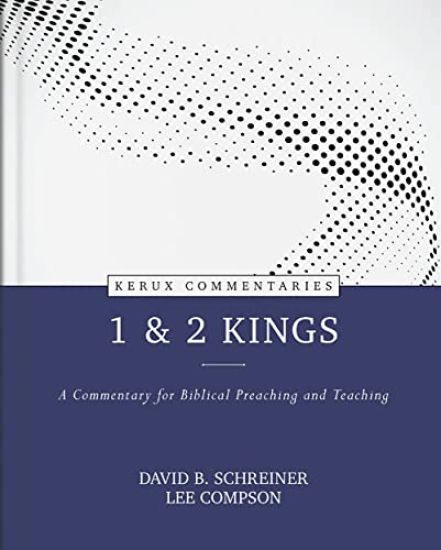
1 & 2 Kings – A Commentary for Biblical Preaching and Teaching

1 & 2 Kings – A Commentary for Biblical Preaching and Teaching

David B. Schreiner; Lee Compson

KREGEL PUBLICATIONS,U.S.
2022
sidottu
Kerux Commentaries enable pastors and teachers to understand and effectively present the main message in a biblical text Unlike any other commentary series, each volume is written by an expert in biblical exegesis and an experienced homiletician in partnership. Inclusion of a preaching author means that the commentary is focused on biblical insights that are useful in biblical teaching, with communication strategies and illustrations for each passage that are powerful and engaging. Each volume is divided into distinct preaching segments, in which the authors guide the reader through a well-tested sequence: exegetical analysis, theological focus, and teaching strategy. Based on the text-driven Big Idea model, Kerux enhances the reader's ability to deliver a message that is biblical, cohesive, and dynamic.
Hypnosis for Behavioral Health

Hypnosis for Behavioral Health

David B. Reid

Springer Publishing Co Inc
2012
nidottu
Winner of the Arthur Shapiro Award for the 2013 Best Book on Hypnosis The charm and value of Reid's book is that it is very personal... Reid's persona emerges as a warm, generous, and enthusiastic colleague, who is eager to share how he figured this clinical hypnosis stuff out and integrated it into his practice... [The book] serves quite well to introduce the uninitiated, and those who wish to guide them, about using the power of trance and therapeutic communication in practical ways to become more effective in helping those for whom we care. I wish I had read it in medical school." -- Laurence I. Sugarman, M.D., F.A.A.P., A.B.M.H., Annals of Behavioral Sciences and Medical Education This is an excellent introductory book for any professional who deals with behavioral health issues and would like to add hypnosis to her arsenal of clinical tools."--American Journal of Clinical Hypnosis Clinical hypnosis has been proven through decades of rigorous research and practice to be an effective intervention in a wide range of mental, behavioral, and physical health issues. This highly practical text demystifies clinical hypnosis by providing step-by-step guidance for using its techniques to enhance the repertoire of practitioners in other psychotherapeutic modalities. It offers mental health providers with no formal training in hypnosis the requisite guidance and information they need to learn and confidently apply strategies to help their clients initiate constructive, health-oriented change in their lives. Chapters progress from initial assessment through the development of treatment plans and actual hypnotic techniques with clients. The author shows how to apply hypnosis to such clinical issues as anxiety, stress, somatic disorders, pain, and unwanted habits. In addition, the author shows clinicians how they can broaden their practice beyond mental or physical health parameters of treatment by applying hypnosis in areas of personal growth and wellness (motivation, athletic performance, conflict resolution). The text also covers ethical and professional issues related to clinical hypnosis, which does not require special licensure when it is integrated into a psychotherapeutic practice. Key Features: Offers clinicians who have no or little background in clinical hypnosis clear, accessible information on how to safely and effectively use basic techniques with clients Helps psychotherapists expand their practice by providing effective interventions with behavioral health issues that are also eligible for insurance reimbursement Includes sample guided scripts for specific problems as well as experiential exercises and treatment plans Provides case histories drawn from the author's clinical work and those of the "father" of clinical hypnosis, Milton Erickson Instructs therapists on the use of hypnosis for clinical and personal growth and wellness issues
Rediscovering Jesus – An Introduction to Biblical, Religious and Cultural Perspectives on Christ

Rediscovering Jesus – An Introduction to Biblical, Religious and Cultural Perspectives on Christ

David B. Capes; Rodney Reeves; E. Randolph Richards

Inter-Varsity Press,US
2015
sidottu
Readers' Choice Awards Honorable Mention One of Nijay Gupta's Best Academic New Testament Books Who is your Jesus? Matthew's teacher? John's Word made flesh? Hebrews' great high priest? What if it turned out that your Jesus is a composite of your favorite selections from the New Testament buffet, garnished with some Hollywood and Americana? Rediscovering Jesus takes us on a gallery tour of biblical portraits of Jesus, from Matthew through Revelation. Our expert guides point out the background and highlights of each New Testament image of Jesus. Then we hit the streets to visit other houses of worship and their scriptures, examining the Jesus of the Book of Mormon and the Qur'an. Popping into a bookstore, we browse the latest on the Gnostic and the historical Jesus. Then we're off on a walking tour of Jesus in America, followed by a film festival of Jesus movies. All along the way our tour guides describe and interpret, but also raise questions: How is this Jesus different from other portraits? If this were our only portrait of Jesus, what would our faith be like? Rediscovering Jesus is an enjoyable, informative and challenging look at how we encounter Jesus in Scripture and our culture. With ample sidebars exploring contexts and the "so what?" questions, it takes us beyond other surveys by probing how our understanding of Jesus can make a difference for faith and life. From the authors of Rediscovering Paul, this is a textbook introduction to Jesus that guides us in our pilgrimage toward seeing Jesus truly.
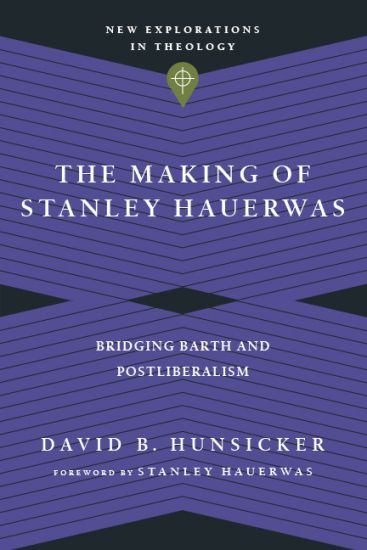
The Making of Stanley Hauerwas – Bridging Barth and Postliberalism

The Making of Stanley Hauerwas – Bridging Barth and Postliberalism

David B. Hunsicker; Stanley Hauerwas

IVP Academic
2019
nidottu
In the past half-century, few theologians have shaped the landscape of American belief and practice as much as Stanley Hauerwas. His work in social ethics, political theology, and ecclesiology has had a tremendous influence on the church and society. But have we understood Hauerwas's theology, his influences, and his place among the theologians correctly? Hauerwas is often associated—and rightly so—with the postliberal theological movement and its emphasis on a narrative interpretation of Scripture. Yet he also claims to stand within the theological tradition of Karl Barth, who strongly affirmed the priority of Jesus Christ in all matters and famously rejected Protestant liberalism. These are two rivers that seem to flow in different directions. In this New Explorations in Theology (NET) volume, theologian David Hunsicker offers a reevaluation of Hauerwas's theology, arguing that he is both a postliberal and a Barthian theologian. In so doing, Hunsicker helps us to understand better both the formation and the ongoing significance of one of America's great theologians. Featuring new monographs with cutting-edge research, New Explorations in Theology provides a platform for constructive, creative work in the areas of systematic, historical, philosophical, biblical, and practical theology.
Rediscovering Paul – An Introduction to His World, Letters, and Theology

Rediscovering Paul – An Introduction to His World, Letters, and Theology

David B. Capes; Rodney Reeves; E. Randolph Richards

IVP Academic
2017
sidottu
For some of us, the apostle Paul is intimidating, like a distant and difficult uncle. Maybe not someone you'd like to hang out with at a coffee shop on a rainy day. He'd make a scene, evangelize the barista, and arouse looks across the room. For a mid-morning latte, we'd prefer Jesus over Paul. But Paul is actually the guy who—from Ephesus to Athens—was the talk of the marketplace, the raconteur of the Parthenon. He knew everyone, founded emerging churches, loved the difficult people, and held his own against the intellectuals of his day. If you’re willing to give Paul a try, Rediscovering Paul is your reliable guide. This is a book that reacquaints us with Paul, as if for the first time. Drawing on the best of contemporary scholarship, and with language shaped by teaching and conversing with today's students, Rediscovering Paul is a textbook that has passed the test. Now in a reworked edition, it’s better than ever. There are fresh discussions of Paul’s letter writing and how those letters were received in the churches, new considerations of pseudonymity and the authenticity of Paul’s letters, and updated coverage of recent developments in interpreting Paul. from Paul’s conversion and call to his ongoing impact on church and culture, this second edition of Rediscovering Paul comes enthusiastically recommended.
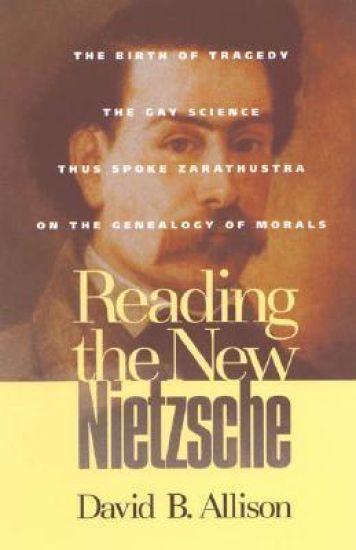
Reading the New Nietzsche

Reading the New Nietzsche

David B. Allison

Rowman Littlefield
2000
sidottu
In this long-awaited volume, David B. Allison argues for a "generous" approach to Nietzsche's writings, and then provides comprehensive analyses of Nietzsche's The Birth of Tragedy, The Gay Science, On the Genealogy of Morals, and Thus Spoke Zarathustra. Unique among other books on Nietzsche, Allison's text includes individual chapters devoted to Nietzsche's principal works. Historically-oriented and continentally-informed, Allison's readings draw on French and German thinkers, such as Heidegger, Battaille, Derrida, Birault, and Deleuze, while the author explicitly resists the use of jargon that frequently characterizes those approaches. Reading the New Nietzsche is an outstanding resource for those reading Nietzsche for the first time as well as for those who wish to know him better.
Reading the New Nietzsche

Reading the New Nietzsche

David B. Allison

Rowman Littlefield
2000
nidottu
In this long-awaited volume, David B. Allison argues for a 'generous' approach to Nietzsche's writings, and then provides comprehensive analyses of Nietzsche's The Birth of Tragedy, The Gay Science, On the Genealogy of Morals, and Thus Spoke Zarathustra. Unique among other books on Nietzsche, Allison's text includes individual chapters devoted to Nietzsche's principal works. Historically-oriented and continentally-informed, Allison's readings draw on French and German thinkers, such as Heidegger, Battaille, Derrida, Birault, and Deleuze, while the author explicitly resists the use of jargon that frequently characterizes those approaches. Reading the New Nietzsche is an outstanding resource for those reading Nietzsche for the first time as well as for those who wish to know him better.
Ecotourism in the Less Developed World

Ecotourism in the Less Developed World

David B Weaver

CABI Publishing
1998
sidottu
Ecotourism is the result of increasing interest amongst consumers in developed countries in exploring the natural world as an alternative to more conventional holidays, along with a desire to reduce the environmental and cultural impact of their activities. It is, therefore, a relatively new sector of the tourism industry. This book is unique in defining, describing and analysing ecotourism in the less developed countries and its effects, in all parts of the world. The first three chapters set the broader industry context and geographical scope of the book. This is followed by country case studies on Costa Rica, Kenya, Nepal and Thailand and a chapter on the Caribbean and South Pacific. In the final chapter, the common themes and patterns which emerge are discussed with regard to strategies for future developments. This book is essential reading for lecturers, advanced students and researchers in tourism and for those actively involved in ecotourism in less developed countries. It will also be valuable to other tourism industry staff, geographers, development economists and government and regional policy makers.
Encyclopedia of Ecotourism

Encyclopedia of Ecotourism

David B Weaver

CABI Publishing
2003
nidottu
The Encyclopedia of Ecotourism provides an expert, state-of-the-art and comprehensive knowledge base of the rapidly growing global ecotourism sector. It is divided into eight major sections, and contains 41 chapters, individually authored by international researchers and practitioners in ecotourism. Each chapter combines theory and practice in a complementary way. The scope of the encyclopedia includes definitions and other contextual material, regional perspectives, venues, impacts, planning and management considerations, and issues associated with ecotourism businesses, research and training.
European Approaches to North America, 1450–1640
European Approaches to North America, 1450-1640 by David Quinn provides a series of insights into the early cartography and exploration of the North Atlantic and North America, and what was believed and written about this by Europeans. Its focus is the two hundred years from the mid-15th century. The work demonstrates how detailed studies can throw much light on more general developments, and enable them to be seen close up. It is primarily concerned with English developments, but looks also at Champlain and Henri IV and the origins of French settlement in Canada, while the final paper - one of four not previously published - presents a broader, comparative perspective on European settlement patterns.
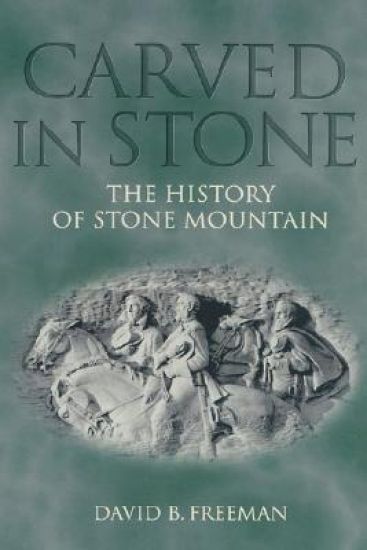
Carved in Stone

Carved in Stone

David B Freeman

Mercer University Press
1997
sidottu
In 1915 the United Daughters of the Confederacy leased the land and commissioned Gutzon Borglum, later the sculptor of Mount Rushmore, to carve the Lost Cause memorial on the mountain where the second Ku Klux Klan was resurrected by William J. Simmons. Proceeding intermittently over six decades, the project was given added impetus in the wake of the South's massive resistance to racial integration. Capitalizing on this impulse, the state of Georgia funded the completion of the project in 1958 for use as a tourist attraction. Opening as a theme park in 1970, Stone Mountain now draws some five million visitors a year, exceeded only by the Disney theme parks in Orlando, Florida. David Freeman's Carved in Stone narrates the development of Stone Mountain from natural wonder to historic site to recreational park. This elegantly written story recounts the fits and starts of the Stone Mountain project, tracing the mountain's changing meaning over time. Readers of Georgia history and enthusiasts of Confederate iconography will find Freeman's work a fascinating story.
Word Processing in Groups

Word Processing in Groups

David B.A. Epstein

Jones and Bartlett Publishers, Inc
1992
sidottu
This study in combinatorial group theory introduces the concept of automatic groups. It contains a succinct introduction to the theory of regular languages, a discussion of related topics in combinatorial group theory, and the connections between automatic groups and geometry which motivated the development of this new theory. It is of interest to mathematicians and computer scientists, and includes open problems that will dominate the research for years to come.
Saint Sergius of Radonezh, His Trinity Monastery, and the Formation of the Russian Identity
When Sergius of Radonezh founded a monastery near Moscow, his example spawned a movement of monastic foundations throughout Russia. Within three decades of his death in 1392, Sergius was recognized as a saint, and by 1450 many considered him the intercessor for the Russian land who freed its people from Mongol rule. Over the next century and a half, thousands sought St. Sergius' intercession with gifts to the monastery. Moscow's rulers made Sergius patron saint of their dynasty and of the Russian tsardom. By 1605, the Trinity-Sergius monastery was the biggest house in Russia. Miller presents Trinity's dramatic history from the fourteenth century to the beginning of the Time of Troubles. Using extensive archival materials, he traces the evolution of Trinity's relationship to Sergius' venerators and its traditions, governance, social composition, and the lifestyle of its members. In lucid prose, Miller argues that St. Sergius' cult and monastery became integrating forces on a national scale and vital elements in the forging of a Russian identity, economy, and cohesive society. The power of religion to shape national identity is a lively topic today, and Miller's study will interest both medievalists and modern historians, as well as readers of Orthodox Church history.