Kirjojen hintavertailu. Mukana 12 016 292 kirjaa ja 12 kauppaa.

Kirjahaku

Etsi kirjoja tekijän nimen, kirjan nimen tai ISBN:n perusteella.

1000 tulosta hakusanalla David H. Ramirez

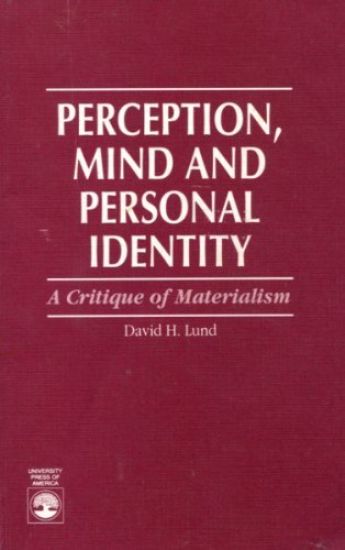
Perception, Mind and Personal Identity

Perception, Mind and Personal Identity

David H. Lund

University Press of America
1994
nidottu
The book is primarily a critique of a materialistic view of persons and their experiences. Its subject matter is quite broad, as it includes a consideration of not only whether there can be an adequate materialist treatment of sensations, consciousness, and intentionality of thought, but also of whether there can be such a treatment of perceptual experience, on the one hand, and of self-consciousness, on the other. It presents a case for concluding that the difficulties facing the materialist are overwhelming.
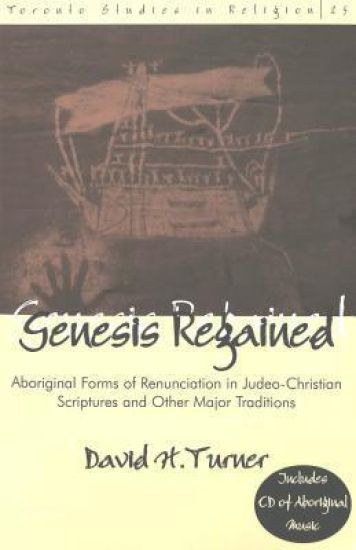
Genesis Regained

Genesis Regained

David H Turner

Peter Lang Publishing Inc
2000
nidottu
Genesis Regained is the fourth book in a series that began with Life Before Genesis (Peter Lang, 1985), and was followed by Return to Eden (Peter Lang, 1996), and Afterlife Before Genesis (Peter Lang, 1997). In this volume, David Turner takes a key concept critical to the Australian Aboriginal way of life, namely Renunciation, and explores the implications for interpreting other major religious traditions, particularly Judeo-Christianism. Aspects of Hinduism, Buddhism, and Islam are explored along with the terms of Canadian Confederation and Sunday Morning Hockey. Renunciation is seen as a subordinate subtheme in the major religious traditions and in history.
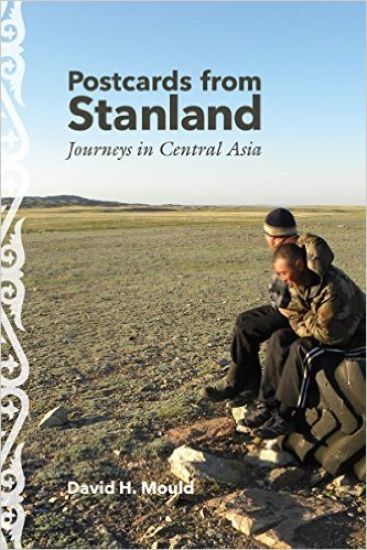
Postcards from Stanland

Postcards from Stanland

David H. Mould

Ohio University Press
2016
sidottu
Central Asia has long stood at the crossroads of history. It was the staging ground for the armies of the Mongol Empire, for the nineteenth-century struggle between the Russian and British empires, and for the NATO campaign in Afghanistan. Today, multinationals and nations compete for the oil and gas reserves of the Caspian Sea and for control of the pipelines. Yet “Stanland” is still, to many, a terra incognita, a geographical blank. Beginning in the mid-1990s, academic and journalist David Mould’s career took him to the region on Fulbright Fellowships and contracts as a media trainer and consultant for UNESCO and USAID, among others. In Postcards from Stanland, he takes readers along with him on his encounters with the people, landscapes, and customs of the diverse countries-Kazakhstan, Kyrgyzstan, Tajikistan, and Uzbekistan-he came to love. He talks with teachers, students, politicians, environmental activists, bloggers, cab drivers, merchants, Peace Corps volunteers, and more. Until now, few books for a nonspecialist readership have been written on the region, and while Mould brings his own considerable expertise to bear on his account-for example, he is one of the few scholars to have conducted research on post-Soviet media in the region-the book is above all a tapestry of place and a valuable contribution to our understanding of the post-Soviet world.
Postcards from Stanland

Postcards from Stanland

David H. Mould

Ohio University Press
2016
pokkari
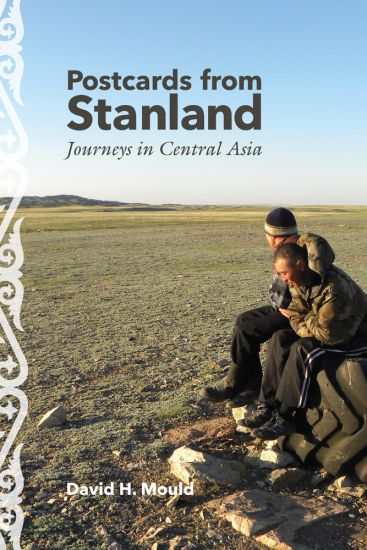
Central Asia has long stood at the crossroads of history. It was the staging ground for the armies of the Mongol Empire, for the nineteenth-century struggle between the Russian and British empires, and for the NATO campaign in Afghanistan. Today, multinationals and nations compete for the oil and gas reserves of the Caspian Sea and for control of the pipelines. Yet “Stanland” is still, to many, a terra incognita, a geographical blank. Beginning in the mid-1990s, academic and journalist David Mould’s career took him to the region on Fulbright Fellowships and contracts as a media trainer and consultant for UNESCO and USAID, among others. In Postcards from Stanland, he takes readers along with him on his encounters with the people, landscapes, and customs of the diverse countries-Kazakhstan, Kyrgyzstan, Tajikistan, and Uzbekistan-he came to love. He talks with teachers, students, politicians, environmental activists, bloggers, cab drivers, merchants, Peace Corps volunteers, and more. Until now, few books for a nonspecialist readership have been written on the region, and while Mould brings his own considerable expertise to bear on his account-for example, he is one of the few scholars to have conducted research on post-Soviet media in the region-the book is above all a tapestry of place and a valuable contribution to our understanding of the post-Soviet world.
Monsoon Postcards

Monsoon Postcards

David H. Mould

Ohio University Press
2019
sidottu
In Monsoon Postcards, journalist David H. Mould, notebook in hand, traverses the Indian Ocean-from Madagascar through India and Bangladesh to Indonesia. It’s an unpredictable journey on battered buses, bush taxis, auto-rickshaws, and crowded ferries. Mould travels from the traffic snarls of Delhi, Dhaka, and Jakarta to the rice paddies and ancestral tombs of Madagascar’s Central Highlands; from the ancient kingdom of Hyderabad to India’s so-called chicken neck-the ethnically diverse and underdeveloped northeast; and from the textile factories and rivers of Bangladesh to the beaches of Bali and the province of Aceh-ground zero for the 2004 tsunami. Along the way, in markets, shops, roadside cafes, and classrooms, he meets journalists, professors, students, aid workers, cab drivers, and other everyday residents to learn how they view their past and future. Much like its predecessor, Mould’s Postcards from Stanland, Monsoon Postcards offers witty and insightful glimpses into countries linked by history, trade, migration, religion, and a colonial legacy. It explores how they confront the challenges of climate change, urban growth, economic development, land, water and natural resources, and national and ethnic identity.
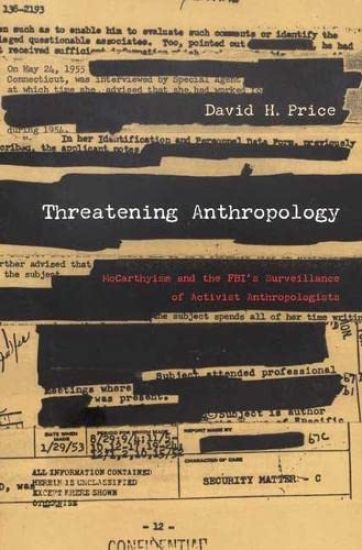
Threatening Anthropology

Threatening Anthropology

David H. Price

Duke University Press
2004
sidottu
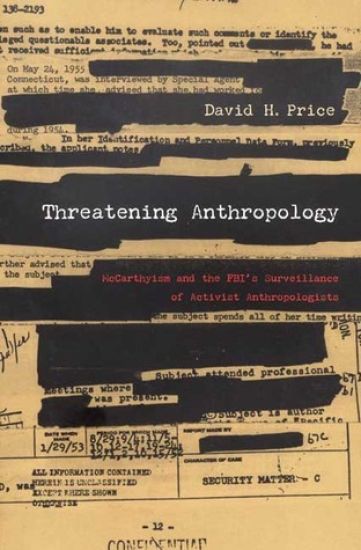
A vital reminder of the importance of academic freedom, Threatening Anthropology offers a meticulously detailed account of how U.S. Cold War surveillance damaged the field of anthropology. David H. Price reveals how dozens of activist anthropologists were publicly and privately persecuted during the Red Scares of the 1940s and 1950s. He shows that it was not Communist Party membership or Marxist beliefs that attracted the most intense scrutiny from the fbi and congressional committees but rather social activism, particularly for racial justice. Demonstrating that the fbi’s focus on anthropologists lessened as activist work and Marxist analysis in the field tapered off, Price argues that the impact of McCarthyism on anthropology extended far beyond the lives of those who lost their jobs. Its messages of fear and censorship had a pervasive chilling effect on anthropological investigation. As critiques that might attract government attention were abandoned, scholarship was curtailed.Price draws on extensive archival research including correspondence, oral histories, published sources, court hearings, and more than 30,000 pages of fbi and government memorandums released to him under the Freedom of Information Act. He describes government monitoring of activism and leftist thought on college campuses, the surveillance of specific anthropologists, and the disturbing failure of the academic community-including the American Anthropological Association-to challenge the witch hunts. Today the “war on terror” is invoked to license the government’s renewed monitoring of academic work, and it is increasingly difficult for researchers to access government documents, as Price reveals in the appendix describing his wrangling with Freedom of Information Act requests. A disquieting chronicle of censorship and its consequences in the past, Threatening Anthropology is an impassioned cautionary tale for the present.
Threatening Anthropology

Threatening Anthropology

David H. Price

Duke University Press
2004
pokkari
A vital reminder of the importance of academic freedom, Threatening Anthropology offers a meticulously detailed account of how U.S. Cold War surveillance damaged the field of anthropology. David H. Price reveals how dozens of activist anthropologists were publicly and privately persecuted during the Red Scares of the 1940s and 1950s. He shows that it was not Communist Party membership or Marxist beliefs that attracted the most intense scrutiny from the fbi and congressional committees but rather social activism, particularly for racial justice. Demonstrating that the fbi’s focus on anthropologists lessened as activist work and Marxist analysis in the field tapered off, Price argues that the impact of McCarthyism on anthropology extended far beyond the lives of those who lost their jobs. Its messages of fear and censorship had a pervasive chilling effect on anthropological investigation. As critiques that might attract government attention were abandoned, scholarship was curtailed.Price draws on extensive archival research including correspondence, oral histories, published sources, court hearings, and more than 30,000 pages of fbi and government memorandums released to him under the Freedom of Information Act. He describes government monitoring of activism and leftist thought on college campuses, the surveillance of specific anthropologists, and the disturbing failure of the academic community-including the American Anthropological Association-to challenge the witch hunts. Today the “war on terror” is invoked to license the government’s renewed monitoring of academic work, and it is increasingly difficult for researchers to access government documents, as Price reveals in the appendix describing his wrangling with Freedom of Information Act requests. A disquieting chronicle of censorship and its consequences in the past, Threatening Anthropology is an impassioned cautionary tale for the present.
Anthropological Intelligence

Anthropological Intelligence

David H. Price

Duke University Press
2008
sidottu
By the time the United States officially entered World War II, more than half of American anthropologists were using their professional knowledge and skills to advance the war effort. The range of their war-related work was extraordinary. They helped gather military intelligence, pinpointed possible social weaknesses in enemy nations, and contributed to the army’s regional Pocket Guide booklets. They worked for dozens of government agencies, including the Office of Strategic Services (OSS) and the Office of War Information. At a moment when social scientists are once again being asked to assist in military and intelligence work, David H. Price examines anthropologists’ little-known contributions to the Second World War. Anthropological Intelligence is based on interviews with anthropologists as well as extensive archival research involving many Freedom of Information Act requests. Price looks at the role played by the two primary U.S. anthropological organizations, the American Anthropological Association and the Society for Applied Anthropology (which was formed in 1941), in facilitating the application of anthropological methods to the problems of war. He chronicles specific projects undertaken on behalf of government agencies, including an analysis of the social effects of postwar migration, the design and implementation of OSS counterinsurgency campaigns, and the study of Japanese social structures to help tailor American propaganda efforts. Price discusses anthropologists’ work in internment camps, their collection of intelligence in Central and South America for the FBI’s Special Intelligence Service, and their help forming foreign language programs to assist soldiers and intelligence agents. Evaluating the ethical implications of anthropological contributions to World War II, Price suggests that by the time the Cold War began, the profession had set a dangerous precedent regarding what it would be willing to do on behalf of the U.S. government.
Anthropological Intelligence

Anthropological Intelligence

David H. Price

Duke University Press
2008
pokkari
By the time the United States officially entered World War II, more than half of American anthropologists were using their professional knowledge and skills to advance the war effort. The range of their war-related work was extraordinary. They helped gather military intelligence, pinpointed possible social weaknesses in enemy nations, and contributed to the army’s regional Pocket Guide booklets. They worked for dozens of government agencies, including the Office of Strategic Services (OSS) and the Office of War Information. At a moment when social scientists are once again being asked to assist in military and intelligence work, David H. Price examines anthropologists’ little-known contributions to the Second World War. Anthropological Intelligence is based on interviews with anthropologists as well as extensive archival research involving many Freedom of Information Act requests. Price looks at the role played by the two primary U.S. anthropological organizations, the American Anthropological Association and the Society for Applied Anthropology (which was formed in 1941), in facilitating the application of anthropological methods to the problems of war. He chronicles specific projects undertaken on behalf of government agencies, including an analysis of the social effects of postwar migration, the design and implementation of OSS counterinsurgency campaigns, and the study of Japanese social structures to help tailor American propaganda efforts. Price discusses anthropologists’ work in internment camps, their collection of intelligence in Central and South America for the FBI’s Special Intelligence Service, and their help forming foreign language programs to assist soldiers and intelligence agents. Evaluating the ethical implications of anthropological contributions to World War II, Price suggests that by the time the Cold War began, the profession had set a dangerous precedent regarding what it would be willing to do on behalf of the U.S. government.
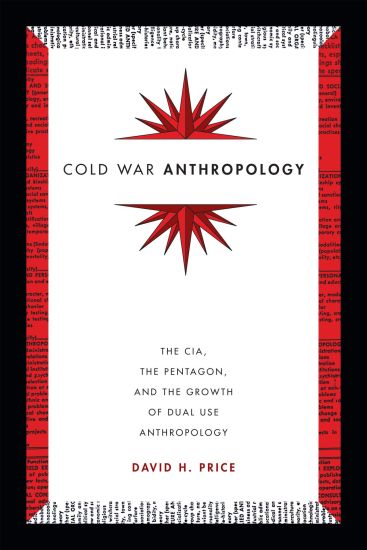
Cold War Anthropology

Cold War Anthropology

David H. Price

Duke University Press
2016
sidottu
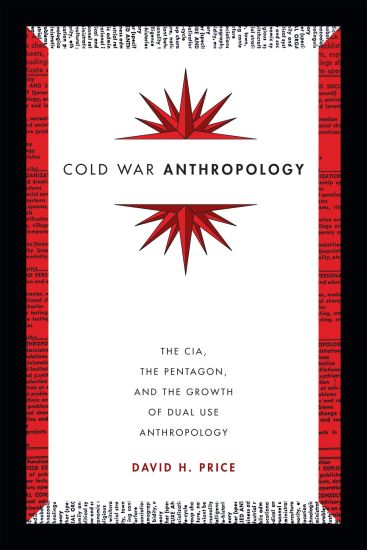
In Cold War Anthropology, David H. Price offers a provocative account of the profound influence that the American security state has had on the field of anthropology since the Second World War. Using a wealth of information unearthed in CIA, FBI, and military records, he maps out the intricate connections between academia and the intelligence community and the strategic use of anthropological research to further the goals of the American military complex. The rise of area studies programs, funded both openly and covertly by government agencies, encouraged anthropologists to produce work that had intellectual value within the field while also shaping global counterinsurgency and development programs that furthered America’s Cold War objectives. Ultimately, the moral issues raised by these activities prompted the American Anthropological Association to establish its first ethics code. Price concludes by comparing Cold War-era anthropology to the anthropological expertise deployed by the military in the post-9/11 era.
Cold War Anthropology

Cold War Anthropology

David H. Price

Duke University Press
2016
pokkari
In Cold War Anthropology, David H. Price offers a provocative account of the profound influence that the American security state has had on the field of anthropology since the Second World War. Using a wealth of information unearthed in CIA, FBI, and military records, he maps out the intricate connections between academia and the intelligence community and the strategic use of anthropological research to further the goals of the American military complex. The rise of area studies programs, funded both openly and covertly by government agencies, encouraged anthropologists to produce work that had intellectual value within the field while also shaping global counterinsurgency and development programs that furthered America’s Cold War objectives. Ultimately, the moral issues raised by these activities prompted the American Anthropological Association to establish its first ethics code. Price concludes by comparing Cold War-era anthropology to the anthropological expertise deployed by the military in the post-9/11 era.
The Holmes-Sheehan Correspondence

The Holmes-Sheehan Correspondence

David H. Burton

Fordham University Press
1993
sidottu
Oliver Wendell Holmes, Jr., distinguished American jurist, and Patrick Augustine Sheehan, an Irish clerical-savant, enjoyed a warm and notable friendship based largely on their exchange of letters from 1903, when they first met in Ireland, until 1913, the year of Sheehan's death. This correspondence illuminates what is otherwise a largely hidden and little appreciated side of the mind and faith of Justince Holmes. Sheehan was able to draw from his friend an awareness and sympathy for human frailty and its counterpoint, faith in a divine plan of earthly things, thoughts and feelings that surfaced in letters to other of his friends. The importance of this edition of the Holmes-Sheehan letters rests in the first instance on this discovery. But Canon Sheehan wsa no mere foil for Holmes as they discussed with equal insight issues as varied as the economic man and the age of faith, of classical works, including Dante's Divine Comedy and Pascal's Pensees. Holmes discovered in the Canon a man of the most profound faith who remained open and tolerant of the beliefs and non-beliefs of others. He is better understood because of his affection for Sheehan, and, no less telling, because of the Canon's admiration for him. Gary J. Aichele in Oliver Wendell Holmes, Jr.: Soldier, Scholar, Judge finds this set of letters "perhaps the most unusual" of any collection of Holmes correspondence published to date.
Tucumcari Tonite!

Tucumcari Tonite!

David H. Stratton

UNIVERSITY OF NEW MEXICO PRESS
2022
pokkari
Tucumcari, New Mexico, was founded in 1901 by the Rock Island Railroad and soon had major railroad lines converging there from Chicago, Los Angeles, and Memphis as well as a northern branch line from the Dawson coalfields. The federal highway system established Route 66, the "Main Street of America," through the middle of town in 1926. Tucumcari flourished as a tourist mecca, welcoming travelers with its blazing displays of neon lights. But mergers, reorganizations, and financial problems of the railroads, as well as the creation of the interstate highway system that bypassed small places, brought a sharp decline to the once-prosperous town. Tucumcari Tonite! blends in-depth research and personal and family experiences to re-create a "memoir" of Tucumcari. Drawing on newspapers and government documents as well as business records, personal interviews, and archival holdings, Stratton weaves a poignant tale of a western town's rise and decline--providing a prime example of the destructive forces that have been inflicted on small towns in the West and all across America.
Moral Responsibility in the Holocaust

Moral Responsibility in the Holocaust

David H. Jones

Rowman Littlefield
1999
sidottu
In Moral Responsibility in the Holocaust, David H. Jones goes beyond historical and psychological explanations of the Holocaust to directly address the moral responsibility of individuals involved in it. While defending the view that individuals caught up in large-scale historical events like the Holocaust are still responsible for their choices, he provides the philosophical tools needed to assess the responsibility, both negative and positive, of perpetrators, accomplices, bystanders, victims, helpers, and rescuers.
Moral Responsibility in the Holocaust

Moral Responsibility in the Holocaust

David H. Jones

Rowman Littlefield
1999
nidottu
In Moral Responsibility in the Holocaust, David H. Jones goes beyond historical and psychological explanations of the Holocaust to directly address the moral responsibility of individuals involved in it. While defending the view that individuals caught up in large-scale historical events like the Holocaust are still responsible for their choices, he provides the philosophical tools needed to assess the responsibility, both negative and positive, of perpetrators, accomplices, bystanders, victims, helpers, and rescuers.
The Search for Satisfaction

The Search for Satisfaction

David H. McKinley

Thomas Nelson Publishers
2006
nidottu
We live in constant search mode looking for purpose and meaning, trying to find something, anything, that might satisfy the deep longings of our heart. Yet this search is nothing new. Even the wisest man who ever lived struggled with these same issues finding that everything in life was meaningless, a "chasing after the wind."Follow Solomon's search through a fascinating study of Ecclesiastes as in the depths of his despair he discovers that only the God who made the sun can offer real and lasting results under it. Satisfaction guaranteed.
The Life You Were Born to Give

The Life You Were Born to Give

David H. McKinley

Thomas Nelson Publishers
2007
nidottu
Everything we have we've been given. Even our very lives are a gift from God, given so we can live to give, not live to get. Yet it is our tendency in life to absorb, to take in without distribution resulting in a "souring" of all that is good and a separation from all that is intended. In The Life You Were Born to Give, David McKinley helps readers shift their focus from getting all they can out of life to giving their lives away, for Christ. Guiding them through the book of Romans, the transformational message includes:A Life Delivered (Romans 1-11)A Life Devoted (Romans 12: 1-2)A Life Distributed (Romans 12-16)"Recommended for readers looking for a basic approach to spiritual growth." -Don Morgan, Aspiring Retail