

Kirjahaku
Etsi kirjoja tekijän nimen, kirjan nimen tai ISBN:n perusteella.
1000 tulosta hakusanalla David N Alderman

Squawk 7600: Passing your check ride; From Flight Instructor to Private Pilot
David N. Boyd
Createspace Independent Publishing Platform
2016
nidottu

Why America can never be great again: Is it too late?
David N. Smeltz
Createspace Independent Publishing Platform
2016
nidottu

House on Fire: Fighting for Democracy in the Age of Political Arson
David N. Cicilline
Twelve
2022
sidottu
Practical Pastoral Theology: The Prepared Pastor
David N. Smeltz Sr
Createspace Independent Publishing Platform
2016
nidottu

What Every Person in America Needs to Know about Islam: Will Islam Dominate America?
David N. Smeltz Sr
Createspace Independent Publishing Platform
2016
nidottu
Halina' T Mag-akay Ng Kaluluwa Sa Kaligtasan
David N. Smeltz; Melody Salazar Tosch
Createspace Independent Pub
2017
pokkari
Truth to Life: Turning Doctrine into Devotion - Prayers Based Upon the Thirty-Nine Articles
David N. Beckmann
Createspace Independent Publishing Platform
2017
nidottu
The idea behind this book is to provide an example of the kind of thing that can be done to turn what some might call "dry doctrine" into an act of devotion. People often complain about how to get theological "head knowledge" into the day-to-day experience of the believer. The first thing we have to do to make this happen is, of course, to believe the truth of the Scriptures. Then we must obey what they say, either expressly or by implication. Yet the whole process is a part of the wonderful fellowship to which God has called us in His Son, and that means prayer. We pray about what the Word teaches us, we pray for faith to believe it, we pray for grace to do it, and we pray prayers of thanksgiving and praise as we grow in our experience of being a child of God. Here in this book are 40 prayers which interact with God about particular truths in His Word and then deal with the implications of those truths which challenge our faith and obedience. Obviously, the number makes the book convenient for use during Lent, but it can of course be used any time.The Appendix is a little exercise in composing such prayers to encourage the reader to keep doing this kind of thing for themselves.Further information is included in the Introduction.


Development Review in Local Government
David N. Ammons; Ryan Davidson; Ryan Ewalt
School of Government
2009
nidottu
Throughout the late 80s and 90s many companies fell victim to the downsizing trend. Of the companies that downsized by removing middle managers 66% found productivity declined, 49% found profits did not increase, and in 86% morale plummeted. Middle managers often provide your most important link between top management, operating staff, and your customer. Yet this valuable resource is often stereotyped, skipped over, and avoided as deadwood and blockers. Why make this expensive and critical mistake? Mining the Middle Ground: Developing Mid-Level Managers for Strategic Change presents an applied, field-proven model for the roles, responsibilities, and steps necessary to develop, integrate, and mine your middle management resource for strategic change. Founded on a strong theoretical basis, the model has been developed and refined over the past 15 years and implemented in over 100 organizations. Case study examples, success stories, and interview excerpts lend support and explain the various aspects and steps involved in the model. Anecdotal examples and in-depth interview excerpts support and illustrate the concepts and steps involved. Successfully enabled and cultivated, mid-level managers can be your company's strongest resource for knowledge creation, breakthrough thinking, and change leadership-and they are readily available to you. Developing and tapping this resource is an option you cannot continue to ignore. Stop wasting the valuable resource middle management represents based on stereotypes and low expectations. Raise your sights, actively develop and involve them, and you will discover that this group is a vital, unique asset for strategic change. Mining the Middle Ground: Developing Mid-Level Managers for Strategic Change shows you how to make it happen.
In good markets or bad, reverse mergers play a key role for companies that want to avoid the IPO route for going public. Since the successful first edition of Reverse Mergers was published in 2006, the economic and regulatory landscape has changed. Executives, owners, lawyers, accountants, professional investors, regulators, and others need to know what those changes mean for reverse mergers. Reverse-merger expert David Feldman gives an overview of the most important changes since the previous edition was published: new SEC regulations, the changing nature of SPACs (Special-Purpose Acquisition Company), and the emergence of new instruments called WRASPs (WestPark Alternative Senior Exchange Process). The book includes a new chapter on China, and the "Experts Speak" chapter features all new interviewees. David Feldman is one of the country's leading experts on reverse mergers, self-filings, and other alternatives to IPOs. His firm has guided hundreds of companies on going public, advising them on structure and mechanics, financing, due diligence, regulatory issues, and more.

This book brings new attention to Simon Rawidowicz (1897-1957), the wide-ranging Jewish thinker and scholar who taught at Brandeis University in the 1950s. At the heart of Myers' book is a chapter that Rawidowicz wrote as a coda to his Hebrew tome Babylon and Jerusalem (1957) but never published. In it, Rawidowicz shifted his decades-long preoccupation with the "Jewish Question" to what he called the "Arab Question." Asserting that the "Arab Question" had become a most urgent political and moral matter for Jews after 1948, Rawidowicz called for an end to discrimination against Arabs resident in Israel-and more provocatively, for the repatriation of Arab refugees from 1948. Myers' book is divided into two main sections. Part I introduces the life and intellectual development of Rawidowicz. It traces the evolution of his thinking about the"Jewish Question," namely, the status of Jews as a national minority in the Diaspora. Part II concentrates on the shift occasioned by the creation of the State of Israel, when Jews assumed political sovereignty and entered into a new relationship with the native Arab population. Myers analyzes the structure, content, and context of Rawidowicz's unpublished chapter on the "Arab Question," paying particular attention to Rawidowicz's calls for an end to discrimination against Arabs in Israel, on the one hand, and for the repatriation of those refugees who left Palestine in 1948, on the other. The volume also includes a full English translation of"Between Jew and Arab," a timeline of significant events, and an appendix of official legal documents from Israel and the international community pertaining to the conflict.

Maladies of Modernity – Scientism and the Deformation of Political Order
David N. Whitney
ST AUGUSTINE'S PRESS
2019
nidottu
This work explores the complex relationship between science and politics. More specifically, it focuses on the problem of scientism. Scientism is a deformation of science, which unnecessarily restricts the scope of scientific inquiry by placing a dogmatic faith in the method of the natural sciences. Its adherents call for nothing less than a complete transformation of society. Science becomes the idol that can magically cure the perpetual maladies of modern society and of human nature itself. Whitney demonstrates that scientism is intellectually impoverishing and politically dangerous. Whitney surveys the development of scientism from early modernity to the present day, beginning with Francis Bacon, arguing that Bacon stands as the founder, not only of the experimental method, but also of scientism. This is most evident in his presentation of a scientific utopia in New Atlantis. After briefly noting the impact of Isaac Newton and the French Encylopedists, Whitney then moves on to the other great representative figure of scientism: Auguste Comte, who demonstrates the religious fervor that accompanies the scientistic attitude. Continuing on the path set forth by Bacon, Comte argues for a reorganization of society based on the precepts of positive science. The eugenics movements in 20th-century America and Germany is next, and the author argues that they reflect the new worldview that had emerged from Darwin’s evolutionary theory; a theory partially based on scientistic principles. The solution to scientism, Whitney advances, lies in a new (or revised) science of politics; the foundation of which is based on the Classical sources that were either discredited or banned outright by the proposals of Bacon and Comte. He concludes the work with contemporary examples of scientism, including the climate change debates, genetic engineering, and the New Atheism movement. “Chief among the spiritually blighting tendencies of the age is materialist reductionism parading as scientific orthodoxy. David Whitney powerfully explores this movement and habit of mind as it takes its rise in the form of scientism, especially from Sir Francis Bacon’s NEW ATLANTIS in the 17th century and finds full fruition in the positivist teachings of August Comte in the 19th century—a preamble to the behavioralist dogmas of our own time. The openness to the facts of experience characteristic of all science as a search for the truth of reality in all its dimensions and diversity is thereby effectively abandoned in favor of an unrelenting insistence on a restrictive methodology ostensibly grounded in phenomenal reality that is perversely made the touchstone of all valid inquiry. The consequences are philosophically as well as politically disastrous, as Whitney brilliantly demonstrates in this path-breaking study.” – Ellis Sandoz, Founder of the Eric Voegelin Institute for American Renaissance Studies "David Whitney’s excellent critique of what he calls scientism, a dogmatic application of the methods of natural science to social science, provides a high-brow diagnosis of the modern maladies that result from the “rhetorical power of science.” –– Scott Robinson, voegelinview
In this powerful story of a vital prayer movement that is igniting men's hearts, David N. Calvillo narrates his own life-changing experience of the Rosary, presents a comprehensive guide to the Rosary, and offers a 33-Day Rosary Challenge.
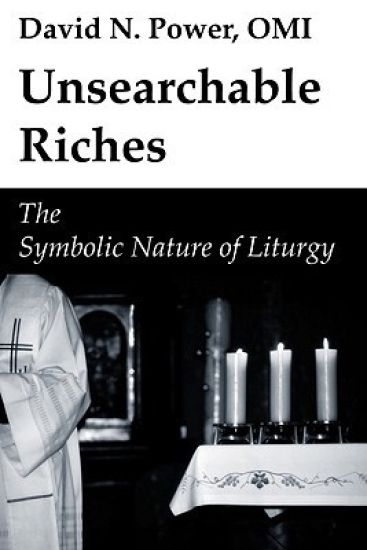
""This study has two aims. The first is to relate studies on symbolism and its modes to an understanding of the liturgy. The second is to relate these studies to the renewal of the liturgy in a time of crisis. Since the first aim is affected by the second, it may be well to say something about the nature of the crisis at this point . . . ""The crisis as it touches on liturgy is twofold. First there is a crisis of vision and second a crisis of hope. The churches are forced to ask how well the vision of reality, or the world view, projected in liturgical celebration expresses a sense of being in time and a sense of the holy that are pertinent to contemporary fact and contemporary models of reality. This is the crisis of vision. At the same time, the churches are part of a humanity which lives in a time of disintegration and destruction, a humanity continually compelled to consider whether there are any hopes by which it is possible to face the future. The despair of the age is represented in the twofold holocaust of the century. There is the holocaust of the Jewish people under the Nazi regime, and there is the imminent nuclear holocaust which threatens the entire world. Can those who profess faith in Jesus Christ profess it in such an age?"" --from the Introduction David N. Power, OMI, who has taught in the USA since 1977, is now professor emeritus at the School of Theology and Religious Studies at the Catholic University of America, Washington, DC. Since becoming emeritus, he has taught at schools of theology in French Polynesia, South Africa, Canada, and at the Oblate School of Theology, San Antonio, Texas. He has authored eleven books, including the recently published Mission Ministry Order (New York & London: Continuum Publishing Group, 2008).

Karl Marx did not write Das Kapital for the bookshelves of economists and philosophers. It is economics for working people, from their viewpoint and history. It is the classic masterpiece of revolutionary working-class politics. Here, David Smith and Phil Evans explode the myth of difficulty haunting Marx's Kapital.
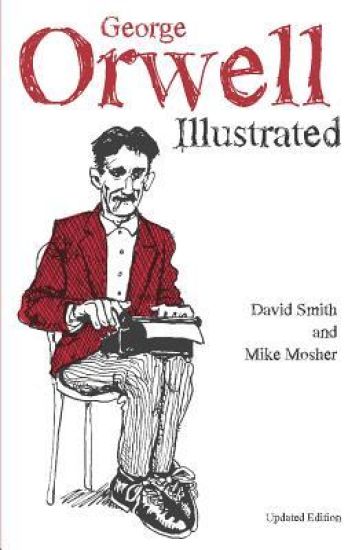
With 'alternative facts' and newspeak the order of the political day, a growing audience for George Orwell's work has emerged. Orwell is one of the most celebrated twentieth-century literary figures, and his dystopian novel, 1984, continues to be widely read. This illustrated narrative of his life is uniquely accessible and provides the insight needed to understand Orwell, with the kind of light touch that Orwell himself would appreciate.