Kirjojen hintavertailu. Mukana 12 390 323 kirjaa ja 12 kauppaa.

Kirjahaku

Etsi kirjoja tekijän nimen, kirjan nimen tai ISBN:n perusteella.

1000 tulosta hakusanalla David Nelson

Robin Hood

Robin Hood

David Neilson

Samuel French Ltd
1984
pokkari
"Feared by the bad, loved by the good" goes the song about Robin Hood, but in the case of Albert Ross, the distinction is not quite so clear-cut. For Albert is a coward, transferring his allegiance from Merry Men to Sheriff and back again at the drop of a hat - or rather, at the point of a sword. All of which lands Albert, his wife, Robin and Maid Marian in some very awkward situations...2 women, 7 men
The Victorian Soldier

The Victorian Soldier

David Nalson

Shire Publications
2004
nidottu
Although lacking the weapons of today, Victorian soldiers were no different from their present-day successors. This volume aims to bring these soldiers to life through their uniforms, weapons, equipment and illustrations of them at war and at peace.
Chasing the Mountain Light

Chasing the Mountain Light

David Neilson

ABBEVILLE PRESS INC.,U.S.
2022
sidottu
From his childhood in Melbourne, David Neilson (b. 1946) has been motivated by his twin loves of mountaineering and photography. He has made multiple expeditions to southwest Tasmania, Patagonia, and Antarctica, and published critically acclaimed photo books about each of these places; he has also carried his camera into the Karakoram, and the Alps of Australia, New Zealand, and Europe. In this oversize volume, Neilson recounts his lifelong quest to capture the mountain light and encourage the preservation of wild places. His most spectacular images of jagged peaks, massive glaciers, and hardy wildlife are reproduced as duotones of the highest quality. A number of vertical double-page images even invite readers to turn the book sideways to immerse themselves in the mountain heights. Chasing the Mountain Light will delight all lovers of the outdoors.
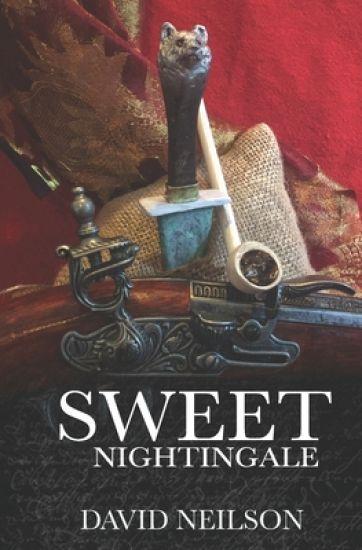
Sweet Nightingale: A Sophie Rathenau Short

Sweet Nightingale: A Sophie Rathenau Short

David Neilson

Independently Published
2020
nidottu
Vienna, 1773. Camilla has a new maid, as usual. But is Anni Nachtigall as demure as she seems? Uncovering layers of deceit, Sophie is plunged into an adventure which will take all of her ingenuity and diplomatic skill to survive.A Sophie Rathenau novella from the age of Mozart and Maria Theresia.Note: This story originally appeared in "Winter's Edge: An Anthology of Historical Fiction" (2017).
Serene

Serene

David Neilson

Independently Published
2019
nidottu
Violent moneylender Corona Mundt warned Sophie not to come back to Venice, so she shouldn't be guarding Archduchess Isabella at the Carnival - any more than Isabella should fall for louche, penniless, would-be librettist Larry da Ponte. And once the two of them get together, it's only a matter of time before Sophie comes face to face with her worst enemy. "Serene" is the third in a series of novels from the era of Mozart and Maria Theresia.
The Prussian Dispatch

The Prussian Dispatch

David Neilson

Owlsgate Press
2015
nidottu
Habsburg Vienna, 1772.With nothing in her purse, Sophie Rathenau can't refuse work, even from a down-at-heel pimp. But tracing the woman who's gone off with his document is a chancy business. A gang of Prussian maniacs are hunting for it too, as well as thugs from the shadowy Versailles Club, and a Polish countess desperate to preserve her country.Caught up in an international conspiracy, Sophie's only weapons are her sardonic tongue and an old cavalry pistol. But it'll take more than those to find the dispatch, keep a vengeful Chancellor at bay, and deal with a past that threatens to engulf her."The Prussian Dispatch" is the first in a series of novels from the era of Mozart and Maria Theresia. What readers say: "A vivid historical world full of living characters""Excellent character... she feels very real to me""Seems to have all the elements of a great and successful book: a powerful heroine, political intrigue, and a riveting plot""Character and voice are what make this book distinctive...""Hard-bitten Jane Eyre""The setting is vivid. The characterization excellent. And of course the dialogue fantastic...""Sophie is awesome
The History of Christianity in West Papua to 2000

The History of Christianity in West Papua to 2000

David Neilson

Indian Society for Promoting Christian Knowledge
2021
pokkari
The western half of the second largest island on earth (greater New Guinea) has been absorbed into Indonesia since 1969. Its indigenous peoples are usually placed among the Melanesians or black islanders of the southwest Pacific, and they present a very complicated array of traditional languages and cultures, some of which are still barely open to the wider world. This is the first general history of the Christian presence in West Papua (formerly Irian Jaya), and takes us from missionary beginnings, at least from the 1850s, to the emergence of national churches at the dawn of the new millennium. The book details how Christian missions spread in the region and documents the nature and consequences of interactions between proud local peoples and daring outsiders.
Unashamed

Unashamed

Heather Davis Nelson; Edward T. Welch

Crossway Books
2016
pokkari
Shame is everywhere. Whether it's related to relationships, body image, work difficulties, or a secret sin, we all experience shame at some point in our lives. While shame can manifest itself in different ways—fear, regret, and anger—it ultimately points us to our most fundamental need as human beings: redemption. Shame never disappears in solitude, and Heather Davis Nelson invites us to not only be healed of our own shame but also be a part of healing for others. She shines the life-giving light of the gospel on the things that leave us feeling worthless and rejected, giving us courage us to walk out of shame’s shadows and offering hope for our bondage to brokenness. Through the gospel, we discover the only real and lasting antidote to shame: exchanging our shame for the righteousness of Christ alongside others on this same journey.
Unashamed (Pack of 25)

Unashamed (Pack of 25)

Heather Davis Nelson

Crossway Books
2017
nidottu
ANNA WEEPS over the phone with her best friend as she describes a marriage that feels hopeless and lifeless. No matter what she tries, her husband cannot seem to see her, care about her, or change the behavior that is destroying their marriage and their family. Jake is alone. He assumed that by age thirty he would be well on his way to his dream of a successful career, marriage, and starting a family. Instead, Jake works an unmotivating job and can't seem to gain the courage to talk to the woman he admires from afar. Even after losing significant weight, Lily still views herself as several sizes larger than she is and doesn't connect someone discussing"a thin woman" as describing her. Can you relate to these scenarios and forms of shame? Perhaps your experiences have been different, but despite its manifestation, shame is something we all endure. WHAT IS SHAME? Shame is the feeling of "not good enough," according to our own standard or our perception of someone else's standard for us. It's what keeps us from being honest about our struggles, sins, and less-than-perfect moments. Whereas guilt is associated with actions, shame taints your entire identity. At its core, shame is fear of weakness, failure, or unworthiness being unveiled for all to see. It commonly masquerades as embarrassment, and it shows up when you attempt something new, or when you're unsure of your place in a group. The ultimate origin of shame is no less dark than the Accuser of our souls himself, Satan. The Evil One always wants us to doubt whether we belong to the kingdom, whether God loves us, and whether we are truly forgiven and free of our sin and others' sin against us. THE GREAT SHAME EXCHANGE How can we break the cycle of reacting to shame with more shame? In the "great shame exchange," Jesus took our shame and clothed us with joy. The gospel--the good news of Jesus Christ--means that through Jesus's life, death on a cross, and resurrection from the grave, all of our shame is exchanged for honor, beauty, joy, comfort, justice, favor, and freedom. This shame exchange is costly. It is very costly for Christ, but not for us. All it costs us is the humility of admitting we cannot cover our own shame. We receive honor; he took our shame. We are lavished with grace; he was stained with our sin. We receive salvation; he experienced damnation. When Jesus cried, "It is finished" from the cross, he bore our sin, guilt, and shame, that we might know forgiveness, redemption, and freedom. Consider the good news Jesus offers: - Jesus comes to give honor instead of dishonor. - Jesus clothes you with beauty, removing the ashes of shame you've worn for your sin or for the sinful atrocities committed against you. - He comforts you as you mourn. - Whether in this life or the one to come, he brings justice for the injustice you've suffered. - Jesus brings favor instead of the vague cloud of constant disapproval. FIGHTING THE BATTLEAGAINST SHAME Bringing Shame into the Light of Community Shame thrives in secrecy. But fighting against shame moves you out of your lonely bunker of one into vibrant community. It does so one brave conversation at a time. It does so one relationship at a time. It will not be smooth and seamless. Expect your initial attempts to be flawed and broken and bumpy. Meeting Shame with the Grace of Forgiveness The Bible is unique in its approach to community because it holds in tension both the ideal vision of people living in harmony with one another and the reality that our sin and brokenness will often disrupt this harmony. It allows for repair of the inevitable fissures that happen as we try to love one another perfectly with hearts that are imperfect. Living in the reality of God's forgiveness of us requires a posture of forgiveness toward others. And when we receive forgiveness from others, it makes us grateful for God's forgiveness of us, and the cycle of redemption rolls along like the reassuring tide of the ocean's waves. Scripture provides God's instruction for living in community: Put on then, as God's chosen ones, holy and beloved, compassionate hearts, kindness, humility, meekness, and patience, bearing with one another and, if one has a complaint against another, forgiving each other; as the Lord has forgiven you, so you also must forgive. (Colossians 3:12-13) FREEDOM FROM SHAME The battle against shame is definitively won through the gospel of Jesus and his victory over sin and death--the freedom that follows Christ's victory arrives through something as simple and as hard as faith. This type of faith agrees you cannot rescue yourself from your shame, that your attempts to clothe yourself have been as futile as the fig-leaf loin cloths our first parents in Adam and Eve crafted. It's a faith that addresses the complication of shame mingled with guilt. This faith gives you an underlying confidence that your sin has truly been atoned for and taken away by a dying-now-resurrected Savior. By faith, we know that there will be no more mourning or tears or death in the life to come. We look back to the Garden of Eden to see that there was no shame before sin. Unashamed. It's where we began, and it's our destiny as the redeemed ones in Christ. The Christian's ultimate hope for shame is that we will be clothed in the honor of Jesus Christ when we stand before God in all his glory. Focusing on this sure and true shame-free destiny gives us hope to keep going--to keep battling shame's dark lies, to enlist others into our journeys with us, and to seek to make our church communities a small though imperfect taste of the life to come.
Fritos Pie

Fritos Pie

Kaleta Doolin; Davia Nelson

Texas A M University Press
2011
nidottu
Fritos® Pie is an insider's look at the never-before-told story of the Frito Company written by Kaleta Doolin, daughter of the company's founder. Filled with personal anecdotes, more than 150 vintage and newly created recipes, and stories, this book recounts the company's early days, the 1961 merger that created Frito-Lay, Inc., and beyond. In 1932 C. E. Doolin, the operator of a struggling San Antonio confectionery, purchased for $100 the recipe for a fried corn chip product and a crude device used to make it, along with a list of nineteen customer accounts. From that humble beginning sprang Fritos® ('fries' in Spanish), a product that, thanks to Doolin's marketing ingenuity and a visionary approach to food technology, would become one of the best-known brands in America. One of the first firms to utilize point-of-sale advertising, the Frito Company developed dozens of recipes intended to get American homemakers 'Cooking with Fritos.' Indeed, Doolin shows that many of the vintage recipes developed by her grandmother, her father, and company employees became integral to the company's marketing success. The book includes recipes-for everything from appetizers to desserts, all using Fritos as an ingredient-along with the author's comments and anecdotes about her adventures experimenting with them in her kitchen. Doolin also draws upon hours of interviews with her mother, siblings, cousins, and many of her father's closest business associates as well as focused research in Frito-Lay corporate archives and other collections to paint a portrait of her father as not only an innovator in food marketing but also a visionary inventor, a forward-thinking agriculturalist, and an entrepreneur with an amazing grasp of detail.
Fritos® Pie Volume 24

Fritos® Pie Volume 24

Kaleta Doolin; Davia Nelson

TEXAS A M UNIVERSITY PRESS
2024
nidottu
"Kaleta has written a deep-fried, wide-eyed American saga of family and food."--Davia Nelson of NPR's award winning Kitchen Sisters "Fun and detailed glimpse into the history of an American snack-food icon."--Rob DeWalt, New Mexico-based food writer "Fritos(R) Pie is a well-written book covering a subject which in some way touches everyone. . . . The book is more than a business matter, it deals with family and memories."--Jerry Turner, Mexia News "Doolin uses her access to the extensive Frito-Lay archives well, and the advertising that she shares provides a useful time-line of both Frito-Lay history, as well as advertising trends of the last fifty years. . . . For those interested in Texas food history, this book is certainly worth a look."--Melissa Prycer, Legacies
Utamaro

Utamaro

Davis Julie Nelson

Reaktion Books
2007
sidottu
Japanese artist Kitagawa Utamaro (1753-1806) was one of the most influential artists working in the genre of ukiyo-e, pictures of the floating world', in late eighteenth-century Japan, and was widely appreciated for his prints of beautiful women. In 1804, at the height of his success, Utamaro published a set of prints related to a banned historical novel. The prints, entitled Hideyoshi and his Five Concubines, depicted the military ruler Toyotomi Hideyoshi's wife and concubines, and consequently he was accused of insulting Hideyoshi's dignity. He was sentenced to be handcuffed for 50 days, and was perhaps even briefly imprisoned. According to some sources, the experience crushed him emotionally and ended his career as an artist. In this book, Julie Nelson Davis draws on a wide range of period sources, makes a close study of selected print sets, and reinterprets Utamaro in the context of his times. Reconstructing the place of the ukiyo-e artist within the commercial print market, she demonstrates how Utamaro's images participated in a larger spectacle of beauty in the city of Edo (present-day Tokyo). Offering a new approach to issues of the status of the artist and the construction of gender, identity, sexuality and celebrity in the Edo period, this book is significant contribution to the field, and will be a key work for readers interested in Japanese arts and cultures.
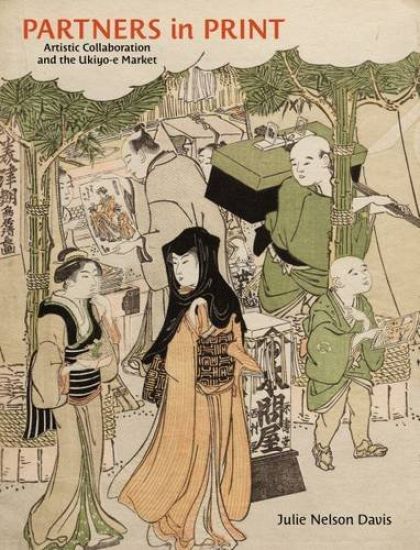
Partners in Print

Partners in Print

Julie Nelson Davis

University of Hawai'i Press
2014
sidottu
This compelling account of collaboration in the genre of ukiyo-e (pictures of the floating world) offers a new approach to understanding the production and reception of print culture in early modern Japan. It provides a corrective to the perception that the ukiyo-e tradition was the product of the creative talents of individual artists, revealing instead the many identities that made and disseminated printed work. Julie Nelson Davis demonstrates by way of examples from the later eighteenth century that this popular genre was the result of an exchange among publishers, designers, writers, carvers, printers, patrons, buyers, and readers. By recasting these works as examples of a network of commercial and artistic cooperation, she off ers a nuanced view of the complexity of this tradition and expands our understanding of the dynamic processes of production, reception, and intention in fl oating world print culture.Four case studies give evidence of what constituted modes of collaboration among artistic producers in the period. In each case Davis explores a different configuration of collaboration: that between a teacher and a student, two painters and their publishers, a designer and a publisher, and a writer and an illustrator. Each investigates a mode of partnership through a single work: a specially commissioned print, a lavishly illustrated album, a printed handscroll, and an inexpensive illustrated novel. These case studies explore the diversity of printed things in the period ranging from expensive works made for a select circle of connoisseurs to those meant to be sold at a modest price to a large audience. They take up familiar subjects from the floating world - connoisseurship, beauty, sex, and humor - and explore multiple dimensions of inquiry vital to that dynamic culture: the status of art, the evaluation of beauty, the representation of sexuality, and the tension between mind and body.Where earlier studies of woodblock prints have tended to focus on the individual artist, Partners in Print takes the subject a major step forward to a richer picture of the creative process. Placing these works in their period context not only revealsan aesthetic network responsive to and shaped by the desires of consumers in a specific place and time, but also contributes to a larger discussion about the role of art and the place of the material text in the early modern world.
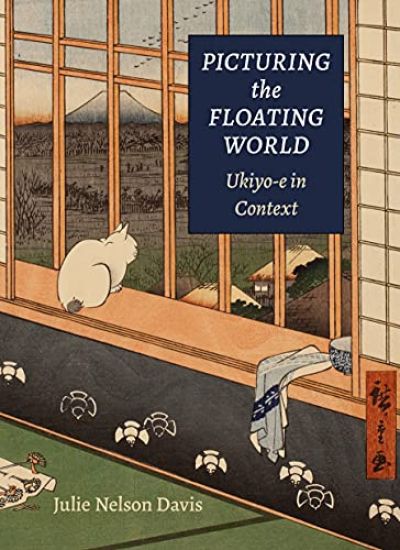
Picturing the Floating World

Picturing the Floating World

Julie Nelson Davis

University of Hawai'i Press
2021
nidottu
Today we think of ukiyo-e-"the pictures of the floating world"-as masterpieces of Japanese art, highly prized throughout the world. Yet it is often said that ukiyo-e were little appreciated in their own time and were even used as packing material for ceramics. In Picturing the Floating World Julie Nelson Davis debunks this myth and demonstrates that ukiyo-e was thoroughly appreciated as a field of artistic production, worthy of connoisseurship and canonization by its contemporaries. Putting these images back into their dynamic context, she shows how consumers, critics, and makers produced and sold, appraised and collected, described and recorded ukiyo-e. She recovers this multilayered world of pictures in which some were made for a commercial market, backed by savvy entrepreneurs looking for new ways to make a profit, while others were produced for private coteries and high-ranking connoisseurs seeking to enrich their cultural capital. The book opens with an analysis of period documents to establish the terms of appraisal brought to ukiyo-e in late eighteenth-century Japan, mapping the evolution of the genre from a century earlier and the development of its typologies and the creation of a canon of makers-both of which have defined the field ever since. Organized around divisions of major technological and aesthetic developments, the book reveals how artistic practice and commercial enterprise were intertwined throughout ukiyo-e's history, from its earliest imagery through the twentieth century. The depiction of particular subjects in and for the floating world of urban Edo and the process of negotiating this within the larger field of publishing are examined to further ground ukiyo-e as material culture, as commodities in a mercantile economy.Picturing the Floating World offers a new approach: a critical yet accessible analysis of the genre as it was developed in its social, cultural, and political milieu. The book introduces students, collectors, and enthusiasts to ukiyo-e as a genre under construction in its own time while contributing to our understanding of early modern visual production.
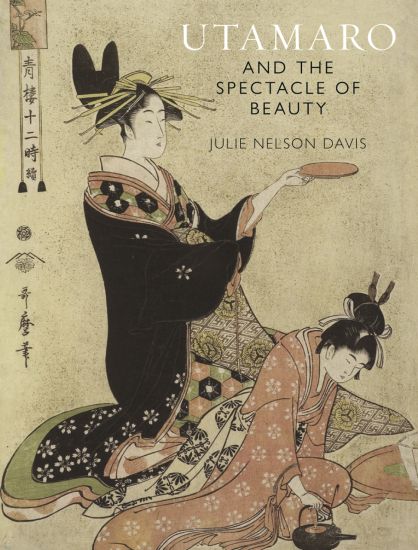
Utamaro and the Spectacle of Beauty

Utamaro and the Spectacle of Beauty

Julie Nelson Davis

Reaktion Books
2021
nidottu
Japanese artist Kitagawa Utamaro (1753–1806) was one of the most influential artists working in the genre of ukiyo-e, ‘pictures of the floating world’, in late eighteenth-century Japan, and was widely appreciated for his prints of beautiful women. In this book, Julie Nelson Davis draws on a wide range of period sources, makes a close study of selected print sets and reinterprets Utamaro in the context of his times. Offering a new approach to issues of the status of the artist and the construction of gender, identity, sexuality and celebrity in the Edo period, and now in an updated edition containing a new preface and many new images, this book is a significant contribution to the field, and will be a key work for readers interested in Japanese arts and cultures.