Kirjojen hintavertailu. Mukana 12 016 292 kirjaa ja 12 kauppaa.

Kirjahaku

Etsi kirjoja tekijän nimen, kirjan nimen tai ISBN:n perusteella.

665 tulosta hakusanalla Dissected Lives

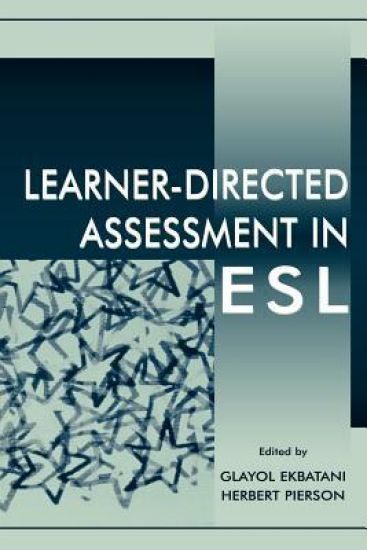
Learner-directed Assessment in Esl

Learner-directed Assessment in Esl

Routledge Member of the Taylor and Francis Group
2000
nidottu
This text integrates the theory and practice of learner-based assessment. Written in response to two recent movements in language teaching--learner-centered teaching and a renewed interest in authenticity in language testing--it examines the relationship between the language learner and language assessment processes, and promotes approaches to assessment that involve the learner in the testing process. Particular attention is given to issues of reliability and validity. Grounded in current pedagogical applications of authentic assessment measures, this volume is intended for and eminently accessible to classroom teachers and program directors looking for ways to include their students in the evaluation process, graduate students, and professional language testers seeking authenticity in assessment and desiring to create more interactive evaluation tools.
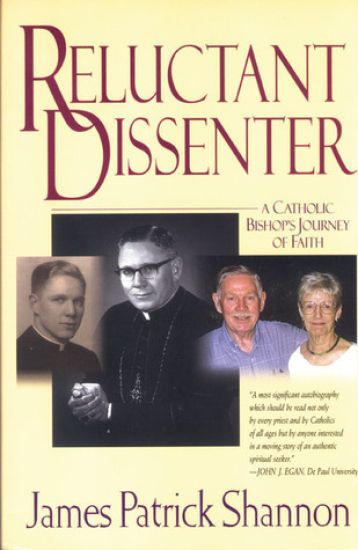
Reluctant Dissenter

Reluctant Dissenter

James Patrick Shannon

Crossroad Publishing Co ,U.S.
2000
nidottu
Bishop Shannon resigned from the episcopate when he could no longer reconcile his personal convictions about family planning with Vatican policy. Now happily married, he writes about a more democratic and inclusive church in an age of increasing authoritarianism.
Self-Directed Work Teams

Self-Directed Work Teams

Cresencio Torres; Jerry Spiegel

Pfeiffer Co ,U.S.
1991
nidottu
Empowerment is essential! Self-directed work teams create an environment that empowers employees to contribute to the improvement of products and services. In the face of this challenge, employees experience greater opportunities and greater satisfaction. And they do a better job! Successful work teams call for a new kind of leadership and a bold new attitude about workforce organization. Self-Directed Work Teams shows how this leadership style changes the role of the supervisor and the way that work is managed.You'll learn to help workers feel like partners in their organizations by contributing to the improvement of products and services. Use these guiding principles, working models, key strategies, and action steps to create successful self-directed teams!
Oncogene-Directed Therapies
Prominent investigators and clinicians summarize in a balanced blend of fundamental science, basic research, experimental therapeutics, and early clinical experiences, what is known about oncogenes and oncogenesis, and describe how that knowledge can be used to treat the cancer. The contributors explain how, why, and under what conditions certain proteins acquire the ability to transform eukaryotic cells, and detail the crucial biological consequences of this oncogenic transformation, particularly for cellular mitogenesis, survival, differentiation, migration, proteolysis, or angiogenic competence. Their articles thoroughly explicate the premises, principles, techniques, and approaches to oncogene targeting in various types of human cancer by using signal transduction inhibitors, immunological targeting methods, and antisense gene therapy.
Organ Directed Toxicities of Anticancer Drugs
The addition of chemotherapy as an effective means to treat cancer has had a major impact on selected human malignancies. Due to a general inability to dif­ ferentiate between normal and neoplastic cells, little selectivity exists in currently used oncolytic drugs. Consequently, significant toxicity to the patient is expected when systemic cancer chemotherapy is chosen as an appropriate therapeutic in­ tervention. Much of this toxicity, such as damage to the bone marrow, gastroin­ testinal tract, or hair follicles, is predictable based upon the fact that anticancer drugs kill actively dividing cells. These types of toxicities, while serious, are usually manageable and reversible and are, therefore, not often considered to be dose limiting. Unfortunately, several of the most important anticancer drugs also damage tissues in which the growth fraction is relatively small. Such toxicities can not be predicted based on the chemical structure of the drugs, are often not detected in preclinical studies, and are encountered frequently for the first time in clinical studies. Further, unlike most of the proliferative-dependent toxicities, the unpre­ dicted toxicities are usually irreversible or only partially reversible upon cessation of drug administration. Because of this, the unpredicted toxicities are referred to as dose limiting. They represent a significant barrier to the ultimate efficacy of several of our most important anticancer drugs.
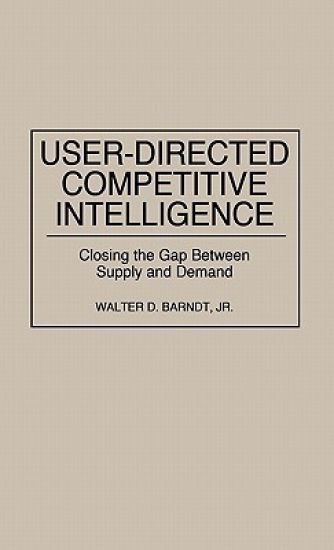
User-Directed Competitive Intelligence

User-Directed Competitive Intelligence

Walter D. Barndt

Praeger Publishers Inc
1994
sidottu
This is the first book to address the real issues and problems confronting the competitive intelligence industry today. It pinpoints the reason why competitive intelligence is on hold in corporate America and offers practical advice and solutions to position competitive intelligence systems as the systems of choice for intelligence users. The key is to stimulate demand and the author tells us why and how. A must read for intelligence providers, for managers and intelligence users, and for management program faculty and students in our colleges and universities.The author identifies missing links in the system--purpose, domain, terminology, and research. He identifies value-added opportunities for strengthening competitive intelligence programs by focusing on user needs and benefits. How to define and measure the benefits of a Competitive Intelligence program, as the primary source of competitive advantage, the key question plaguing intelligence providers, is addressed and answered.
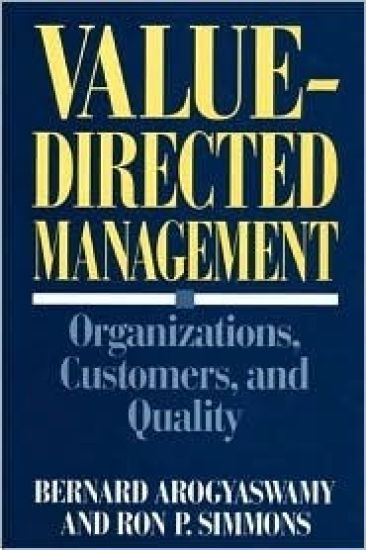
Value-Directed Management

Value-Directed Management

Bernard Arogyaswamy; Ronald P. Simmons

Praeger Publishers Inc
1993
sidottu
Arogyaswamy and Simmons combine the technique of value analysis and the concept of the value chain to build a perspective on value that is at once comprehensive and practical. They provide a methodology for formulating value-based strategy as well as a system for managing the value-directed organization. The management system proposed is based upon the high value Just-in-Time (JIT) and Total Quality Control (TQC) principles successfully deployed by numerous Japanese (and more recently American) firms. In a sense, this book brings together the American and Japanese streams of value creation.Essentially, the authors argue that accepting, and indeed increasing, interdependencies within activities (design, operations, marketing) is imperative in order not only to create value but also to build the value-creating organization. Effective integration among activities is the second key ingredient, while involvement by deemphasizing power-based relationships--by providing knowledge and information, as well as the opportunity and the desire to use both--is the third requirement, and one that makes the process of value creation self-sustaining. The authors discuss the cultural traits most conducive to value enhancement and specifically tackle the ingraining process. The measurement of improvements both in value-as received and in the process of value delivery itself is extensively discussed. Numerous practical value indicators to assess progress in value creation are proposed. Being a judicious how-to, why-to amalgam, the book will appeal equally to executives and managers seeking to install value as a guide to action, as well as to graduate and advance undergraduate students seeking the rationale underlying value management.
Self-Directed Growth

Self-Directed Growth

Douglas L. Robertson

Accelerated Development
1988
nidottu
Self-Directed Growth is a valuable map to the no-man’s land where education, philosophy, adult-development, and counseling meet. This is the trackless waste that we usually encounter when we try to explore the relation between learning and personal meaning. The book helps the student wrestle with issues of identity, knowledge, change, and purpose. Betteryet, it does so in a clear sequence of steps that keep the student on track. With the average” student today being more and more likely to be beyond the traditional college age, this map of the territory of self-directed learning is long overdue. Too many of its would-be competitors err either by being about adult education,” while leaving out anything for learners themselves, or by being cookbooks full of recipes for how to throw off the past or dive into the future, while leaving out the critical process of learning. Robertson’s book will be used in many ways. Self-directed learners, either inside an educational institution or outside, will use it to launch themselves on journeys of self-discovery. Groups of them, working under the guidance of a mentor, will use it as a text for exciting new kinds of courses. And teachers will use it as a guide to reorienting their own efforts away from implanting content and toward developing students.
EGFR-Directed Therapy in Lung Cancer

EGFR-Directed Therapy in Lung Cancer

So Yeon Kim; Daniel B. Costa; Daisuke Shibahara; Susumu Kobayashi; Balazs Halmos

Cambridge University Press
2023
pokkari
Epidermal growth factor receptor (EGFR)-mutant non-small cell lung cancer (NSCLC) is a clinically important driver alteration affecting approximately one-third of lung cancer patients. Treatments for EGFR-exon 19 deletion and exon 21 L858R NSCLC have evolved over the last decade from first-generation reversible tyrosine kinase inhibitors (TKI) to third-generation irreversible TKIs, of which osimertinib has been the widely accepted as first-line therapy. Despite survival improvement seen with osimertinib and its efficacy against acquired T790M mutation, resistance through on-target and off-target pathways eventually develop. This Element describes the structural biology and pathophysiology of EGFR-mutant NSCLC and discusses past, current, and future treatment options in the metastatic, neoadjuvant, and adjuvant settings. It describes the biology and recently approved treatment for EGFR-exon 20 insertion mutation and the treatment for the uncommon exon 18 (G719X), 20 (S768I), and 21 (L861Q) mutations. It also outlines the promising clinical applications of circulating tumor DNA (ctDNA).
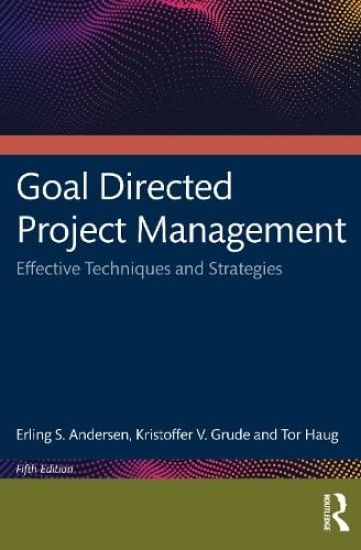
Goal Directed Project Management

Goal Directed Project Management

Erling S. Andersen; Kristoffer V. Grude; Tor Haug

TAYLOR FRANCIS LTD
2025
nidottu
GDPM is a method developed by the authors based on practical experience. It has been refined over 40 years, and still widespread as curricular in universities/colleges and adopted as standard approach by organizations all over the world.The book is different from other textbooks in project management as it is a focused approach on how to do it, rather than general discussion. The book emphasizes PSO (People, System and Organisational development), the need to develop People (training and motivation) and Organization in conjunction with Systems/technical development if you want desired results. The book presents detailed and practical guidance on how to plan, organize and control PSO projects through hierarchical planning with practical methods and tools (milestone and activity planning and responsibility charts). Uncertainty and multi project management is also covered.New in this edition is benefit realization. Most of the work on benefits realization takes place after the deliveries have been completed, but a lot can be implemented within the framework of the project. Research shows that the greatest degree of project success is achieved when there is a close relationship between benefits realization and project management, and between project owner and project manager.
Goal Directed Project Management

Goal Directed Project Management

Erling S. Andersen; Kristoffer V. Grude; Tor Haug

TAYLOR FRANCIS LTD
2025
sidottu
GDPM is a method developed by the authors based on practical experience. It has been refined over 40 years, and still widespread as curricular in universities/colleges and adopted as standard approach by organizations all over the world.The book is different from other textbooks in project management as it is a focused approach on how to do it, rather than general discussion. The book emphasizes PSO (People, System and Organisational development), the need to develop People (training and motivation) and Organization in conjunction with Systems/technical development if you want desired results. The book presents detailed and practical guidance on how to plan, organize and control PSO projects through hierarchical planning with practical methods and tools (milestone and activity planning and responsibility charts). Uncertainty and multi project management is also covered.New in this edition is benefit realization. Most of the work on benefits realization takes place after the deliveries have been completed, but a lot can be implemented within the framework of the project. Research shows that the greatest degree of project success is achieved when there is a close relationship between benefits realization and project management, and between project owner and project manager.