Kirjojen hintavertailu. Mukana 12 595 353 kirjaa ja 12 kauppaa.

Kirjahaku

Etsi kirjoja tekijän nimen, kirjan nimen tai ISBN:n perusteella.

1000 tulosta hakusanalla Dominic

Undocumented Dominican Migration

Undocumented Dominican Migration

Frank Graziano

University of Texas Press
2013
nidottu
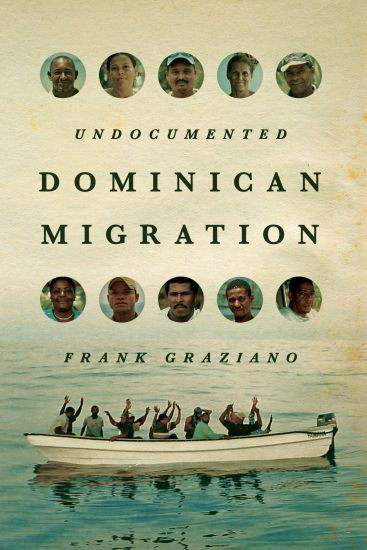
Undocumented Dominican Migration is the first comprehensive study of boat migration from the Dominican Republic to Puerto Rico. It brings together the interactive global, cultural, and personal factors that induce thousands of Dominicans to journey across the Mona Passage in attempts to escape chronic poverty. The book provides in-depth treatment of decision-making, experiences at sea, migrant smuggling operations, and U.S. border enforcement. It also explores several topics that are rare in migration studies. These include the psychology of migrant motivation, religious beliefs, corruption and impunity, procreation and parenting, compulsive recidivism after failed attempts, social values in relation to law, marriage fraud, and the use of false documents for air travel from Puerto Rico to the mainland United States.Frank Graziano’s extensive fieldwork among migrants, smugglers, and federal agencies provides an authority and immediacy that brings the reader close to the migrants’ experiences. The exhaustive research and multidisciplinary approach, highly readable narrative, and focus on lesser-known emigrants make Undocumented Dominican Migration an essential addition to public and academic debates about migration.
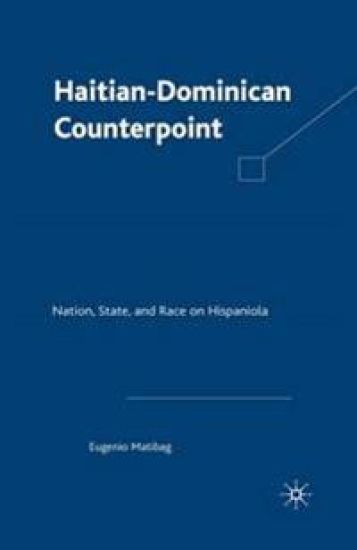
Haitian-Dominican Counterpoint

Haitian-Dominican Counterpoint

E. Matibag

Palgrave Macmillan
2003
sidottu
What would the island of Hispaniola look like if viewed as a loosely connected system? That is the question Haitian-Dominican Counterpointseeks to answer as it surveys the insular space shared by Haiti and the Dominican Republic throughout their parallel histories. For beneath the familiar tale of hostilities, the systemic perspective reveals a lesser-known, "unitarian" narrative of interdependencies and reciprocal influences shaping each country'sidentity. In view of the sociocultural and economic linkages connecting the two countries, their relations would have to resemble not so much acockfight (the conventional metaphor) as a serial and polyrhythmic counterpoint.
The Dominican Americans

The Dominican Americans

Ramona Hernandez; Silvio Torres-Saillant

Greenwood Press
1998
sidottu
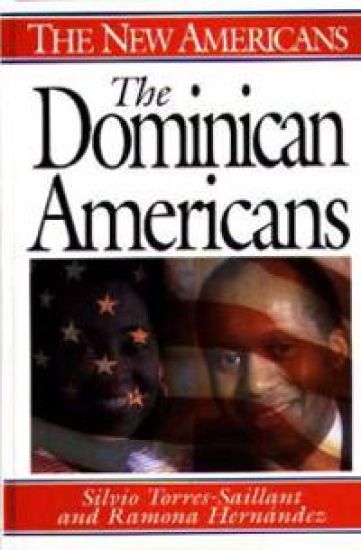
This profile of Dominican Americans closes a critical gap in information about the accomplishments of one of the largest immigrant groups in the United States. Beginning with a look at the historical background and the roots of native Dominicans, this book then carries the reader through the age-old romance of U.S. and Dominican relations. With great detail and clarity, the authors explain why the Dominicans left their land and came to the United States. The book includes discussions of education, health issues, drugs and violence, the visual and performing arts, popular music, faith, food, gender, and race. Most important, this book assesses how Dominicans have adapted to America, and highlights their losses and gains. The work concludes with an evaluation of Dominicans' achievements since their arrival as a group three decades ago and shows how they envision their continued participation in American life. Biographical profiles of many notable Dominican Americans such as artists, sports greats, musicians, lawyers, novelists, actors, and activists, highlight the text.The authors have created a novel book as they are the first to examine Dominicans as an ethnic minority in the United States and highlight the community's trials and tribulations as it faces the challenge of survival in a economically competitive, politically complex, and culturally diverse society. Students and interested readers will be engaged by the economic and political ties that have attached Americans to Dominicans and Dominicans to Americans for approximately 150 years. While massive immigration of Dominicans to the United States began in the 1960s, a history of previous contact between the two nations has enabled the development of Dominicans as a significant component of the U.S. population. Readers will also understand the political and economic causes of Dominican emigration and the active role the United States government had in stimulating Dominican immigration to the United States. This book traces the advances of Dominicans toward political empowerment and summarizes the cultural expressions, the survival strategies, and the overall adaptation of Dominicans to American life.
The Dominica Story

The Dominica Story

Lennox Honychurch

Macmillan Education
1995
nidottu
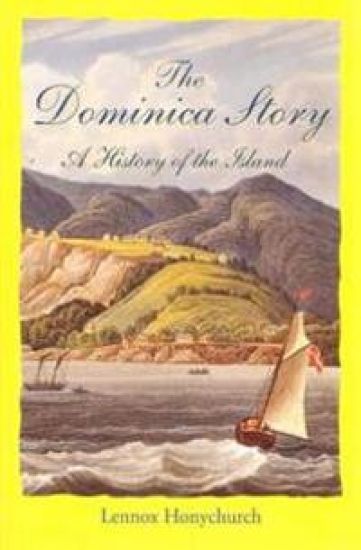
This text traces the origin and development of this island from its volcanic formation to 1994. The author interweaves the island's history with geography, ecology, folklore and social custom to inform the reader about both Dominica and Caribbean history as a whole.
The Dominican Republic

The Dominican Republic

Howard J. Wiarda; Michael J Kryzanek

Routledge
2019
sidottu
Much has occurred in the Dominican Republic since the first edition of this critically acclaimed profile was published ten years ago: Democratic government has become more firmly established, if no less contentious, and the fragile economy, though still the definitive element in Dominican life, has benefited from changes in global trade patterns and corporate investment. Yet the Dominican Republic remains a nation mired in poverty and social tension. As the country heads toward the quincentennial of Columbus's landing in the New World, there is both anticipation and apprehension as the citizenry looks back proudly to their heritage and forward to a future clouded by uncertainties. This edition examines the changing character of governance and the political changes that have returned Joaquin Balaguer to the presidency for an unprecedented sixth term. The economic transitions that have made the Dominican Republic an attractive site for foreign business and tourism are also addressed, along with the economic causes of urban and rural unrest and the emigration of Dominicans to Puerto Rico and the United States. Critical public policy issues such as energy, taxation, population control, and education are explored, together with the social and political conflicts created by debt, austerity, and fiscal reform. Finally, the authors analyze the Dominican Republic's relations with its neighbors and major trading partners, giving special emphasis to the impact of new global and regional ties. Throughout, they focus on the struggle to maintain democracy in the face of the inevitable dislocations caused by economic reform and modernization.
The Dominican Republic

The Dominican Republic

Howard J. Wiarda; Michael J Kryzanek

Routledge
2021
nidottu
Much has occurred in the Dominican Republic since the first edition of this critically acclaimed profile was published ten years ago: Democratic government has become more firmly established, if no less contentious, and the fragile economy, though still the definitive element in Dominican life, has benefited from changes in global trade patterns and corporate investment. Yet the Dominican Republic remains a nation mired in poverty and social tension. As the country heads toward the quincentennial of Columbus's landing in the New World, there is both anticipation and apprehension as the citizenry looks back proudly to their heritage and forward to a future clouded by uncertainties. This edition examines the changing character of governance and the political changes that have returned Joaquin Balaguer to the presidency for an unprecedented sixth term. The economic transitions that have made the Dominican Republic an attractive site for foreign business and tourism are also addressed, along with the economic causes of urban and rural unrest and the emigration of Dominicans to Puerto Rico and the United States. Critical public policy issues such as energy, taxation, population control, and education are explored, together with the social and political conflicts created by debt, austerity, and fiscal reform. Finally, the authors analyze the Dominican Republic's relations with its neighbors and major trading partners, giving special emphasis to the impact of new global and regional ties. Throughout, they focus on the struggle to maintain democracy in the face of the inevitable dislocations caused by economic reform and modernization.
The Dominicans in the Americas and the Philippines (c. 1500–c. 1820)
The Dominicans in the Americas and the Philippines (c. 1500–c. 1820) is part of a renewal of interest in the global history of the Dominican Order. Many of the essays were carefully selected among some of the papers presented at the III International Conference on the History of the Order of Preachers in the Americas, a gathering that stands in continuity with the conferences of Mexico (2013) and Bogotá (2016).This book, the contributors of which are active researchers specializing in the history of the Order of Preachers in Latin America, is organized in four parts: Women and the Order of Preachers; “Benditos Bienes”: Libraries and Material Patrimony; Missions, Devotional, and Daily Life; and The Order of Preachers and Their Writings. Contributions deal with different subfields including art history, gender studies, history of the book, and intellectual history more broadly. Additionally, it contains a chapter examining the historiography of the Order of Preachers in Latin America.Covering the time range from 1510 to the early nineteenth century, the book fills a gap in the historiography of the Order of Preachers in the Americas, especially in English-language scholarly literature. Students of Latin American history, the history of Christianity, and the history of global Catholicism will surely find the volume to be of great interest.
The Dominicans in the Americas and the Philippines (c. 1500–c. 1820)
The Dominicans in the Americas and the Philippines (c. 1500–c. 1820) is part of a renewal of interest in the global history of the Dominican Order. Many of the essays were carefully selected among some of the papers presented at the III International Conference on the History of the Order of Preachers in the Americas, a gathering that stands in continuity with the conferences of Mexico (2013) and Bogotá (2016). This book, the contributors of which are active researchers specializing in the history of the Order of Preachers in Latin America, is organized in four parts: Women and the Order of Preachers; “Benditos Bienes”: Libraries and Material Patrimony; Missions, Devotional, and Daily Life; and The Order of Preachers and Their Writings. Contributions deal with different subfields including art history, gender studies, history of the book, and intellectual history more broadly. Additionally, it contains a chapter examining the historiography of the Order of Preachers in Latin America. Covering the time range from 1510 to the early nineteenth century, the book fills a gap in the historiography of the Order of Preachers in the Americas, especially in English-language scholarly literature. Students of Latin American history, the history of Christianity, and the history of global Catholicism will surely find the volume to be of great interest.
The Dominican Rite: History and Liturgy
The renewal in the Church's liturgical life effected by Pope Benedict XVI's Motu Proprio Summorum Pontificum has generated a great deal of interest, not only in the Traditional Roman Rite in Latin, but also in the revival of other western rites, both of provinces and of Religious Orders.The Dominican Rite is an ancient and venerable rite in the Western Church, and today is gaining renewed interest both from Dominicans attempting to recover their roots, as well as laity taking up the subject of liturgy. This reprint of Archdale A. King's study of the Dominican Liturgy traces the history and development of the rite, as well as the spirituality and rubrics. May this work assist those looking to recoup the tradition of Catholic worship passed on by the sons of St. Dominic for generations.
The Dominican Republic and the Beginning of a Revolutionary Cycle in the Spanish Caribbean
In this book, Álvarez-López details the history of revolution in the Dominican Republic, which was an infant independent nation struggling to preserve its political independence from Haiti and from the expansionist policies of northern European countries and the United States. In 1861, the Dominican Republic was annexed to Spain. The Spanish empire expansionist policy sought to preserve Cuba and Puerto Rico, and the acquisition of the Dominican Republic strengthened Spain's hold on the Antilles Empire. Spain's policies strengthened the political objectives of the Dominican ruling class, which were political stability and control of the political power under a Caucasian empire. While both these objectives were achieved, the new colonial experiment was a total failure. The exclusion of the native ruling class, over taxation, economic exploitation, coercive imposition of the Catholic Church customs, prejudice against blacks and mulattos led to war, ending with the defeat of the Spanish Empire. This defeat opened a revolutionary cycle in the Spanish Caribbean.
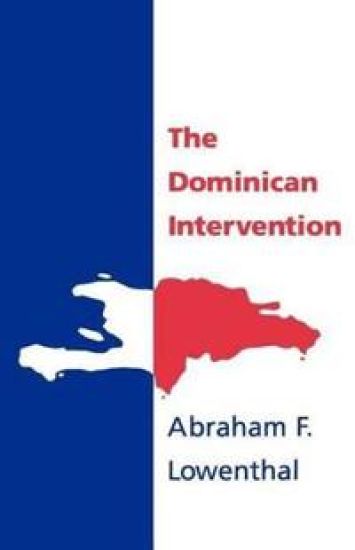
The Dominican Intervention

The Dominican Intervention

Abraham F. Lowenthal

Johns Hopkins University Press
1995
pokkari
"Reprint of 1972 classic on US intervention in the Dominican Republic (1965). Excellent analysis of apparent non-rational bases of US actions contains a wealth of information"--Handbook of Latin American Studies, v. 57.
Early Dominicans

Early Dominicans

Paulist Press International,U.S.
1982
nidottu
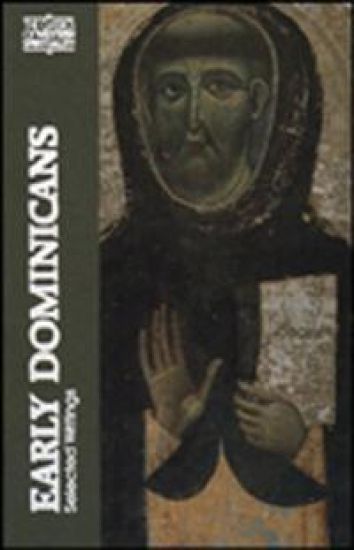
"...clearly a must for all libraries...and for all readers interested in spirituality." Religious Studies Review Early Dominicans: Selected Writings edited with an introduction by Simon Tugwell, O.P. [reface buy Father Vincent de Couesnongle, O.P. "He [Dominic] thought he would only really be a member of Christ's Body when he could spend himself utterly with all his strength in the winning of souls, just as the Saviour of us all, the Lord Jesus, gave himself up entirely for our salvation." Jordan of Saxony (d. 1237) The spirituality of St. Dominic and his early followers was a dynamic force in thirteenth-century Europe. In this volume the writings of Dominic's early disciples are presented in a fresh, lively translation by Simon Tugwell, O.P., of Blackfriars, Oxford. The simplicity, ruggedness, and clarity of the Dominicans' biblically-based, Christ-centered spirituality is illustrated in Jean de Mailly's Life of St. Dominic, The Nine Ways of Prayer of St. Dominic,and the writings of Jordan of Saxony, Peter of Rheims, Thomas Agni, and Robert Kilwardby. The importance of preaching in the Dominican tradition is reflected in the book's main selection, Humbert of Romans' Treatise on the Formation of Preachers. The breadth of Dominican piety represented by these selections and the fine preface by the Master of the Order of Preachers, Father Vincent de Couesnongle, O.P., plus Tugwell's brilliant introduction, called by Spirituality Today "the best treatise on Dominican spirituality now available," combine in making this a truly classic volume. †
The Dominican Racial Imaginary

The Dominican Racial Imaginary

Milagros Ricourt

Rutgers University Press
2016
nidottu
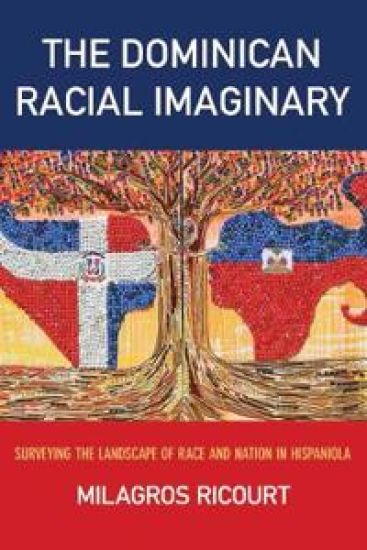
Honorable mention, 2017 Gordon K. and Sybil Lewis Award from the Caribbean Studies Association This book begins with a simple question: why do so many Dominicans deny the African components of their DNA, culture, and history? Seeking answers, Milagros Ricourt uncovers a complex and often contradictory Dominican racial imaginary. Observing how Dominicans have traditionally identified in opposition to their neighbors on the island of Hispaniola—Haitians of African descent—she finds that the Dominican Republic’s social elite has long propagated a national creation myth that conceives of the Dominican as a perfect hybrid of native islanders and Spanish settlers. Yet as she pores through rare historical documents, interviews contemporary Dominicans, and recalls her own childhood memories of life on the island, Ricourt encounters persistent challenges to this myth. Through fieldwork at the Dominican-Haitian border, she gives a firsthand look at how Dominicans are resisting the official account of their national identity and instead embracing the African influence that has always been part of their cultural heritage. Building on the work of theorists ranging from Edward Said to Édouard Glissant, this book expands our understanding of how national and racial imaginaries develop, why they persist, and how they might be subverted. As it confronts Hispaniola’s dark legacies of slavery and colonial oppression, The Dominican Racial Imaginary also delivers an inspiring message on how multicultural communities might cooperate to disrupt the enduring power of white supremacy.
The Dominican Racial Imaginary

The Dominican Racial Imaginary

Milagros Ricourt

Rutgers University Press
2016
sidottu
Honorable mention, 2017 Gordon K. and Sybil Lewis Award from the Caribbean Studies Association This book begins with a simple question: why do so many Dominicans deny the African components of their DNA, culture, and history? Seeking answers, Milagros Ricourt uncovers a complex and often contradictory Dominican racial imaginary. Observing how Dominicans have traditionally identified in opposition to their neighbors on the island of Hispaniola—Haitians of African descent—she finds that the Dominican Republic’s social elite has long propagated a national creation myth that conceives of the Dominican as a perfect hybrid of native islanders and Spanish settlers. Yet as she pores through rare historical documents, interviews contemporary Dominicans, and recalls her own childhood memories of life on the island, Ricourt encounters persistent challenges to this myth. Through fieldwork at the Dominican-Haitian border, she gives a firsthand look at how Dominicans are resisting the official account of their national identity and instead embracing the African influence that has always been part of their cultural heritage. Building on the work of theorists ranging from Edward Said to Édouard Glissant, this book expands our understanding of how national and racial imaginaries develop, why they persist, and how they might be subverted. As it confronts Hispaniola’s dark legacies of slavery and colonial oppression, The Dominican Racial Imaginary also delivers an inspiring message on how multicultural communities might cooperate to disrupt the enduring power of white supremacy.
The Dominican Tradition

The Dominican Tradition

Phyllis Zagano; Thomas McGonigle

Liturgical Press
2006
pokkari
St. Dominic, who died in 1221, took to heart Jesus' charge to make disciples of all nations. He founded a religious community, the Order of Preachers, which differed from most orders of his day. Dominic trained preachers who traveled anywhere and everywhere to spread the Gospel.The Dominicans continue to flourish today. The Dominican Tradition, the first in a spirituality anthology series, provides readers a window into Dominican spirituality. You will learn the core values that shape their way of life. Mostly, you will come to realize that the spiritual legacy established by Dominic is as vibrant today as it was centuries ago.Phyllis Zagano, PhD, is senior research associate-in-residence at Hofstra University, where she teaches in the Department of Religion. She is also the author of Woman to Woman published by Liturgical Press.Thomas McGonigle, OP, teaches in the history department at Providence College in Rhode Island. He specializes in Dominican spirituality and history.
The Dominican Republic and the United States

The Dominican Republic and the United States

G. Pope Atkins; Larman C. Wilson

University of Georgia Press
1998
pokkari
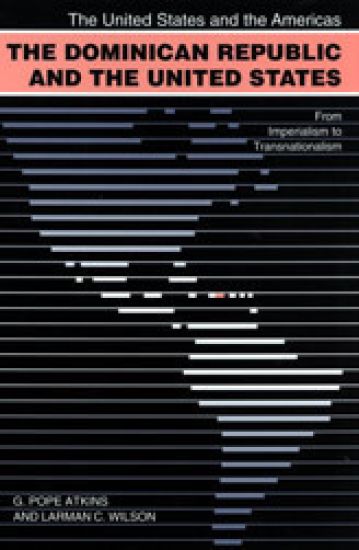
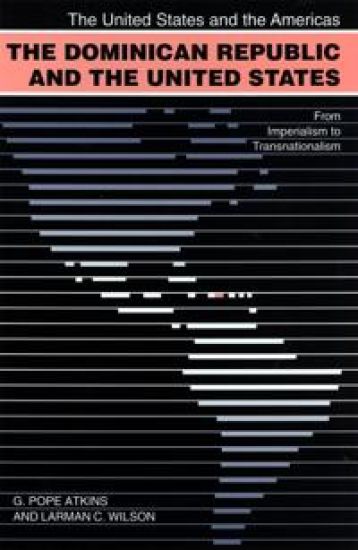
This study of the political, economic, and sociocultural relationship between the Dominican Republic and the United States follows its evolution from the middle of the nineteenth century to the mid-1990s. It deals with the interplay of these dimensions from each country's perspective and in both private and public interactions.From the U.S. viewpoint, important issues include interpretation of the rise and fall of the Dominican Republic's strategic importance, the legacy of military intervention and occupation, the problem of Dominican dictatorship and instability, and vacillating U.S. efforts to "democratize" the country. From the Dominican perspective, the essential themes involve foreign policies adopted from a position of relative weakness, ambivalent love-hate views toward the United States, emphasis on economic interests and the movement of Dominicans between the two countries, international political isolation, the adversarial relationship with neighboring Haiti, and the legacy of dictatorship and the uneven evolution of a Dominican-style democratic system.The Dominican Republic and the United States is the eleventh book in The United States and the Americas series, volumes suitable for classroom use.
The Dominican Republic and the United States

The Dominican Republic and the United States

G. Pope Atkins; Larman C. Wilson

University of Georgia Press
2017
sidottu
This study of the political, economic, and sociocultural relationship between the Dominican Republic and the United States follows its evolution from the middle of the nineteenth century to the mid-1990s. It deals with the interplay of these dimensions from each country's perspective and in both private and public interactions.From the U.S. viewpoint, important issues include interpretation of the rise and fall of the Dominican Republic's strategic importance, the legacy of military intervention and occupation, the problem of Dominican dictatorship and instability, and vacillating U.S. efforts to "democratize" the country. From the Dominican perspective, the essential themes involve foreign policies adopted from a position of relative weakness, ambivalent love-hate views toward the United States, emphasis on economic interests and the movement of Dominicans between the two countries, international political isolation, the adversarial relationship with neighboring Haiti, and the legacy of dictatorship and the uneven evolution of a Dominican-style democratic system.The Dominican Republic and the United States is the eleventh book in The United States and the Americas series, volumes suitable for classroom use.
The Dominican Republic Reader

The Dominican Republic Reader

Duke University Press
2014
sidottu
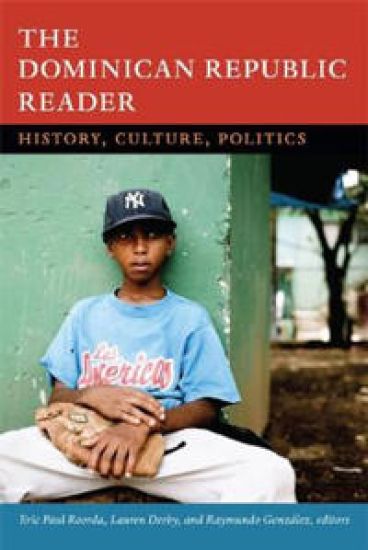
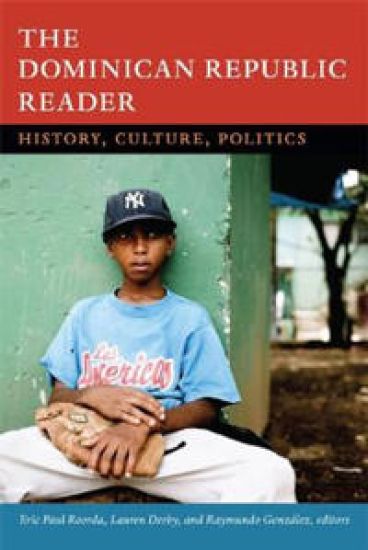
Despite its significance in the history of Spanish colonialism, the Dominican Republic is familiar to most outsiders through only a few elements of its past and culture. Non-Dominicans may be aware that the country shares the island of Hispaniola with Haiti and that it is where Christopher Columbus chose to build a colony. Some may know that the country produces talented baseball players and musicians; others that it is a prime destination for beach vacations. Little else about the Dominican Republic is common knowledge outside its borders. This Reader seeks to change that. It provides an introduction to the history, politics, and culture of the country, from precolonial times into the early twenty-first century. Among the volume's 118 selections are essays, speeches, journalism, songs, poems, legal documents, testimonials, and short stories, as well as several interviews conducted especially for this Reader. Many of the selections have been translated into English for the first time. All of them are preceded by brief introductions written by the editors. The volume's eighty-five illustrations, ten of which appear in color, include maps, paintings, and photos of architecture, statues, famous figures, and Dominicans going about their everyday lives.
The Dominican Republic Reader

The Dominican Republic Reader

Duke University Press
2014
pokkari
Despite its significance in the history of Spanish colonialism, the Dominican Republic is familiar to most outsiders through only a few elements of its past and culture. Non-Dominicans may be aware that the country shares the island of Hispaniola with Haiti and that it is where Christopher Columbus chose to build a colony. Some may know that the country produces talented baseball players and musicians; others that it is a prime destination for beach vacations. Little else about the Dominican Republic is common knowledge outside its borders. This Reader seeks to change that. It provides an introduction to the history, politics, and culture of the country, from precolonial times into the early twenty-first century. Among the volume's 118 selections are essays, speeches, journalism, songs, poems, legal documents, testimonials, and short stories, as well as several interviews conducted especially for this Reader. Many of the selections have been translated into English for the first time. All of them are preceded by brief introductions written by the editors. The volume's eighty-five illustrations, ten of which appear in color, include maps, paintings, and photos of architecture, statues, famous figures, and Dominicans going about their everyday lives.