Kirjojen hintavertailu. Mukana 11 504 854 kirjaa ja 12 kauppaa.

Kirjahaku

Etsi kirjoja tekijän nimen, kirjan nimen tai ISBN:n perusteella.

1000 tulosta hakusanalla Edmundo LLAMAS ALBA

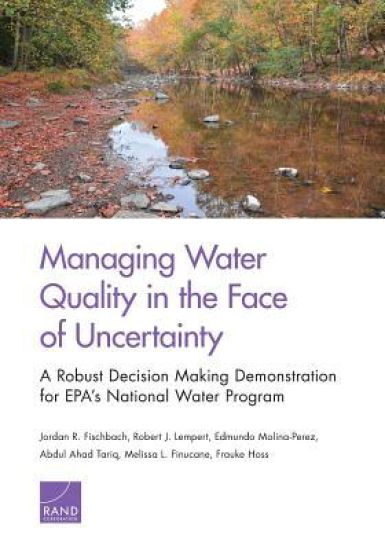
Managing Water Quality in the Face of Uncertainty

Managing Water Quality in the Face of Uncertainty

Jordan R. Fischbach; Robert J. Lempert; Edmundo Molina-Perez; Abdul Ahad Tariq; Melissa L. Finucane; Frauke Hoss

RAND
2015
pokkari
The U.S. Environmental Protection Agency and its partners develop implementation plans to meet water quality standards. Climate change and other key drivers may significantly affect these plans, but are often neglected due to uncertainty. This study uses two case studies to demonstrate how Robust Decision Making (RDM) can help to address future uncertainty by identifying vulnerabilities in water quality plans and suggesting appropriate responses.
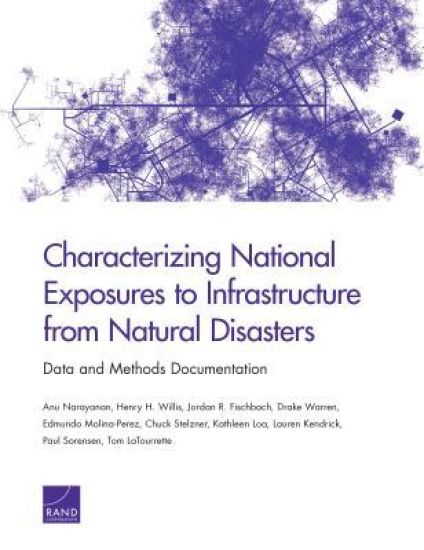
Characterizing National Exposures to Infrastructure from Natural Disasters

Characterizing National Exposures to Infrastructure from Natural Disasters

Anu Narayanan; Henry H. Willis; Jordan R. Fischbach; Drake Warren; Edmundo Molina-Perez; Chuck Stelzner; Kathleen Loa; Lauren Kendrick; Paul Sorensen; Tom LaTourrette

RAND
2016
pokkari
This report serves as the technical documentation and reference document for the data, methods, and analytic approach used in the analysis of national exposures to infrastructure from natural disasters. The analysis includes 11 natural hazards and five infrastructure sectors. Analytic findings about current and future exposures of infrastructure in the United States drawn from this data analysis are documented in a separate report.
Current and Future Exposure of Infrastructure in the United States to Natural Hazards

Current and Future Exposure of Infrastructure in the United States to Natural Hazards

Henry H. Willis; Anu Narayanan; Jordan R. Fischbach; Edmundo Molina-Perez; Chuck Stelzner; Kathleen Loa; Lauren Kendrick

RAND
2016
pokkari
Communities, companies, and governments at all levels in the United States are making decisions that will influence where, what and how infrastructure will be built. This report describes insights about exposures from natural hazards now and in the future, as well as gaps in data that, if filled, could improve the nation s ability to assess infrastructure risk and improve infrastructure resilience."
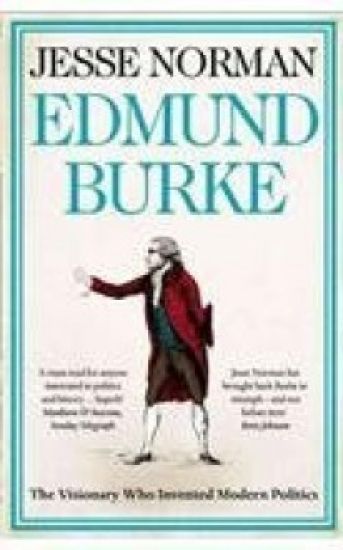
Edmund Burke

Edmund Burke

Jesse Norman

Harpercollins Publishers
2014
pokkari
Longlisted for the Orwell Prize and the Samuel Johnson prize for non-fiction; both conservative and subversive, Burkeâ??s beliefs have never been more relevant, as MP Jesse Norman explains.
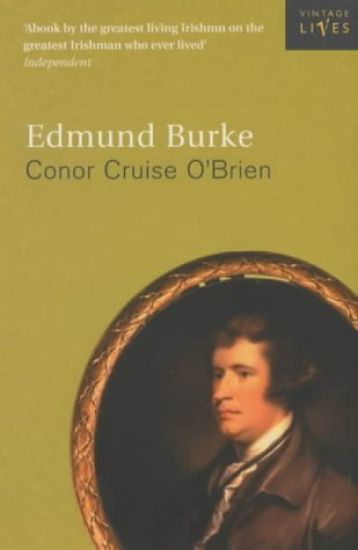
Edmund Burke

Edmund Burke

Conor Cruise O'Brien

Vintage Publishing
2002
pokkari
Statesman, political thinker, orator and ardent campaigner, Edmund Burke was one of the greatest minds of the 18th century. His ideas and principles were expressed in the great debates over liberty, the rights of man and the American and French Revolutions.
The Portable Edmund Burke

The Portable Edmund Burke

Edmund Burke

PENGUIN BOOKS LTD
1999
pokkari
The intellectual wellspring of modern political conservatism, Edmund Burke is also considered a significant figure in aesthetic theory and cultural studies. As a member of the House of Commons during the late eighteenth century, Burke shook Parliament with his powerful defense of the American Revolution and the rights of persecuted Catholics in England and Ireland; his indictment of the English rape of the Indian subcontinent; and, most famously, his denouncement of English Jacobin sympathizers during the French Revolution. The Portable Edmund Burke is the fullest one- volume survey of Burke's thought, with sections devoted to his writings on history and culture, politics and society, the American Revolution, Ireland, colonialism and India, and the French Revolution. This volume also includes excerpts from his letters and an informative Introduction surveying Burke's life, ideas, and his reception and influence in the nineteenth and twentieth centuries.
Edmund Campion: Jesuit and Martyr

Edmund Campion: Jesuit and Martyr

Evelyn Waugh

Penguin Classics
2012
pokkari
In 1581 Edmund Campion, a Jesuit priest working underground in Protestant England, was found guilty of treason and hanged, drawn and quartered at Tyburn. Years later he would be beatified. Evelyn Waugh's compelling and elegant narrative is a homage to the man he revered as a poet, scholar, hero and martyr. He tells Campion's story with a novelist's eye for detail, from his success as an Oxford scholar, through his travels around Europe, his doomed secret mission to England and on to his capture and dramatic trial.Vividly re-creating a time of persecution and surveillance, Evelyn Waugh - author of A Handful of Dust, Scoop, Vile Bodies, Brideshead Revisited and the Sword of Honour trilogy - writes that 'the hunted, trapped murdered priest is our contemporary and Campion's voice sounds to us across the centuries'.
Edmund of Abingdon

Edmund of Abingdon

H. P. Forshaw

Oxford University Press
1973
sidottu
Written before he became Archbishop of Canterbury in 1234, Speculum Ecclesiae presents Edmund of Abingdon's thoughts on an ideal religious life of meditation and contemplation. The original Latin text is here faced with a vulgate Latin translation of one of the Anglo-Norman versions.
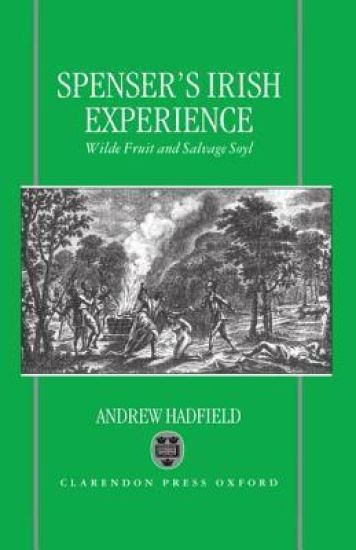
Edmund Spenser's Irish Experience

Edmund Spenser's Irish Experience

Andrew Hadfield

Clarendon Press
1997
sidottu
Spenser's Irish Experience is the first sustained critical work to argue that Edmund Spenser's perception and fragmented representation of Ireland shadows the whole narrative of his major work, The Faerie Queene, traditionally regarded as one of the finest achievements of the English Renaissance. The poem has often been read in specifically English contexts but, as Hadfield argues, demands to be read in terms of England's expanding colonial hegemony within the British Isles and the ensuing fear that such national ambition would actually lead to the destruction of England's post-Reformation legacy. Spenser should be seen less as an English writer and more as a new English writer in Ireland, his prose and poetry expressing the hopes and fears of his class. Where A View of the Present State of Ireland attempts to provide a violent political solution to England's Irish problem, The Faerie Queene exposes the apocalyptic fear that there may be no solution at all. The book contains an analysis of Spenser's life on the Munster plantation, readings of the political rhetoric and antiquarian discourse of A View of the Present State of Ireland, and three chapters which argue the case that the apparently Anglocentric allegory of The Faerie Queene reveals a land gradually--but clearly--transformed into its Irish other. Spenser emerges from this study as a writer whose experience in Ireland rendered him implacably opposed to the vacillations of his English monarch.
Edmund Burke: Volume I, 1730-1784

Edmund Burke: Volume I, 1730-1784

F. P Lock

Clarendon Press
1999
sidottu
Edmund Burke (1730-1797) was one of the most profound, versatile, and accomplished thinkers of the eighteenth century. Born and educated in Dublin, he moved to London to study law, but remained to make a career in English politics, completing A Philosophical Enquiry into the Origin of Our Ideas of the Sublime and Beautiful (1757) before entering the political arena. A Member of Parliament for nearly thirty years, his speeches are still read and studied as classics of political thought, and through his best-known work, Reflections on the Revolution in France (1790) he has continued to exercise a posthumous influence as `the father of conservatism'. This is the first full, scholarly biography of Burke for over a generation, to be completed in two volumes. The first volume covers the years between 1730-1784, and describes his Irish upbringing and education, early writing, and his parliamentary career throughout the momentous years of the American War of Independence. Lavishly illustrated, it provides an authoritative account of the complexity and breadth of Burke's philosophical and political writing and examines its origins in his personal experiences and the political world of his day. This outstanding book will be be required reading for anybody seeking a fuller understanding of eighteenth-century history, philosophy, and political thought.
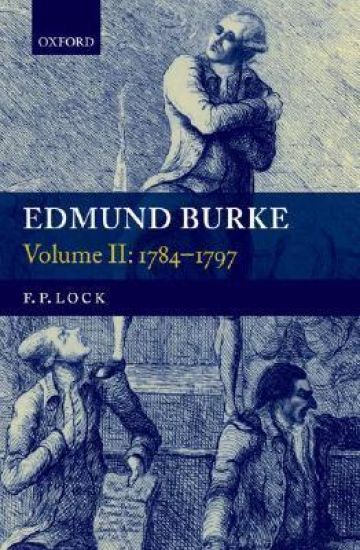
Edmund Burke, Volume II

Edmund Burke, Volume II

F. P. Lock

Clarendon Press
2006
sidottu
This is the second and concluding volume of a biography of Edmund Burke (1730-97), a key figure in eighteenth-century British and Irish politics and intellectual life. Covering the most interesting years of his life (1784-97), its leading themes are India and the French Revolution. Burke was largely responsible for the impeachment of Warren Hastings, former Governor-General of Bengal. The lengthy (145-day) trial of Hastings (which lasted from 1788 to 1795) is recognized as a landmark episode in the history of Britain's relationship with India. Lock provides the first day-by-day account of the entire trial, highlighting some of the many disputes about evidence as well as the great set speeches by Burke and others. In 1790, Burke published Reflections on the Revolution in France, the earliest sustained attack on the principles of the Revolution. Continuously in print ever since, the Reflections remains the most widely read and quoted book about the Revolution. The Reflections was followed by a series of anti-revolutionary writings, as Burke maintained his crusade against the Revolution to the end of his life. In addition to these leading themes, the biography examines many other topics in its coverage of Burke's busy and varied life: his parliamentary career; his family, friendships, and philanthropy; and his often difficult and obsessive personality. There are more than thirty illustrations, including many contemporary caricatures that convey how Burke was perceived by an often hostile and uncomprehending public. Controversial in his time, Burke is now regarded as one of the greatest of orators in the English language, as well as one of the most influential political philosophers in the Western tradition.
The Writings and Speeches of Edmund Burke: Volume VII: India: The Hastings Trial 1789-1794
This key volume specifically completes the collection of Edmund Burke's Indian Writings and Speeches which is set within the series, and is both an exposition of Burke's views on India from his coverage of the Hastings trial, and his views on maintaining the rule of a universal justice. The texts for the items, which have appeared in previous editions of Burke's Works, have been reconstructed, largely by the use of manuscripts. Indeed many of the shorter speeches appear here in print for the first time. The volume includes a key speech which introduced one of the main charges in the trial of Warren Hastings on an impeachment from 1789-1794, and an important report on the conduct of the trial. It closes with the enormously lengthy and significant speech in which Burke summed up the prosecution's case over nine days. However, this volume is not only a full exposition of Burke's views on India but contains much of great interest about other aspects of his thought. In particular, Burke saw himself in these years as being engaged in a battle against the lawless disruption of society, both in Europe and in Asia, in order to maintain the rule of a universal justice, a main theme of this volume.
The Writings and Speeches of Edmund Burke: Volume IX: Part I. The Revolutionary War, 1794-1797; Part II. Ireland
This volume of Burke's writings and speeches is divided into two parts. The first covers the period between the time of his retirement from the House of Commons in 1794 and his death in 1797. His main preoccupation during this period was, of course, the French Revolution and the progress of the war against France. Surveying developments with dismay and apprehension, he produced a critique of the Revolution which expressed much of his mature thinking on political and social life, and issued a clarion call for a European crusade to save civilization. Part II contains Burke's writings and speeches relating to Ireland. From his entry into political life, he was intensely interested in Irish problems, religious, economic, and constitutional, and in Anglo-Irish relations. Fervently believing that Great Britain and Ireland should be partners within the Empire, in his last years he was deeply disturbed by the influence of the French Revolution on Irish politics.
The Writings and Speeches of Edmund Burke: Volume VI: India: The Launching of the Hastings Impeachment 1786-1788
This volume continues the story of Burke and the affairs of the East India Company which was begun in Volume V (OUP 1981, #70.00, 0-19-822417-6). By 1786, Burke had fixed on Warren Hastings as the main culprit for the abuses that seemed to him so glaring. He greeted Hastings's return to Britain with a parliamentary attack which culminated in a trial by impeachment in the House of Lords. This was to be one of Burke's major preoccupations for the rest of his life. The material presented in this volume covers two years of proceedings in the House of Commons and the first session of the trial in the Lords. Its highlights are two great set-piece speeches delivered to the Commons, which can be reconstructed from manuscript material as well as from contemporary reports; and the four-day oration with which Burke opened the prosecution before the Lords: for this a complete verbatim shorthand record exists. The material in these and other speeches is not only central to an understanding of Burke and India, but to his moral and political thought as a whole in the years immediately before the outbreak of the French Revolution.
The Writings and Speeches of Edmund Burke: Volume III: Party, Parliament, and the American War 1774-1780
This volume of The Writings and Speeches of Edmund Burke continues the story of Edmund Burke, the Rockingham party in British politics, and the American crisis. By 1774 Burke was already recognized as a master of parliamentary debate and an accomplished writer. By 1780, however, his reputation was to have risen substantially. Probably the most important single reason was his Speech on Conciliation with America, which was presented to the House of Commons in March 1775, published, and circulated to a wide audience on both sides of the Atlantic. In that speech, Burke used the full force of his intellect and eloquence to set out the Rockinghams' first comprehensive plan for achieving lasting peace in the Empire. The public commendation he received helped him to gain recognition for offerings such as his second conciliation proposal in November 1775, and his Letter to the Sheriffs of Bristol in 1777. It also gave him some of the confidence he needed to announce the Whig party's historic conversion to a moderate reform programme in his celebrated speeches on economical reform in 1779 and 1780. Numerous writings and speeches in this volume are transcriptions of previously unpublished manuscripts from the collections at Sheffield and Northampton. These allow the reader new insights into the workings of Burke's mind not just in relation to the major political issues, but also to a multitude of engaging subjects such as education, capital punishment, religious dissent, and the return of the Rockingham Whigs to government power,
The Writings and Speeches of Edmund Burke: Volume I: The Early Writings
Volume 1 of the Writings and Speeches of Edmund Burke presents Burke's early literary writings up to 1765, and before he became a key political figure. It is the first fully annotated and critical edition, with comprehensive notes and an authoritative introduction. The writings published here introduce readers to Burke's early attempts at a public voice. They demonstrate in a variety of ways how determined he was to become involved in the social and intellectual life of his times. The one work of Burke's early life which has long been recognized as having prime critical significance, the Sublime and the Beautiful, is naturally found here. In addition the volume includes the first fully edited version of other works which have been neglected, notably the Vindication of Natural Society, a substantial satire on current philosophical and religious thought, the Abridgement of English History and the Hints for an Essay on the Drama. The volume also prints reliable texts of his early poems and prose `characters' as well as the first complete text of The Reformer since it was first published in 1748. This was a weekly paper devoted principally to the Dublin cultural scene and was edited by Burke shortly after he graduated from Trinity College, Dublin.
The Writings and Speeches of Edmund Burke: Volume VIII: The French Revolution 1790-1794
This is the first edition of Burke's famous Reflections on the Revolution in France to appear for twenty years. No edition of his other writings on the Revolution has appeared for almost a century. In these years, the background against which Burke wrote has been much studied, throwing new light on his motives for commentating on France, and the reasons why his writings were both widely read and widely rejected. Published two hundred years after the outbreak of the French Revolution, this edition shows that the issues raised by the most influential commentaries on that Revolution have yet to be resolved.