Kirjojen hintavertailu. Mukana 12 016 292 kirjaa ja 12 kauppaa.

Kirjahaku

Etsi kirjoja tekijän nimen, kirjan nimen tai ISBN:n perusteella.

1000 tulosta hakusanalla Edward Robson

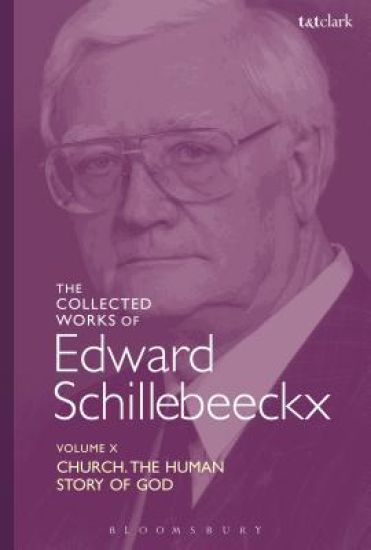
The Collected Works of Edward Schillebeeckx Volume 10
This book was originally planned as the 'ecclesiological' third part of Schillebeeckx Jesus trilogy. It indeed concludes his thinking about the relevance of the living Jesus through history, but with a different approach than originally intended. By the end of the 20th century, many believers have left the unworldly 'super-naturalistic' preconciliar church behind. Those who leave the church, often leave a church that claims to be the direct mediator of God's will. However, the church is not a flawless gift from heaven. It is the vulnerable work of human beings which tries to find accurate ways to comply to the heart of the gospel message. In a time that is characterized by polarization in the church, Schillebeeckx does not forget to look at the unprecedented and authentic flourishing of the gospel. This book therefore contains the testimony of a theologian who tried, during the course of his life, to describe what God can mean for people today.
The Collected Works of Edward Schillebeeckx Volume 11
This is a unique selection of Edward Schillebeeckx' collection, translated into English here for the first time. This is a collection of essays from one of the most eminent Catholic theologians of the late 20th century. Edward Schillebeeckx Collected Works bring together the most important and influential works of the Dutch Dominican and theologian Edward Schillebeeckx (1914-2009) in a reliable edition. All translations have been carefully checked or revised, some texts are presented in English for the first time. The page numbers of earlier editions are included. Each volume carries a foreword by an internationally renowned Schillebeeckx expert. This edition makes Schillebeeckx available for a new generation of scholars and students.
Collected Poems of Edward Thomas

Collected Poems of Edward Thomas

Edward Thomas

Faber Faber
2004
nidottu
Since the publication of Walter de la Mare's first edition of his poems in 1920, Edward Thomas has gradually come to be recognised as one of the great English poets of the 20th century.Though sometimes classified with Owen, Rosenberg and Sassoon as a 'war poet', he was rather a poet who died tragically in the war, and whose main subjects were the English countryside and its people, and the solitude of the observing self. The present edition offers the complete poems together with detailed editorial apparatus in what has become acknowledged as the standard edition by R. George Thomas. It also includes Thomas's remarkable prose War Diary of 1917.
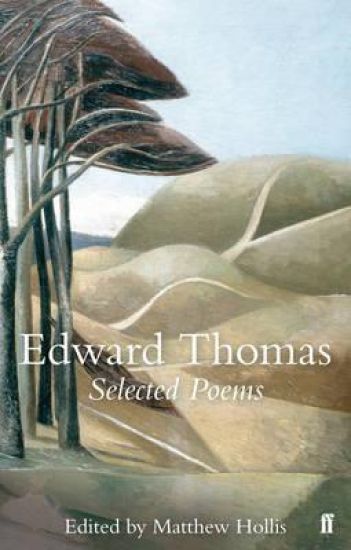
Selected Poems of Edward Thomas

Selected Poems of Edward Thomas

Edward Thomas

Faber Faber
2011
pokkari
When Edward Thomas was killed at the Battle of Arras in 1917 his poems were largely unpublished. But in the years since his death, his work has come to be cherished for its rare, sustained vision of the natural world and as 'a mirror of England' (Walter de la Mare). This edition, drawn from Thomas's manuscripts and typescripts as well as from his published works, offers an accessible introduction to this most resonant - and relevant - of poets.'In his lifetime, he was known and loved by a very, loving few. Now, since his death, he is known and loved by very many, and yearly this is more so. There is in his poems an unassumingly profound sense of permanence. A war came and ditched him, but his poems stay with no other wounds than those which caused them.' Dylan Thomas 'A very fine poet. And a poet all in his own right. The accent is absolutely his own.' Robert Frost'The one hundred and forty poems he wrote in the last two years of his life are a miracle. I can think of no body of work in English that is more mysterious.' Michael Longley
The Childhood of Edward Thomas

The Childhood of Edward Thomas

Edward Thomas

Faber Faber
2008
nidottu
Killed at Arras in 1917, Edward Thomas left behind him a short, vivid history of his own early life, covering the period from his birth to his entry into St Paul's. Though a fragment, in many senses it is far more: in the words of its author 'no less than an autobiography . . . an attempt to put down on paper what [this author] sees when he thinks of himself from 1878 to about 1895'. The Childhood of Edward Thomas was not published until 1938, over two decades after Thomas originally showed the manuscript to a publisher. Those eventual publishers, Faber & Faber, were building on their release two years earlier of Thomas's Collected Poems, for which he was becoming best known.This edition includes Edward Thomas's 'War Diary,' a record of the last three months of his life when, as an elderly - at thirty-eight - subaltern he fought among the misery of the trenches. To witness Thomas's childhood memoir and wartime diaries in such close proximity is to have a moving incarnation of his distinctive voice, its clarity and - even in war - its unfailing attention to his fellow-creatures.
Edward Thomas on the Countryside

Edward Thomas on the Countryside

Edward Thomas

Faber Faber
2009
pokkari
Edward Thomas was born in Lambeth, London, in 1878, and educated at St Paul's College and Lincoln College, Oxford. Thomas voluntarily enlisted in the Artists' Rifles in 1915 and was commissioned into the Royal Garrison Artillery in 1916. He was killed in action at Arras on 9 April 1917. Since his death his reputation as a poet has grown steadily, but the prose work is largely inaccessible or unknown. His books have often been dismissed as bread-and-butter work by a poet who was able to blossom only when his soldier's pay released him from wage-earning. Roland Gant has made a selection from Thomas's writings on country matters which will be welcomed not only by admirers of his poetry but also by readers interested in pre-1914 rural life. Drawing on nearly twenty books such as The South Country, Wales, The Heart of England and volumes of essays, Grant has arranged his extracts under the headings 'Roads and Footpaths', 'The Lie of the Land', 'Figures in the Landscape' and 'Through the Year'. Interspersed are poems that often distil the theme of a prose description and show that Thomas's strength as a poet is more than equal to his creative achievement as a writer of prose.
Edward Thomas

Edward Thomas

Eleanor Farjeon

Faber Faber
2010
pokkari
Eleanor Farjeon first met Edward Thomas in the late autumn of 1912, when her brother invited him to tea. It was the beginning of a deep friendship between the painfully shy 31-year-old woman and the reserved writer known for his prose works and literary criticism. Though he died at the Battle of Arras in April 1917, it was a friendship which for Eleanor did not end with his death, but lived beyond it in his letters, and his poems, many of which Edward had sent to her from the trenches of the First World War for her comments.This double memoir uses Edward's letters and Eleanor's diaries and linking commentary to provide an extraordinarily candid account of their developing friendship, and of the enthusiasms they shared - both loved walking, and it was during this period that Edward first found his way into poetry. Edward was often deeply depressed, a man who found in nature something fundamental and ideal, a soldier-poet who wrote about the war in a new way, but Eleanor also shows us another side to his character, capturing moments of joy and humour. She also offers a unique account of Thomas's development as a poet, including the momentous meeting in 1913 with the American poet Robert Frost, whose encouragement led to Thomas's first poems. Thomas describes for her his family, his friendships with other writers, D H Lawrence among them, and also provides an exceptionally detailed account of his experiences in the First World War with the Artists' Rifles.Edward Thomas: The Last Four Years, was widely acclaimed on its first publication in 1958 - this second edition, published on the 80th anniversary of Thomas's death, has an introduction by Anne Harvey, a selection of Eleanor's sonnets 'To E.T.', and 'Walking Tom', a hitherto little-known poem about Edward written by Clifford Bax and Herbert Farjeon. Also included are eight pages of black and white photographs.
Edward VII

Edward VII

Giles St Aubyn

Faber Faber
2010
pokkari
'An exceptional study, which fascinates, entertain, and illuminates.' The New YorkerThrough half a century of public service King Edward had the advantage of a private secretary whose tact, judgement, loyalty and affection never failed him. Francis Knollys was one of that small intimate circle from whom he had no secrets, personal or political. Previous biographers of the King have lamented the too perfect discretion that led Knollys to destroy all his papers on his master's death, but in fact his discretion outreached even its own reputation. The Knollys Papers were preserved with the perfect secrecy that their creator practised in the discharge of his office, but were put at the disposal of the author, enabling him to extend and deepen the commonly held portrait of a man whose physical grossness has, as in the case of the Prince Regent, been allowed to obscure both a keen intelligence and a serious even conscientious pursuit of duty. King Edward is here shown to have deserved the deep affection and respect felt for him by his private secretary.'In Edward VII Giles St Aubyn has splendidly filled the gap between hagiography and muck-raking ... one of the most elegant yet solidly-founded studies so far produced of this splendid monarch.'. Sunday Telegraph'This book has delighted me by its good judgement of character and its pungency, as well as by the important new material it includes.' Raymond Mortimer
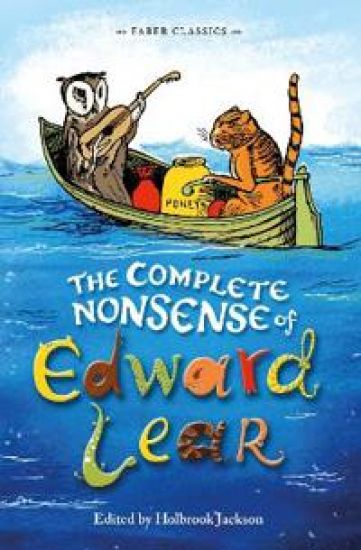
The Complete Nonsense of Edward Lear
Edward Lear was the greatest nonsensicalist of all time. He was the inventor of the limerick and created the Jumblies and The Owl and the Pussycat. This complete edition of Lear's nonsense verse - including the limericks, longer verses, alphabets and his own illustrations - is lovingly restored and beautifully presented, for adults and children to enjoy together.
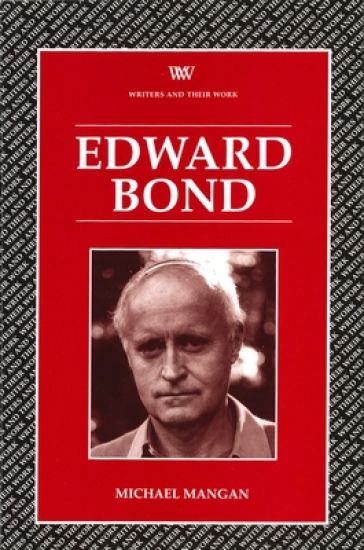
Edward Bond

Edward Bond

Simon Trussler

LIVERPOOL UNIVERSITY PRESS
1976
nidottu
Edward Bond has been, since his controversial arrival on the theatrical scene in 1965, one of Britain's most distinctive and important theatre writers. This study examines his work, from The Pope's Wedding (1962) to Coffee (1995). It gives an overview of the development of his distinctive dramatic language and style, and looks at his experiments with various theatrical forms and genres. It examines, too, the ways in which Bond's insistence upon the necessity of the drama as an agent of social evolution have determined his development as a dramatist. There are sections which situate Bond's work within its wider theatrical and political contexts, and which explore his concerns with issues such as violence, technology and social evolution, as they are expressed in plays such as Saved (1965), and Lear (1971). The study also deals with Bond's continual dialogue with our cultural history.
Edward II everything you need to catch up, study and prepare for the 2025 and 2026 exams
York Notes Advanced offer a fresh and accessible approach to English Literature. This market-leading series has been completely updated to meet the needs of today's A-level and undergraduate students. Written by established literature experts, York Notes Advanced intorduce students to more sophisticated analysis, a range of critical perspectives and wider contexts.