Kirjojen hintavertailu. Mukana 11 699 587 kirjaa ja 12 kauppaa.

Kirjahaku

Etsi kirjoja tekijän nimen, kirjan nimen tai ISBN:n perusteella.

1000 tulosta hakusanalla FREEDOM DIVIDEND

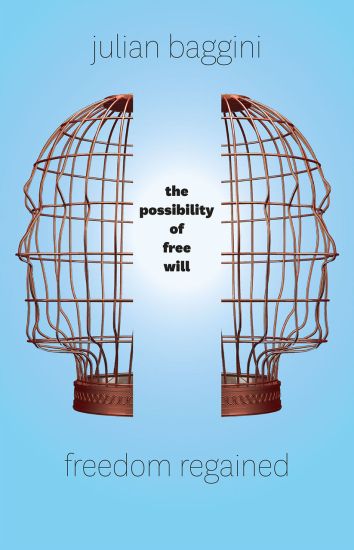
Freedom Regained

Freedom Regained

University of Chicago Press
2015
sidottu
It's a question that has puzzled philosophers and theologians for centuries and is at the heart of numerous political, social, and personal concerns: Do we have free will? In this cogent and compelling book, Julian Baggini explores the concept of free will from every angle, blending philosophy, sociology, and cognitive science to find rich new insights on the intractable questions that have plagued us. Are we products of our culture, or free agents within it? Are our neural pathways fixed early on by a mixture of nature and nurture, or is the possibility of comprehensive, intentional psychological change always open to us? And what, exactly, are we talking about when we talk about "freedom" anyway? Freedom Regained brings the issues raised by the possibilities--and denials--of free will to thought-provoking life, drawing on scientific research and fascinating encounters with everyone from artists to prisoners to dissidents. He looks at what it means for us to be material beings in a universe of natural laws. He asks if there is any difference between ourselves and the brains from which we seem never able to escape. He throws down the wildcards and plays them to the fullest: What about art? What about addiction? What about twins? And he asks, of course, what this all means for politics. Ultimately, Baggini challenges those who think free will is an illusion. Moving from doubt to optimism to a hedged acceptance of free will, he ultimately lands on a satisfying conclusion: it is something we earn. The result is a highly engaging, new, and more positive understanding of our sense of personal freedom, a freedom that is definitely worth having.
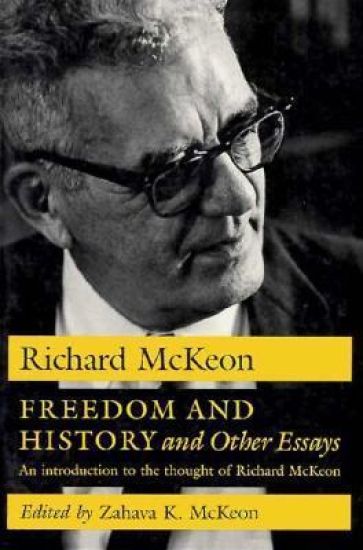
Freedom and History and Other Essays

Freedom and History and Other Essays

Richard P. McKeon

University of Chicago Press
1989
nidottu
This volume of essays is an important introduction to the thought of one of the twentieth century's most significant yet underappreciated philosophers, Richard McKeon. The originator of philosophical pluralism, McKeon made extraordinary contributions to philosophy, to international relations, and to theory-formation in the communication arts, aesthetics, the organization of knowledge, and the practical sciences. This collection, which includes a philosophical autobiography as well as the out-of-print title essay "Freedom and History" and a previously unpublished essay on "Philosophic Semantics and Philosophic Inquiry," is a testimony to the range and systematic power of McKeon's thinking for the social sciences and the humanities.
Freedom and Despair

Freedom and Despair

David Shulman

University of Chicago Press
2018
sidottu
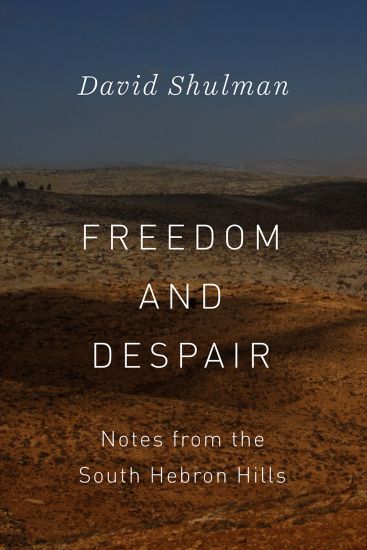
Lately, it seems as if we wake up to a new atrocity each day. Every morning is now a ritual of scrolling through our Twitter feeds or scanning our newspapers for the latest updates on fresh horrors around the globe. Despite the countless protests we attend, the phone calls we make, or the streets we march, it sometimes feels like no matter how hard we fight, the relentless crush of injustice will never abate. David Shulman knows intimately what it takes to live your beliefs, to return, day after day, to the struggle, despite knowing you are often more likely to lose than win. Interweaving powerful stories and deep meditations, Freedom and Despair offers vivid firsthand reports from the occupied West Bank in Palestine as seen through the eyes of an experienced Israeli peace activist who has seen the Israeli occupation close up as it impacts on the lives of all Palestinian civilians. Alongside a handful of beautifully written and often shocking tales from the field, Shulman meditates deeply on how to understand the evils around him, what it means to persevere as an activist decade after decade, and what it truly means to be free. The violent realities of the occupation are on full display. We get to know and understand the Palestinian shepherds and farmers and Israeli volunteers who face this situation head-on with nonviolent resistance. Shulman does not hold back on acknowledging the daily struggles that often leave him and his fellow activists full of despair. Inspired by these committed individuals who are not prepared to be silent or passive, Shulman suggests a model for ordinary people everywhere. Anyone prepared to take a risk and fight their oppressive political systems, he argues, can make a difference-if they strive to act with compassion and to keep hope alive. This is the moving story of a man who continues to fight for good in the midst of despair. An indispensable book in our era of reactionary politics and refugee crises, political violence and ecological devastation, Freedom and Despair is a gripping memoir of struggle, activism, and hope for peace.
Freedom and Despair

Freedom and Despair

David Shulman

University of Chicago Press
2018
pokkari
Lately, it seems as if we wake up to a new atrocity each day. Every morning is now a ritual of scrolling through our Twitter feeds or scanning our newspapers for the latest updates on fresh horrors around the globe. Despite the countless protests we attend, the phone calls we make, or the streets we march, it sometimes feels like no matter how hard we fight, the relentless crush of injustice will never abate. David Shulman knows intimately what it takes to live your beliefs, to return, day after day, to the struggle, despite knowing you are often more likely to lose than win. Interweaving powerful stories and deep meditations, Freedom and Despair offers vivid firsthand reports from the occupied West Bank in Palestine as seen through the eyes of an experienced Israeli peace activist who has seen the Israeli occupation close up as it impacts on the lives of all Palestinian civilians. Alongside a handful of beautifully written and often shocking tales from the field, Shulman meditates deeply on how to understand the evils around him, what it means to persevere as an activist decade after decade, and what it truly means to be free. The violent realities of the occupation are on full display. We get to know and understand the Palestinian shepherds and farmers and Israeli volunteers who face this situation head-on with nonviolent resistance. Shulman does not hold back on acknowledging the daily struggles that often leave him and his fellow activists full of despair. Inspired by these committed individuals who are not prepared to be silent or passive, Shulman suggests a model for ordinary people everywhere. Anyone prepared to take a risk and fight their oppressive political systems, he argues, can make a difference-if they strive to act with compassion and to keep hope alive. This is the moving story of a man who continues to fight for good in the midst of despair. An indispensable book in our era of reactionary politics and refugee crises, political violence and ecological devastation, Freedom and Despair is a gripping memoir of struggle, activism, and hope for peace.
Freedom Is an Endless Meeting – Democracy in American Social Movements
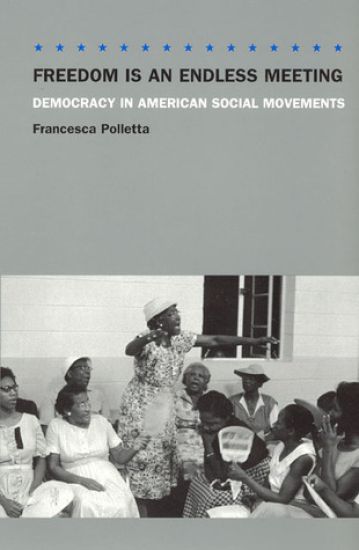
Freedom Is an Endless Meeting offers vivid portraits of American experiments in participatory democracy throughout the twentieth century. Drawing on meticulous research and more than one hundred interviews with activists, Francesca Polletta challenges the conventional wisdom that participatory democracy is worthy in purpose but unworkable in practice. Instead, she shows that social movements have often used bottom-up decision making as a powerful tool for political change.Polletta traces the history of democracy in early labor struggles and pre-World War II pacifism, in the civil rights, new left, and women's liberation movements of the sixties and seventies, and in today's faith-based organizing and anti-corporate globalization campaigns. In the process, she uncovers neglected sources of democratic inspiration—Depression-era labor educators and Mississippi voting registration workers, among them—as well as practical strategies of social protest. But Freedom Is an Endless Meeting also highlights the obstacles that arise when activists model their democracies after familiar nonpolitical relationships such as friendship, tutelage, and religious fellowship. Doing so has brought into their deliberations the trust, respect, and caring typical of those relationships. But it has also fostered values that run counter to democracy, such as exclusivity and an aversion to rules, and these have been the fault lines around which participatory democracies have often splintered. Indeed, Polletta attributes the fragility of the form less to its basic inefficiency or inequity than to the gaps between activists' democratic commitments and the cultural models on which they have depended to enact those commitments. The challenge, she concludes, is to forge new kinds of democratic relationships, ones that balance trust with accountability, respect with openness to disagreement, and caring with inclusiveness.For anyone concerned about the prospects for democracy in America, Freedom Is an Endless Meeting will offer abundant historical, theoretical, and practical insights. "This is an excellent study of activist politics in the United States over the past century. . . . Assiduously researched, impressively informed by a great number of thoughtful interviews with key members of American social movements, and deeply engaged with its subject matter, the book is likely to become a key text in the study of grass-roots democracy in America."—Kate Fullbrook, Times Literary Supplement"Polletta's portrayal challenges the common assumption that morality and strategy are incompatible, that those who aim at winning must compromise principle while those who insist on morality are destined to be ineffective. . . . Rather than dwell on trying to explain the decline of 60s movements, Polletta shows how participatory democracy has become the guiding framework for many of today's activists."—Richard Flacks, Los Angeles Times Book Review "In Freedom Is an Endless Meeting, Francesca Polletta has produced a remarkable work of historical sociology. . . . She provides the fullest theoretical work of historical sociology. . . . She provides the fullest theoretical picture of participatory democracy, rich with nuance, ambiguity, and irony, that this reviewer has yet seen. . . . This wise book should be studied closely by both academics and by social change activists."—Stewart Burns, Journal of American History
Freedom in Fulani Social Life

Freedom in Fulani Social Life

Paul Riesman

University of Chicago Press
1998
nidottu
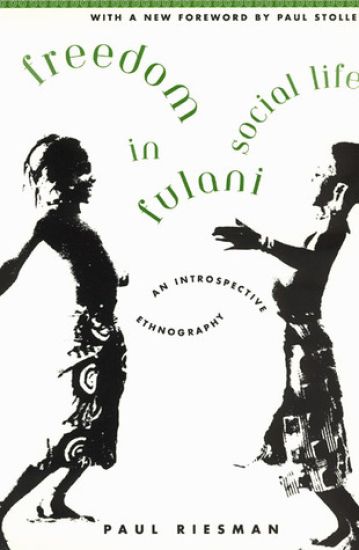
Paul Riesman's Freedom in Fulani Social Life is based upon his two years of residence among the Jelgobe, a group of semi-nomadic Fulani of the Sahel in Upper Volta, western Africa. Since its original publication, this classic study has profoundly influenced the field of anthropology through its re-examination of the enthnographer's personal input on his research. "Freedom in Fulani Social Life richly documents how the ethnographer's own personal and cultural background is implicated in the research process...For this reason, [Riesman's] book will be of paramount interest to all ethnographers."--Philip L. Kilbride, Reviews in Anthropology "A remarkably well-written and insightful account of Fulani life...In addition to using the conventional approaches of participating in and observing the daily activities of the Jelgobe ...Riesman enriches his account by examining his personal feelings about particular incidents."--Library Journal "An interesting and provocative study."--Choice At the time of his death in 1988, Paul Riesman was an anthropologist who taught at Carleton College.
Freedom and the End of Reason

Freedom and the End of Reason

Richard L. Velkley

University of Chicago Press
1989
sidottu
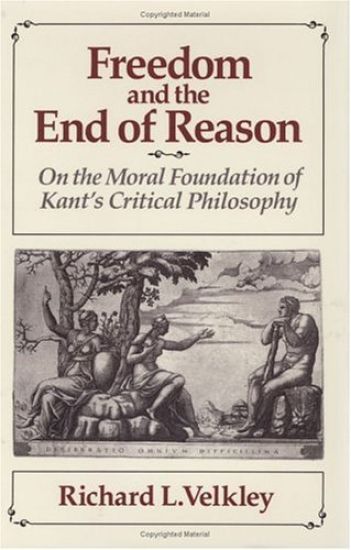
In Freedom and the End of Reason, Richard L. Velkley offers an influential interpretation of the central issue of Kant's philosophy and an evaluation of its position within modern philosophy's larger history. He persuasively argues that the whole of Kantianism-not merely the Second Critique-focuses on a "critique of practical reason" and is a response to a problem that Kant saw as intrinsic to reason itself: the teleological problem of its goodness. Reconstructing the influence of Rousseau on Kant's thought, Velkley demonstrates that the relationship between speculative philosophy and practical philosophy in Kant is far more intimate than generally has been perceived. By stressing a Rousseau-inspired notion of reason as a provider of practical ends, he is able to offer an unusually complete account of Kant's idea of moral culture.
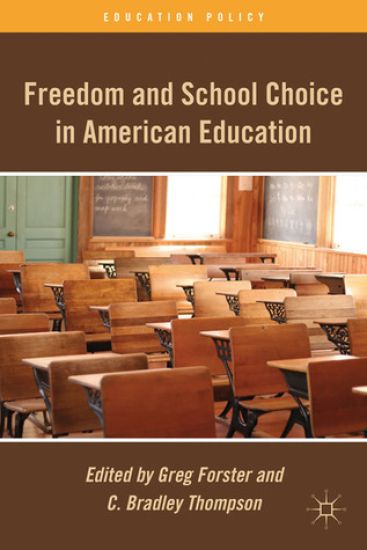
Freedom and School Choice in American Education
Leading intellectual figures in the school reform movement, all of them favoring approaches centered around the value of competition and choice, outline different visions for the goal of choice-oriented educational reform and the best means for achieving it. This volume takes the reader inside the movement to empower parents with choice, airing the more interesting debates that the reformers have with one another over the direction and strategy of their movement.
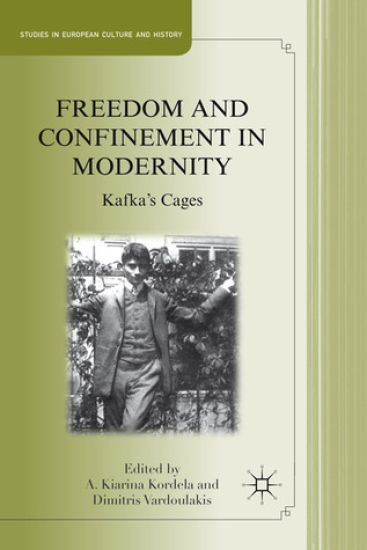
Freedom and Confinement in Modernity
Kafka's literary universe is organized around constellations of imprisonment. Freedom and Confinement in Modernity proposes that imprisonment does not signify a tortured state of the individual in modernity. Rather, it provides a new reading of imprisonment suggesting it allows Kafka to perform a critique of a modernity instead.
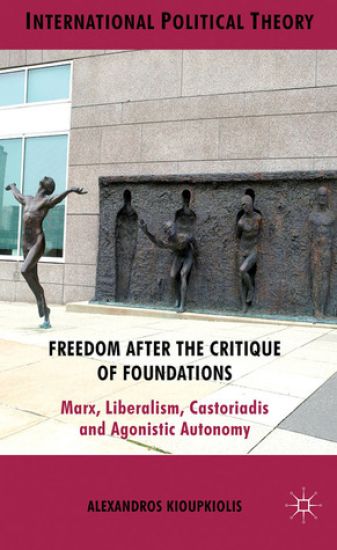
Freedom After the Critique of Foundations

Freedom After the Critique of Foundations

A. Kioupkiolis

Palgrave Macmillan
2012
sidottu
An exploration of the contemporary re-conception of freedom after the critique of objective truths and ideas of an unchanging human nature, in which modern self-determination was grounded. This book focuses on the radical theorist Cornelius Castoriadis and the new paradigm of 'agonistic autonomy' is contrasted with Marxian and liberal approaches.
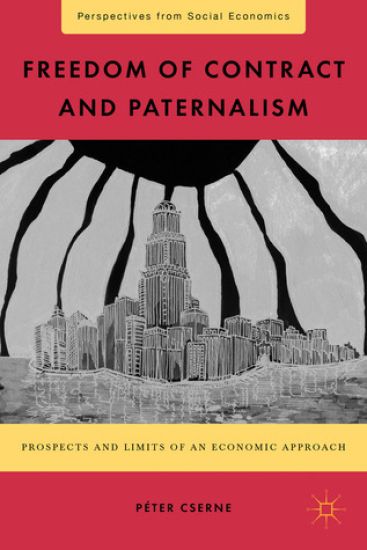
Freedom of Contract and Paternalism

Freedom of Contract and Paternalism

P. Cserne

Palgrave Macmillan
2012
sidottu
A theoretical discussion and internal critique of mainstream law and economics scholarship, especially as it approaches the issue of paternalism. Cserne discusses how, and to what extent, economic analysis can explain and/or justify the limitations on freedom of contract, with special emphasis on paternalism.
Freedom and Neurobiology

Freedom and Neurobiology

John Searle

Columbia University Press
2006
sidottu
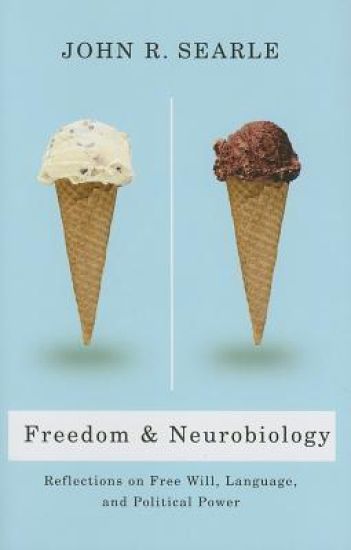
Our self-conception derives mostly from our own experience. We believe ourselves to be conscious, rational, social, ethical, language-using, political agents who possess free will. Yet we know we exist in a universe that consists of mindless, meaningless, unfree, nonrational, brute physical particles. How can we resolve the conflict between these two visions? In Freedom and Neurobiology, the philosopher John Searle discusses the possibility of free will within the context of contemporary neurobiology. He begins by explaining the relationship between human reality and the more fundamental reality as described by physics and chemistry. Then he proposes a neurobiological resolution to the problem by demonstrating how various conceptions of free will have different consequences for the neurobiology of consciousness. In the second half of the book, Searle applies his theory of social reality to the problem of political power, explaining the role of language in the formation of our political reality. The institutional structures that organize, empower, and regulate our lives-money, property, marriage, government-consist in the assignment and collective acceptance of certain statuses to objects and people. Whether it is the president of the United States, a twenty-dollar bill, or private property, these entities perform functions as determined by their status in our institutional reality. Searle focuses on the political powers that exist within these systems of status functions and the way in which language constitutes them. Searle argues that consciousness and rationality are crucial to our existence and that they are the result of the biological evolution of our species. He addresses the problem of free will within the context of a neurobiological conception of consciousness and rationality, and he addresses the problem of political power within the context of this analysis. A clear and concise contribution to the free-will debate and the study of cognition, Freedom and Neurobiology is essential reading for students and scholars of the philosophy of mind.
Freedom and Neurobiology

Freedom and Neurobiology

John Searle

Columbia University Press
2008
pokkari
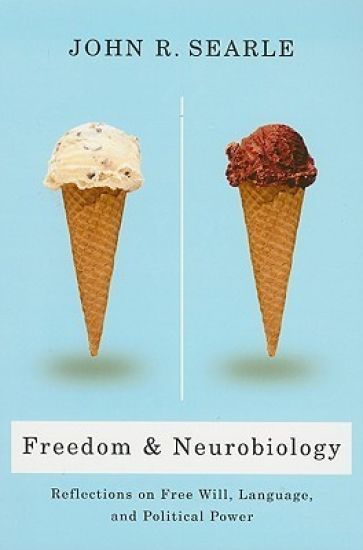
Our self-conception derives mostly from our own experience. We believe ourselves to be conscious, rational, social, ethical, language-using, political agents who possess free will. Yet we know we exist in a universe that consists of mindless, meaningless, unfree, nonrational, brute physical particles. How can we resolve the conflict between these two visions? In Freedom and Neurobiology, the philosopher John Searle discusses the possibility of free will within the context of contemporary neurobiology. He begins by explaining the relationship between human reality and the more fundamental reality as described by physics and chemistry. Then he proposes a neurobiological resolution to the problem by demonstrating how various conceptions of free will have different consequences for the neurobiology of consciousness. In the second half of the book, Searle applies his theory of social reality to the problem of political power, explaining the role of language in the formation of our political reality. The institutional structures that organize, empower, and regulate our lives-money, property, marriage, government-consist in the assignment and collective acceptance of certain statuses to objects and people. Whether it is the president of the United States, a twenty-dollar bill, or private property, these entities perform functions as determined by their status in our institutional reality. Searle focuses on the political powers that exist within these systems of status functions and the way in which language constitutes them. Searle argues that consciousness and rationality are crucial to our existence and that they are the result of the biological evolution of our species. He addresses the problem of free will within the context of a neurobiological conception of consciousness and rationality, and he addresses the problem of political power within the context of this analysis. A clear and concise contribution to the free-will debate and the study of cognition, Freedom and Neurobiology is essential reading for students and scholars of the philosophy of mind.
Freedom and the Self

Freedom and the Self

Columbia University Press
2015
sidottu
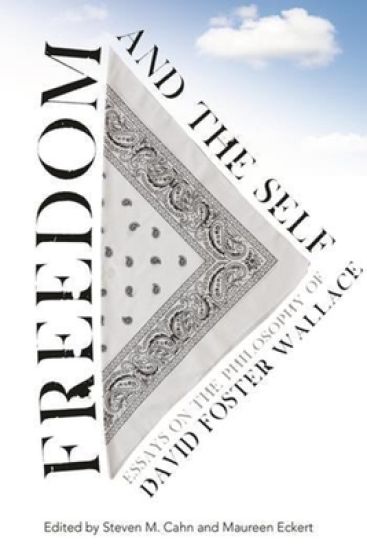
The book Fate, Time, and Language: An Essay on Free Will, published in 2010 by Columbia University Press, presented David Foster Wallace's challenge to Richard Taylor's argument for fatalism. In this anthology, notable philosophers engage directly with that work and assess Wallace's reply to Taylor as well as other aspects of Wallace's thought. With an introduction by Steven M. Cahn and Maureen Eckert, this collection includes essays by William Hasker (Huntington University), Gila Sher (University of California, San Diego), Marcello Oreste Fiocco (University of California, Irvine), Daniel R. Kelly (Purdue University), Nathan Ballantyne (Fordham University), Justin Tosi (University of Arizona), and Maureen Eckert. These thinkers explore Wallace's philosophical and literary work, illustrating remarkable ways in which his philosophical views influenced and were influenced by themes developed in his other writings, both fictional and nonfictional. Together with Fate, Time, and Language, this critical set unlocks key components of Wallace's work and its traces in modern literature and thought.
Freedom and the Self

Freedom and the Self

Columbia University Press
2015
pokkari
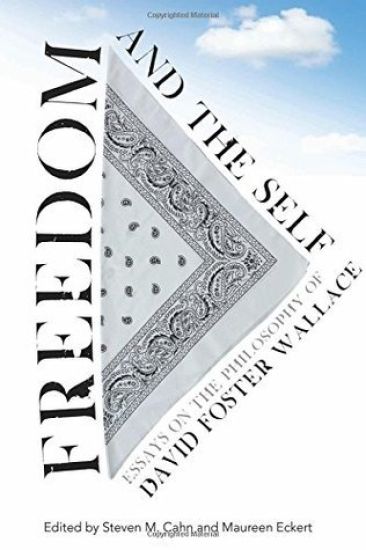
The book Fate, Time, and Language: An Essay on Free Will, published in 2010 by Columbia University Press, presented David Foster Wallace's challenge to Richard Taylor's argument for fatalism. In this anthology, notable philosophers engage directly with that work and assess Wallace's reply to Taylor as well as other aspects of Wallace's thought. With an introduction by Steven M. Cahn and Maureen Eckert, this collection includes essays by William Hasker (Huntington University), Gila Sher (University of California, San Diego), Marcello Oreste Fiocco (University of California, Irvine), Daniel R. Kelly (Purdue University), Nathan Ballantyne (Fordham University), Justin Tosi (University of Arizona), and Maureen Eckert. These thinkers explore Wallace's philosophical and literary work, illustrating remarkable ways in which his philosophical views influenced and were influenced by themes developed in his other writings, both fictional and nonfictional. Together with Fate, Time, and Language, this critical set unlocks key components of Wallace's work and its traces in modern literature and thought.
Freedom's Right: The Social Foundations of Democratic Life
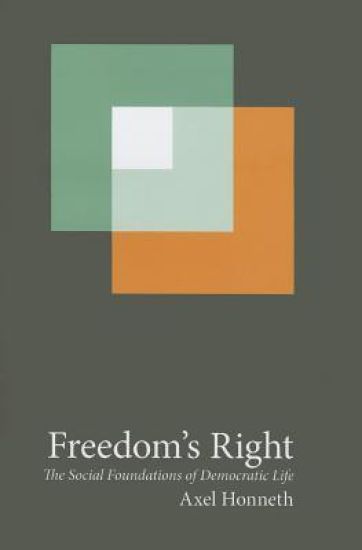
Theories of justice often fixate on purely normative, abstract principles unrelated to real-world situations. The philosopher and theorist Axel Honneth addresses this disconnect, and constructs a theory of justice derived from the normative claims of Western liberal-democratic societies and anchored in morally legitimate laws and institutionally established practices. Honneth's paradigm-which he terms "a democratic ethical life"-draws on the spirit of Hegel's Philosophy of Right and his own theory of recognition, demonstrating how concrete social spheres generate the tenets of individual freedom and a standard for what is just. Using social analysis to re-found a more grounded theory of justice, he argues that all crucial actions in Western civilization, whether in personal relationships, market-induced economic activities, or the public forum of politics, share one defining characteristic: they require the realization of a particular aspect of individual freedom. This fundamental truth informs the guiding principles of justice, enabling a wide-ranging reconsideration of its nature and application.
Freedom's Right

Freedom's Right

Axel Honneth

Columbia University Press
2015
nidottu
Theories of justice often fixate on purely normative, abstract principles unrelated to real-world situations. The philosopher and theorist Axel Honneth addresses this disconnect, and constructs a theory of justice derived from the normative claims of Western liberal-democratic societies and anchored in morally legitimate laws and institutionally established practices. Honneth's paradigm-which he terms "a democratic ethical life"-draws on the spirit of Hegel's Philosophy of Right and his own theory of recognition, demonstrating how concrete social spheres generate the tenets of individual freedom and a standard for what is just. Using social analysis to re-found a more grounded theory of justice, he argues that all crucial actions in Western civilization, whether in personal relationships, market-induced economic activities, or the public forum of politics, share one defining characteristic: they require the realization of a particular aspect of individual freedom. This fundamental truth informs the guiding principles of justice, enabling a wide-ranging reconsideration of its nature and application.
Freedom Reread

Freedom Reread

L. Gibson

Columbia University Press
2023
sidottu
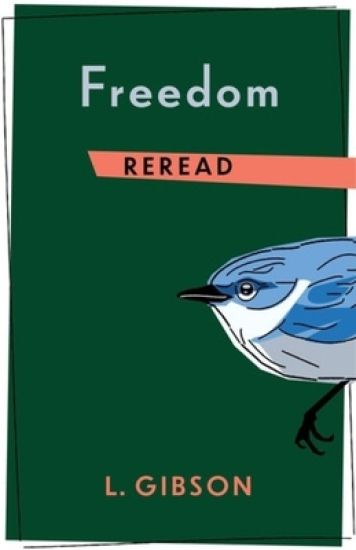
Few writers rankle like Jonathan Franzen. Despite popular acclaim, robust sales, and august literary laurels, Franzen’s polarizing persona shares the spotlight with—and sometimes steals it from—his tragicomic novels of Midwestern family life.In this reconsideration of Freedom (2010), L. Gibson explores the difficulty of coming to terms with Jonathan Franzen. Freedom Reread considers the author’s distinctive narrative technique in light of the contradictions for which he is renowned: widely read curmudgeon, tweeted-about luddite, self-proclaimed partisan of fiction who frequently announces the novel’s death. Bookended by autofictional forays into the process of—and resistance to—taking a definite stance on Franzen, this book places Freedom in conversation with a playful, idiosyncratic array of interlocutors, including Middlemarch and You’ve Got Mail, Amitav Ghosh on climate change and Susan Sontag on metaphor, speculative fiction and Succession.Avowedly ambivalent about Franzen, Gibson offers both a fresh appreciation of the author’s work and a searching critical analysis of his pronouncements on the novel’s fate. Wide-ranging and stylistically ambitious, Freedom Reread delivers an assured, artful inquiry into Franzen’s novelistic technique and public persona.
Freedom Reread

Freedom Reread

L. Gibson

Columbia University Press
2023
pokkari
Few writers rankle like Jonathan Franzen. Despite popular acclaim, robust sales, and august literary laurels, Franzen’s polarizing persona shares the spotlight with—and sometimes steals it from—his tragicomic novels of Midwestern family life.In this reconsideration of Freedom (2010), L. Gibson explores the difficulty of coming to terms with Jonathan Franzen. Freedom Reread considers the author’s distinctive narrative technique in light of the contradictions for which he is renowned: widely read curmudgeon, tweeted-about luddite, self-proclaimed partisan of fiction who frequently announces the novel’s death. Bookended by autofictional forays into the process of—and resistance to—taking a definite stance on Franzen, this book places Freedom in conversation with a playful, idiosyncratic array of interlocutors, including Middlemarch and You’ve Got Mail, Amitav Ghosh on climate change and Susan Sontag on metaphor, speculative fiction and Succession.Avowedly ambivalent about Franzen, Gibson offers both a fresh appreciation of the author’s work and a searching critical analysis of his pronouncements on the novel’s fate. Wide-ranging and stylistically ambitious, Freedom Reread delivers an assured, artful inquiry into Franzen’s novelistic technique and public persona.