Kirjojen hintavertailu. Mukana 11 627 220 kirjaa ja 12 kauppaa.

Kirjahaku

Etsi kirjoja tekijän nimen, kirjan nimen tai ISBN:n perusteella.

1000 tulosta hakusanalla Florian Rotkowski

Guderian's XIXth Panzer Corps and the Battle of France

Guderian's XIXth Panzer Corps and the Battle of France

Florian Rothburst

Praeger Publishers Inc
1990
sidottu
Certain to become the definitive work in English on the Battle of France, this volume is a long overdue and much needed correction to all previous English accounts. With extensive use of primary sources and strong secondary sources, it places us closer to the actual operational planning, preparation, and deployment of one of the most successful military operations in recent history. It covers major changes made by the German Army after the Polish Campaign; and the infighting surrounding these changes; the reorganization and preparation of the Army for the Battle of France. It also provides the only detailed day-by-day breakdown of German action during the battle's first five critical days. According to S. J. Lewis, it provides a totally new perspective to these battles and a unique view of the German Army. This volume covers extensive ground and uses numerous appendices and detailed biographical sketches to set the stage for its primary focus--a five day period during the Battle of France. Similar to the Allied Invasion of Normandy, the campaign plan for the Battle of France required six months to develop and elaborate. As a result, this reading provides an ideal opportunity to observe the World War II German Army performing its military work and an insightful look at the friction inherent in campaign planning and on the battlefield.
Kosta Alex

Kosta Alex

Florian Rodari

Yale University Press
2011
sidottu
The Greek-American artist Kosta Alex (1925-2005) initially trained in figure sculpture in Manhattan. In 1947 he moved to Paris, where he mingled with and exhibited alongside the avant-garde artists of his day. His interest in the flattening of forms led him to create his first series of decoupage-collages in about 1950. Like many other artists of the time, he was drawn to using humble, utilitarian materials such as corrugated cardboard, packaging, newspapers, magazines, wallpaper, timetables, lists, maps, and other scraps culled from daily urban life. He integrated these elements into his art in an often poetic and humorous manner, using screws, nuts, staples, rope, string, and glue to connect them into a cohesive whole. Alex also drew inspiration from classical sculpture, primitive art, and Islamic art, and employed repetitive themes and rhythmic arrangements in his compositions. In the late 1960s and early 1970s he produced groundbreaking collage-reliefs in expanded polystyrene, which Man Ray praised for breaking "the two-dimensional barrier." Handsomely illustrated, Kosta Alex is the first monograph on this intriguing artist.Distributed for Editions Hazan, Paris
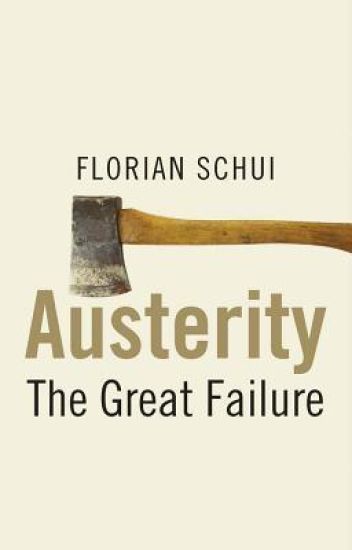
Austerity

Austerity

Florian Schui

Yale University Press
2015
pokkari
In times of economic crisis austerity becomes a rallying cry, but what does history tell us about its chances for success? Austerity is at the center of political debates today. Its defenders praise it as a panacea that will prepare the ground for future growth and stability. Critics insist it will precipitate a vicious cycle of economic decline, possibly leading to political collapse. But the notion that abstinence from consumption brings benefits to states, societies, or individuals is hardly new. This book puts the debates of our own day in perspective by exploring the long history of austerity—a popular idea that lives on despite a track record of dismal failure. Florian Schui shows that arguments in favor of austerity were—and are today—mainly based on moral and political considerations, rather than on economic analysis. Unexpectedly, it is the critics of austerity who have framed their arguments in the language of economics. Schui finds that austerity has failed intellectually and in economic terms every time it has been attempted. He examines thinkers who have influenced our ideas about abstinence from Aristotle through such modern economic thinkers as Smith, Marx, Veblen, Weber, Hayek, and Keynes, as well as the motives behind specific twentieth-century austerity efforts. The persistence of the concept cannot be explained from an economic perspective, Schui concludes, but only from the persuasive appeal of the moral and political ideas linked to it.
Organometallic Chemistry of the Transition Elements

Organometallic Chemistry of the Transition Elements

Florian P. Pruchnik

Kluwer Academic/Plenum Publishers
1990
sidottu
Organometallic chemistry belongs to the most rapidly developing area of chemistry today. This is due to the fact that research dealing with the structure of compounds and chemical bonding has been greatly intensified in recent years. Additionally, organometallic compounds have been widely utilized in catalysis, organic synthesis, electronics, etc. This book is based on my lectures concerning basic organometallic chemistry for fourth and fifth year chemistry students and on my lectures concerning advanced organometallic chemistry and homogeneous catalysis for Ph.D. graduate students. Many recent developments in the area of organometallic chemistry as weIl as homogeneous catalysis are presented. Essential research results dealing with a given class of organometallic compounds are discussed briefly. Results of physicochemical research methods of various organometallic compounds as weIl as their synthesis, properties, structures, reactivities, and applications are discussed more thoroughly. The selection of tabulated data is arbitrary because, often, it has been impossible to avoid omissions. Nevertheless, these data can be very helpful in understanding properties of organometaIlic compounds and their reactivities. All physical data are given in SI units; the interatomic distances are given in pm units in figures and tables. I am indebted to Professor S. A. Duraj for translating and editing this book. His remarks, discussions, and suggestions are greatly appreciated. I also express gratitude to Virginia E. Duraj for editing and proofreading.
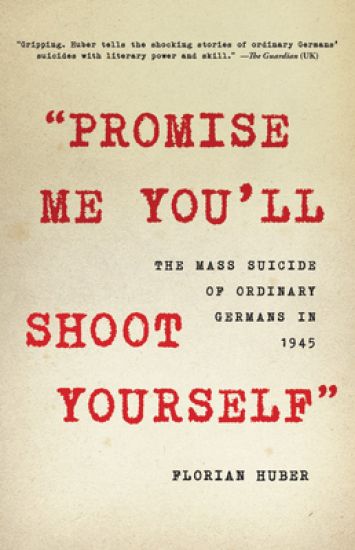
Promise Me You'll Shoot Yourself: The Mass Suicide of Ordinary Germans in 1945
Named a Best History Book of 2019 by The Times (UK) The astounding true story of how thousands of ordinary Germans, overcome by shame, guilt, and fear, killed themselves after the fall of the Third Reich and the end of World War II.By the end of April 1945 in Germany, the Third Reich had fallen and invasion was underway. As the Red Army advanced, horrifying stories spread about the depravity of its soldiers. For many German people, there seemed to be nothing left but disgrace and despair. For tens of thousands of them, the only option was to choose death -- for themselves and for their children. Promise Me You'll Shoot Yourself recounts this little-known mass event. Using diaries, letters, and memoirs, historian Florian Huber traces the euphoria of many ordinary Germans as Hitler restored national pride; their indifference as the F hrer's political enemies, Jews, and other minorities began to suffer; and the descent into despair as the war took its terrible toll, especially after the invasion of the Soviet Union. Above all, he investigates how suicide became a contagious epidemic as the country collapsed.Drawing on eyewitness accounts and other primary sources, Promise Me You'll Shoot Yourself presents a riveting portrait of a nation in crisis, and sheds light on a dramatic yet largely unknown episode of postwar Germany.
Popular New Orleans

Popular New Orleans

Florian Freitag

Routledge
2020
sidottu
New Orleans is unique – which is precisely why there are many Crescent Cities all over the world: for almost 150 years, writers, artists, cultural brokers, and entrepreneurs have drawn on and simultaneously contributed to New Orleans’s fame and popularity by recreating the city in popular media from literature, photographs, and plays to movies, television shows, and theme parks. Addressing students and fans of the city and of popular culture, Popular New Orleans examines three pivotal moments in the history of New Orleans in popular media: the creation of the popular image of the Crescent City during the late nineteenth century in the local-color writings published in Scribner’s Monthly/Century Magazine; the translation of this image into three-dimensional immersive spaces during the twentieth century in Disney’s theme parks and resorts in California, Florida, and Japan; and the radical transformation of this image following Hurricane Katrina in public performances such as Mardi Gras parades and operas. Covering visions of the Crescent City from George W. Cable’s Old Creole Days stories (1873-1876) to Disneyland’s "New Orleans Square" (1966) to Rosalyn Story’s opera Wading Home (2015), Popular New Orleans traces how popular images of New Orleans have changed from exceptional to exemplary.
Corrosion Mechanisms

Corrosion Mechanisms

Florian B. Mansfeld

CRC Press
2019
nidottu
This book discusses the mechanisms that have been proposed for the main corrosion phenomena, providing a thorough discussion of the pros and cons of the various corrosion mechanisms with support by experimental and theoretical results.
Popular New Orleans

Popular New Orleans

Florian Freitag

TAYLOR FRANCIS LTD
2022
nidottu
New Orleans is unique – which is precisely why there are many Crescent Cities all over the world: for almost 150 years, writers, artists, cultural brokers, and entrepreneurs have drawn on and simultaneously contributed to New Orleans’s fame and popularity by recreating the city in popular media from literature, photographs, and plays to movies, television shows, and theme parks. Addressing students and fans of the city and of popular culture, Popular New Orleans examines three pivotal moments in the history of New Orleans in popular media: the creation of the popular image of the Crescent City during the late nineteenth century in the local-color writings published in Scribner’s Monthly/Century Magazine; the translation of this image into three-dimensional immersive spaces during the twentieth century in Disney’s theme parks and resorts in California, Florida, and Japan; and the radical transformation of this image following Hurricane Katrina in public performances such as Mardi Gras parades and operas. Covering visions of the Crescent City from George W. Cable’s Old Creole Days stories (1873-1876) to Disneyland’s "New Orleans Square" (1966) to Rosalyn Story’s opera Wading Home (2015), Popular New Orleans traces how popular images of New Orleans have changed from exceptional to exemplary.
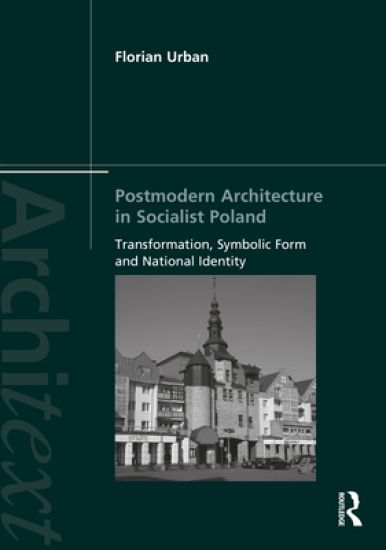
Postmodern Architecture in Socialist Poland
Garish churches, gabled panel blocks, neo-historical tenements—this book is about these and other architectural oddities that emerged in Poland between 1975 and 1989, a period characterised by the decline of the authoritarian socialist regime and waves of political protest. During that period, committed architects defied repressive politics and persistent shortages, and designed houses and churches which adapted eclectic historical forms and geometric volumes, and were based on traditional typologies.These buildings show a very different background of postmodernism, far removed from the debates over Robert Venturi, Philip Johnson, or Prince Charles in Western Europe and North America—a context in which postmodern architecture stood not for world-weary irony in an economically saturated society, but for individualised counter-propositions to a collectivist ideology, for a yearning for truth and spiritual values, and for a discourse on distinctiveness and national identity.Postmodern Architecture in Socialist Poland argues that this new architecture marked the beginning of socio-political transformation and at the same time showed postmodernism's reconciliatory potential. In light of massive historical ruptures and wartime destruction, these buildings successfully responded to the contradictory desires for historical continuity and acknowledgment of rupture and loss. Next to international ideas, the architects took up domestic traditions, such as the ideas of the Polish school of historic conservation and long-standing national-patriotic narratives. They thus contributed to the creation of a built environment and intellectual climate that have been influential to date.This book will be of great interest to students and scholars interested in postmodern architecture and urban design, as well as in the socio-cultural background and transformative potential of architecture under socialism.
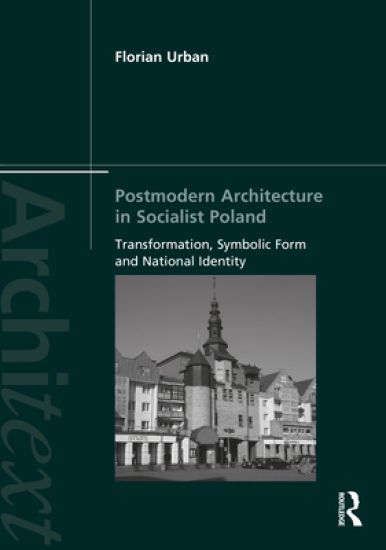
Postmodern Architecture in Socialist Poland
Garish churches, gabled panel blocks, neo-historical tenements—this book is about these and other architectural oddities that emerged in Poland between 1975 and 1989, a period characterised by the decline of the authoritarian socialist regime and waves of political protest. During that period, committed architects defied repressive politics and persistent shortages, and designed houses and churches which adapted eclectic historical forms and geometric volumes, and were based on traditional typologies.These buildings show a very different background of postmodernism, far removed from the debates over Robert Venturi, Philip Johnson, or Prince Charles in Western Europe and North America—a context in which postmodern architecture stood not for world-weary irony in an economically saturated society, but for individualised counter-propositions to a collectivist ideology, for a yearning for truth and spiritual values, and for a discourse on distinctiveness and national identity.Postmodern Architecture in Socialist Poland argues that this new architecture marked the beginning of socio-political transformation and at the same time showed postmodernism's reconciliatory potential. In light of massive historical ruptures and wartime destruction, these buildings successfully responded to the contradictory desires for historical continuity and acknowledgment of rupture and loss. Next to international ideas, the architects took up domestic traditions, such as the ideas of the Polish school of historic conservation and long-standing national-patriotic narratives. They thus contributed to the creation of a built environment and intellectual climate that have been influential to date.This book will be of great interest to students and scholars interested in postmodern architecture and urban design, as well as in the socio-cultural background and transformative potential of architecture under socialism.
Bioconductor Case Studies

Bioconductor Case Studies

Florian Hahne; Wolfgang Huber; Robert Gentleman; Seth Falcon

Springer-Verlag New York Inc.
2008
nidottu
Bioconductor software has become a standard tool for the analysis and comprehension of data from high-throughput genomics experiments. Its application spans a broad field of technologies used in contemporary molecular biology. In this volume, the authors present a collection of cases to apply Bioconductor tools in the analysis of microarray gene expression data. Topics covered include: (1) import and preprocessing of data from various sources; (2) statistical modeling of differential gene expression; (3) biological metadata; (4) application of graphs and graph rendering; (5) machine learning for clustering and classification problems; (6) gene set enrichment analysis. Each chapter of this book describes an analysis of real data using hands-on example driven approaches. Short exercises help in the learning process and invite more advanced considerations of key topics. The book is a dynamic document. All the code shown can be executed on a local computer, and readers are able to reproduce every computation, figure, and table.
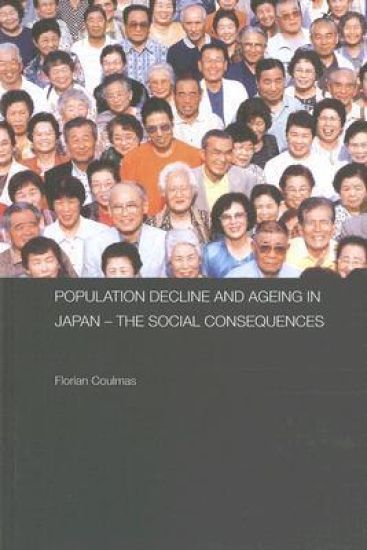
Population Decline and Ageing in Japan - The Social Consequences
This book presents a comprehensive analysis of one of the most pressing challenges facing Japan today: population decline and ageing. It argues that social ageing is a phenomenon that follows in the wake of industrialization, urbanization and social modernization, bringing about changes in values, institutions, social structures, economic activity, technology and culture, and posing many challenges for the countries affected. Focusing on the experience of Japan, the author explores:how Japan has recognized the emerging problems relatively early because during the past half century population ageing has been more rapid in Japan than in any other countryhow all of Japanese society is affected by social ageing, not just certain substructures and institutions, and explains its complex causes, describes the resulting challenges and analyses the solutions under consideration to deal with it the nature of Japan’s population dynamics since 1920, and argues that Japan is rapidly moving in the direction of a ‘hyperaged society’ in which those sixty-five or older account for twenty-five per cent of the total population the implications for family structures and other social networks, gender roles and employment patterns, health care and welfare provision, pension systems, immigration policy, consumer and voting behaviour and the cultural reactions and ramifications of social ageing.
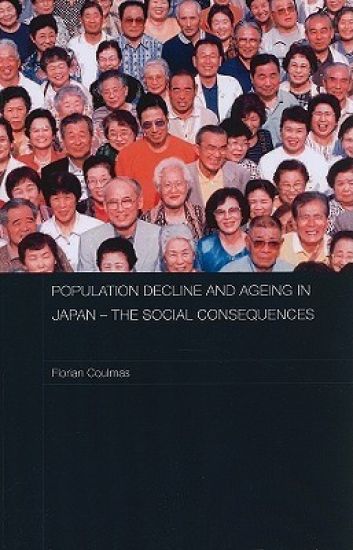
Population Decline and Ageing in Japan - The Social Consequences
This book presents a comprehensive analysis of one of the most pressing challenges facing Japan today: population decline and ageing. It argues that social ageing is a phenomenon that follows in the wake of industrialization, urbanization and social modernization, bringing about changes in values, institutions, social structures, economic activity, technology and culture, and posing many challenges for the countries affected. Focusing on the experience of Japan, the author explores:how Japan has recognized the emerging problems relatively early because during the past half century population ageing has been more rapid in Japan than in any other countryhow all of Japanese society is affected by social ageing, not just certain substructures and institutions, and explains its complex causes, describes the resulting challenges and analyses the solutions under consideration to deal with it the nature of Japan’s population dynamics since 1920, and argues that Japan is rapidly moving in the direction of a ‘hyperaged society’ in which those sixty-five or older account for twenty-five per cent of the total population the implications for family structures and other social networks, gender roles and employment patterns, health care and welfare provision, pension systems, immigration policy, consumer and voting behaviour and the cultural reactions and ramifications of social ageing.
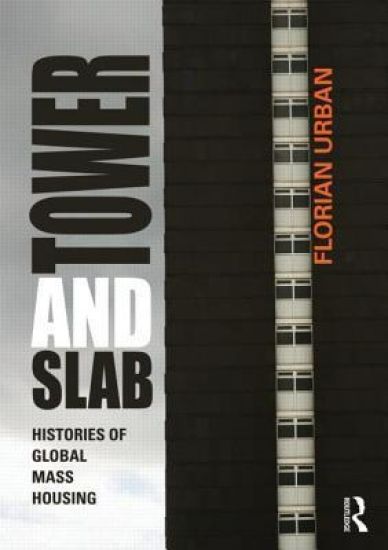
Tower and Slab

Tower and Slab

Florian Urban

Routledge
2011
sidottu
Tower and Slab looks at the contradictory history of the modernist mass housing block - home to millions of city dwellers around the world. Few urban forms have roused as much controversy. While in the United States decades-long criticism caused the demolition of most mass housing projects for the poor, in the booming metropolises of Shanghai and Mumbai remarkably similar developments are being built for the wealthy middle class. While on the surface the modernist apartment block appears universal, it is in fact diverse in its significance and connotations as its many different cultural contexts. Florian Urban studies the history of mass housing in seven narratives: Chicago, Paris, Berlin, Brasilia, Mumbai, Moscow, and Shanghai. Investigating the complex interactions between city planning and social history, Tower and Slab shows how the modernist vision to house the masses in serial blocks succeeded in certain contexts and failed in others. Success and failure, in this respect, refers not only to the original goals – to solve the housing crisis and provide modern standards for the entire society – but equally to changing significance of the housing blocks within the respective societies and their perception by architects, politicians, and inhabitants. These differences show that design is not to blame for mass housing’s mixed record of success. The comparison of the apparently similar projects suggests that triumph or disaster does not depend on a single variable but rather on a complex formula that includes not only form, but also social composition, location within the city, effective maintenance, and a variety of cultural, social, and political factors.
Tower and Slab

Tower and Slab

Florian Urban

Routledge
2011
nidottu
Tower and Slab looks at the contradictory history of the modernist mass housing block - home to millions of city dwellers around the world. Few urban forms have roused as much controversy. While in the United States decades-long criticism caused the demolition of most mass housing projects for the poor, in the booming metropolises of Shanghai and Mumbai remarkably similar developments are being built for the wealthy middle class. While on the surface the modernist apartment block appears universal, it is in fact diverse in its significance and connotations as its many different cultural contexts. Florian Urban studies the history of mass housing in seven narratives: Chicago, Paris, Berlin, Brasilia, Mumbai, Moscow, and Shanghai. Investigating the complex interactions between city planning and social history, Tower and Slab shows how the modernist vision to house the masses in serial blocks succeeded in certain contexts and failed in others. Success and failure, in this respect, refers not only to the original goals – to solve the housing crisis and provide modern standards for the entire society – but equally to changing significance of the housing blocks within the respective societies and their perception by architects, politicians, and inhabitants. These differences show that design is not to blame for mass housing’s mixed record of success. The comparison of the apparently similar projects suggests that triumph or disaster does not depend on a single variable but rather on a complex formula that includes not only form, but also social composition, location within the city, effective maintenance, and a variety of cultural, social, and political factors.
Reciprocity in English

Reciprocity in English

Florian Haas

Routledge
2009
sidottu
Although the grammatical expression of reciprocal (or ‘mutual’) situations in the languages of the world has received a surprising amount of attention in recent years, so far no comprehensive study specifically dealing with the historical development and synchronic structure of English reciprocal constructions has been published. This book takes into consideration insights from the three major research projects on reciprocity in the languages of the world as well as the rich literature on more specific aspects of reciprocity. Assuming a usage-based model of grammar, the development of the reciprocal strategies used in present-day English is described, with special attention paid to the periods following Middle English, where today’s system began to take shape. The means of expressing reciprocity in today’s English (e.g. the expressions each other and one another) are then analyzed as a system of competing constructions, the make-up and distribution of which can be related both to their history and subtle distinctions in meaning and use associated with the different constructions. Quantitative data from corpora of natural language provides evidence for the analyses put forward. Wherever possible, claims on the expression of reciprocity in present-day English are checked against what is known about the grammar of reciprocity in other languages.
Fiction, Film, and Indian Popular Cinema
This book analyses the novels of Salman Rushdie and their stylistic conventions in the context of Indian popular cinema and its role in the elaboration of the author’s arguments about post-independence postcolonial India. Focusing on different genres of Indian popular cinema, such as the ‘Social’, ‘Mythological’ and ‘Historical’, Stadtler examines how Rushdie’s writing foregrounds the epic, the mythic, the tragic and the comic, linking them in storylines narrated in cinematic parameters. The book shows that Indian popular cinema’s syncretism becomes an aesthetic marker in Rushdie’s fiction that allows him to elaborate on the multiplicity of Indian identity, both on the subcontinent and abroad, and illustrates how Rushdie uses Indian popular cinema in his narratives to express an aesthetics of hybridity and a particular conceptualization of culture with which ‘India’ has become identified in a global context. Also highlighted are Rushdie’s uses of cinema to inflect his reading of India as a pluralist nation and of the hybrid space occupied by the Indian diaspora across the world. The book connects Rushdie’s storylines with modes of cinematic representation to explore questions about the role, place and space of the individual in relation to a fast-changing social, economic and political space in India and the wider world.
Reading Jean-Jacques Rousseau through the Prism of Chess

Reading Jean-Jacques Rousseau through the Prism of Chess

Florian Vauleon

The University of Michigan Press
2019
sidottu
Over a period of forty years, Rousseau combined his devotion to writing with his enthusiasm for chess, and these two passions necessarily intertwined. Rousseau was able to transfer his power of concentration and the strict dialectics of his literary writings to his chess strategy. If Rousseau’s analytical skills influenced his attitude toward the game, then the game of chess inspired his logic and affected his discourse. Interpreted as a form of rationality, as a conceptual paradigm, the rules and strategies of chess accurately describe Rousseau’s ideas for social management, political power, and organization. Reading Jean-Jacques Rousseau through the Prism of Chess shows that Rousseau’s political theory, though allegedly inspired by Nature, found a perfect model in a game created by mankind; chess thus became a reference for his philosophical discourse and practice as well as a method to systematize Nature and organize society.