Kirjojen hintavertailu. Mukana 11 241 044 kirjaa ja 12 kauppaa.

Kirjahaku

Etsi kirjoja tekijän nimen, kirjan nimen tai ISBN:n perusteella.

1000 tulosta hakusanalla Forst Birgit

Gadamer-Preis 2022: Reden Und Grussworte Von Charles Larmore, Rainer Forst, Carsten Dutt, Matthias Weidemuller
Anlasslich des 20. Todestages von Hans-Georg Gadamer wurde am 13. Marz 2022 in der Alten Aula der Heidelberger Universitat der erste Gadamer-Preis verliehen. Er ging an den amerikanischen Philosophen Charles Larmore. Die Gadamer-Gesellschaft wurdigt damit einen Denker von Weltrang, in dessen weitgespanntem Werk argumentative Prazision, historische Sensibilitat und zeitdiagnostische Kraft eine Verbindung eingehen, die im besten Sinne hermeneutisch genannt werden darf und durch ebenso eigenstandige wie philosophisch belangvolle Bezugnahmen auf die Hermeneutik Gadamers ausgezeichnet ist. Der erste Band der 'Reden zum Gadamer-Preis' versammelt die als Dialog mit Gadamer angelegte Dankesrede Charles Larmores, die den Preistrager und sein Werk wurdigende Laudatio des Frankfurter Philosophen Rainer Forst, die Begrussungsansprache des Prasidenten der Gadamer-Gesellschaft Carsten Dutt sowie das Grusswort des Prorektors fur Innovation und Transfer der Universitat Heidelberg Matthias Weidemuller.
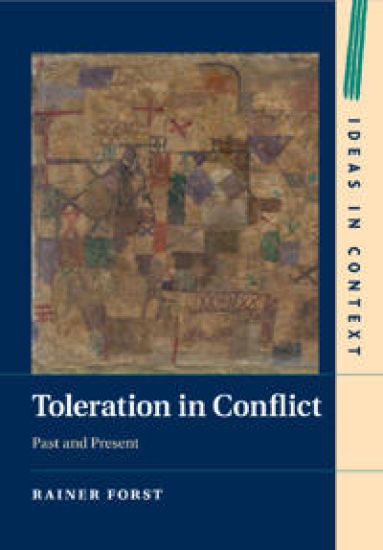
Toleration in Conflict

Toleration in Conflict

Forst Rainer

Cambridge University Press
2016
pokkari
The concept of toleration plays a central role in pluralistic societies. It designates a stance which permits conflicts over beliefs and practices to persist while at the same time defusing them, because it is based on reasons for coexistence in conflict - that is, in continuing dissension. A critical examination of the concept makes clear, however, that its content and evaluation are profoundly contested matters and thus that the concept itself stands in conflict. For some, toleration was and is an expression of mutual respect in spite of far-reaching differences, for others, a condescending, potentially repressive attitude and practice. Rainer Forst analyses these conflicts by reconstructing the philosophical and political discourse of toleration since antiquity. He demonstrates the diversity of the justifications and practices of toleration from the Stoics and early Christians to the present day and develops a systematic theory which he tests in discussions of contemporary conflicts over toleration.
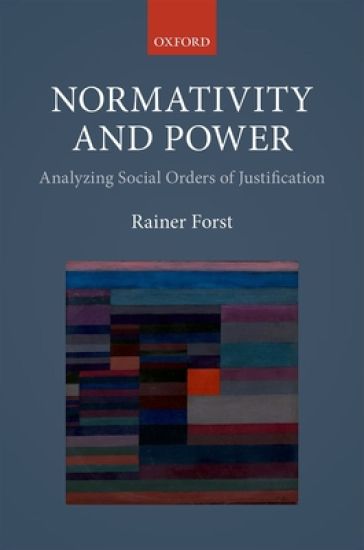
Normativity and Power

Normativity and Power

Rainer Forst

Oxford University Press
2017
sidottu
Humans are justificatory beingsthey offer, demand, and require justifications. The rules and institutions they follow rest on justification narratives that have evolved over time and, taken together, constitute a dynamic and tension-laden normative order. In this collection of essays, the first translation into English of the ground-breaking Normativität und Macht (Suhrkamp 2015), Rainer Forst presents a new approach to critical theory. Each essay reflects on the basic principles that guide our normative thinking. Forst's argument goes beyond 'ideal' and 'realist' theories and shows how closely the concepts of normativity and power are interrelated, and how power rests on the capacity to influence, determine, and possibly restrict the space of justifications for others. By combining insights from the disciplines of philosophy, history, and the social sciences, Forst re-evaluates theories of justice, as well as of power, and provides the tools for a critical theory of relations of justification.
The Right to Justification

The Right to Justification

Rainer Forst

Columbia University Press
2011
sidottu
Contemporary philosophical pluralism recognizes the inevitability and legitimacy of multiple ethical perspectives and values, making it difficult to isolate the higher-order principles on which to base a theory of justice. Rising up to meet this challenge, Rainer Forst, a leading member of the Frankfurt School's newest generation of philosophers, conceives of an "autonomous" construction of justice founded on what he calls the basic moral right to justification. Forst begins by identifying this right from the perspective of moral philosophy. Then, through an innovative, detailed critical analysis, he ties together the central components of social and political justice--freedom, democracy, equality, and toleration--and joins them to the right to justification. The resulting theory treats "justificatory power" as the central question of justice, and by adopting this approach, Forst argues, we can discursively work out, or "construct," principles of justice, especially with respect to transnational justice and human rights issues. As he builds his theory, Forst engages with the work of Anglo-American philosophers such as John Rawls, Ronald Dworkin, and Amartya Sen, and critical theorists such as Jurgen Habermas, Nancy Fraser, and Axel Honneth. Straddling multiple subjects, from politics and law to social protest and philosophical conceptions of practical reason, Forst brilliantly gathers contesting claims around a single, elastic theory of justice.
The Right to Justification

The Right to Justification

Rainer Forst

Columbia University Press
2014
pokkari
Contemporary philosophical pluralism recognizes the inevitability and legitimacy of multiple ethical perspectives and values, making it difficult to isolate the higher-order principles on which to base a theory of justice. Rising up to meet this challenge, Rainer Forst, a leading member of the Frankfurt School's newest generation of philosophers, conceives of an "autonomous" construction of justice founded on what he calls the basic moral right to justification. Forst begins by identifying this right from the perspective of moral philosophy. Then, through an innovative, detailed critical analysis, he ties together the central components of social and political justice--freedom, democracy, equality, and toleration--and joins them to the right to justification. The resulting theory treats "justificatory power" as the central question of justice, and by adopting this approach, Forst argues, we can discursively work out, or "construct," principles of justice, especially with respect to transnational justice and human rights issues. As he builds his theory, Forst engages with the work of Anglo-American philosophers such as John Rawls, Ronald Dworkin, and Amartya Sen, and critical theorists such as Jurgen Habermas, Nancy Fraser, and Axel Honneth. Straddling multiple subjects, from politics and law to social protest and philosophical conceptions of practical reason, Forst brilliantly gathers contesting claims around a single, elastic theory of justice.
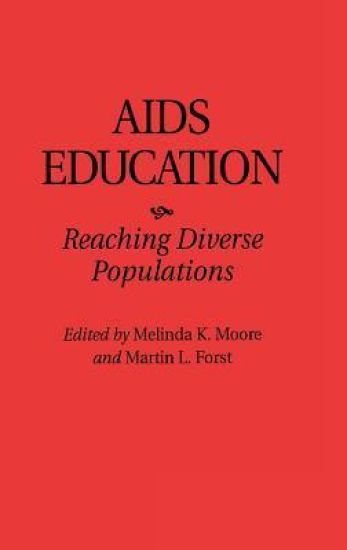
AIDS Education

AIDS Education

Martin Forst; Melinda Moore

Praeger Publishers Inc
1996
sidottu
Since the time AIDS and HIV infection were first discovered, no medical cures have been developed. It became clear early on that education would be the cornerstone in the fight against AIDS, and that assessment remains true in the 1990s. This book describes how to tailor HIV education and prevention efforts to specific communities, including how to identify those most at risk, what types of interventions are most appropriate to those communities, how to engage those most at risk, and the role of participatory evaluation in determining the effectiveness of community education efforts.
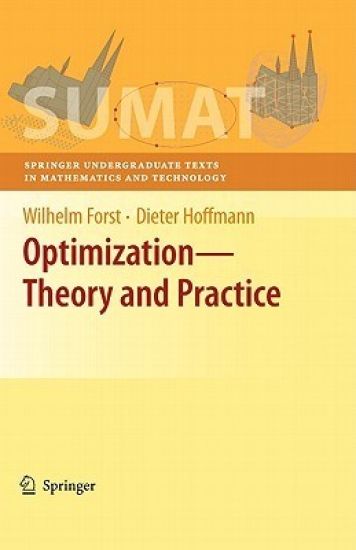
Optimization—Theory and Practice

Optimization—Theory and Practice

Wilhelm Forst; Dieter Hoffmann

Springer-Verlag New York Inc.
2010
sidottu
Optimization is a field important in its own right but is also integral to numerous applied sciences, including operations research, management science, economics, finance and all branches of mathematics-oriented engineering. Constrained optimization models are one of the most widely used mathematical models in operations research and management science.This book gives a modern and well-balanced presentation of the subject, focusing on theory but also including algorithims and examples from various real-world applications. The text is easy to read and accessible to anyone with a knowledge of multi-dimensional calculus, linear algebra and basic numerical methods. Detailed examples and counter-examples are provided - as are exercises, solutions and helpful hints, and Matlab/Maple supplements.The intended readership is advanced undergraduates, graduates, and professionals in any of the applied fields.
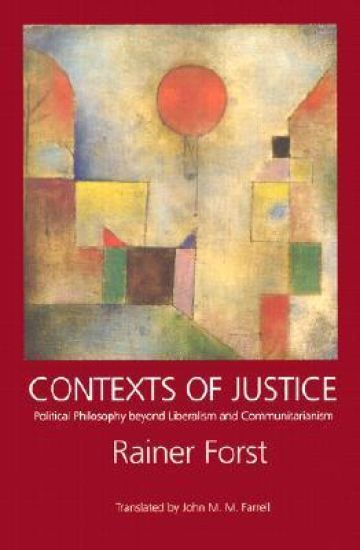
Contexts of Justice

Contexts of Justice

Rainer Forst

University of California Press
2002
pokkari
Contexts of Justice, highly acclaimed when it was published in Germany, provides a significant new intervention into the important debate between communitarianism and liberalism. Rainer Forst argues for a theory of "contexts of justice" that leads beyond the narrow confines of this debate as it has been understood until now and posits the possibility of a new conception of social and political justice. This book brings refreshing clarity to a complex topic as it provides a synthesis of traditions and theories that leads to a truly original approach. Forst makes a four-part distinction to decipher the debate between communitarianism and liberalism. These four parts concern the constitution of the self, the neutrality of law, the ethos of democracy, and the opposition between universalism and contextualism. He shows that a comprehensive theory of justice needs to take these different contexts adequately into account. He discusses recent debates about discursive democracy and feminist critiques of liberalism, and addresses such topics as multiculturalism and civil society.
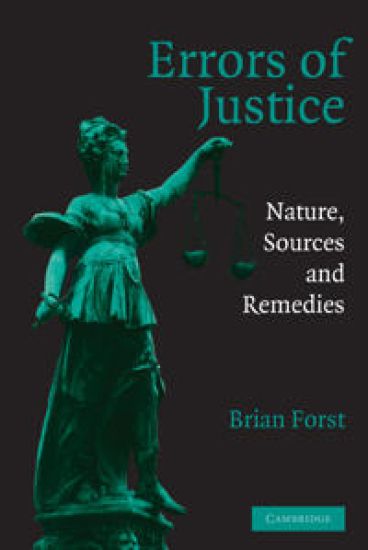
Errors of Justice

Errors of Justice

Brian Forst

Cambridge University Press
2003
pokkari
In this book, Brian Forst takes a fresh new perspective on the assessment of criminal justice policy, examining the prospect of assessing policies based on their impact on errors of justice: the error of failing to bring offenders to justice, on the one hand, and the error of imposing costs on innocent people and excessive costs on offenders, on the other. Noting that we have sophisticated systems for managing errors in statistical inference and quality control processes and no parallel system for managing errors of a more socially costly variety - on matters of guilt and innocence - the author lays the foundation for a common sense approach to the management of errors in the criminal justice system, from policing and prosecution to sentencing and corrections. He examines the sources of error in each sector, the harms they impose on society, and frameworks for analyzing and reducing them.