Kirjojen hintavertailu. Mukana 11 717 486 kirjaa ja 12 kauppaa.

Kirjahaku

Etsi kirjoja tekijän nimen, kirjan nimen tai ISBN:n perusteella.

1000 tulosta hakusanalla Frank Merlo

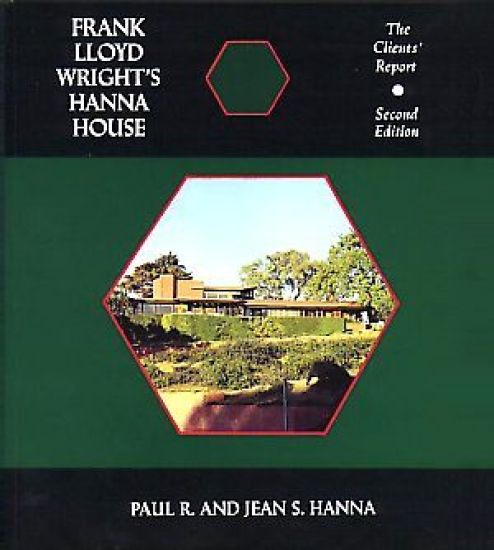
Frank Lloyd Wright's Hanna House

Frank Lloyd Wright's Hanna House

Hanna Paul R.; Hanna Jean S.

SOUTHERN ILLINOIS UNIVERSITY PRESS
2006
sidottu
The Hanna house is a milestone in Frank Lloyd Wright s career and one of the acknowledged masterworks of 20th-century architecture. The Hannas tell how they came to commission Wright, how they received his ingenious yet provocative designbased on a hexagonal pattern like a bee s honeycomband how it was built all within their means. In this reprint of the 1981 MIT edition they also tell what it meant to live and enjoy life in this unprecedented structure that was eventually given to Stanford University."
Frank Lloyd Wright in the Realm of Ideas

Frank Lloyd Wright in the Realm of Ideas

Frank Lloyd Wright; Pfeiffer Bruce Brooks; Nordland Gerald

SOUTHERN ILLINOIS UNIVERSITY PRESS
1988
nidottu
One hundred years from now, people will look at his ideas, his principles, his forms, and seewith wonder and amazementthat those ideas are still fresh, vibrant, applicable, and intensely prophetic. Olgivanna Lloyd Wright (1969).Nearly twenty years later, this exhibition of Frank Lloyd Wright s principles and forms validates Mrs. Wright s prophecy highlighting his ideasthe foundation of his achievement.Part 1 of the book, prepared by Bruce Brooks Pfeiffer, contains four sections defined by Wright s own words: The Destruction of the Box: The Freedom of Space; The Nature of the Site; Materials and Methods; and The Architecture of Democracy. The 150 illustrations in this part (86 in full color), are dazzling visions of what was but is no more, what was planned but never built, as well as those architectural treasures that continue to enrich and challenge our society. The illustrations are accompanied by quotations from Frank Lloyd Wright that demonstrate how his ideas found expression in his designs.Part 2 contains 5 essays that serve to increase our awareness and appreciation of Frank Lloyd Wright s contribution: Jack Quinan, Frank Lloyd Wright in 1893: The Chicago Context; Aaron Green, Organic Architecture: The Principles of Frank Lloyd Wright; E. T. Casey, Structure in Organic Architecture; Narciso Menocal, Frank Lloyd Wright s Architectural Democracy: An American Jeremiad; and Bruce Brooks Pfeiffer, The Second Career: 19241959. An appendix provides full descriptions of the works in part 1, including notes on media, methods, and measurements."
Frank Lloyd Wright: The Crowning Decade (1949-1959)

Frank Lloyd Wright: The Crowning Decade (1949-1959)

Bruce Brooks Pfeiffer

SOUTHERN ILLINOIS UNIVERSITY PRESS
1989
sidottu
In the last ten years of his life, Frank Lloyd Wright became a respected public figure honored throughout the world. The shift from maverick to honoree changed his architecture, which became simpler and more sensuous.This decade also saw an incredible increase in production from Wright. Between the ages of 82 and 92, he designed the Price Tower, the Beth Shalom Synagogue, the Dallas Theater Center, the Guggenheim Museum, and at the time of his death, there were 86 projects in various stages of completion in the drafting room.The Crowning Decade views Wright's final years from five perspectives: as Wright saw himself; as the outside world saw him; as he appears in the private memoirs of Olgivanna Lloyd Wright; as his daughter, Iovanna Wright, saw him; and in a composite portrait by his Taliesin Fellows.
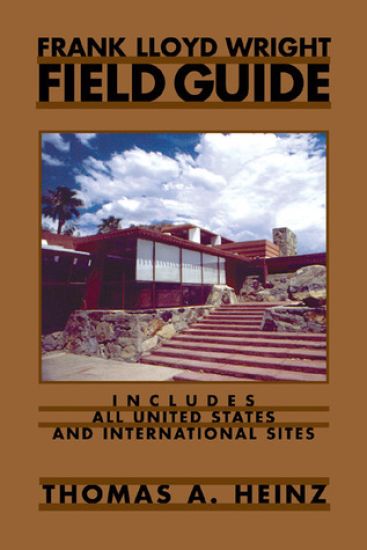
Frank Lloyd Wright Field Guide

Frank Lloyd Wright Field Guide

Thomas A. Heinz

Northwestern University Press
2005
nidottu
Frank Lloyd Wright Field Guide provides the first complete visitors' guide to all of Wright's buildings in the United States and around the world. This new, single-volume edition is written and compiled by architect and Frank Lloyd Wright expert Thomas A. Heinz, AIA. In a highly readable and informative style. Heinz presents each building page by page, providing brief histories and background details, information on accessibility and viewing, and driving directions. Every entry is accompanied by a photograph and location map Buildings are arranged geographically. A cross-referenced index enables each building to be easily accessed by location or client or building name.
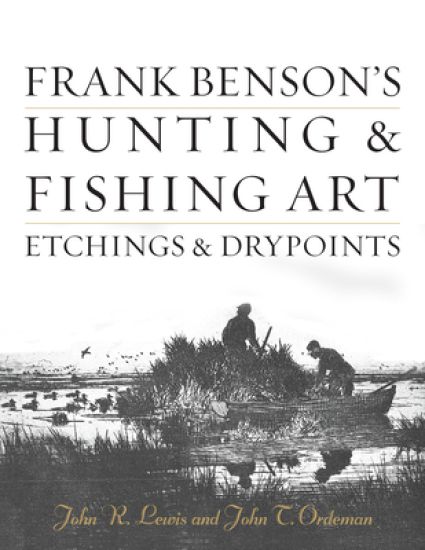
Frank Benson's Hunting & Fishing Art

Frank Benson's Hunting & Fishing Art

John R. Lewis; John T. Ordeman

Stackpole Books
2020
sidottu
John Lewis has spent forty years assembling this rare collection of all fifty-five of Frank Benson’s etchings in the hunting and fishing genre. The strength and subtlety of the pieces show off Benson’s mastery of technique and artistry. Born in Salem, Massachusetts in 1862, Benson was well educated in the arts (Boston’s Museum of Fine Arts and Julian Academy in Paris) and first achieved success in painting. Benson’s oils and portraits were exhibited in museums and galleries and he was granted academic honors for his work in oils before he turned to etching in 1880. For subject matter for the etchings he chose his pastime passions, hunting and fishing. The book fully documents the etchings, how they were created, their focus/subjects, background and provenance, including their sale at auction. In the world of art, it is generally held that Benson will be best remembered for his etched work.
Frank Furness

Frank Furness

George E. Thomas

University of Pennsylvania Press
2021
pokkari
Frank Furness (1839-1912) has remained a curiosity to architectural historians and critics, somewhere between an icon and an enigma, whose importance and impact have yet to be properly evaluated or appreciated. To some, his work pushed pattern and proportion to extremes, undermining or forcing together the historic styles he referenced in such eclectic buildings as the Pennsylvania Academy of the Fine Arts and the University of Pennsylvania Library. To others, he was merely a regional mannerist creating an eccentric personal style that had little resonance and modest influence on the future of architecture. By placing Furness in the industrial culture that supported his work, George Thomas finds a cutting-edge revolutionary who launched the beginnings of modern design, played a key part in its evolution, and whose strategies continue to affect the built world. In his sweeping reassessment of Furness as an architect of the machine age, Thomas grounds him in Philadelphia, a city led by engineers, industrialists, and businessmen who commissioned the buildings that extended modern design to Chicago, Glasgow, and Berlin. Thomas examines the multiple facets of Victorian Philadelphia's modernity, looking to its eager embrace of innovations in engineering, transportation, technology, and building, and argues that Furness, working for a particular cohort of clients, played a central role in shaping this context. His analyses of the innovative planning, formal, and structural qualities of Furness's major buildings identifies their designs as initiators of a narrative that leads to such more obviously modern figures as Louis Sullivan, William Price, Frank Lloyd Wright and eventually, the architects of the Bauhaus. Misunderstood and reviled in the traditional architectural centers of New York and Boston, Furness's projects, commissioned by the progressive industrialists of the new machine age, intentionally broke with the historical styles of the past to work in a modern way-from utilizing principles based on logistical planning to incorporating the new materials of the industrial age. Lavishly illustrated, the book includes more than eighty black-and-white and thirty color photographs that highlight the richness of his work and the originality of his design spanning more than forty years.
Frank Furness

Frank Furness

George E. Thomas

University of Pennsylvania Press
2018
sidottu
Frank Furness (1839-1912) has remained a curiosity to architectural historians and critics, somewhere between an icon and an enigma, whose importance and impact have yet to be properly evaluated or appreciated. To some, his work pushed pattern and proportion to extremes, undermining or forcing together the historic styles he referenced in such eclectic buildings as the Pennsylvania Academy of the Fine Arts and the University of Pennsylvania Library. To others, he was merely a regional mannerist creating an eccentric personal style that had little resonance and modest influence on the future of architecture. By placing Furness in the industrial culture that supported his work, George Thomas finds a cutting-edge revolutionary who launched the beginnings of modern design, played a key part in its evolution, and whose strategies continue to affect the built world. In his sweeping reassessment of Furness as an architect of the machine age, Thomas grounds him in Philadelphia, a city led by engineers, industrialists, and businessmen who commissioned the buildings that extended modern design to Chicago, Glasgow, and Berlin. Thomas examines the multiple facets of Victorian Philadelphia's modernity, looking to its eager embrace of innovations in engineering, transportation, technology, and building, and argues that Furness, working for a particular cohort of clients, played a central role in shaping this context. His analyses of the innovative planning, formal, and structural qualities of Furness's major buildings identifies their designs as initiators of a narrative that leads to such more obviously modern figures as Louis Sullivan, William Price, Frank Lloyd Wright and eventually, the architects of the Bauhaus. Misunderstood and reviled in the traditional architectural centers of New York and Boston, Furness's projects, commissioned by the progressive industrialists of the new machine age, intentionally broke with the historical styles of the past to work in a modern way-from utilizing principles based on logistical planning to incorporating the new materials of the industrial age. Lavishly illustrated, the book includes more than eighty black-and-white and thirty color photographs that highlight the richness of his work and the originality of his design spanning more than forty years.
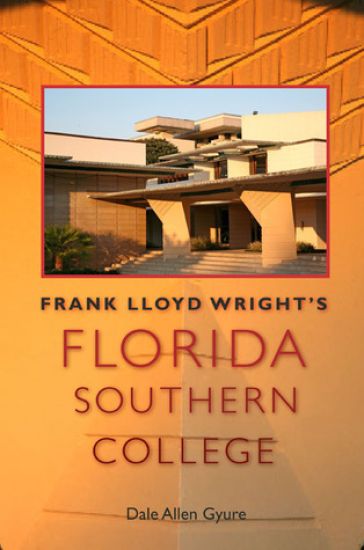
Frank Lloyd Wright'S Florida Southern College

Frank Lloyd Wright'S Florida Southern College

Dale Allen Gyure

University Press of Florida
2010
sidottu
"Florida Southern College is a signature point in the visioning of American education. Now, Frank Lloyd Wright's genius is documented, revealing how he translated nature's 'occult symmetry' into organic architecture reflecting democratic ideals. Wright belongs to the pantheon of similar utopian aspirants--Flagler, Fischer, Merrick, Nolan, Disney--who came to Florida to express visions of modern life."--Bruce Stephenson, author of Visions of Eden"Dale Gyure has crafted the first thoughtful examination of Frank Lloyd Wright's Child of the Sun campus. This book serves as a benchmark for future studies of Mr. Wright at Florida Southern College."--Randall M. MacDonald, coauthor of The Buildings of Frank Lloyd Wright at Florida Southern CollegeFlorida Southern College in Lakeland boasts the largest single-site collection of Frank Lloyd Wright architecture in the world. With eleven buildings planned and designed by Wright, the campus forms a rich tableau for examining the architect's philosophy and design practice.In this fully illustrated volume, Dale Allen Gyure tells the engaging story of the ambitious project from beginning to end. The college's dynamic president, Ludd M. Spivey, wanted the grounds and buildings redesigned to embody a modern and distinctly American expression of Protestant theology. Informed by Spivey's vision, his own early educational experience, and his architectural philosophy, Wright conceived the "Child of the Sun" complex.Much like Thomas Jefferson's famous plan for the University of Virginia, the academic village that Wright designed for Florida Southern College expresses a dramatic and personal statement about education in a democratic society. Little studied to date, this significant campus and its history are finally given the attention they deserve in this fascinating volume.
Frank Miller's Daredevil and the Ends of Heroism

Frank Miller's Daredevil and the Ends of Heroism

Paul Young

Rutgers University Press
2016
nidottu
2017 EISNER AWARD NOMINEE for Best Academic/Scholarly Work In the late 1970s and early 1980s, writer-artist Frank Miller turned Daredevil from a tepid-selling comic into an industry-wide success story, doubling its sales within three years. Lawyer by day and costumed vigilante by night, the character of Daredevil was the perfect vehicle for the explorations of heroic ideals and violence that would come to define Miller’s work. Frank Miller’s Daredevil and the Ends of Heroism is both a rigorous study of Miller’s artistic influences and innovations and a reflection on how his visionary work on Daredevil impacted generations of comics publishers, creators, and fans. Paul Young explores the accomplishments of Miller the writer, who fused hardboiled crime stories with superhero comics, while reimagining Kingpin (a classic Spider-Man nemesis), recuperating the half-baked villain Bullseye, and inventing a completely new kind of Daredevil villain in Elektra. Yet, he also offers a vivid appreciation of the indelible panels drawn by Miller the artist, taking a fresh look at his distinctive page layouts and lines. A childhood fan of Miller’s Daredevil, Young takes readers on a personal journey as he seeks to reconcile his love for the comic with his distaste for the fascistic overtones of Miller’s controversial later work. What he finds will resonate not only with Daredevil fans, but with anyone who has contemplated what it means to be a hero in a heartless world. Other titles in the Comics Culture series include Twelve-Cent Archie, Wonder Woman: Bondage and Feminism in the Marston/Peter Comics, 1941-1948, and Considering Watchmen: Poetics, Property, Politics.
Frank Miller's Daredevil and the Ends of Heroism

Frank Miller's Daredevil and the Ends of Heroism

Paul Young

Rutgers University Press
2016
sidottu
2017 EISNER AWARD NOMINEE for Best Academic/Scholarly Work In the late 1970s and early 1980s, writer-artist Frank Miller turned Daredevil from a tepid-selling comic into an industry-wide success story, doubling its sales within three years. Lawyer by day and costumed vigilante by night, the character of Daredevil was the perfect vehicle for the explorations of heroic ideals and violence that would come to define Miller’s work. Frank Miller’s Daredevil and the Ends of Heroism is both a rigorous study of Miller’s artistic influences and innovations and a reflection on how his visionary work on Daredevil impacted generations of comics publishers, creators, and fans. Paul Young explores the accomplishments of Miller the writer, who fused hardboiled crime stories with superhero comics, while reimagining Kingpin (a classic Spider-Man nemesis), recuperating the half-baked villain Bullseye, and inventing a completely new kind of Daredevil villain in Elektra. Yet, he also offers a vivid appreciation of the indelible panels drawn by Miller the artist, taking a fresh look at his distinctive page layouts and lines. A childhood fan of Miller’s Daredevil, Young takes readers on a personal journey as he seeks to reconcile his love for the comic with his distaste for the fascistic overtones of Miller’s controversial later work. What he finds will resonate not only with Daredevil fans, but with anyone who has contemplated what it means to be a hero in a heartless world. Other titles in the Comics Culture series include Twelve-Cent Archie, Wonder Woman: Bondage and Feminism in the Marston/Peter Comics, 1941-1948, and Considering Watchmen: Poetics, Property, Politics.
Frank Lloyd Wright's Pope-Leighey House

Frank Lloyd Wright's Pope-Leighey House

Steven M. Reiss

University of Virginia Press
2014
sidottu
Frank Lloyd Wright designed and realized over 500 buildings between 1886 and 1959 for a wide range of clients. In Frank Lloyd Wright's Pope-Leighey House, architect Steven Reiss presents the updated and detailed story of one of Wright’s few Virginia commissions. Designed and built for Loren and Charlotte Pope and later purchased by Marjorie and Robert Leighey, the Pope-Leighey House stands as a stunning example of an innovative form of shelter—which Wright called Usonian—for families beset by the Great Depression. Here, and elsewhere, Wright offered a unique and unprecedented approach for homes that would be small yet architecturally significant, carefully sited, and constructed of readily available local materials. He believed that anyone with an acre of land should have the opportunity to own a Usonian home. Set in Northern Virginia, the Pope-Leighey House has an unusual history in that it has been moved twice, first to the grounds of the National Trust’s Woodlawn to rescue it from the path of Route 66 in Falls Church, then to re-site it to better correspond to its original orientation. Wright’s mission was to remind us that ""we need to see life in simpler terms."" In this amply illustrated book, Reiss echoes Wright’s reminder that small, carefully built structures should be the starting point of sustainable and environmentally responsible house design.
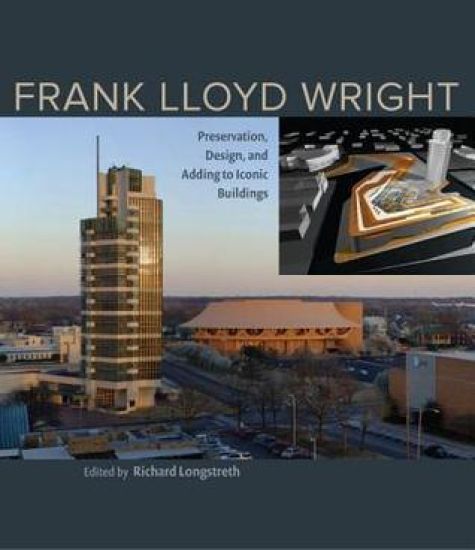
Frank Lloyd Wright

Frank Lloyd Wright

University of Virginia Press
2014
sidottu
The buildings of Frank Lloyd Wright are not immune to the social and environmental forces that affect all architecture. Because of the popular recognition and historical significance of his work, however, the stakes are unusually high when his buildings are modified in any way. Any additions or changes must meet the highest standards; how exactly this can be achieved is the debate that fuels this compelling new book. The essays collected here are authored by many of the top professionals in the fields of architecture and preservation. Some of the contributors worked directly on the buildings discussed and provide invaluable firsthand accounts of these projects. This is the most thorough discussion of modifying Wright’s works published to date and a fascinating commentary on preserving our architectural legacy.Contributors:Richard Longstreth on additions to historic buildings, de Teel Patterson Tiller on design in historic districts, Sidney K. Robinson on Taliesin, Anne Biebel and Mary Keiran Murphy on the Hillside School, Mark Hertzberg on the S. C. Johnson Administration Building, Dale Allen Gyure on Florida Southern College, Neil Levine on the Guggenheim Museum, Scott W. Perkins on the Price Tower, Tom Kubala on the First Unitarian Meeting House, Eric Jackson-Forsberg on the Darwin Martin House, Lynda S. Waggoner on Fallingwater, Patrick J. Mahoney on Graycliff, Thomas Templeton Taylor on the Westcott House.
Frank Lloyd Wright's Pope-Leighey House

Frank Lloyd Wright's Pope-Leighey House

Steven M. Reiss

UNIVERSITY OF VIRGINIA PRESS
2023
pokkari
In Frank Lloyd Wright’s Pope-Leighey House, architect Steven M. Reiss presents the updated and detailed story of one of Wright’s few Virginia commissions. Designed and built for Loren and Charlotte Pope and later purchased by Marjorie and Robert Leighey, the Pope-Leighey House stands as a stunning example of an innovative form of shelter—which Wright called Usonian—for families beset by the Great Depression. Here, and elsewhere, Wright offered a unique and unprecedented approach for homes that would be small yet architecturally significant, carefully sited, and constructed of readily available local materials. He believed that anyone with an acre of land should have the opportunity to own a Usonian home. In this amply illustrated book, Reiss echoes Wright’s reminder that small, carefully built structures should be the starting point of sustainable and environmentally responsible house design.
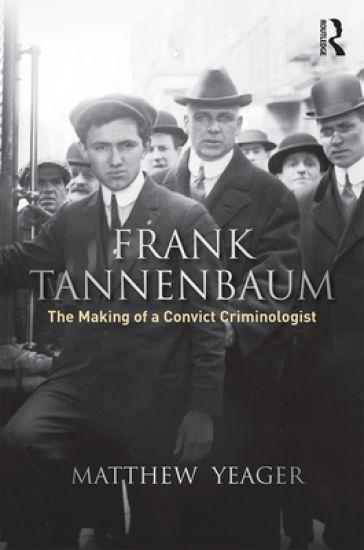
Frank Tannenbaum

Frank Tannenbaum

Matthew G. Yeager

CRC Press Inc
2017
nidottu
Frank Tannenbaum and the Making of a Convict Criminologist is a historical biography about Columbia University professor Frank Tannenbaum and his contribution to American criminology. Tannenbaum was a major figure in criminology in the early twentieth century, and is known for his contributions to labeling theory, particularly his conception of the "dramatization of evil" presented in his 1938 book, Crime and Community. Tannenbaum served a year on Blackwell’s Island in New York City for labor disturbances in 1914 and subsequently became a prison reformer, writing about his experiences with the American penal system and serving as the official reporter for the Wickersham Commission’s study on Penal Institutions, Probation, and Parole in 1931. This book explores his unique early career, and his influence on convict criminology, drawing on his personal papers housed at the Butler Library at Columbia University.