
Kirjahaku
Etsi kirjoja tekijän nimen, kirjan nimen tai ISBN:n perusteella.
1000 tulosta hakusanalla Franz Neumann


Kutenai Tales, / By Franz Boas, Together with Texts Collected by Alexander Francis Chamberlain.
Franz Boas
University of Michigan Library
2006
pokkari


Dr. Franz Hartmann's Diseases of Children and Their Homeopathic Treatment
Franz Hartmann; Charles J. (TRN) Hempel
Kessinger Pub
2007
pokkari
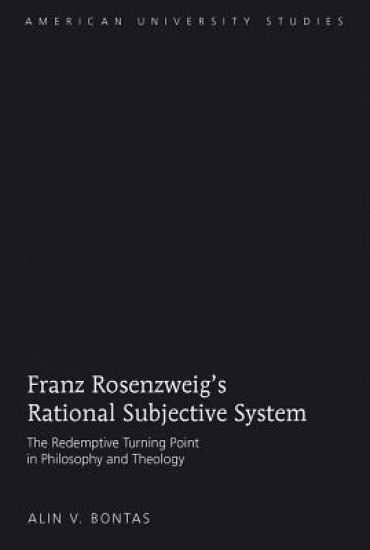
Franz Rosenzweig’s The Star of Redemption is best understood as a rational subjective system, and as such, as the redemptive turning point in philosophy and theology in general. In asserting Rosenzweig’s essential commitment to a «new» systematic conception of thinking as the most basic, deepest, and comprehensive intellectual procedure, Franz Rosenzweig’s Rational Subjective System sheds light on the extensive method of the Star and shows it to be rooted in a fundamental rethinking of the methodological and logical-metaphysical resources of Kant, most especially of the transcendent metaphysics of the psychological, cosmological, and theological substances (i.e., the «threefold nothing», or entia rationis). The true radicality and originality of Rosenzweig, Bontas claims, is the exposition of the «rational subjective» approach to substance and knowledge on the «logical form» of the hypothetical thought (i.e., the modal relation of logical consequence between original and non-natural ground and phenomenal consequence, that positively establishes the wholly final and non-ideal destinations of redemption), which valorizes the alliance between pure reason and revelation disrupted by the Kantian epistemology. The title, The Star of Redemption, indicates exactly this long rational and not exclusively mundane «new systematic principle» of coherent and reliable knowledge, which is ultimately shown to be «true» and «right» from a «self-examining» subjective perspective and thereby justified.

Dr. Franz Hartmann's Diseases Of Children And Their Homeopathic Treatment (1853)
Franz Hartmann
KESSINGER PUBLISHING, LLC
2008
sidottu

Franz Grillparzers Selbstbiographie/ Franz Grillparzers Autobiography
Franz Grillparzer; Albrect (EDT) Keller
Kessinger Pub
2008
pokkari
Franz Grillparzers Selbstbiographie
Franz Grillparzer; Albrect (EDT) Keller
Kessinger Pub
2008
sidottu
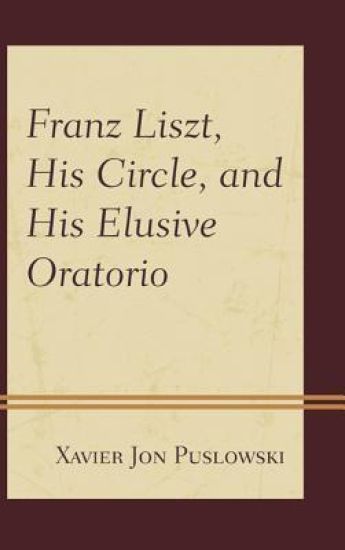
Franz Liszt, His Circle, and His Elusive Oratorio
Xavier Jon Puslowski
Rowman Littlefield
2014
sidottu
Many scholars, concert pianists, and classical music fans deem Franz Liszt the preeminent pianist of the nineteenth century. In Franz Liszt, His Circle, and His Elusive Oratorio, Xavier Puslowski engages in a detailed study of the links between Liszt, his contemporaries, and his milieu. Drawing on Liszt’s famous Saint Stanislas Oratorio as a focal point, Puslowski brings together the history of the Romantic period in classical music and the intersection of key figures and historical events in his story of Liszt’s achievements told from a distinctly historicist perspective. Readers get a new view of Liszt as Puslowski brings together a remarkable cast of characters. Friend and rival, Frederic Chopin, stands tall as a symbol of Poland’s fight for independence; the remarkable French “people’s poet” Pierre Beranger makes his entrance; virtuoso violinist Niccolo Paganini takes center stage later in Liszt’s life; the indefatigable French composer Hector Berlioz and the domineering Richard Wagner assume their roles in this musical drama; and finally two of Poland’s premier violinists, Karol Lipinski and Henryk Wieniawski, stand side by side with Russian pianist Anton Rubinstein, as the story of Liszt’s influence reaches across national boundaries and time itself to make its presence felt.

36 Originaltanze By Franz Schubert For Solo Piano D.365 (Op.9)
Franz Schubert
READ BOOKS
2010
pokkari
6 Moments Musicaux By Franz Schubert For Solo Piano D.780 (Op.94)
Franz Schubert
READ BOOKS
2010
pokkari

4 Impromptus By Franz Schubert For Solo Piano (1827) Op.90/D899
Franz Schubert
READ BOOKS
2010
pokkari