Kirjojen hintavertailu. Mukana 12 441 637 kirjaa ja 12 kauppaa.

Kirjahaku

Etsi kirjoja tekijän nimen, kirjan nimen tai ISBN:n perusteella.

1000 tulosta hakusanalla Gabrielle

Anti-Dumping and Anti-Trust Issues in Free-Trade Areas
In this book the legitimacy of anti-dumping measures in free trade areas is discussed. Economists argue that, generally, anti-dumping actions restrict and distort competition. In political terms, anti-dumping measures are biased in favour of a privileged interest group: the producers. Legally, they infringe the obligation of National Treatment contained in the GATT and NAFTA. Within regional groupings they contradict the guidelines of Article XXIV(8) (b) of the GATT. At the same time, anti-dumping measures are an exclusive exercise of sovereignty and would seem to protect statehood and arguably other national interests of any importing state. The traditional alternative for anti-dumping actions has always been argued to be the application of domestic legislation against predation and price discrimination. It is suggested that this solution is inappropriate or at least incomplete. Many abuses, other than predation, can be exercised in transnational market: transnational vertical restraints such as tying, refusal to deal, restrictions on patents, trade marks and copyrights may all facilitate dumping. Indeed, in an international forum, what constitute market power and abusive conduct differ from what would otherwise be acceptable in a domestic market. Security and other national policies ought to be weighted against efficiency considerations. In this context, the European framework of analysis, where variables additional to efficiency are balanced in competition assessments, provides a good model for such an international code of competition. Indeed, within a regional economic grouping, interests may be different. Anti-dumping laws may be phased out if states are willing to see national distinction phasing out as well. It is argued in this book that NAFTA can constitute a laboratory for needed discussion on an international code of conduct of firms and governments. It will then be suggested that anti-dumping actions could be phased out within NAFTA only if a comprehensive system of competition laws were to be enforceable against any transnational restrictive business practice. But for all states to agree on such legislation, they must have reached parallel.

Respect and Criminal Justice

Respect and Criminal Justice

Gabrielle Watson

Oxford University Press
2020
sidottu
Respect and Criminal Justice offers the first sustained examination of 'respect' in criminal justice in England and Wales, where the value is elusive but of persisting significance. The book takes the form of a critique of the 'respect deficit' in policing and imprisonment. It is especially concerned with the ways in which both institutions are merely constrained and not characterised by respect. In the course of the critique, it emerges that they appeal to the word 'respect' but rarely and only superficially address the prior question of what it is to respect and be respected. Despite academic interest in the democratic design of these institutions in recent decades, the book concludes that respect is more akin to a slogan than a foundational value of criminal justice practice.
International Arbitration: Law and Practice in Switzerland

International Arbitration: Law and Practice in Switzerland

Gabrielle Kaufmann-Kohler; Antonio Rigozzi

Oxford University Press
2015
sidottu
This book expounds the theory of international arbitration law. It explains in easily accessible terms all the fundamentals of arbitration, from separability of the arbitration agreement to competence-competence over procedural autonomy, finality of the award, and many other concepts. It does so with a focus on international arbitration law and jurisprudence in Switzerland, a global leader in the field. With a broader reach than a commentary of Chapter 12 of the Swiss Private International Law Act, the discussion contains numerous references to comparative law and its developments in addition to an extensive review of the practice of international tribunals. Written by two well-known specialists - Professor Kaufmann-Kohler being one of the leading arbitrators worldwide and Professor Rigozzi one of the foremost experts in sports arbitration - the work reflects many years of experience in managing arbitral proceedings involving commercial, investment, and sports disputes. This expertise is the basis for the solutions proposed to resolve the many practical issues that may arise in the course of an arbitration. It also informs the discussion of the arbitration rules addressed in the book, from the ICC Arbitration Rules to the Swiss Rules of International Arbitration, the CAS Code, and the UNCITRAL Rules. While the book covers commercial and sports arbitrations primarily, it also applies to investment arbitrations conducted under rules other than the ICSID framework.
Spiritual Sonnets

Spiritual Sonnets

Gabrielle de Coignard

University of Chicago Press
2003
sidottu
Born into a wealthy family in Toulouse, Gabrielle de Coignard (ca. 1550-86) married a prominent statesman in 1570. Widowed three years later, with two young daughters to raise, Coignard turned to writing devotional verse to help her cope with her practical and spiritual struggles.Spiritual Sonnets presents the first English translation of 129 of Coignard's highly autobiographical poems, giving us a startlingly intimate view into the life and mind of this Renaissance woman. The sonnets are all written "in the shadow of the Cross" and include elegies, penitential lyrics, Biblical meditations, and more. Rich with emotion, Coignard's poems reveal anguished moments of loneliness and grief as well as ecstatic experiences of mystical union. They also reveal her mastery of sixteenth-century literary conventions and spiritual traditions. This edition, printed in bilingual format with Melanie E. Gregg's translations facing the French originals, will be welcomed by teachers and students of poetry, French literature, women's studies, and religious and Renaissance studies.
Spiritual Sonnets

Spiritual Sonnets

Gabrielle de Coignard

University of Chicago Press
2003
nidottu
Born into a wealthy family in Toulouse, Gabrielle de Coignard (ca. 1550-86) married a prominent statesman in 1570. Widowed three years later, with two young daughters to raise, Coignard turned to writing devotional verse to help her cope with her practical and spiritual struggles.Spiritual Sonnets presents the first English translation of 129 of Coignard's highly autobiographical poems, giving us a startlingly intimate view into the life and mind of this Renaissance woman. The sonnets are all written "in the shadow of the Cross" and include elegies, penitential lyrics, Biblical meditations, and more. Rich with emotion, Coignard's poems reveal anguished moments of loneliness and grief as well as ecstatic experiences of mystical union. They also reveal her mastery of sixteenth-century literary conventions and spiritual traditions. This edition, printed in bilingual format with Melanie E. Gregg's translations facing the French originals, will be welcomed by teachers and students of poetry, French literature, women's studies, and religious and Renaissance studies.
Modernizing Main Street

Modernizing Main Street

Gabrielle Esperdy

University of Chicago Press
2008
sidottu
An important part of the New Deal, the Modernization Credit Plan helped transform urban business districts and small-town commercial strips across 1930s America, but it has since been almost completely forgotten. In "Modernizing Main Street", Gabrielle Esperdy uncovers the cultural history of the hundreds of thousands of modernized storefronts that resulted from the little-known federal provision that made billions of dollars available to shop owners who wanted to update their facades.Esperdy argues that these updated storefronts served a range of complex purposes, such as stimulating public consumption, extending the New Deal's influence, reviving a stagnant construction industry, and introducing European modernist design to the everyday landscape. She goes on to show that these diverse roles are inseparable, woven together not only by the crisis of the Depression, but also by the pressures of bourgeoning consumerism. As the decade's two major cultural forces, Esperdy concludes, consumerism and the Depression transformed the storefront from a seemingly insignificant element of the built environment into a potent site for the physical and rhetorical staging of recovery and progress.
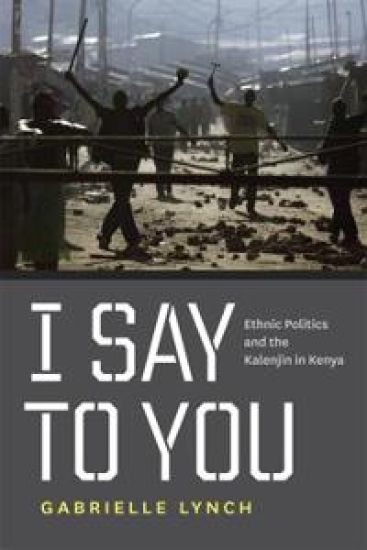
I Say to You

I Say to You

Gabrielle Lynch

University of Chicago Press
2011
sidottu
In 2007 a disputed election in Kenya erupted into a two-month political crisis that led to the deaths of more than a thousand people and the displacement of almost seven hundred thousand. Much of the violence fell along ethnic lines, the principal perpetrators of which were the Kalenjin, who lashed out at other communities in the Rift Valley. What makes this episode remarkable compared to many other instances of ethnic violence is that the Kalenjin community is a recent construct: the group has only existed since the mid-twentieth century. Drawing on rich archival research and vivid oral testimony, "I Say to You" is a timely analysis of the creation, development, political relevance, and popular appeal of the Kalenjin identity as well as its violent potential. Uncovering the Kalenjin's roots, Gabrielle Lynch examines the ways in which ethnic groups are socially constructed and renegotiated over time. She demonstrates how historical narratives of collective achievement, migration, injustice, and persecution constantly evolve. As a consequence, ethnic identities help politicians mobilize support and help ordinary people lay claim to space, power, and wealth. This kind of ethnic politics, Lynch reveals, encourages a sense of ethnic difference and competition, which can spiral into violent confrontation and retribution.
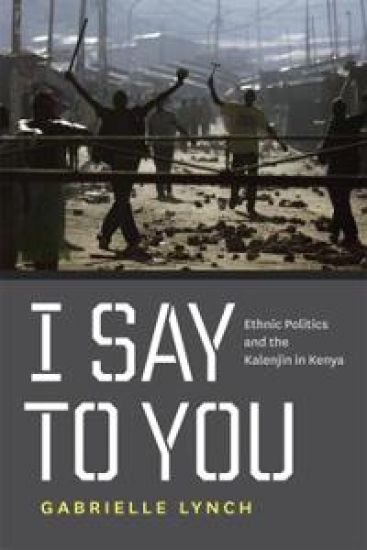
I Say to You

I Say to You

Gabrielle Lynch

University of Chicago Press
2011
nidottu
In 2007 a disputed election in Kenya erupted into a two-month political crisis that led to the deaths of more than a thousand people and the displacement of almost seven hundred thousand. Much of the violence fell along ethnic lines, the principal perpetrators of which were the Kalenjin, who lashed out at other communities in the Rift Valley. What makes this episode remarkable compared to many other instances of ethnic violence is that the Kalenjin community is a recent construct: the group has only existed since the mid-twentieth century. Drawing on rich archival research and vivid oral testimony, "I Say to You" is a timely analysis of the creation, development, political relevance, and popular appeal of the Kalenjin identity as well as its violent potential. Uncovering the Kalenjin's roots, Gabrielle Lynch examines the ways in which ethnic groups are socially constructed and renegotiated over time. She demonstrates how historical narratives of collective achievement, migration, injustice, and persecution constantly evolve. As a consequence, ethnic identities help politicians mobilize support and help ordinary people lay claim to space, power, and wealth. This kind of ethnic politics, Lynch reveals, encourages a sense of ethnic difference and competition, which can spiral into violent confrontation and retribution.
A Woman Who Defends All the Persons of Her Sex

A Woman Who Defends All the Persons of Her Sex

Gabrielle Suchon

University of Chicago Press
2010
sidottu
During the oppressive reign of Louis XIV, Gabrielle Suchon (1623-1703) was the most forceful female voice in France, advocating women's freedom and self-determination, access to knowledge, and assertion of authority. This volume collects Suchon's writing from two works - "Treatise on Ethics and Politics" (1693) and "On the Celibate Life Freely Chosen; or, Life without Commitments" (1700) - and demonstrates her to be an original philosophical and moral thinker and writer. Suchon argues that both women and men have inherently similar intellectual, corporeal, and spiritual capacities, which entitle them equally to essentially human prerogatives, and she displays her breadth of knowledge as she harnesses evidence from biblical, classical, patristic, and contemporary secular sources to bolster her claim. Forgotten over the centuries, these writings have been gaining increasing attention from feminist historians, students of philosophy, and scholars of seventeenth-century French literature and culture. This translation, from Domna C. Stanton and Rebecca M. Wilkin, marks the first time these works have appeared in English.
A Woman Who Defends All the Persons of Her Sex

A Woman Who Defends All the Persons of Her Sex

Gabrielle Suchon

University of Chicago Press
2010
nidottu
During the oppressive reign of Louis XIV, Gabrielle Suchon (1623-1703) was the most forceful female voice in France, advocating women's freedom and self-determination, access to knowledge, and assertion of authority. This volume collects Suchon's writing from two works - "Treatise on Ethics and Politics" (1693) and "On the Celibate Life Freely Chosen; or, Life without Commitments" (1700) - and demonstrates her to be an original philosophical and moral thinker and writer. Suchon argues that both women and men have inherently similar intellectual, corporeal, and spiritual capacities, which entitle them equally to essentially human prerogatives, and she displays her breadth of knowledge as she harnesses evidence from biblical, classical, patristic, and contemporary secular sources to bolster her claim. Forgotten over the centuries, these writings have been gaining increasing attention from feminist historians, students of philosophy, and scholars of seventeenth-century French literature and culture. This translation, from Domna C. Stanton and Rebecca M. Wilkin, marks the first time these works have appeared in English.
Unbound

Unbound

Gabrielle McIntire

McGill-Queen's University Press
2021
nidottu
inside sadness is glory / if you see it right way round, / find the seam, reverse it to perspectivize, / unwind light, joy's unravelling spoolInspired by mystical traditions, birdwatching, tree planting, ethics, neuropsychology, and quantum physics, Gabrielle McIntire's poems draw us in with their passionate attention to what it means to be human in a still-wondrous natural environment.Touching on human frailty, the eternal, and the ecological with a delicate and evocative brush, Unbound enacts an almost prayerful attentiveness to the earth's creatures and landscapes while it offers both mournful and humorous treatments of love and loss. McIntire's finely tuned musical voice – with its incantatory rhythms, rhymes, sound play, and entrancing double meanings – invites us to be courageously open to the unexpected.Unbound stirs us to re-evaluate our place amidst the astonishing beauty and wisdom of an Earth facing the early stages of climate change.
Bad Boy Bubby

Bad Boy Bubby

Gabrielle Murray

Red Globe Press
2013
nidottu
Bad Boy Bubby focuses on a 35 year-old man-child whose 'mother/keeper' keeps him imprisoned in a windowless hovel. From the moment it entered the festival cycle in 1993, the film has polarized audiences. This volume examines how and why the film produced such conflicting responses, as well as reviewing its current relevance.
Poor Artists

Poor Artists

Gabrielle de la Puente; Zarina Muhammad

PENGUIN BOOKS LTD
2024
sidottu
SHORTLISTED FOR THE GORDON BURN PRIZE'Irreverent, provocative and funny' Dazed'This book might change the way you look at art, or change the way you feel it' Daisy Hildyard'A full-throated defence of the inherent value of making, experiencing and talking about art' Frieze'Let me stay there, let me paint. Let me go to bed when the sun comes up. I don't want life to sharpen me.'Why make art? Faced with a capitalist system that has turned art into artwork and creative expression into cut-throat competition, why do so many artists try anyway?In this eye-opening journey through the bizarre world of contemporary art, criticism duo The White Pube tell the story of art like never before. Poor Artists follows aspiring artist Quest Talukdar through childhood obsessions, art school lessons and her professional debut. In surreal encounters with other artists, Quest learns profound truths about money and power, and must decide whether she cares more about success or staying true to herself.Blending imaginative storytelling with dialogue from anonymized interviews with real people in the art world who have all had to wrestle with the same decisions – including a Turner Prize winner or two, a few ghosts, a Venice Biennale fraudster and a communist messiah – Poor Artists is a powerful testimony to the emotional, existential and financial experience of artists today.
Poor Artists

Poor Artists

Gabrielle de la Puente; Zarina Muhammad

PENGUIN BOOKS LTD
2025
pokkari
SHORTLISTED FOR THE GORDON BURN PRIZE'Irreverent, provocative and funny' Dazed'This book might change the way you look at art, or change the way you feel it' Daisy Hildyard'A full-throated defence of the inherent value of making, experiencing and talking about art' Frieze'Let me stay there, let me paint. Let me go to bed when the sun comes up. I don't want life to sharpen me.'Why make art? Faced with a capitalist system that has turned art into artwork and creative expression into cut-throat competition, why do so many artists try anyway?In this eye-opening journey through the bizarre world of contemporary art, criticism duo The White Pube tell the story of art like never before. Poor Artists follows aspiring artist Quest Talukdar through childhood obsessions, art school lessons and her professional debut. In surreal encounters with other artists, Quest learns profound truths about money and power, and must decide whether she cares more about success or staying true to herself.Blending imaginative storytelling with dialogue from anonymized interviews with real people in the art world who have all had to wrestle with the same decisions – including a Turner Prize winner or two, a few ghosts, a Venice Biennale fraudster and a communist messiah – Poor Artists is a powerful testimony to the emotional, existential and financial experience of artists today.
Ejaculate Responsibly

Ejaculate Responsibly

GABRIELLE BLAIR

PENGUIN BOOKS LTD
2023
pokkari
THE NEW YORK TIMES BESTSELLER Men are responsible for all unwanted pregnancies. Why? Ovulation is involuntary. Ejaculation is not. It is also true that...- Men are 50 times more fertile than women- Birth control is hard to access, use, and comes with numerous side effects- Vasectomies are less risky than tubal litigationsYet, it's women who are expected to do the work of pregnancy prevention. Why must women be responsible for men's bodies, as well as their own?Rather than endlessly exploring how and why we control women's bodies in the highly polarised anti-abortion and pro-choice 'debate', Ejaculate Responsibly makes a witty and unflinching case for why men must be held accountable for their reproductive choices. There are zero consequences for men who ejaculate irresponsibly. It's time to shift the responsibility - and burden - of pregnancy prevention onto men.'A gorgeous manifesto' Oprah Daily 'A tactical, full-throated cry for men to step up' Vogue
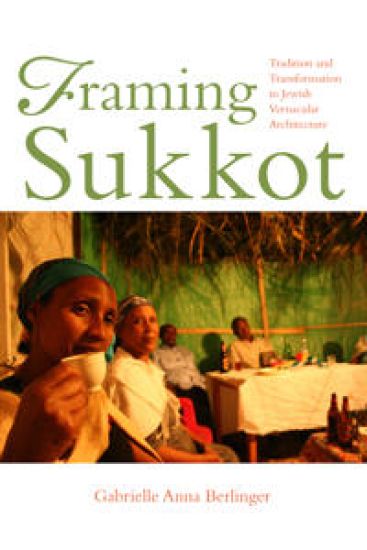
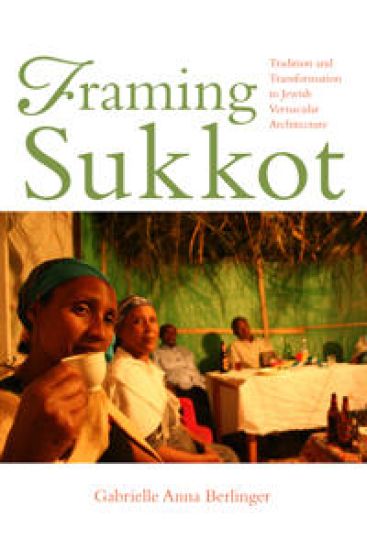
Framing Sukkot

Framing Sukkot

Gabrielle Anna Berlinger

Indiana University Press
2017
sidottu
The sukkah, the symbolic ritual home built during the annual Jewish holiday of Sukkot, commemorates the temporary structures that sheltered the Israelites as they journeyed across the desert after the exodus from Egypt. Despite the simple Biblical prescription for its design, the remarkable variety of creative expression in the construction, decoration, and use of the sukkah, in both times of peace and national upheaval, reveals the cultural traditions, political convictions, philosophical ideals, and individual aspirations that the sukkah communicates for its builders and users today. In this ethnography of contemporary Sukkot observance, Gabrielle Anna Berlinger examines the powerful role of ritual and vernacular architecture in the formation of self and society in three sharply contrasting Jewish communities: Bloomington, Indiana; South Tel Aviv, Israel; and Brooklyn, New York. Through vivid description and in-depth interviews, she demonstrates how constructing and decorating the sukkah and performing the weeklong holiday's rituals of hospitality provide unique circumstances for creative expression, social interaction, and political struggle. Through an exploration of the intersections between the rituals of Sukkot and contemporary issues, such as the global Occupy movement, Berlinger finds that the sukkah becomes a tangible expression of the need for housing and economic justice, as well as a symbol of the longing for home.
Framing Sukkot

Framing Sukkot

Gabrielle Anna Berlinger

Indiana University Press
2017
pokkari
The sukkah, the symbolic ritual home built during the annual Jewish holiday of Sukkot, commemorates the temporary structures that sheltered the Israelites as they journeyed across the desert after the exodus from Egypt. Despite the simple Biblical prescription for its design, the remarkable variety of creative expression in the construction, decoration, and use of the sukkah, in both times of peace and national upheaval, reveals the cultural traditions, political convictions, philosophical ideals, and individual aspirations that the sukkah communicates for its builders and users today. In this ethnography of contemporary Sukkot observance, Gabrielle Anna Berlinger examines the powerful role of ritual and vernacular architecture in the formation of self and society in three sharply contrasting Jewish communities: Bloomington, Indiana; South Tel Aviv, Israel; and Brooklyn, New York. Through vivid description and in-depth interviews, she demonstrates how constructing and decorating the sukkah and performing the weeklong holiday's rituals of hospitality provide unique circumstances for creative expression, social interaction, and political struggle. Through an exploration of the intersections between the rituals of Sukkot and contemporary issues, such as the global Occupy movement, Berlinger finds that the sukkah becomes a tangible expression of the need for housing and economic justice, as well as a symbol of the longing for home.
Invisible Colors

Invisible Colors

Gabrielle Decamous

MIT Press
2019
sidottu
How art makes visible what had been invisible-the effects of radiation, the lives of atomic bomb survivors, and the politics of the atomic age.The effects of radiation are invisible, but art can make it and its effects visible. Artwork created in response to the events of the nuclear era allow us to see them in a different way. In Invisible Colors, Gabrielle Decamous explores the atomic age from the perspective of the arts, investigating atomic-related art inspired by the work of Marie Curie, the bombings of Hiroshima and Nagasaki, the disaster at Fukushima, and other episodes in nuclear history.Decamous looks at the "Radium Literature" based on the work and life of Marie Curie; "A-Bomb literature" by Hibakusha (bomb survivor) artists from Nagasaki and Hiroshima; responses to the bombings by Western artists and writers; art from the irradiated landscapes of the Cold War-nuclear test sites and uranium mines, mainly in the Pacific and some African nations; and nuclear accidents in Fukushima, Chernobyl, and Three Mile Island. She finds that the artistic voices of the East are often drowned out by those of the West. Hibakusha art and Japanese photographs of the bombing are little known in the West and were censored; poetry from the Marshall Islands and Moruroa is also largely unknown; Western theatrical and cinematic works focus on heroic scientists, military men, and the atomic mushroom cloud rather than the aftermath of the bombings.Emphasizing art by artists who were present at these nuclear events-the "global Hibakusha"-rather than those reacting at a distance, Decamous puts Eastern and Western art in dialogue, analyzing the aesthetics and the ethics of nuclear representation.
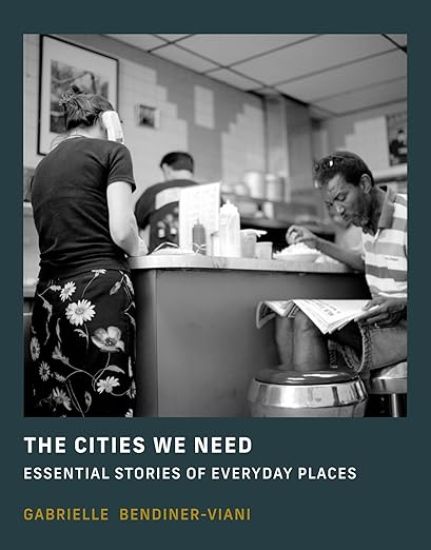
The Cities We Need

The Cities We Need

Gabrielle Bendiner-Viani

MIT PRESS LTD
2024
sidottu
An expressive book of prose and photographs that reveals the powerful ways our everyday places support our shared belonging. Where would you take someone on a guided tour of your neighborhood? In The Cities We Need, photographer and urbanist Gabrielle Bendiner-Viani introduces us to the complex, political, and eminently personable stories of residents who answered this question in Brooklyn, New York and Oakland, California. Their universal stories and Bendiner-Viani s evocative images illuminate what s at stake in our everyday places from diners to churches to donut shops. In this culmination of two decades of research and art practice Bendiner-Viani intertwines the personal, historical, and photographic to present us with placework, the way that unassuming places foster a sense of belonging and, in fact, do the essential work of helping us become communities. In this unique book, Bendiner-Viani makes visible how seemingly unimportant places can lay the foundation for a functional interconnected society, so necessary for both public health and social justice. The Cities We Need explores both what we gain in these spaces, and what we risk losing as they are threatened by gentrification, large-scale development, and most recently the COVID-19 pandemic. Ultimately, Bendiner-Viani shows us how to understand ourselves as part of a shared society, with a shared fate; she shows us that everyday places can be the spaces of liberation in which we can build the cities we need.