Kirjojen hintavertailu. Mukana 11 244 527 kirjaa ja 12 kauppaa.

Kirjahaku

Etsi kirjoja tekijän nimen, kirjan nimen tai ISBN:n perusteella.

1000 tulosta hakusanalla Gavin Pyakurel

Somewhere Over The Rainbow
Near the southern tip of Africa, there is a mountain that does a conjuring trick with the biggest tablecloth on earth. In a sacred forest near the Limpopo river, there is a bird that flies on wings of thunder, flashing lightning from its eyes and bearing rain in its beak. In between, there is a hauntingly beautiful land and millions of confused people. When Archbishop Desmond Tutu dubbed his native South Africa the 'Rainbow Nation', he conjured a vision of ethnic diversity and harmony in a country with eleven official languages, two national anthems, and a parliament that shuttled between two cities. As a foreign correspondent reporting on the last days of apartheid, Gavin Bell thought it was a brave image and wondered how long it would endure. A few years later, he returned to find out what had happened to Tutu's rainbow. In his travels he found a country at odds with itself, swinging between hope and despair, buoyed by a sense of freedom and haunted by a fear of violent crime. SOMEWHERE OVER THE RAINBOW is not only a fine travel book by an award-winning writer, it is a compelling portrait of a country in search of an identity. The leopard stories are good too.

Autumn's Dying

Autumn's Dying

Gavin Cathcart

Lulu.com
2018
pokkari
Immortality can be a tough row to hoe, particularly when you have to continually kill folks to keep on going. Since being slain by a female vampire in the autumn of 1944, Luke Bennek has stuck to the shadows, carving out a gritty existence in the decaying sections of America's cities. To avoid detection, he feeds only when necessary, taking those that will be little missed. For over seven decades it'd been going fairly well, but time catches up with everyone. In a rapidly changing world, Luke is finding it harder and harder to stay under the radar, and now someone has discovered what he is. When the predator becomes the prey, all bets are off, and something's gotta give.
Ruma

Ruma

Gavin Jackowski

Lulu.com
2018
pokkari
When Andrew accidentally unleashes a fury that could wipe out the entirety of the human race, he along with his friend Mack must travel to the past and alter Andrew's future. Camp Ruma is the place in which Andrew must reunite his younger self with all of his old friends and train them to wield a power known as Pura against one of the greatest evils the earth has ever seen. Will Andrew succeed at destroying this threat to the human race or will he perish?
Writing the Past

Writing the Past

Gavin Lucas

Routledge
2018
sidottu
How do archaeologists make knowledge? Debates in the latter half of the twentieth century revolved around broad, abstract philosophies and theories such as positivism and hermeneutics which have all but vanished today. By contrast, in recent years there has been a great deal of attention given to more concrete, practice-based study, such as fieldwork. But where one was too abstract, the other has become too descriptive and commonly evades issues of epistemic judgement.Writing the Past attempts to reintroduce a normative dimension to knowledge practices in archaeology, especially in relation to archaeological practice further down the ‘assembly line’ in the production of published texts, where archaeological knowledge becomes most stabilized and is widely disseminated. By exploring the composition of texts in archaeology and the relation between their structural, performative characteristics and key epistemic virtues, this book aims to move debate in both knowledge and writing practices in a new direction.Although this book will be of particular interest to archaeologists, the argument offered has relevance for all academic disciplines concerned with how knowledge production and textual composition intertwine.
Writing the Past

Writing the Past

Gavin Lucas

Routledge
2018
nidottu
How do archaeologists make knowledge? Debates in the latter half of the twentieth century revolved around broad, abstract philosophies and theories such as positivism and hermeneutics which have all but vanished today. By contrast, in recent years there has been a great deal of attention given to more concrete, practice-based study, such as fieldwork. But where one was too abstract, the other has become too descriptive and commonly evades issues of epistemic judgement.Writing the Past attempts to reintroduce a normative dimension to knowledge practices in archaeology, especially in relation to archaeological practice further down the ‘assembly line’ in the production of published texts, where archaeological knowledge becomes most stabilized and is widely disseminated. By exploring the composition of texts in archaeology and the relation between their structural, performative characteristics and key epistemic virtues, this book aims to move debate in both knowledge and writing practices in a new direction.Although this book will be of particular interest to archaeologists, the argument offered has relevance for all academic disciplines concerned with how knowledge production and textual composition intertwine.
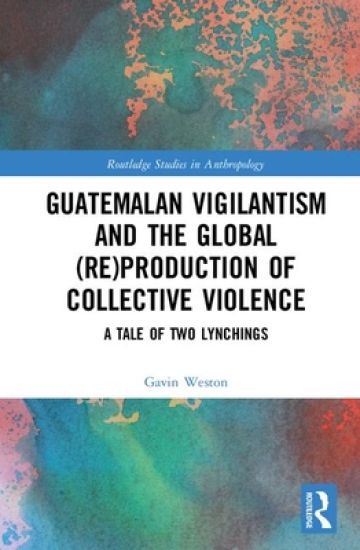
Guatemalan Vigilantism and the Global (Re)Production of Collective Violence
This book grounds an understanding of lynching as an increasingly globalised phenomenon through an examination of two cases in Guatemala.The chapters cover issues of migration, tourism, gangs, inter-generational conflict, media, gossip, and rumour to understand national and global patterns of mob-based vigilantism and how diverse factors are funnelled into singular acts of violence. Gavin Weston critically engages with the discussion of Guatemalan lynchings as a form of post-conflict violence alongside other less direct chains of causation. Lynchings have complex, tiered causations based in contestations regarding ideas and provision of justice. Underlying social problems and similarities in the way lynchings spread through talk and media make them relatively anticipatable in certain contexts and suggest possible spaces for mitigation against their viral spread.This volume will be relevant to Latin Americanists and those interested in the anthropology and sociology of violence, post-conflict violence, and peace studies.
Youth Activism and Solidarity

Youth Activism and Solidarity

Gavin Brown; Helen Yaffe

Routledge
2019
nidottu
From April 1986 until just after Nelson Mandela’s release from prison in February 1990, supporters of the City of London Anti-Apartheid Group maintained a continuous protest, day and night, outside the South African Embassy in central London. This book examines how and why a group of children, teenagers and young adults made themselves ‘non-stop against apartheid’, creating one of the most visible expressions of anti-apartheid solidarity in Britain.Drawing on interviews with over ninety former participants in the Non-Stop Picket of the South African Embassy and extensive archival research using previously unstudied documents, this book offers new insights to the study of social movements and young people’s lives. It theorises solidarity and the processes of adolescent development as social practices to provide a theoretically-informed, argument-led analysis of how young activists build and practice solidarity.Youth Activism and Solidarity: The Non-Stop Picket Against Apartheid will be of interest to geographers, historians and a wide range of other social scientists concerned with the historical geography of the international anti-apartheid movement, social movement studies, contemporary British history, and young people’s activism and geopolitical agency.
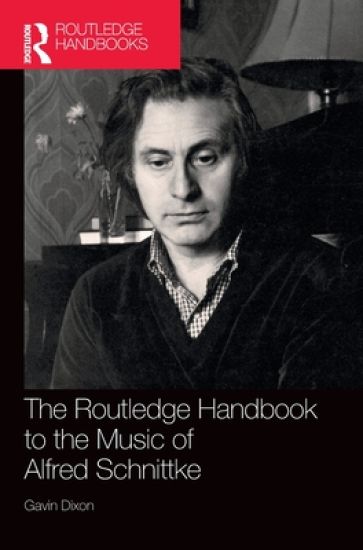
The Routledge Handbook to the Music of Alfred Schnittke
The Routledge Handbook to the Music of Alfred Schnittke is a comprehensive study of the work of one of the most important Russian composers of the late 20th century. Each piece is discussed in detail, with particular attention to the composer’s groundbreaking polystylism, as well as his unique approach to musical symbolism and his deep engagement with Christian themes. This is the first publication to look at Schnittke’s output in its entirety, and for most works it represents either the first ever published analysis or the first in a language other than Russian. The volume presents new research from the Ivashkin-Schnittke Archive at Goldsmiths, University of London and the collection of Schnittke’s compositional sketches at the Julliard Library in New York. It also draws on the substantial research on Schnittke’s music published in the Russian language. Including a work list and bibliography of primary and secondary sources, this is an essential reference for all those interested in Russian music, 20th-century music and performance studies.
Rethinking Socialism

Rethinking Socialism

Gavin Kitching

Routledge
2019
sidottu
First published in 1983. Socialism was generally unpopular in Britain in the 1980s. The Left needed new ideas and fresh approaches if it was ever to escape its isolation from the mainstream of political and cultural life. Rethinking Socialism brought such a perspective to socialist thought and practice in Britain. Gavin Kitching contended that the unpopularity of the Left was not due primarily to the pernicious influence of the press and media, as many socialists argued, but reflected fundamental changes in the British social structure and, above all, the simple incredibility and irrelevance of many socialist beliefs and policies. He also claims that socialism will continue to be unpopular so long as it is divorced from the values and concerns of the majority of British people. Kitching shows how basic and obvious facts about Britain, and other advanced capitalist countries, were ignored or wished away, and how crucial lessons of the Soviet and East European experience had not been learnt. He argues that radical politics in Britain both reflected and reinforced a ‘ghetto’ mentality bred by the Left’s political and intellectual isolation. The book is more than just a critique, however; it presented as well a more relevant and popular alternative strategy for the Left. This focused on extending and deepening political and economic democracy, and aimed to preserve the benefits which people had derived from capitalism and parliamentary democracy while extending them and thus transforming the system that conferred them.
Rethinking Socialism

Rethinking Socialism

Gavin Kitching

Routledge
2021
nidottu
First published in 1983. Socialism was generally unpopular in Britain in the 1980s. The Left needed new ideas and fresh approaches if it was ever to escape its isolation from the mainstream of political and cultural life. Rethinking Socialism brought such a perspective to socialist thought and practice in Britain. Gavin Kitching contended that the unpopularity of the Left was not due primarily to the pernicious influence of the press and media, as many socialists argued, but reflected fundamental changes in the British social structure and, above all, the simple incredibility and irrelevance of many socialist beliefs and policies. He also claims that socialism will continue to be unpopular so long as it is divorced from the values and concerns of the majority of British people. Kitching shows how basic and obvious facts about Britain, and other advanced capitalist countries, were ignored or wished away, and how crucial lessons of the Soviet and East European experience had not been learnt. He argues that radical politics in Britain both reflected and reinforced a ‘ghetto’ mentality bred by the Left’s political and intellectual isolation. The book is more than just a critique, however; it presented as well a more relevant and popular alternative strategy for the Left. This focused on extending and deepening political and economic democracy, and aimed to preserve the benefits which people had derived from capitalism and parliamentary democracy while extending them and thus transforming the system that conferred them.
The Political Economy of State Intervention
Both the exponents and critics of neoliberalism assert the dominance of market forces in western nations. The Political Economy of State Intervention calls this into question. Through a re-examination of state intervention in the USA and Britain over the course of the "long depression" (1970-to date), this book argues that the state has performed an increasingly significant role in conserving capital, propping up an economic and social order that has lost its productive dynamism.The specific forms of capital’s dependency on the state may vary, however the underlying weaknesses of mature western economies have prompted new forms of state intervention narrowly aimed at conserving capital, especially in the wake of the financial crisis. The chapters consider factors which are usually posited as explanations for the long depression such as oil price shocks, domestic conditions and technological innovation. The work argues that the consensus view of neoliberalism has served to underplay the significance of the state’s role in failing to lift this long depression in several ways: it has lent a greater ideological coherence to the policies pursued by successive governments than they deserve; the state has been less subordinate to the market than is usually claimed and more often its maker; and there has been a significant growth in jobs located in the private sector that are funded by public money. The cumulative effect of this is a narrowing of the state’s purpose to conserving capital, a role which has contributed to its loss of authority as an institution that claims to represent society as a whole. It is theorised that this, in turn, has led to the insecurities of the existing political order and the rise of populism. This book will be of great interest to students and scholars of political economy, public policy, political theory, economics and sociology.
Capitalism and Democracy in the Twenty-First Century
This short book makes a connection between recent ‘tectonic shifts’ in the world economy and the political problems currently confronted by western democracies.The shift of manufacturing away from the West, allied to the pressure to keep costs down in an increasingly competitive global economy, has led to economic inequality, reliance on service industry employment and public sector austerity. All this has in turn produced large numbers of desperate citizens attracted to a populist economic nationalism accompanied by xenophobia. However, the originality of this text lies not in the above argument, but in the philosophical reflections which drive and derive from it. These include reflections on history as a supposed causal process; on the need to make ethical judgements of economic activities and the difficulties of doing so; and on the problems confronting modern citizens in understanding complex economic processes and their political implications.Capitalism and Democracy in the Twenty-First Century endorses Wittgenstein’s ‘praxis’ approach to human social life and its study. Accordingly, it not only analyses economic and political problems but suggests ways of solving or mitigating them. In doing so it relies on Marx’s conviction that our capacity to see certain phenomena as problems is at least a priori evidence that they can be solved. This book will appeal to undergraduate and postgraduate students of politics, comparative politics, political economy and international relations.
Capitalism and Democracy in the Twenty-First Century
This short book makes a connection between recent ‘tectonic shifts’ in the world economy and the political problems currently confronted by western democracies.The shift of manufacturing away from the West, allied to the pressure to keep costs down in an increasingly competitive global economy, has led to economic inequality, reliance on service industry employment and public sector austerity. All this has in turn produced large numbers of desperate citizens attracted to a populist economic nationalism accompanied by xenophobia. However, the originality of this text lies not in the above argument, but in the philosophical reflections which drive and derive from it. These include reflections on history as a supposed causal process; on the need to make ethical judgements of economic activities and the difficulties of doing so; and on the problems confronting modern citizens in understanding complex economic processes and their political implications.Capitalism and Democracy in the Twenty-First Century endorses Wittgenstein’s ‘praxis’ approach to human social life and its study. Accordingly, it not only analyses economic and political problems but suggests ways of solving or mitigating them. In doing so it relies on Marx’s conviction that our capacity to see certain phenomena as problems is at least a priori evidence that they can be solved. This book will appeal to undergraduate and postgraduate students of politics, comparative politics, political economy and international relations.
The Property-Owning Democracy

The Property-Owning Democracy

Gavin Kerr

Routledge
2019
nidottu
The ideas of ‘predistribution’ and the property-owning democracy have recently emerged as the central features of the progressive social liberal response to the problems of poverty, unemployment, economic insecurity, burgeoning socio-economic inequality, and economic instability, none of which the more familiar institutions of welfare state capitalism seem able effectively to solve. These social liberal proposals for institutional reform have, however, been rejected by ‘neo-classical’ liberals who have attempted to modernize and revitalize the traditional classical liberal case for a set of ‘market democratic’ laissez-faire institutions. This book makes a fresh attempt to demarcate an area of common ground between the positions occupied by classical and social liberals by identifying a set of institutional arrangements to which both can agree, while at the same time recognizing that there will be many important issues about which liberal (and non-liberal) political and social thinkers will continue strongly to disagree. Drawing on ideas and arguments identifiable within a particular branch of the left-libertarian tradition, the book develops market democratic interpretations of the ideas of predistribution and the property-owning democracy, and presents a powerful case for an institutional reform which constitutes a genuinely progressive alternative to more familiar social democratic institutions. By identifying progressive predistributive institutions as essential conditions both for the effective protection of 'market freedom' and for the maximization of the substantive opportunities of the least advantaged members of society, the book shows how these institutions may be justified on grounds which both classical and social liberals may reasonably be expected to endorse.
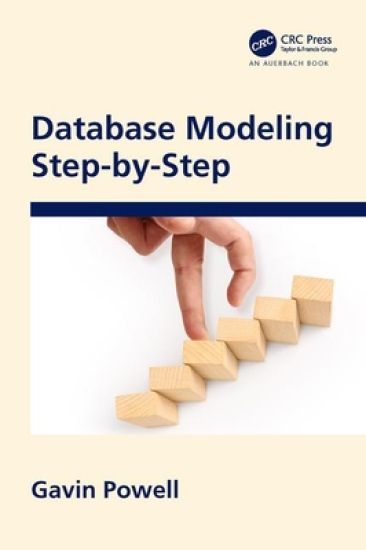
Database Modeling Step by Step

Database Modeling Step by Step

Gavin Powell

CRC Press
2019
nidottu
With the aim of simplifying relational database modeling, Database Modeling Step-by-Step presents the standard approach to database normalization and then adds its own approach, which is a more simplistic, intuitive way to building relational database models. Going from basics to contemporary topics, the book opens with relational data modeling and ends with BigData database modeling following a road map of the evolution in relational modeling and including brief introductions to data warehousing and BigData modeling. A break-down of the elements of a model explains what makes up a relational data model. This is followed by a comparison between standard normalization and a more simplistic intuitive approach to data modeling that a beginner can follow and understand.A brief chapter explains how to use the database programming language SQL (Structured Query Language), which reads from and writes to a relational database. SQL is fundamental to data modeling because it helps in understanding how the model is used. In addition to the relational model, the last three chapters cover important modern world topics including denormalization that leads into data warehouses and BigData database modeling. The book explains how there is not much to logical data modeling in BigData databases because as they are often schema-less, which means that BigData databases do not have schemas embedded into the database itself, they have no metadata and thus not much of a logical data model.Online bonus chapters include a case study that covers relational data modeling and are available at the author’s web site: www.oracletroubleshooter.com/datamodeling.html
Calculating X-ray Tube Spectra

Calculating X-ray Tube Spectra

Gavin Poludniowski; Artur Omar; Pedro Andreo

TAYLOR FRANCIS LTD
2022
sidottu
Calculating x-ray tube spectra provides a comprehensive review of the modelling of x-ray tube emissions, with a focus on medical imaging and radiotherapy applications. It begins by covering the relevant background, before discussing modelling approaches, including both analytical formulations and Monte Carlo simulation. Historical context is provided, based on the past century of literature, as well as a summary of recent developments and insights. The book finishes with example applications for spectrum models, including beam quality prediction and the calculation of dosimetric and image-quality metrics.This book will be a valuable resource for postgraduate and advanced undergraduate students studying medical radiation physics, in addition to those in teaching, research, industry and healthcare settings whose work involves x-ray tubes.Key Features:Covers simple modelling approaches as well as full Monte Carlo simulation of x-ray tubes.Bremsstrahlung and characteristic contributions to the spectrum are discussed in detail.Learning is supported by free open-source software and an online repository of code.An online repository of the code that accompanies this book can be found here: https://bitbucket.org/caxtus
Calculating X-ray Tube Spectra

Calculating X-ray Tube Spectra

Gavin Poludniowski; Artur Omar; Pedro Andreo

TAYLOR FRANCIS LTD
2024
nidottu
Calculating x-ray tube spectra provides a comprehensive review of the modelling of x-ray tube emissions, with a focus on medical imaging and radiotherapy applications. It begins by covering the relevant background, before discussing modelling approaches, including both analytical formulations and Monte Carlo simulation. Historical context is provided, based on the past century of literature, as well as a summary of recent developments and insights. The book finishes with example applications for spectrum models, including beam quality prediction and the calculation of dosimetric and image-quality metrics.This book will be a valuable resource for postgraduate and advanced undergraduate students studying medical radiation physics, in addition to those in teaching, research, industry and healthcare settings whose work involves x-ray tubes.Key Features:Covers simple modelling approaches as well as full Monte Carlo simulation of x-ray tubes.Bremsstrahlung and characteristic contributions to the spectrum are discussed in detail.Learning is supported by free open-source software and an online repository of code.An online repository of the code that accompanies this book can be found here: https://bitbucket.org/caxtus
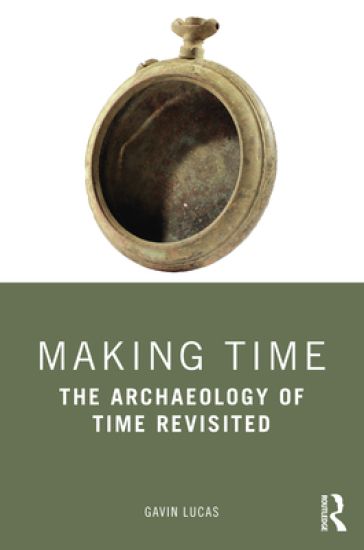
Making Time

Making Time

Gavin Lucas

Routledge
2021
nidottu
Making Time grapples with a range of issues that have crystallized in the wake of 15 years of discussion on time in archaeology, since the author's seminal volume The Archaeology of Time, synthesizing them for a new generation of scholars. The general understanding of time held by both archaeologists and non-archaeologists is often very simple: a linear notion where time flows along a single path from the past into the future. This book sets out to complicate this image, to draw out the key problems and issues with time that impact archaeological interpretation. Using concrete examples drawn from different periods and places, the book challenges the reader to think again. Ultimately, the book will suggest that if we want to understand what archaeological time is, then we need to accept that things do not exist in time, they make time. The crucial question then becomes: what kinds of time do archaeological materialities produce?Written for upper level undergraduates and researchers in archaeology, the book is also accessible to non-academics with an interest in the topic. The book is relevant for cognate disciplines, especially history, heritage studies and philosophy.