Kirjahaku
Etsi kirjoja tekijän nimen, kirjan nimen tai ISBN:n perusteella.
1000 tulosta hakusanalla Geiger Ludwig

Eine Milieustudie oder Realdoku aus dem wahren Leben. Der Leser ist eingeladen, eine Geigerin auf ihrem Lebensweg zu begleiten, und an den Freuden und Dramen zu partizipieren, die den Dezember 2003 in einen Roman verwandeln sollen. Das Leben selber f hrt Regie.

STARK Interpretationen Deutsch - Arno Geiger: Unter der Drachenwand
Lorenz Varga
Stark Verlag GmbH
2021
muu



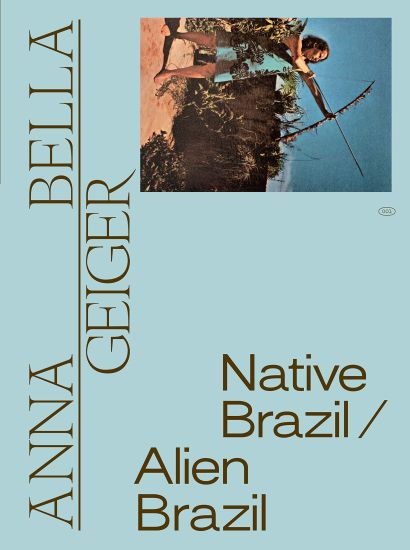
Anna Bella Geiger: Native Brazil/Alien Brazil
MASP
2020
sidottu
A long-needed appraisal of the abstractions, mail art and conceptual work of Anna Bella Geiger, one of postwar Brazil’s unsung pioneers Brazilian artist Anna Bella Geiger (born 1933) was one of the first artists to engage in abstract art in Brazil, participating in the historic exhibition of Brazilian abstract art held in Rio de Janeiro in 1953. Since the 1970s she has also worked with video, conceptual art and mail art. Native Brazil/Alien Brazil, named after her provocative political postcard series from 1976, covers the artist’s entire seven-decade career from the 1950s to the present, providing an overview of the extraordinary scope and diversity of Geiger’s work and themes, including informal abstraction, self-portraits, maps, landscapes and equations, as well as the artist’s interest in the interior of the human body, and her critiques of art systems and analyses of political and historical issues of Brazil.

A Brief Digest of the Geiger Family in Missouri / Compiled by Erwin J. Otis, Sr.
Erwin James 1888- Otis
Hassell Street Press
2021
nidottu
This work has been selected by scholars as being culturally important and is part of the knowledge base of civilization as we know it.This work is in the public domain in the United States of America, and possibly other nations. Within the United States, you may freely copy and distribute this work, as no entity (individual or corporate) has a copyright on the body of the work.Scholars believe, and we concur, that this work is important enough to be preserved, reproduced, and made generally available to the public. To ensure a quality reading experience, this work has been proofread and republished using a format that seamlessly blends the original graphical elements with text in an easy-to-read typeface.We appreciate your support of the preservation process, and thank you for being an important part of keeping this knowledge alive and relevant.


Esperimenti didattici e amatoriali con i contatori Geiger
Francesco Riggi
Springer International Publishing AG
2025
sidottu
Questo libro offre una raccolta completa di esperimenti introduttivi alla fisica dei raggi cosmici e alla fisica nucleare utilizzando i contatori Geiger. Presenta oltre 50 esperimenti con brevi spiegazioni della fisica coinvolta, indicazioni sull'impostazione di esperimenti didattici e amatoriali, mostrandone i risultati effettivi. Gli esperimenti coprono l'utilizzo dei contatori Geiger per rilevare radiazioni alfa, beta, gamma e raggi cosmici, valutare le prestazioni di un rivelatore, monitorare il livello di radiazioni in vari ambienti, condurre esperimenti di coincidenza e applicare nozioni di statistica e algoritmi di analisi dati. I capitoli introduttivi approfondiscono inoltre i princìpi basilari delle radiazioni, i processi di interazione della radiazione con la materia e la storia dei rivelatori di particelle, in particolare i contatori Geiger. Con la diffusa disponibilità di contatori Geiger moderni ed economici e di dispositivi fai-da-te, molti esperimenti sono adatti anche agli studenti delle scuole superiori e universitari, in linea con i moderni programmi di studio della fisica. L'autore ha condotto personalmente molti di questi esperimenti negli ultimi 20 anni con studenti di fisica del terzo anno. Il libro si rivolge anche agli scienziati dilettanti e ad un vasto pubblico interessato ad esplorare i fenomeni delle radiazioni e della loro rivelazione. Presenta circa 250 illustrazioni originali e riferimenti a esperimenti storici e scoperte contemporanee.

Unter der Drachenwand von Arno Geiger: Lektüreschlüssel mit Inhaltsangabe, Interpretation, Prüfungsaufgaben mit Lösungen, Lernglossar. (Reclam Lektüreschlüssel XL)
Sascha Feuchert
Reclam Philipp Jun.
2020
pokkari
Untersuchungen zum Entladungsmechanismus von selbstlöschenden Geiger-Müller-Zählrohren
Erich Huster
VS Verlag fur Sozialwissenschaften
1966
nidottu
Nach der Theorie von KORFF und PRESENT [1] werden die in der Entladung eines selbstlöschenden Zählrohres entstehenden Photonen vom Löschdampf stark ab sorbiert, und die Entladung breitet sich durch Photoeffekt im Gas in einer engen drahtnahen Zone in kleinen Schritten von ca. 1 mm Länge aus [2]. HUSTER und ZIEGLER [3] hatten dagegen gefunden, daß in der Entladung auch von selbst löschenden Zählrohren sehr viele Photonen großer Reichweite auftreten, die noch nach mehr als 10 cm Weg im Zählgas Zählrohrentladungen durch Photoeffekt an der Kathode zünden können. Versuchsweise schrieben sie diesen Photonen allein die Ausbreitung der Entladung durch Photoeffekt an der Kathode in wenigen großen Schritten zu, deren Länge etwa gleich dem Zählrohrradius sein sollte. Sie zeigten, daß alle bis dahin bekannten Zählrohrexperimente sich auch mit dieser Hypothese deuten ließen [4]. Es muß aber darauf hingewiesen werden, daß die Untersuchungen von HUSTER und ZIEGLER zwar eindeutig zeigten, daß zahlreiche Photonen großer Reichweite auftreten, nicht aber auch, daß diese weitreichenden Photonen die Entladung aus breiten. In der Entladung werden sicher auch Photonen recht geringer Reich weite erzeugt. Damit bestanden wieder zwei Annahmen über den Ausbreitungsmechanismus. Versuche zu einer Klärung wurden von LAUTERJUNG und VATER [5] und von FRANKE und HUSTER [6] unternommen. LAUTERJUNG und VATER maßen u. a. die statistische Verteilung der Laufzeiten der Entladung längs eines Zählrohres.

La sociología del derecho de Theodor Geiger
Teodoro Dalavecuras
Universidad Externado de Colombia
2018
nidottu
Inter Calibration Between a Vial Scintillation Detector and a Geiger-Mueller Counter.
Joe V. Morey
Hassell Street Press
2021
nidottu
This work has been selected by scholars as being culturally important and is part of the knowledge base of civilization as we know it.This work is in the public domain in the United States of America, and possibly other nations. Within the United States, you may freely copy and distribute this work, as no entity (individual or corporate) has a copyright on the body of the work.Scholars believe, and we concur, that this work is important enough to be preserved, reproduced, and made generally available to the public. To ensure a quality reading experience, this work has been proofread and republished using a format that seamlessly blends the original graphical elements with text in an easy-to-read typeface.We appreciate your support of the preservation process, and thank you for being an important part of keeping this knowledge alive and relevant.



General Roy S. Geiger, USMC: Marine Aviator, Joint Force Commander
School of Advanced Air and Space Studies
Createspace Independent Publishing Platform
2014
nidottu