Kirjojen hintavertailu. Mukana 11 717 486 kirjaa ja 12 kauppaa.

Kirjahaku

Etsi kirjoja tekijän nimen, kirjan nimen tai ISBN:n perusteella.

1000 tulosta hakusanalla George Barrell Cheever

George W. Brackenridge

George W. Brackenridge

Marilyn Mcadams Sibley

University of Texas Press
1973
nidottu
George W. Brackenridge (1832–1920) was a paradox to his fellow Texans. A Republican in a solidly Democratic state, a financier in a cattleman's country, a Prohibitionist in the goodtime town of San Antonio, he devoted his energies to making a fortune only to give it to philanthropic causes. Indiana born, Brackenridge came to Texas in 1853, but left the state during the Civil War to serve as U.S. Treasury agent and engage in the wartime cotton trade. Later he settled in San Antonio, where he founded a bank and invested in railroads, utilities, and other enterprises. Some of Brackenridge's contemporaries never forgave him for his Civil War career, but others knew him as a public-spirited citizen, educator, and advocate of civil rights. He cared little for what others thought of him. Yet, he confided once in a rare interview that his fondest ambition was to leave the world a better place for his having lived in it. To this end, he gave generously of himself and his means. His best-known benefaction is Brackenridge Park, which he gave to the city of San Antonio, but most of his contributions were in the field of education. As regent of the University of Texas for more than twenty-five years, he gave the institution its first dormitory, a large tract of land in Austin, and innumerable smaller gifts. He also offered to underwrite the expenses of the University when Governor James E. Ferguson vetoed the appropriation bill for 1917–1919. Other educational institutions to benefit from his largess were the public schools of San Antonio, a Negro college in Seguin, and the University of Texas Medical Branch at Galveston. In addition, he assisted individual students, especially women, through scholarships and loans. Believing that the betterment of humanity lay in education, Brackenridge arranged for the continuation of his philanthropies. By his will he created the George W. Brackenridge Foundation, the first of its kind in Texas and one of the first in the United States. Marilyn McAdams Sibley's study of George W. Brackenridge is the first biography of an important and, for his time, unusual Texan. It presents new material concerning the Mexican cotton trade during the Civil War, on the beginnings of banking in Texas, and on higher education in Texas.
George Perkins Marsh

George Perkins Marsh

David Lowenthal; William Cronon

University of Washington Press
2003
pokkari
George Perkins Marsh (1801–1882) was the first to reveal the menace of environmental misuse, to explain its causes, and to prescribe reforms. David Lowenthal here offers fresh insights, from new sources, into Marsh's career and shows his relevance today, in a book which has its roots in but wholly supersedes Lowenthal's earlier biography George Perkins Marsh: Versatile Vermonter (1958). Marsh's devotion to the repair of nature, to the concerns of working people, to women's rights, and to historical stewardship resonate more than ever. His Vermont birthplace is now a national park chronicling American conservation, and the crusade he launched is now global.Marsh's seminal book Man and Nature is famed for its ecological acumen. The clue to its inception lies in Marsh's many-sided engagement in the life of his time. The broadest scholar of his day, he was an acclaimed linguist, lawyer, congressman, and renowned diplomat who served 25 years as U.S. envoy to Turkey and to Italy. He helped found and guide the Smithsonian Institution, shaped the Washington Monument, penned potent tracts on fisheries and on irrigation, spearheaded public science, art, and architecture. He wrote on camels and corporate corruption, Icelandic grammar and Alpine glaciers. His pungent and provocative letters illuminate life on both sides of the Atlantic.Like Darwin's Origin of Species, Marsh's Man and Nature marked the inception of a truly modern way of looking at the world, of taking care lest we irreversibly degrade the fabric of humanized nature we are bound to manage. Marsh's ominous warnings inspired reforestation, watershed management, soil conservation, and nature protection in his day and ours.George Perkins Marsh: Prophet of Conservation was awarded the Association for American Geographers' 2000 J. B. Jackson Prize. The book was also on the shortlist for the first British Academy Book Prize, awarded in December 2001.
George Perkins Marsh

George Perkins Marsh

David Lowenthal; William Cronon

University of Washington Press
2015
sidottu
George Perkins Marsh (1801–1882) was the first to reveal the menace of environmental misuse, to explain its causes, and to prescribe reforms. David Lowenthal here offers fresh insights, from new sources, into Marsh’s career and shows his relevance today, in a book which has its roots in but wholly supersedes Lowenthal’s earlier biography George Perkins Marsh: Versatile Vermonter (1958). Marsh’s devotion to the repair of nature, to the concerns of working people, to women’s rights, and to historical stewardship resonate more than ever. His Vermont birthplace is now a national park chronicling American conservation, and the crusade he launched is now global.Marsh’s seminal book Man and Nature is famed for its ecological acumen. The clue to its inception lies in Marsh’s many-sided engagement in the life of his time. The broadest scholar of his day, he was an acclaimed linguist, lawyer, congressman, and renowned diplomat who served 25 years as U.S. envoy to Turkey and to Italy. He helped found and guide the Smithsonian Institution, shaped the Washington Monument, penned potent tracts on fisheries and on irrigation, spearheaded public science, art, and architecture. He wrote on camels and corporate corruption, Icelandic grammar and Alpine glaciers. His pungent and provocative letters illuminate life on both sides of the Atlantic.Like Darwin’s Origin of Species, Marsh’s Man and Nature marked the inception of a truly modern way of looking at the world, of taking care lest we irreversibly degrade the fabric of humanized nature we are bound to manage. Marsh’s ominous warnings inspired reforestation, watershed management, soil conservation, and nature protection in his day and ours.George Perkins Marsh: Prophet of Conservation was awarded the Association for American Geographers' 2000 J. B. Jackson Prize. The book was also on the shortlist for the first British Academy Book Prize, awarded in December 2001.
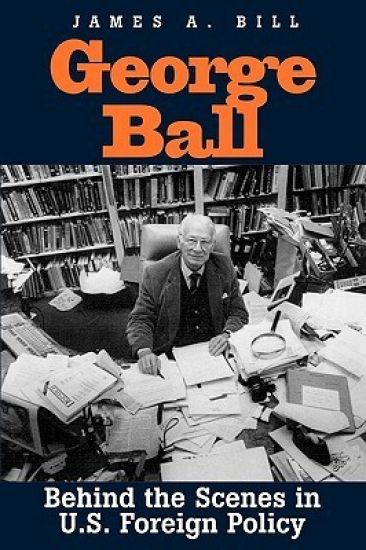
George Ball

George Ball

James A. Bill

Yale University Press
1998
pokkari
Diplomat and "wise man" George Ball wielded enormous influence in American foreign policy for more than forty years. Best known for his dissent from U.S. Vietnam policy when he was under secretary of state during the Kennedy and Johnson administrations, he also helped those administrations formulate policy concerning the European Community, the Congo, the Cuban missile crisis, and Cyprus. His last formal appointment was in 1968 as U.S. Ambassador to the United Nations, but he continued to advise and unofficially assist presidents and members of the American political elite for another twenty-five years, often taking contrary and critical positions on the major issues of the day. In this book James Bill offers fascinating new insights into the inner workings of foreign policy by examining Ball's career and the political problems with which he grappled. Drawing on Ball's personal archive as well as extensive interviews with Ball and with dozens of his associates, Bill traces Ball's involvement with foreign policy. He begins in the 1940s, when Ball was a close associate of Jean Monnet, chief architect of the European Community, and ends with Ball's death in 1994. He also chronicles Ball's forty-year involvement as a founding member of the Bilderberg group, an international clique of powerful European and American leaders. The book stresses a seldom-recognized dimension of the U.S. foreign policymaking process: the importance of the second tier of officialdom, the level just below that of cabinet secretary. And it provides a thoughtful comparison of the realpolitik model of statesmanship practiced by Henry Kissinger and the phronesis practiced by Ball, who was a prudent statesman guided by practical wisdom within a moral framework.
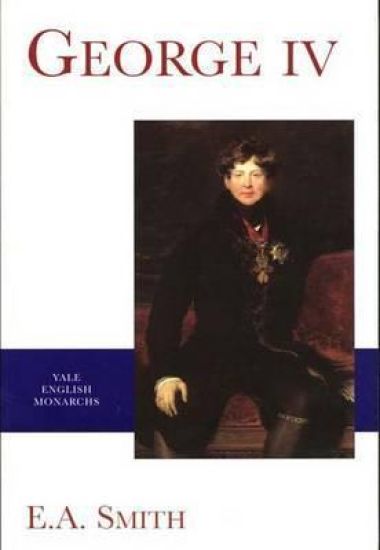
George IV

George IV

E. A. Smith

Yale University Press
2000
pokkari
This engrossing biography of George IV, king of England from 1820 to 1830, gives a full and objective reassessment of the monarch’s character, reputation, and achievement. Previous writers have tended to accept the unfavorable verdicts of the king’s contemporaries that he was a dissolute, pleasure-loving dilettante and a feeble and ineffective ruler who was responsible for the decline of the power and reputation of the monarchy in the early nineteenth century. Now E.A. Smith offers a new view of George IV, one that does not minimize the king’s faults but focuses on the positive qualities of his achievement in politics and in the patronage of the arts.Smith explores the roots of the king’s character and personality, stressing the importance of his relationship with his parents and twelve surviving siblings. He examines the king’s important contributions to the cultural enhancement of his capital and his encouragement of the major artistic, literary, and scholarly figures of his time. He reassesses the king’s role as constitutional monarch, contending that it was he, rather than Victoria and Albert, who created the constitutional monarchy of nineteenth-century Britain and began the revival of its popularity. Smith’s biography not only illuminates the character of one of the most colorful of Britain’s rulers but also contributes to the history of the British monarchy and its role in the nation’s life.
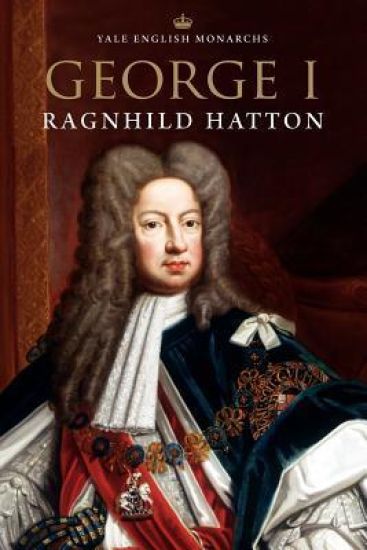
George I

George I

Ragnhild Hatton

Yale University Press
2001
pokkari
In 1714 George Ludwig, the fifty-eight-year-old elector of Brunswick-Luneburg, became, as George I, the first of the Hanoverian dynasty to rule Britain. Until his death in 1727 George served as both elector of Hanover and British monarch. An enigmatic figure whose real character has long been concealed by anti-Hanoverian propaganda, George emerges in this groundbreaking biography as an impressive ruler who welcomed the responsibilities the accession brought him and set out to bring culture to what he considered the unsophisticated English nation.Ragnhild Hatton’s biography is the only comprehensive account of George’s life and reign. It draws on a wide range of archival sources in several languages to illuminate the fascinating details of George’s early life and dynastic crises, his plans and ambitions for the British nation, the impact of his rationalist ideas, and his accomplishments as king. The book also examines the king’s private life, his family relationships in both Prussia and England, his private interest in music and the arts, and the improvement of his British and Hanoverian properties.
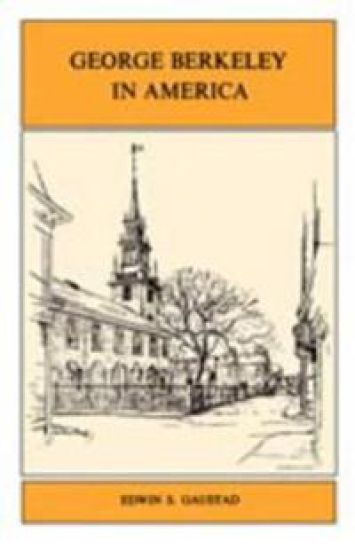
George Berkeley in America

George Berkeley in America

Edwin Scott Gaustad

Yale University Press
2005
pokkari
In 1728 George Berkeley, the Irish philosopher and Anglican priest, came to America in the hope of founding a university in Bermuda and converting the Indians. He never reached Bermuda, where within a few years no Indians were left. Instead he settled in Newport, Rhode Island, one of the few places in New England that was hospitable to Anglicans. There his lively mind and sympathetic spirit involved him in a great variety of interests, though he stayed only thirty-three months. “Westward the Course of Empire takes its Way,” Berkeley wrote, and these words inspired Americans both as British colonists and later as citizens of a new nation. Berkeley, in spite of his disappointment over the much-vexed Bermuda project, never flagged in his concern for the spiritual and intellectual life of the New World. The presence of the distinguished churchman gave heart to embattled Anglicans in Puritan New England. Through his close friendship with New Haven’s Samuel Johnson, Berkeley did much to encourage both that faith and the town’s recently founded college. Harvard also benefited from his generosity. But Berkeley’s enduring influence on the cultural life of America is attested all the way from Yale’s Berkeley College to Berkeley, California, the site of another great university.This book is a graceful and authoritative account of an important episode in the life of a major philosopher and influential figure in the religious life of colonial New England.
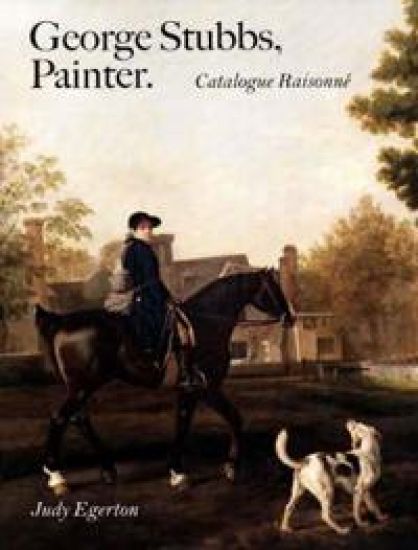
George Stubbs, Painter

George Stubbs, Painter

Judy Egerton

Yale University Press
2007
sidottu
George Stubbs (1724-1806), now recognized as one of the greatest and most original artists of the eighteenth century, stands out from other practitioners in the field of animal painting. His most frequent commissions were for paintings of horses, dogs, and wild animals, and his images invariably arrest attention and frequently strike a deeply poetic note. Stubbs did not emerge as a painter until he was in his mid-thirties, but then his genius flowered astonishingly. He steadily celebrates English sporting and country life and reveals himself—in his “incidental” portraits of jockeys and grooms, for example—as a perceptive observer of different levels of social behavior. Among his many experiments with technique were his chemical experiments with painting in enamels, first on copper and later on earthenware “tablets,” manufactured for him in Wedgwood's potteries.This is the first full catalogue of Stubbs's paintings and drawings. Along with the full catalogue entries, the book offers a lengthy study of Stubbs's art and career. Published for the Paul Mellon Centre for Studies in British Art
George III

George III

Jeremy Black

Yale University Press
2008
nidottu
The first full new study of George III in thirty years The sixty-year reign of George III (1760–1820) witnessed and participated in some of the most critical events of modern world history: the ending of the Seven Years’ War with France, the American War of Independence, the French Revolutionary Wars, the campaign against Napoleon Bonaparte and battle of Waterloo in 1815, and Union with Ireland in 1801. Despite the pathos of the last years of the mad, blind, and neglected monarch, it is a life full of importance and interest. Jeremy Black’s biography deals comprehensively with the politics, the wars, and the domestic issues, and harnesses the richest range of unpublished sources in Britain, Germany, and the United States. But, using George III’s own prolific correspondence, it also interrogates the man himself, his strong religious faith, and his powerful sense of moral duty to his family and to his nation. Black considers the king’s scientific, cultural, and intellectual interests as no other biographer has done, and explores how he was viewed by his contemporaries. Identifying George as the last British ruler of the Thirteen Colonies, Black reveals his strong personal engagement in the struggle for America and argues that George himself, his intentions and policies, were key to the conflict.
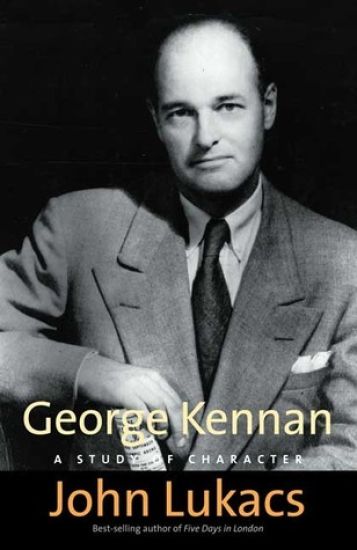
George Kennan

George Kennan

John Lukacs

Yale University Press
2007
pokkari
A profoundly moving biographical study of George Kennan by the fine historian John Lukacs A man of impressive mental powers, of extraordinary intellectual range, and—last but not least—of exceptional integrity, George Frost Kennan (1904-2005) was an adviser to presidents and secretaries of state, with a decisive role in the history of this country (and of the entire world) for a few crucial years in the 1940s, after which he was made to retire; but then he became a scholar who wrote seventeen books, scores of essays and articles, and a Pulitzer Prize–winning memoir. He also wrote remarkable public lectures and many thousands of incisive letters, laying down his pen only in the hundredth year of his life. Having risen within the American Foreign Service and been posted to various European capitals, and twice to Moscow, Kennan was called back to Washington in 1946, where he helped to inspire the Truman Doctrine and draft the Marshall Plan. Among other things, he wrote the “X” or “Containment” article for which he became, and still is, world famous (an article which he regarded as not very important and liable to misreading). John Lukacs describes the development and the essence of Kennan’s thinking; the—perhaps unavoidable—misinterpretations of his advocacies; his self-imposed task as a leading realist critic during the Cold War; and the importance of his work as a historian during the second half of his long life.
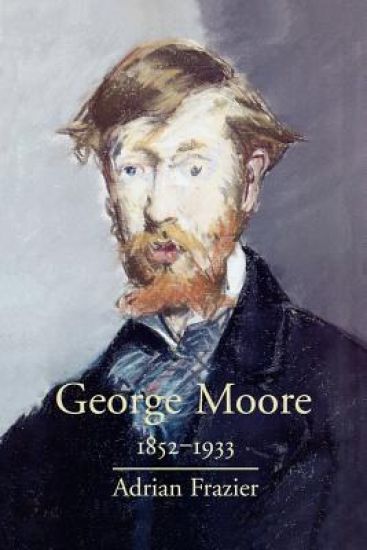
George Moore, 1852-1933

George Moore, 1852-1933

Adrian Frazier

Yale University Press
2011
pokkari
Always at the center of cultural change and excitement, George Moore enjoyed a sixty-year literary career during which he wrote prolifically, befriended artists and authors from Paris to London to Dublin, and rejected marriage but never the company of women. This book—the first documentary biography of Moore since 1936—tells the remarkable story of a high-spirited man and his pathbreaking innovations as a writer. Adrian Frazier has mined letters, memoirs, society journals, writings not previously attributed to Moore, and other archives to reveal new information about Moore’s early life, his ostensibly promiscuous bachelor life, and his complex career as an author. The book provides an engaging account of Moore’s pursuit of his passions, from his early, failed attempt to become an artist in Paris in the 1870s through his long career as an author. Moore wrote plays, poetry, criticism, short stories, and sixteen novels, among them his best-known Esther Waters. His experiments in style ranged from the naturalistic A Mummer’s Wife to the stream-of-consciousness prose of The Lake to the seamless, fluent narratives of his late manner—the comic Hail and Farewell and the epic The Brook Kerith. Frazier records the relationships between Moore and his well-known friends—Yeats, Joyce, Archer, Shaw, Frank Harris, Sickert, Whistler, and many others—and with the many women in his life, including his greatest love, Lady Cunard. At the end of his life, Moore sought without success a writer who would candidly tell the story of his life, loves, and art. At last Adrian Frazier has written that story.
George II

George II

Thompson Andrew C.

Yale University Press
2012
nidottu
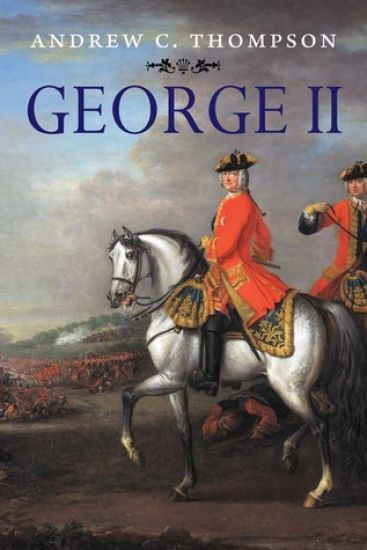
Despite a long and eventful reign, Britain's George II is a largely forgotten monarch, his achievements overlooked and his abilities misunderstood. This landmark biography uncovers extensive new evidence in British and German archives, making possible the most complete and accurate assessment of this thirty-three-year reign. Andrew C. Thompson paints a richly detailed portrait of the many-faceted monarch in his public as well as his private life. Born in Hanover in 1683, George Augustus first came to London in 1714 as the new Prince of Wales. He assumed the throne in 1727, held it until his death in 1760, and has the distinction of being Britain's last foreign-born king and the last king to lead an army in battle. With George's story at its heart, the book reconstructs his thoughts and actions through a careful reading of the letters and papers of those around him. Thompson explores the previously underappreciated roles George played in the political processes of Britain, especially in foreign policy, and also charts the intricacies of the king's complicated relationships and reassesses the lasting impact of his frequent return trips to Hanover. George II emerges from these pages as an independent and cosmopolitan figure of undeniable historical fascination.
George Gershwin

George Gershwin

Larry Starr

Yale University Press
2013
pokkari
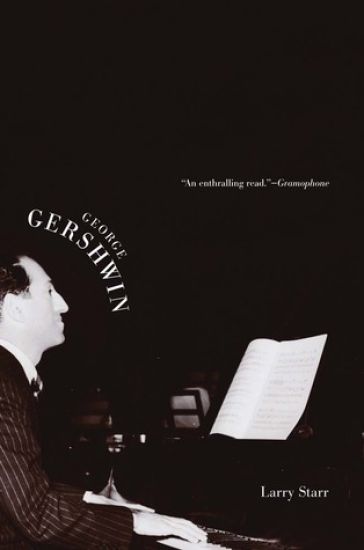
In this welcome addition to the immensely popular Yale Broadway Masters series, Larry Starr focuses fresh attention on George Gershwin’s Broadway contributions and examines their centrality to the composer’s entire career. Starr presents Gershwin as a composer with a unified musical vision—a vision developed on Broadway and used as a source of strength in his well-known concert music. In turn, Gershwin’s concert-hall experience enriched and strengthened his musicals, leading eventually to his great “Broadway opera,” Porgy and Bess. Through the prism of three major shows—Lady Be Good (1924), Of Thee I Sing (1931), and Porgy and Bess (1935)—Starr highlights Gershwin’s distinctive contributions to the evolution of the Broadway musical. In addition, the author considers Gershwin’s musical language, his compositions for the concert hall, and his movie scores for Hollywood in the light of his Broadway experience.
George Sand

George Sand

Harlan Elizabeth

Yale University Press
2012
nidottu
George Sand was the most famous-and most scandalous-woman in nineteenth-century France. As a writer, she was enormously prolific-she wrote more than ninety novels, thirty-five plays, and thousands of pages of autobiography. She inspired writers as diverse as Flaubert and Proust but is often remembered for her love affairs with such figures as Musset and Chopin. Her affair with Chopin is the most notorious: their nine-year relationship ended in 1847 when Sand began to suspect that the composer had fallen in love with her daughter, Solange. Drawing on archival sources-much of it neglected by Sand's previous biographers-Elizabeth Harlan examines the intertwined issues of maternity and identity that haunt Sand's writing and defined her life. Why was Sand's relationship with her daughter so fraught? Why was a woman so famous for her personal and literary audacity ultimately so conflicted about women's liberation? In an effort to solve the riddle of Sand's identity, Harlan examines a latticework of lives that include Solange, Sand's mother and grandmother, and Sand's own protagonists, whose stories amplify her own.
George Seferis

George Seferis

Roderick Beaton

Yale University Press
2013
pokkari
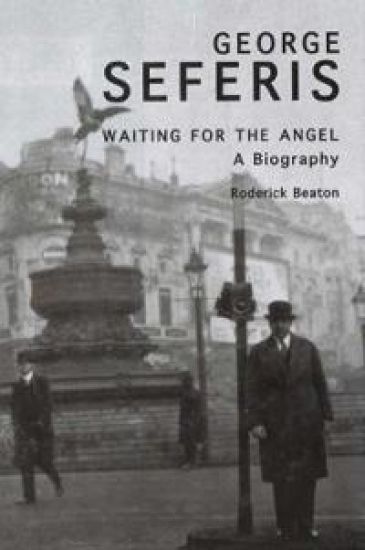
The first biography in any language of one of the world’s greatest modernist poets Poet, essayist, diarist, novelist, and diplomat, George Seferis brought about a revolution in the way people viewed his native Greece. Acclaimed for his thought-provoking lyric poetry, he was awarded the Nobel Prize for Literature in 1963. At the same time, he rose in the diplomatic corps to the position of Ambassador to Britain. This elegantly written book—the first full biography of Seferis—provides insights into his work, life, and country. Roderick Beaton, an acknowledged authority on modern Greek literature and culture, draws on previously unknown sources to tell Seferis’s story. He describes how Seferis occupied key diplomatic positions during periods of historic crisis before, during, and after World War II. He explores Seferis’s service as Ambassador to London at a time when Greece and Great Britain were disputing the future of Cyprus, noting that some of Seferis’s finest poetry was written about that troubled island. He analyzes Seferis’s literary production and his impact on Lawrence Durrell, Henry Miller, and other British and American writers. Exploring the interplay between poet and diplomat, public and private, and poetry and politics in Seferis’s life and career, this book will fascinate anyone interested in twentieth-century Greek literature, culture, or history.
George Romney

George Romney

Alex Kidson

Yale University Press
2015
sidottu
This magnificent catalogue, in three volumes and with nearly 2,000 illustrations, will restore George Romney (1734–1802) to his long-overdue position – with his contemporaries Reynolds and Gainsborough – as a master of 18th-century British portrait painting. The product of impressive and thorough research undertaken over the course of 20 years, Alex Kidson asserts Romney’s status as one of the greatest British painters, whose last catalogue raisonné was published over 100 years ago. In more than 1,800 entries, many supported by new photography, Kidson aims to solve longstanding issues of attribution, distinguishing genuine pictures by Romney from works whose traditional attribution to him can no longer be supported. The author’s insights are guided by rich primary source material on Romney—including account books, ledgers, and sketchbooks—as well as secondary sources such as prints after lost works, newspaper reports and reviews, and writings by Romney’s contemporaries.Published for the Paul Mellon Centre for Studies in British Art
George Whitefield

George Whitefield

Thomas S. Kidd

Yale University Press
2016
pokkari
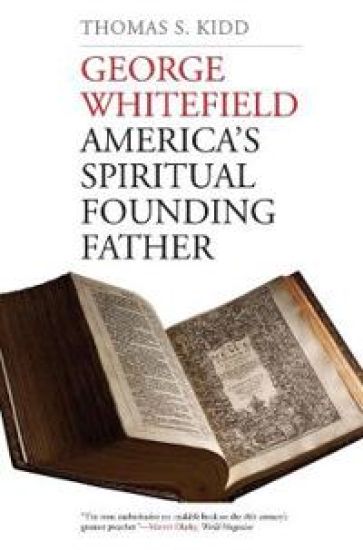
Winner of Christianity Today's 2016 Book Award for History/Biography: an engaging, balanced, and penetrating narrative biography of the charismatic eighteenth-century American evangelist George Whitefield"The most authoritative yet readable book on the eighteenth century’s greatest preacher."—Marvin Olasky, World Magazine"Kidd’s theologically sympathetic approach gives the book a depth that a more detached treatment might not: He misses none of the biblical allusions that peppered Whitefield’s utterances, and he is an excellent guide through the tangled doctrinal controversies that dogged Whitefield’s career."—Barton Swaim, Wall Street Journal In the years prior to the American Revolution, George Whitefield was the most famous man in the colonies. Thomas Kidd’s fascinating biography explores the extraordinary career of the most influential figure in the first generation of Anglo-American evangelical Christianity, examining his sometimes troubling stands on the pressing issues of the day, both secular and spiritual, and his relationships with such famous contemporaries as Benjamin Franklin, Jonathan Edwards, and John Wesley. Based on the author’s comprehensive studies of Whitefield’s original sermons, journals, and letters, this excellent history chronicles the phenomenal rise of the trailblazer of the Great Awakening. Whitefield’s leadership role among the new evangelicals of the eighteenth century and his many religious disputes are meticulously covered, as are his major legacies and the permanent marks he left on evangelical Christian faith. It is arguably the most balanced biography to date of a controversial religious leader who, though relatively unknown three hundred years after his birth, was a true giant in his day and remains an important figure in America’s history.
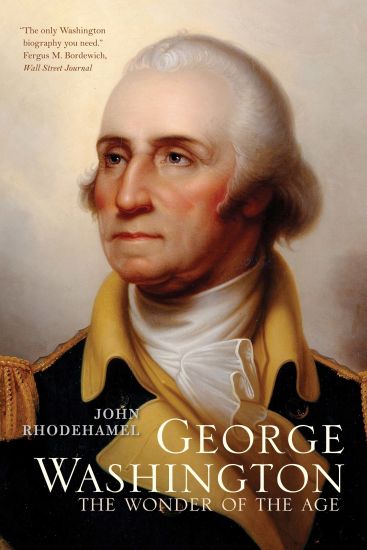
George Washington

George Washington

John Rhodehamel

Yale University Press
2018
pokkari
“The only Washington biography you need. . . . As a brief account of Washington’s life, it is unlikely to be surpassed for many years.”—Fergus M. Bordewich, Wall Street Journal"A masterpiece, a concise, fluidly written and well-grounded biography. Rhodehamel . . . has executed an accurate and revealing portrait of a man who, more than any other, made possible the creation and subsequent success of the United States."—Steve Forbes, Forbes magazine As editor of the award-winning Library of America collection of George Washington’s writings and a curator of the great man’s original papers, John Rhodehamel has established himself as an authority of our nation’s preeminent founding father. In this “crisply written, admirably concise, and never superficial” biography (Fergus M. Bordewich, Wall Street Journal) Rhodehamel examines George Washington as a public figure, arguing that the man—who first achieved fame in his early twenties—is inextricably bound to his mythic status. Solidly grounded in Washington’s papers and exemplary in its brevity, this approachable biography is a superb introduction to the leader whose name has become synonymous with America.
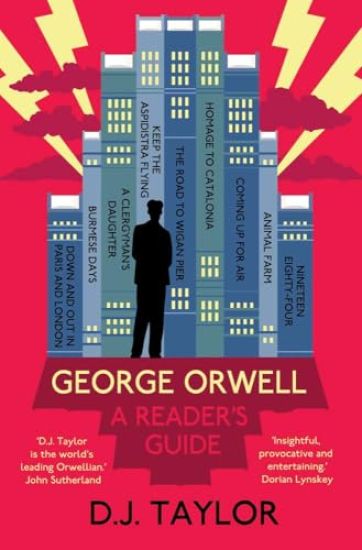
George Orwell: A Reader's Guide

George Orwell: A Reader's Guide

D. J. Taylor

YALE UNIVERSITY PRESS
2025
pokkari
A spirited and essential companion to Orwell and his works, covering all the novels and major essays An intellectual who hated intellectuals, a socialist who didn’t trust the state—our foremost political essayist and author of Animal Farm and Nineteen Eighty-Four was a man of stark, puzzling contradictions. Knowing Orwell’s life and reading Orwell’s works produces just as many questions as it answers. Celebrated Orwell biographer D. J. Taylor guides fans and new readers alike through the many twists and turns of Orwell’s books, life and thought. As a writer he intended his works to be transparent and instantly accessible, yet they are also full of secrets and surprises, tantalising private histories, and psychological quirks. From his conflicted relationship with religion to his competing anti-imperialism and fascination with empire, this book delves into the complex development of this essential yet enigmatic voice. Taylor leads us through Orwell’s principal writings and complex life—crafting an illuminating guide to one of the most enduringly relevant writers in the English language.
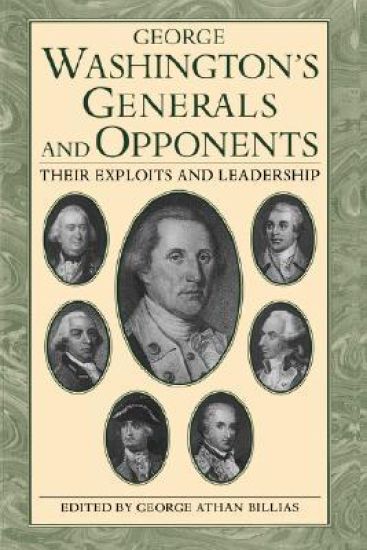
George Washington's Generals And Opponents

George Washington's Generals And Opponents

George Billias

Da Capo Press Inc
1994
pokkari
America's victory came as a surprise to many people. How did untrained American generals, essentially military amateurs at the outbreak of war, and their ragged, half-starved troops manage to defeat British professionals? To what extent did the quality of British military leadership affect the outcome? Was the American success due to the British commanders' incompetence and faulty strategy, or were timing and opportunity more responsible for Washington and his colleagues' achievement? This book provides superbly balanced portraits of the British and American leadership. Renowned historians have contributed concise, remarkably informative, and authoritative essays on generals of both sides. The military gallery includes such Americans as George Washington, Nathaniel Greene, Benedict Arnold, Marquis de Lafayette, and eight others. The British are well-represented by Thomas Gage, Sir William Howe, Charles Lord Cornwallis, and seven others.Each piece not only explores the subject's personality and exploits, but interprets his contribution to victory or defeat. In the process the scholarship never loses sight of the brave, touchy, brilliant, and flawed personalities who fought beside and against one another. Rarely, if ever, has one volume offered such stimulating commentary and insights into key commanders of the Revolutionary War.