Kirjojen hintavertailu. Mukana 12 016 292 kirjaa ja 12 kauppaa.

Kirjahaku

Etsi kirjoja tekijän nimen, kirjan nimen tai ISBN:n perusteella.

1000 tulosta hakusanalla Graham

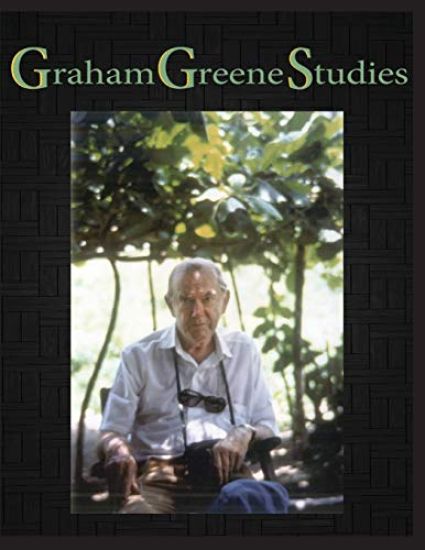
Graham Greene Studies

Graham Greene Studies

University of North Georgia
2017
pokkari
In this first volume, the reader will find a collection of articles written by scholars who have read, studied, and analyzed the work of Graham Greene. This volume includes the following articles: "Reflections" byJudith Adamson"Shades of Greene in Catholic Literary Modernism" by Mark Bosco"Figures in Greene's Carpet: The Power & the Glory to Monsignor Quixote" by Robert M. Davis"Graham Greene's Books for Children" by Fran ois Gallix"Graham Greene & the Congo, 1959: Personal Memories and Background of A Burnt-Out Case" by Michel Lechat"The Furthest Escape Of All: Darkness And Refuge In The Belgian Congo" by Michael Meeuwis"'Memory Cheats' Deception, Recollection and the Problem of Reading in The Captain and the Enemy" by Frances McCormack"Graham Greene in Love and War: French Indochina and the Making of The Quiet American" by Kevin Ruane"'The Invisible Japanese Gentleman' Graham Greene's Literary Influence in Japan" by Motonori Sato"'All Writers are Equal but Some Writers are More Equal than Others' Some Reflections on Links and Contrasts Between Graham Greene and George Orwell" by Neil Sinyard"Darkest Greeneland: Brighton Rock" by Cedric Watts"Travels with Graham Greene" by Bernard Diederich"Traveling in Greeneland" by Quentin Falk"Dr. Fischer of Geneva or There's so Much More to Christmas Crackers" by David Pearce"REVIEW--Jon Wise and Mike Hill: The Works of Graham Greene Volume 2: The Graham Greene Archives" by Judith Adamson"The Ritz" by Graham Greene

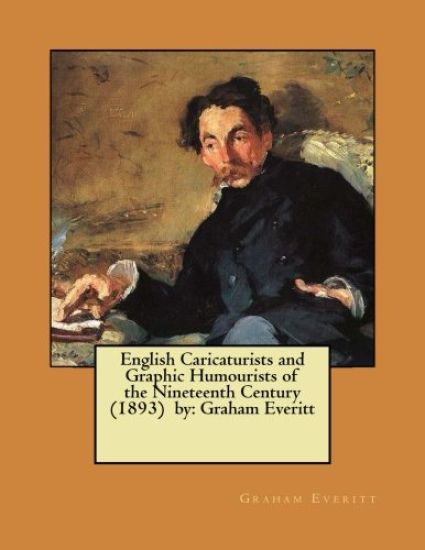
English Caricaturists and Graphic Humourists of the Nineteenth Century (1893) by: Graham Everitt / William Rodgers Richardson /
British solicitor; wrote under the pen name Graham Everitt Everitt, Graham. 1. English Caricaturists and Graphic Humourists of the Nineteenth Century, and how they illustrated and interpreted their Times. Illust. Lon., 1885, 4to. " Mr. Everitt writes with marked ability and acumen. With his conclusions it is not always possible to agree, but much may be learned from his occasional observations. One of the leading features of his book is a very elaborate and generally just account of Cruikshank." Alh., No. 3064. 2. Doctors and Doctors: Some Curious Chapters in Medical History and Quackery, Lon., 1888, p. 8vo. "The old feuds between physician and surgeon, the more recent disputes between physician* and apotheca- ries, the endless eccentricities of belief in remedies, the impostures of the knowing and the delusions of the igno- rant, the tricks of the medical trade, and other kindred subjects, are discussed and described In this volume." Spectator, lxii. 458
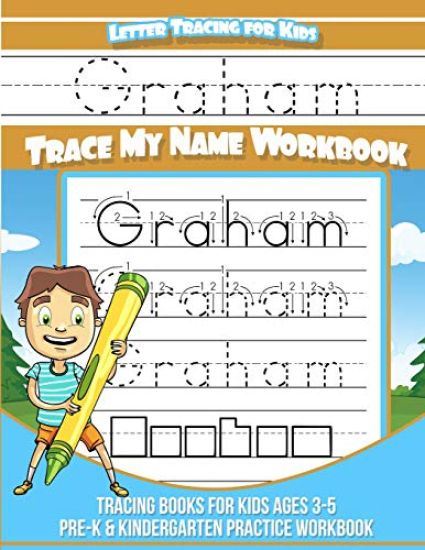
Graham Letter Tracing for Kids Trace my Name Workbook: Tracing Books for Kids ages 3 - 5 Pre-K & Kindergarten Practice Workbook
GRAHAM Name Tracing Workbook - Preschoolers Kindergarten Practice Workbook - Toddlers Writing Notebook - Learn How to Write GRAHAM - Preschoolers Activities Teaching your child the basics of writing is a difficult task especially if he or she is full of energy and finds it more difficult to focus. In order to give him a push in the first years of school or kindergartner, we are presenting a revolutionary way of teaching your baby the basics of the alphabet: the name tracing workbook for children. Why our workbook? The name tracing workbook has been designed specifically to teach children the basic of spelling and writing. By learning to write his own name, your child will develop the abilities and skills needed in the first years of schools while having fun. The 100 pages activity book is the perfect choice if you are searching to invest in your child's education from the beginning so don't hesitate and get him the only workbook he needs LEARNING THE FIRST LETTERS teaching your toddler the first letters and how to spell his or her name is difficult, which is why we have designed a special workbook that will make the learning process easier and a lot more fun, adding to the baby's educational fund. PERSONALIZED WORKING: the name is the first word any child should learn how to spell, but it is almost impossible to find special help for that task. GRAHAM Name Tracing Workbook is divided in 12 themed chapters that will teach your toddler how to spell his or her name in a fun and interactive way. WHAT IT CONTAINS: GRAHAM Name Tracing Workbook counts no less than 100 pages divided in 12 themed sheets that propose recognition activities, letter tracing practice and letter games, that are sure to teach your child the basics of writing and spelling. FOR TODDLERS: GRAHAM Name Tracing Workbook is made especially for children aged 3 to 6 so your son or daughter will be well prepared for both kindergarten and first grade Learning the alphabet will be a piece of cake if your kid will already have the foundation letter tracing so why not give him a head start in school. THE PERFECT GIFT: offering a present to a toddler that is both fun and parents-approved is an almost impossible task, but the name tracing workbook has it all: it is educational, personalized and made especially for youngsters ages 3 to 6 so, if you're trying to bring a smile on a kid's face, this is it
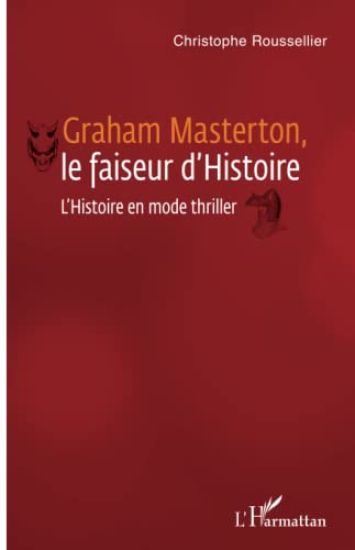
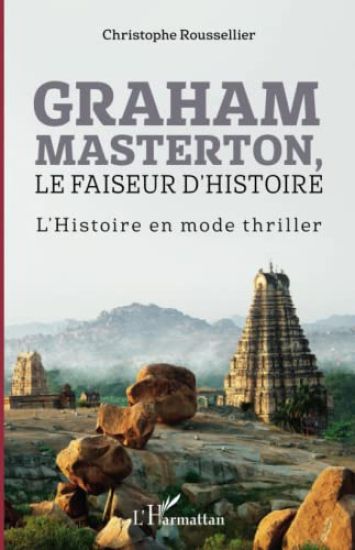
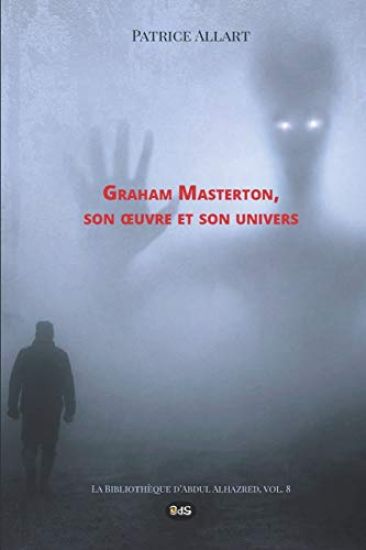
Graham Masterton

Graham Masterton

Les Editions de L'Oeil Du Sphinx
2019
nidottu
Manitou, le Tr ne de Satan, le Jour J du Jugement... Autant de titres qui suscitent le frisson et battent le rappel de nos superstitions les plus enfouies, de nos mythes les plus anciens. Graham Masterton n'est pas qu'un crivain prolixe qui assaille nos biblioth ques d'histoires dormir debout, il est aussi le chantre d'une nouvelle mani re de ra-conter des histoires, celle qui introduit dans notre vie quotidienne des choses qui n'auraient jamais d quitter les pages d'un grimoire m di val. Quels sont donc les m canismes de ce courant litt raire baptis Terreur Moderne ? Dans cet ouvrage d'une rare rudition, et trahissant des heures et des heures de recherche impie, Patrice Allart se livre la dissection consciencieuse de cette Terreur Moderne pratiqu e par Masterton et ses disciples, et d taille, pour notre d lectation la plus inavouable, la mani re dont sont remis au go t du jour les anciens mythes. Vous d couvrirez au fil des pages de ce compendium tr s fouill que, d sormais, aucune l gende n'est plus vou e l'oubli...Ce livre s'adresse aux amateurs de frisson comme aux connaisseurs de la mythologie; car Masterton sait faire l'amalgame de l'ancien et du moderne. Il a renouvel le genre de l' pouvante en faisant appel aux sources de l'imaginaire collectif: un voyage pluriculturel, autant qu' motionnel, dont la destination reste entour e de t n bres...
Graham Priest on Dialetheism and Paraconsistency
This book presents the state of the art in the fields of formal logic pioneered by Graham Priest. It includes advanced technical work on the model and proof theories of paraconsistent logic, in contributions from top scholars in the field. Graham Priest’s research has had a considerable influence on the field of philosophical logic, especially with respect to the themes of dialetheism—the thesis that there exist true but inconsistent sentences—and paraconsistency—an account of deduction in which contradictory premises do not entail the truth of arbitrary sentences. Priest’s work has regularly challenged researchers to reappraise many assumptions about rationality, ontology, and truth.This book collects original research by some of the most esteemed scholars working in philosophical logic, whose contributions explore and appraise Priest’s work on logical approaches to problems in philosophy, linguistics, computation, and mathematics. They provide fresh analyses, critiques, andapplications of Priest’s work and attest to its continued relevance and topicality. The book also includes Priest’s responses to the contributors, providing a further layer to the development of these themes.
Graham Priest on Dialetheism and Paraconsistency
This book presents the state of the art in the fields of formal logic pioneered by Graham Priest. It includes advanced technical work on the model and proof theories of paraconsistent logic, in contributions from top scholars in the field. Graham Priest’s research has had a considerable influence on the field of philosophical logic, especially with respect to the themes of dialetheism—the thesis that there exist true but inconsistent sentences—and paraconsistency—an account of deduction in which contradictory premises do not entail the truth of arbitrary sentences. Priest’s work has regularly challenged researchers to reappraise many assumptions about rationality, ontology, and truth.This book collects original research by some of the most esteemed scholars working in philosophical logic, whose contributions explore and appraise Priest’s work on logical approaches to problems in philosophy, linguistics, computation, and mathematics. They provide fresh analyses, critiques, andapplications of Priest’s work and attest to its continued relevance and topicality. The book also includes Priest’s responses to the contributors, providing a further layer to the development of these themes.
Graham Greene in the 1930s

Graham Greene in the 1930s

Andrew Purssell

Springer International Publishing AG
2025
sidottu
Graham Greene in the 1930s presents a major new reading of Greene’s literary works and critical writings from the 1930s, a period of increasing academic interest and importance. Greene’s works from this period encompass a wide range of forms, genres and media, capturing the richness and variety of British literary culture between the wars; they also reveal its urgent preoccupations and challenges, such as the era-defining concern with the relationship between politics and art, and a corresponding fascination with modernity and mass culture, as well as the shifting status of literature itself during the first true media age. Graham Greene in the 1930s investigates this major twentieth-century author’s less-considered early works in their original literary historical contexts, and in the context of new critical approaches to the decade’s literature and culture: from the reconsideration within modernist studies of the kinds of interwar writing – with its characteristic movement between genres and experimentation – typified by early Greene; to the current focus on “the long 1930s” which has seen the decade repositioned at the heart of twentieth-century British literary history. This book establishes the compelling intersections between early Greene and the literature of the 1930s. It puts Greene at the centre of an era of profound and continuous transition, and of a remarkable period in twentieth-century literary history.