

Kirjahaku
Etsi kirjoja tekijän nimen, kirjan nimen tai ISBN:n perusteella.
1000 tulosta hakusanalla Hans Claesson

The book ""Hans Hofmann"" by William Chapin Seitz is a comprehensive biography of the renowned German-American artist Hans Hofmann. The book delves into Hofmann's life, from his early days in Germany to his later years in America, highlighting his artistic career and contributions to the art world. Seitz provides insights into Hofmann's artistic philosophy, which focused on the importance of color, form, and space in creating abstract art. The book also includes a detailed analysis of Hofmann's most famous works, including his paintings and sculptures. Additionally, the author explores the influence of Hofmann's teachings on the next generation of artists, including many prominent figures in the Abstract Expressionist movement. Throughout the book, Seitz draws on a wealth of primary sources, including interviews with Hofmann's family and friends, as well as archival materials from museums and galleries. Overall, ""Hans Hofmann"" offers a comprehensive and engaging look at the life and work of one of the most important artists of the 20th century.This scarce antiquarian book is a facsimile reprint of the old original and may contain some imperfections such as library marks and notations. Because we believe this work is culturally important, we have made it available as part of our commitment for protecting, preserving, and promoting the world's literature in affordable, high quality, modern editions, that are true to their original work.

Hans Staden: The True History of His Captivity, 1557
Hans Staden
Literary Licensing, LLC
2013
sidottu
Hans Staden: The True History Of His Captivity, 1557 is a historical account written by Hans Staden, a German adventurer and explorer who was captured by the Tupinamb����� people of Brazil in 1554. The book provides a detailed and vivid description of Staden's experiences during his captivity, including the customs and rituals of the Tupinamb����� people, their social structure, and their way of life. Staden's account also includes his observations on the flora and fauna of the region, as well as his interactions with other European explorers and traders who visited the area. The book is considered an important source of information on the early history of Brazil, as well as the interactions between European explorers and indigenous peoples during the Age of Discovery.This is a new release of the original 1929 edition.This scarce antiquarian book is a facsimile reprint of the old original and may contain some imperfections such as library marks and notations. Because we believe this work is culturally important, we have made it available as part of our commitment for protecting, preserving, and promoting the world's literature in affordable, high quality, modern editions, that are true to their original work.


Hans Pete Mortensen and Lorraine Mortensen, Petitioners, V. the United States of America. U.S. Supreme Court Transcript of Record with Supporting Pleadings
Eugene D O'Sullivan
Gale Ecco, U.S. Supreme Court Records
2011
pokkari
Hans Heselloher's Lieder.
Nabu Press
2012
pokkari



Hans Aus Einer Anderen Welt
Nabu Press
2012
pokkari
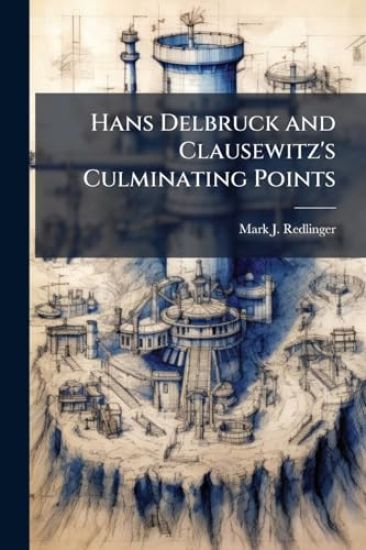
This monograph searches for an answer to the question: "What is the relationship between strategies and operational culminating points?" It begins by examining the theoretical position of Hans Delbruck and his dual strategies of annihilation and exhaustion. It then turns to Clausewitz and investigates the concept of culminating points. Finally, it develops a model of strategic combat power which is used to aid the reader in understanding the theoretical link between operational culminating points and the strategies of exhaustion and annihilation. This concludes the first part of the monograph. The second section of the monograph is a case study of the Yom Kippur War of 1973. This war is used to test the validity of our analysis concerning strategies and culminating points. Our theory not only is valid, but also demonstrates that a strategic planner must consider operational culminating points as an integral element to the success of any campaign. Not to understand the relationship of culminating points to the success of strategies will only end in disaster. This work has been selected by scholars as being culturally important, and is part of the knowledge base of civilization as we know it. This work was reproduced from the original artifact, and remains as true to the original work as possible. Therefore, you will see the original copyright references, library stamps (as most of these works have been housed in our most important libraries around the world), and other notations in the work. This work is in the public domain in the United States of America, and possibly other nations. Within the United States, you may freely copy and distribute this work, as no entity (individual or corporate) has a copyright on the body of the work. As a reproduction of a historical artifact, this work may contain missing or blurred pages, poor pictures, errant marks, etc. Scholars believe, and we concur, that this work is important enough to be preserved, reproduced, and made generally available to the public. We appreciate your support of the preservation process, and thank you for being an important part of keeping this knowledge alive and relevant.
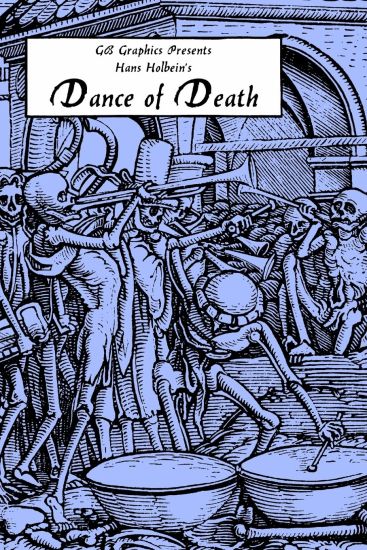
Originally published in 1538 Hans Holbein's Dance of Death is a visual representation of the Dance Macabre morality plays that date back as early as the fourteenth century. The Dance of Death is a Memento Mori, a reminder meant to teach the truth that all men must die and that one should prepare themselves for their final judgment. Presented here are the 49 woodcuts with commentary as originally presented in Bohn's Illustrated Library: Holbein's Dance of Death (1858).

The conquest of Lebensraum - living space - in Eastern Europe was the whole point of the Third Reich. This study investigates a key participant in the criminal project - Hans Frank - and how he tried to establish his corner of Hitler's racial empire. It reveals the different kinds of genocide perpetrated by the Nazis and explores the way in which the Führer's minions had to compete for a place in his apocalyptic system.

Hans Jonas (1903–1993) was one of the most important German-Jewish philosophers of the 20th century. A student of Martin Heidegger and close friend of Hannah Arendt, Jonas advanced the fields of phenomenology and practical ethics in ways that are just beginning to be appreciated in the English-speaking world. Drawing here on unpublished and newly translated material, Lewis Coyne brings together for the first time in English Jonas’s philosophy of life, ethic of responsibility, political theory, philosophy of technology and bioethics. In Hans Jonas: Life, Technology and the Horizons of Responsibility, Coyne argues that the aim of Jonas’s philosophy is to confront three critical issues inherent to modernity: nihilism, the ecological crisis and the transhumanist drive to biotechnologically enhance human beings. While these might at first appear disparate, for Jonas all follow from the materialist turn taken by Western thought from the 17th century onwards, and he therefore seeks to tackle all three issues at their collective point of origin. This book explores how Jonas develops a new categorical imperative of responsibility on the basis of an ontology that does justice to the purposefulness and dignity of life: to act in a way that does not compromise the future of humanity on earth. Reflecting on this, as we face a potential future of ecological and societal collapse, Coyne forcefully demonstrates the urgency of Jonas’s demand that humanity accept its newfound responsibility as the ‘shepherd of beings’.

Hans Jonas (1903–1993) was one of the most important German-Jewish philosophers of the 20th century. A student of Martin Heidegger and close friend of Hannah Arendt, Jonas advanced the fields of phenomenology and practical ethics in ways that are just beginning to be appreciated in the English-speaking world. Drawing here on unpublished and newly translated material, Lewis Coyne brings together for the first time in English Jonas’s philosophy of life, ethic of responsibility, political theory, philosophy of technology and bioethics. In Hans Jonas: Life, Technology and the Horizons of Responsibility, Coyne argues that the aim of Jonas’s philosophy is to confront three critical issues inherent to modernity: nihilism, the ecological crisis and the transhumanist drive to biotechnologically enhance human beings. While these might at first appear disparate, for Jonas all follow from the materialist turn taken by Western thought from the 17th century onwards, and he therefore seeks to tackle all three issues at their collective point of origin. This book explores how Jonas develops a new categorical imperative of responsibility on the basis of an ontology that does justice to the purposefulness and dignity of life: to act in a way that does not compromise the future of humanity on earth. Reflecting on this, as we face a potential future of ecological and societal collapse, Coyne forcefully demonstrates the urgency of Jonas’s demand that humanity accept its newfound responsibility as the ‘shepherd of beings’.
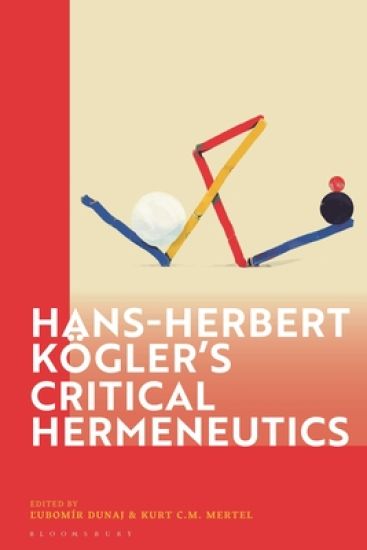
Hans-Herbert Kögler’s Critical Hermeneutics
BLOOMSBURY PUBLISHING PLC
2022
sidottu
Providing a comprehensive engagement with the work of Hans-Herbert Kögler, this is the first volume to expand upon and critique his distinctive approach to critical theory: critical hermeneutics. In the current climate of crisis, the relevance and fruitfulness of Kögler’s work has never been greater, as he fuses the philosophies of Michel Foucault, Hans Georg Gadamer, and his mentor, Jürgen Habermas, to respond to critical international issues surrounding politics, agency, and society. Working towards a truly non-ethno-centric and global conception of intercultural dialogue, an essential aspect of Kögler’s critical hermeneutics is his account of selfhood as reflexive: socially situated, embodied, and linguistically articulated, permeated by power, but yet critical and creative. Leading international scholars, representing a variety of disciplinary backgrounds, build upon Kögler’s approach in this volume and explore the methodological, theoretical, and applicative scope of critical hermeneutics beyond the Frankfurt School. In doing so, they address some of the most pressing issues facing global society today, from multilingual education to the urgent need for interreligious and intercultural understanding. Closing with a response from Kögler himself, Hans-Herbert Kögler’s Critical Hermeneutics also offers an exclusive account of the philosopher’s contemporary re-appraisal of the core tenets of critical hermeneutics.
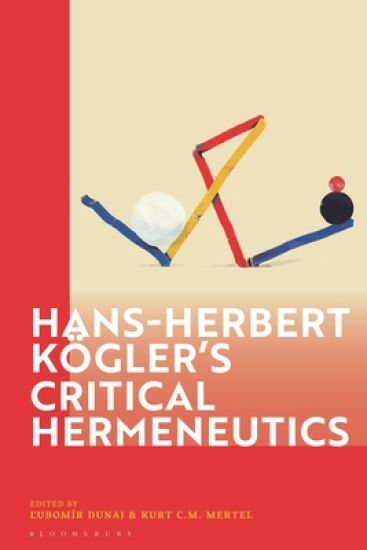
Hans-Herbert Kögler’s Critical Hermeneutics
BLOOMSBURY PUBLISHING PLC
2023
nidottu
Providing a comprehensive engagement with the work of Hans-Herbert Kögler, this is the first volume to expand upon and critique his distinctive approach to critical theory: critical hermeneutics. In the current climate of crisis, the relevance and fruitfulness of Kögler’s work has never been greater, as he fuses the philosophies of Michel Foucault, Hans Georg Gadamer, and his mentor, Jürgen Habermas, to respond to critical international issues surrounding politics, agency, and society. Working towards a truly non-ethno-centric and global conception of intercultural dialogue, an essential aspect of Kögler’s critical hermeneutics is his account of selfhood as reflexive: socially situated, embodied, and linguistically articulated, permeated by power, but yet critical and creative. Leading international scholars, representing a variety of disciplinary backgrounds, build upon Kögler’s approach in this volume and explore the methodological, theoretical, and applicative scope of critical hermeneutics beyond the Frankfurt School. In doing so, they address some of the most pressing issues facing global society today, from multilingual education to the urgent need for interreligious and intercultural understanding. Closing with a response from Kögler himself, Hans-Herbert Kögler’s Critical Hermeneutics also offers an exclusive account of the philosopher’s contemporary re-appraisal of the core tenets of critical hermeneutics.
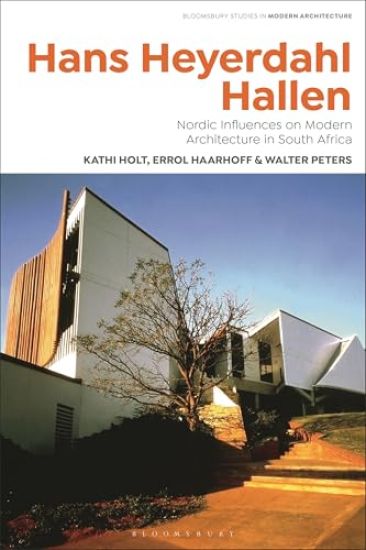
Hans Heyerdahl Hallen
Kathi Holt; Errol Haarhoff; Walter Peters
BLOOMSBURY PUBLISHING PLC
2025
sidottu
Tracing the life of architect Hans Heyerdahl Hallen (1930–2022), this book reveals the transnational influences that shaped his practice in South Africa, and the migratory circles of ideas that defined a new form of subtropical architecture.Beginning with Hallen’s Nordic and South African roots, chapters then explore his practice and studies at the London County Council and Architectural Association, where he met with contemporaries such as Jane Drew and Maxwell Fry. From here, he returned to South Africa with new ideas that challenged the teachings of early modernism, instead combining philosophies such as Norberg Schulz’s genius loci with African traditional architecture (Zulu Kraal) to create buildings unique to local communities and topographical conditions.This need to embrace vernacular forms was a response to local climate conditions and local materials, but also a desire to make cities relevant to the African context. In transmuting European teachings within colonial environments, Hallen’s practice reveals the role of the architect to reflect local communities and to build for their needs, and to create spaces for community and resistance.Published as part of the Bloomsbury Studies in Modern Architecture series, which brings to light the work of significant yet overlooked modernist architects, the study features a wealth of previously-unpublished archival material to explore the role of the architect in the colonial context.
This work has been selected by scholars as being culturally important, and is part of the knowledge base of civilization as we know it. This work was reproduced from the original artifact, and remains as true to the original work as possible. Therefore, you will see the original copyright references, library stamps (as most of these works have been housed in our most important libraries around the world), and other notations in the work.This work is in the public domain in the United States of America, and possibly other nations. Within the United States, you may freely copy and distribute this work, as no entity (individual or corporate) has a copyright on the body of the work.As a reproduction of a historical artifact, this work may contain missing or blurred pages, poor pictures, errant marks, etc. Scholars believe, and we concur, that this work is important enough to be preserved, reproduced, and made generally available to the public. We appreciate your support of the preservation process, and thank you for being an important part of keeping this knowledge alive and relevant.

Hans Heiling, Vierter Und Letzter Regent Der Erd-, Luft-, Feuer- Und Wassergeister
Christian Heinrich Spiess
Palala Press
2018
pokkari
This work has been selected by scholars as being culturally important, and is part of the knowledge base of civilization as we know it. This work was reproduced from the original artifact, and remains as true to the original work as possible. Therefore, you will see the original copyright references, library stamps (as most of these works have been housed in our most important libraries around the world), and other notations in the work.This work is in the public domain in the United States of America, and possibly other nations. Within the United States, you may freely copy and distribute this work, as no entity (individual or corporate) has a copyright on the body of the work.As a reproduction of a historical artifact, this work may contain missing or blurred pages, poor pictures, errant marks, etc. Scholars believe, and we concur, that this work is important enough to be preserved, reproduced, and made generally available to the public. We appreciate your support of the preservation process, and thank you for being an important part of keeping this knowledge alive and relevant.