Kirjahaku
Etsi kirjoja tekijän nimen, kirjan nimen tai ISBN:n perusteella.
1000 tulosta hakusanalla Helmut Isaak

Helmut Thielicke was one of the most read and most listened to theologians of the twentieth century. Like few others, he repeatedly came down from the ivory tower of academic religion in order to build bridges between the church and the world. In his autobiography, written in 1983, Thielicke sets forth his memoirs from a long and full life. His narrative is filled with deeply thoughtful reflections about the poignancy of life, told with a delightful humour that invites us into every story and encounter. Thielicke also introduces us to the figures he counted among his friends and acquaintances: Karl Barth, Konrad Adenauer, Dietrich Bonhoeffer, Dwight Eisenhower, Helmut Kohl and Jimmy Carter. Thielicke was a witness to many of the most significant events of our century; his life history is interwoven with the imperial era, the Weimar Republic, the rise of the Third Reich, a divided Germany, and the tumultuous 1960s. From the perspective of this single life we are afforded a broad and clear vision of the moments that have shaped the generation leading us into the twenty-first century.

This book is an explosive memoir of a 17 year old German boy called up to fight in the last weeks of the Second World War. This is a teenager's vivid account of his experiences as a conscript during the final desperate weeks of the Third Reich, during which he experienced training immediately behind the front line east of Berlin, was caught up in the massive Soviet assault on Berlin from the Oder, retreated successfully and then took part in the fight for the western suburb of Spandau, where he became one of the only two survivors of his company of seventeen year-olds.

We Were Berliners
Helmut Jacobitz; Charlotte Jacobitz; Douglas Niles
The History Press Ltd
2012
sidottu
Helmut and Charlotte Jacobitz were born in Berlin during the mid-1920s. They experienced depression and inflation, and witnessed violence as fascists and communists vied for control of Germany. When the Nazis prevailed, they survived the 12 years of the Third Reich. Drafted in 1943, Helmut was wounded fighting in Normandy. Charlotte, meanwhile, worked at the Reichsbank and took shelter against frequent bombing raids. After the Russians surrounded Berlin in April 1945, she witnessed firsthand the brutal battle for the city. The two young Germans met each other after the war, Charlotte joining Helmut to smuggle food into Berlin through the Russian blockade. The family finally immigrated to America, barely escaping before the Berlin Wall sliced the city in half. We Were Berliners combines the personal reminiscences of the Jacobitzs with a lively, detailed overview of historical events as they related to the family, to Germany, and to Europe.

Authority, State and National Character
Helmut Kuzmics; Roland Axtmann
Ashgate Publishing Limited
2007
sidottu
This book presents a cross-disciplinary and methodologically innovative study, combining historical macro-sociology and a sociology of emotions with historical anthropology and cultural studies. Drawing on the concepts and theories of Norbert Elias on the Civilizing Process, it sets out to pin down and compare qualities that are simultaneously instantly recognisable and highly elusive, that is a kind of typical 'Englishness' and of 'Austrianness' that developed contemporaneously in the period up to the First World War. The authors chart the development of political authority structures in their varied historical manifestations, as well as their affective sedimentation as collective habitus ( national character ), comparing England and Austria from 1700 to 1900 as a case study. Their argument is based on an analysis of literary sources, mainly novels and plays, applying a sociology of literature approach. Axtmann and Kuzmics argue that the very different national characters formed in England and Austria during this time are related to differences in the affective experience of power and powerlessness, in short, of authority. They show that the formation of national character is determined partly by the different mixture of authoritative external constraints and milder self-restraint, and partly by the affective experience of human beings in uneven power balances. Specifically, they show how the formation of the bureaucratic state with strong patrimonial features in Austria, and of a self-organizing civil society with strong bourgeois-liberal features in England resulted both in different institutional structures of authority, and in different modes of the affective experience of this authority. Employing empirical detail of individual cases and texts to analyse and illuminate broad processes, the authors reach a clearer and deeper understanding of seemingly intangible and irrational aspects of national identity.
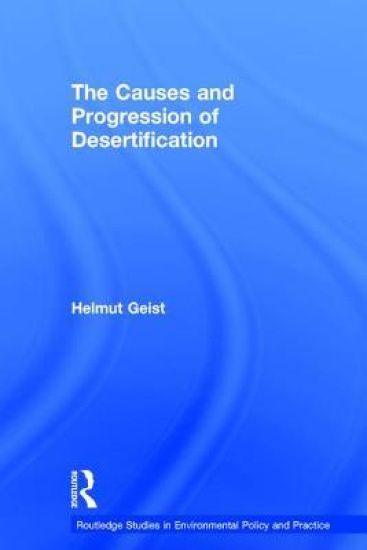
This book provides an examination into the causes and prospects of desertification through a systematic review of 132 sub national case studies. It uses a meta-analytical model to determine whether proximate causes and underlying driving forces fall into any patterns, to identify mediating factors, feedbacks, cross-scalar dynamics and typical pathways. It shows a limited set of recurrent core variables in varying combinations to drive desertification. Most prominent root causes are climatic factors, institutions, national policies, population growth and remote economic influences that lead to local cropland expansion, overgrazing and infrastructure extension, associated with desertification as a potential but not necessary outcome. Some factors are geographically robust; most of them are region and time specific.
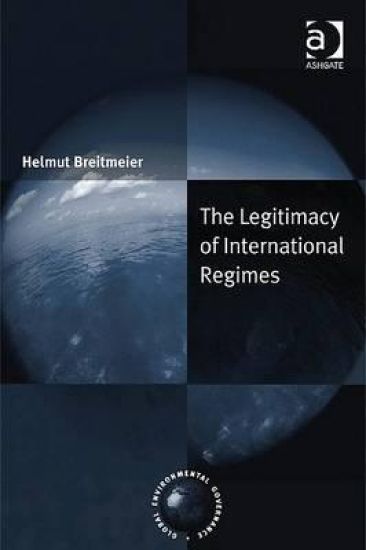
How legitimate are outcomes, outputs and impacts of global environmental regimes? Can non-state actors contribute to improve the output- and input-oriented legitimacy of global environmental governance? Helmut Breitmeier responds to these questions, balancing the volume with both theoretical and empirical chapters. The theoretical and conceptual chapters illustrate the relevance and meaning of legitimacy as well as the impact of non-state actors on environmental governance. They also describe various methodological issues involved with the coding of 23 environmental regimes. The empirical chapters are based on the findings of the International Regimes Database (IRD). They explore whether problem-solving in international regimes is effective and equitable and the influence of a regime's contribution to how states comply with international norms. These chapters also analyze whether non-state actors can improve the output- and input-oriented legitimacy of global governance systems.

Junkers Ju 88 and Its Variants in World War II
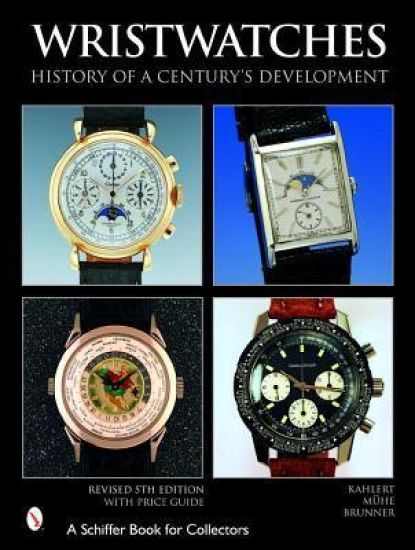
The mechanical wristwatch is a cherished treasure. This newly revised book is designed for the collector, with a historical survey, a description of how mechanical wristwatches work, and a glossary. Updated prices for various watches are included, along with a chapter on fakes, knock-offs, and hybrids. Information on the preservation, care, and repair of the watch rounds out the volume, making it an excellent reference for novice and experienced collectors alike.

Edit video like a pro!“Save it in the edit” is a common saying among film professionals. Editing makes the difference between boring vacation movies and exciting travelogues…between the whole dull news conference and the highlights on the evening news. Whether you’re a budding Spielberg, a proud parent who wants two-year-old Junior’s every feat documented for posterity, or a band that wants your music video to rock, Final Cut Pro HD For Dummies tells you what you need to know to edit regular digital or high definition video like a pro. It covers the basics of capturing, importing, and editing digital videos, with detailed how-to for: Organizing your mediaNavigating the audio and video Timeline tracks and selecting clips and frames on the TimelinesGetting fancier with split, roll, ripple, slip, and slide editsWorking with audio, including mixing, editing out scratches and pops, and using filters to create effectsUsing Soundtrack to compose a musical score, even if you don’t know the difference between horns and stringsApply transitions such as 3D simulation, dissolve, iris, stretch and squeeze, and moreAdding text for captions, opening titles, and closing creditsColor-correcting videoCompositing, rendering, and outputting your final product to tape, CD, DVD, or the Web Three bonus chapters online go into more depth about rendering, customizing the interface, and managing media so you can refine your skills even further. Final Cut Pro HD For Dummies was written by Helmut Kobler, a Los Angeles-based filmmaker, owner of K2Films, and a frequent contributor to Macaddict Magazine. Having this book next to your editing equipment is the next best thing to having him sit next to you and guide you through the editing process.
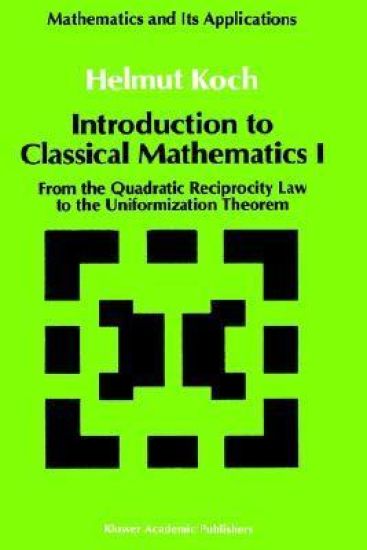
6Et moi, ..., si j'avait su comment en revenir, One service mathematics has rendered the human mce. It has put common sense back je n'y serais point alle.' Jules Verne where it belongs, on the topmost shelf nCllt to the dusty canister labelled 'discarded non- sense'. The series is divergent; therefore we may be able to do something with it. Eric T. Bell O. Heaviside Mathematics is a tool for thought. A highly necessary tool in a world where both feedback and non- linearities abound. Similarly, all kinds of parts of mathematics serve as tools for other parts and for other sciences. Applying a simple rewriting rule to the quote on the right above one finds such statements as: 'One service topology has rendered mathematical physics ...'; 'One service logic has rendered com- puter science ...'; 'One service category theory has rendered mathematics ...'. All arguably true. And all statements obtainable this way form part of the raison d'etre of this series.

6Et moi, ..., si j'avait su comment en revenir, One service mathematics has rendered the human mce. It has put common sense back je n'y serais point alle.' Jules Verne where it belongs, on the topmost shelf nCllt to the dusty canister labelled 'discarded non- sense'. The series is divergent; therefore we may be able to do something with it. Eric T. Bell O. Heaviside Mathematics is a tool for thought. A highly necessary tool in a world where both feedback and non- linearities abound. Similarly, all kinds of parts of mathematics serve as tools for other parts and for other sciences. Applying a simple rewriting rule to the quote on the right above one finds such statements as: 'One service topology has rendered mathematical physics ...'; 'One service logic has rendered com- puter science ...'; 'One service category theory has rendered mathematics ...'. All arguably true. And all statements obtainable this way form part of the raison d'etre of this series.

I have written this book because there is, as in almost all supraspecific ciliate taxa, an ur- gent need for an up-to-date revision of the oxytrichids, which are common in terrestrial, limnetic, and marine biotopes. The last comprehensive, illustrated guides to this group of hypotrichs were provided by KAHL (1932) and SmLER (1974b); however, as regards syn- onymy and faunistics, these works are outdated and not as detailed as EHRENBERG'S out- standing book from 1838. In KAHL's revision, the oxytrichids sensu stricto are described on about 30 pages, whereas in the present book the systematic section comprises about 830 pages. This extraordinary increase in page number is mainly due to the following points: (i) Species number increased from about SO in KAHL to about 170 in the present book. (ii) KAHL usually provided only a single illustration of each species, whereas almost all published illustrations on oxytrichid ciliates are included in my book. (iii) Modern, phylogenetic systematics of oxytrichids without morphogenetic data is impossible; conse- quentlY,*almost all detailed descriptions, usually dealing with the type species, have been included. (iv) Synonymy is discussed, and not only mentioned, as is unfortunately usual.
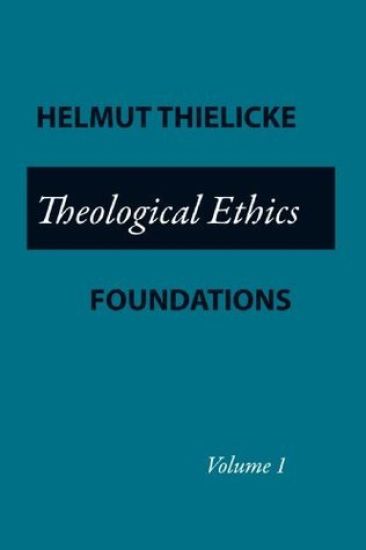

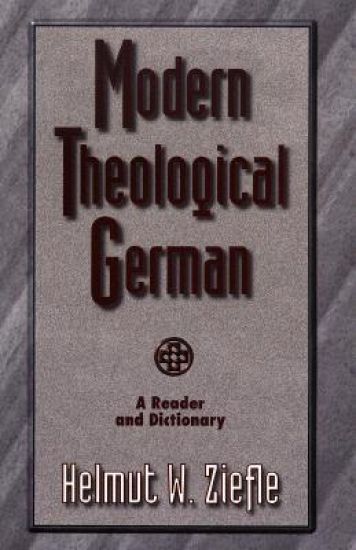
Modern Theological German – A Reader and Dictionary
Helmut W. Ziefle
Baker Academic, Div of Baker Publishing Group
1997
nidottu
Helmut Ziefle's Modern Theological German equips students with a unique tool for learning theological German. This handy reference combines the author's accessible German reader with his Dictionary of Modern Theological German.The reader is divided into two parts. The first part offers readings from the German Bible, enabling students to gain confidence by beginning with familiar texts. The second part presents more difficult readings drawn from the writings of several German theologians, including Martin Luther, Albert Schweitzer, Karl Barth, Helmut Thielicke, Adolf Schlatter, and Rainer Riesner.The dictionary, previously published as a separate volume, contains over twenty thousand terms. Many of these terms are part of the specialized theological vocabulary not generally found, or given only slight treatment, in standard German dictionaries.
Theological Dictionary of the Old Testament, Volume XVII
Helmut Thielicke
William B Eerdmans Publishing Co
2021
sidottu
This useful resource, which concludes the illustrious Theological Dictionary of the Old Testament, provides TDOT users with an index to all sixteen previous volumes. The first part of this volume indexes keywords in Hebrew, Aramaic, and English, while the second part indexes all textual references--both biblical and extrabiblical.
Thielicke here studies the themes of doubt and appropriation in modern Protestant thought. A leading advocate of dialectical theology, Thielicke examines the work of the great German Protestant religious philosophers from Lessing and Schliermacher through Barth and Tillich, probing these theologians' understanding of their context and how this tradition can impact our own engagement with our times. Clear, finely nuanced, historically and philosophically mature, this is a vital reflection on the history of theology and in systematic theology.
Little Exercise for Young Theologians
Helmut Thielicke
William B Eerdmans Publishing Co
2016
nidottu
This classic little book for new and experienced theologians alike offers wise counsel on the difficulties - and vital importance - of maintaining one's spiritual health in the course of academic theological study.Since the book's first appearance in English translation in 1962, thousands of beginning theological students have had the opportunity to eavesdrop, as it were, on the opening lecture of a theological seminar by one of the twentieth century's leading Christian thinkers, Helmut Thielicke. More experienced pastors and theologians have also returned to it again and again for the valuable insights that Thielicke brings to bear on their vocation.