

Kirjahaku
Etsi kirjoja tekijän nimen, kirjan nimen tai ISBN:n perusteella.
1000 tulosta hakusanalla Herbert Strang





Here is the first full-length biography of Herbert Croly (1869-1930), one of the major American social thinkers of the twentieth century. David W. Levy explains the origins and impact of Croly's penetrating analysis of American life and tells the story of a career that included his founding of one of the most influential journals of the period, The New Republic, in 1914 and his writing of The Promise of American Life (1909), a landmark in the history of American ideas. Originally published in 1984. The Princeton Legacy Library uses the latest print-on-demand technology to again make available previously out-of-print books from the distinguished backlist of Princeton University Press. These editions preserve the original texts of these important books while presenting them in durable paperback and hardcover editions. The goal of the Princeton Legacy Library is to vastly increase access to the rich scholarly heritage found in the thousands of books published by Princeton University Press since its founding in 1905.
Here is the first full-length biography of Herbert Croly (1869-1930), one of the major American social thinkers of the twentieth century. David W. Levy explains the origins and impact of Croly's penetrating analysis of American life and tells the story of a career that included his founding of one of the most influential journals of the period, The New Republic, in 1914 and his writing of The Promise of American Life (1909), a landmark in the history of American ideas. Originally published in 1984. The Princeton Legacy Library uses the latest print-on-demand technology to again make available previously out-of-print books from the distinguished backlist of Princeton University Press. These editions preserve the original texts of these important books while presenting them in durable paperback and hardcover editions. The goal of the Princeton Legacy Library is to vastly increase access to the rich scholarly heritage found in the thousands of books published by Princeton University Press since its founding in 1905.

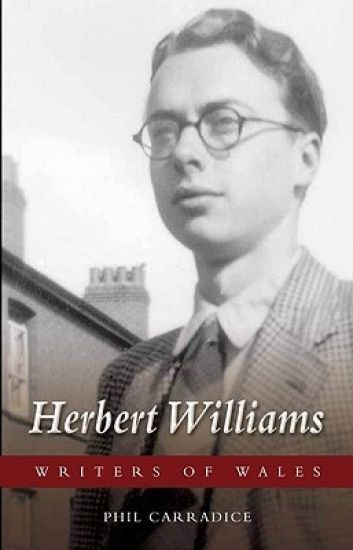
Herbert Williams is one of Wales' most celebrated and distinguished writers. A man of many talents, he is a poet, novelist, short story writer and historian. This book provides a critical survey of his life and writing.

When capitalism is clearly catastrophically out of control and its excesses cannot be sustained socially or ecologically, the ideas of Herbert Marcuse become as relevant as they were in the 1960s. This is the first English introduction to Marcuse to be published for decades, and deals specifically with his aesthetic theories and their relation to a critical theory of society. Although Marcuse is best known as a critic of consumer society, epitomised in the classic One-Dimensional Man, Malcolm Miles provides an insight into how Marcuse's aesthetic theories evolved within his broader attitudes, from his anxiety at the rise of fascism in the 1930s through heady optimism of the 1960s, to acceptance in the 1970s that radical art becomes an invaluable progressive force when political change has become deadlocked. Marcuse's aesthetics of liberation, in which art assumes a primary role in interrupting the operation of capitalism, made him a key figure for the student movement in the 1960s. As diverse forms of resistance rise once more, a new generation of students, scholars and activists will find Marcuse's radical theory essential to their struggle.

When capitalism is clearly catastrophically out of control and its excesses cannot be sustained socially or ecologically, the ideas of Herbert Marcuse become as relevant as they were in the 1960s. This is the first English introduction to Marcuse to be published for decades, and deals specifically with his aesthetic theories and their relation to a critical theory of society. Although Marcuse is best known as a critic of consumer society, epitomised in the classic One-Dimensional Man, Malcolm Miles provides an insight into how Marcuse's aesthetic theories evolved within his broader attitudes, from his anxiety at the rise of fascism in the 1930s through heady optimism of the 1960s, to acceptance in the 1970s that radical art becomes an invaluable progressive force when political change has become deadlocked. Marcuse's aesthetics of liberation, in which art assumes a primary role in interrupting the operation of capitalism, made him a key figure for the student movement in the 1960s. As diverse forms of resistance rise once more, a new generation of students, scholars and activists will find Marcuse's radical theory essential to their struggle.
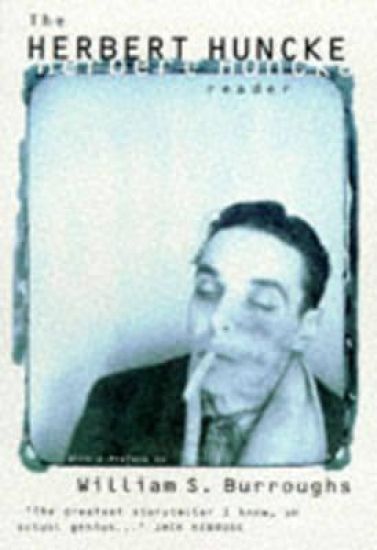
This reader contains the full texts of Herbert Huncke's out-of-print works, "Huncke's Journal" and "The Evening Sun Turned Crimson", and a wide selection from his other published and unpublished poems, stories, memoirs, letters and diaries.
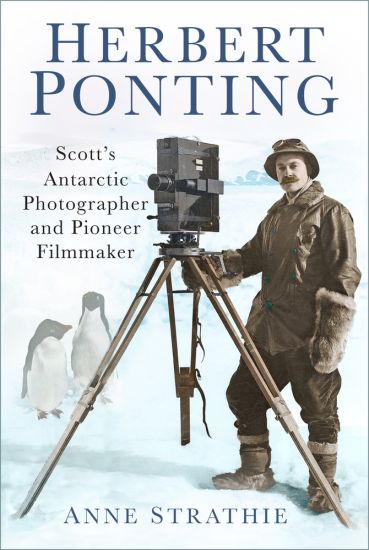
Herbert Ponting (1870-1935) was young bank clerk when he bought an early Kodak compact camera. By the early 1900s, he was living in California, working as a professional photographer, known for stereoview and enlarged images of America, Japan and the Russo-Japanese war. In 1909, back in Britain, Ponting was recruited by Captain Robert Scott as photographer and filmmaker for his second Antarctic expedition. In 1913, following the deaths of Scott and his South Pole party companions, Ponting’s images of Antarctica were widely published, and he gave innovative ‘cinema-lectures’ on the expedition. When war broke out, Ponting’s offers to serve as a photographer or correspondent were declined, but in 1918 he, Ernest Shackleton and other Antarctic veterans joined a government-backed Arctic expedition. During the economically depressed 1920s and 1930s, Ponting wrote his Antarctic memoir, re-worked his Antarctic films into silent and ‘talkie’ versions and worked on inventions. Like others, he struggled financially but was sustained by correspondence with photographic equipment magnate George Eastman, a late-life romance with singer Glae Carrodus and knowing that his images of Antarctica had secured his place in photographic and filmmaking history.

I would like to think that this is the best romantic novel ever written about a newspaper photographer and the town of Hemel Hempstead. This may be because it is the only romantic novel written about a newspaper photographer and Hemel Hempstead!The story starts with the exhumation of the body of Snook. He was a real highway robber who was hung at the scene of his crime on Boxmoor. Examination of the skeleton starts off a trail of mystery and this story runs parallel with that of a photographer who moves to Hemel Hempstead, gets a job on the Gazette and falls in love with an estate agent. Both stories become inter-twined as the plot unfolds with a great deal of action, romance, scary bits and humour.Everyone who has read the book so far, many of these being very critical journalists, has said that it is very entertaining. I am sure you will too.David Satchel.
In this posthumous volume, renowned sociologist Herbert Blumer analyzes George Herbert MeadOs position in the study of human conduct. Engaged with MeadOs work for over half a century, Blumer explored MeadOs ideas for developing the theoretical and methodological position of symbolic interactionism, a term that Blumer would later introduce. Although Blumer focused on the sociological and social psychological implications of MeadOs pragmatism, his objective was to explore social processes embodied in and formed through social action. Envisioning individual and collective social action as ongoing accomplishments achieved through symbolic interaction, Blumer insisted on grounding scholarly knowledge about the human condition in the empirical world of peopleOs experiences. Organized and introduced by Thomas J. Morrione, a colleague and friend to whom Blumer entrusted his unpublished papers, the volume also includes BlumerOs correspondence with David L. Miller about Mead's theories and other related correspondence. For a greater understanding of both MeadOs philosophies and Blumer's, this volume will be essential reading for students and teachers of social theory and symbolic interactionism.
In this posthumous volume, renowned sociologist Herbert Blumer analyzes George Herbert MeadOs position in the study of human conduct. Engaged with MeadOs work for over half a century, Blumer explored MeadOs ideas for developing the theoretical and methodological position of symbolic interactionism, a term that Blumer would later introduce. Although Blumer focused on the sociological and social psychological implications of MeadOs pragmatism, his objective was to explore social processes embodied in and formed through social action. Envisioning individual and collective social action as ongoing accomplishments achieved through symbolic interaction, Blumer insisted on grounding scholarly knowledge about the human condition in the empirical world of peopleOs experiences. Organized and introduced by Thomas J. Morrione, a colleague and friend to whom Blumer entrusted his unpublished papers, the volume also includes BlumerOs correspondence with David L. Miller about Mead's theories and other related correspondence. For a greater understanding of both MeadOs philosophies and Blumer's, this volume will be essential reading for students and teachers of social theory and symbolic interactionism.
Herbert Hoover, Unemployment, and the Public Sphere
Vincent Gaddis; Mary O. Furner
University Press of America
2005
sidottu
Herbert Hoover, Unemployment, and the Public Sphere examines the fulfillment of Hoover's ideas in the area of unemployment between 1919 and 1933. The economic system Herbert Hoover envisioned, one based on cooperation and individual initiative with limited government, and the language he used to promote this system defined New Era discourse. His American Individualism, printed in 1923, served as the political philosophy of the administrations of the 1920s. In his discourse from 1919-1921, Hoover expanded the criteria- the conceptual definitions of virtue and liberty. The book includes a foreword by Mary O. Furner.
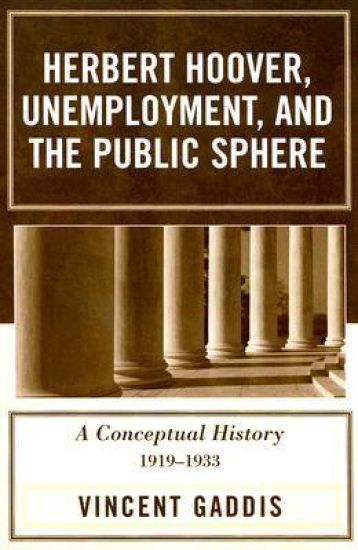
Herbert Hoover, Unemployment, and the Public Sphere
Vincent Gaddis; Mary O. Furner
University Press of America
2005
nidottu
Herbert Hoover, Unemployment, and the Public Sphere examines the fulfillment of Hoover's ideas in the area of unemployment between 1919 and 1933. The economic system Herbert Hoover envisioned, one based on cooperation and individual initiative with limited government, and the language he used to promote this system defined New Era discourse. His American Individualism, printed in 1923, served as the political philosophy of the administrations of the 1920s. In his discourse from 1919-1921, Hoover expanded the criteria- the conceptual definitions of virtue and liberty. The book includes a foreword by Mary O. Furner.

Herbert Hoover and World Peace summarizes Hoover's career-long efforts to preserve peace in the world and to help America avoid unnecessary wars, from his opposition to our entry into World War I to his proposed — and rejected — Cold War strategy, which would have avoided the Vietnam War. Personal experiences in the Boxer Rebellion in China and helping to feed Belgium during World War I, coupled with his early Quaker nurture, that sensitized him to war-related tragedies. These essays illustrate the varied ways in which Hoover expressed and implemented his commitment to world peace, as humanitarian, advisor, cabinet member, president, citizen, and writer. No other president was so consistent and thoughtful on matters of world peace.