Kirjojen hintavertailu. Mukana 11 515 794 kirjaa ja 12 kauppaa.

Kirjahaku

Etsi kirjoja tekijän nimen, kirjan nimen tai ISBN:n perusteella.

1000 tulosta hakusanalla J -R Nogué

J. Robert Oppenheimer, the Cold War, and the Atomic West

J. Robert Oppenheimer, the Cold War, and the Atomic West

Jon Hunner

University of Oklahoma Press
2009
sidottu
In 1922, the teenage son of a Jewish immigrant ventured from Manhattan to New Mexico for his health. It was the first of many trips to the Sangre de Cristo Mountains, a western retreat where J. Robert Oppenheimer would eventually hold pathbreaking discussions with world-renowned scientists about atomic physics. Oppenheimer came to feel at home in the American West, and while extensive studies have been made of the man, this is the first book to explicitly link him with the region. J. Robert Oppenheimer, the Cold War, and the Atomic West explores how the West influenced Oppenheimer as a scientist and as a person - and the role he played in influencing it.Jon Hunner's concise account of Oppenheimer's life and the emergence of an Atomic West distills a vast literature for students and general readers. In this brisk, engaging biography, the author recounts how Oppenheimer helped locate the atomic weapons research lab at Los Alamos, New Mexico, and helped establish leading physics departments at the University of California-Berkeley and Caltech. By taking part in moving atomic physics west of the Mississippi, Oppenheimer bolstered the establishment of research labs, uranium mines, nuclear reactors, and more, bringing talented people - and billions of dollars in federal contracts - to the region.Interwoven into this atomic tale are insights into the physicist's troubled growing-up years, his marriage and family life, the bombing of Hiroshima and Nagasaki, and Oppenheimer's eventual downfall. After the first atomic bomb burst over the New Mexican desert in 1945 and as the Cold War developed, the American myth of the Wild West expanded to encompass atomic sheriffs saving the world for democracy - even as powerful opponents began questioning Oppenheimer's place in that story. Against the backdrop of the physicist's life twining with the region's history, Hunner explores the promise and peril of the Atomic Age.
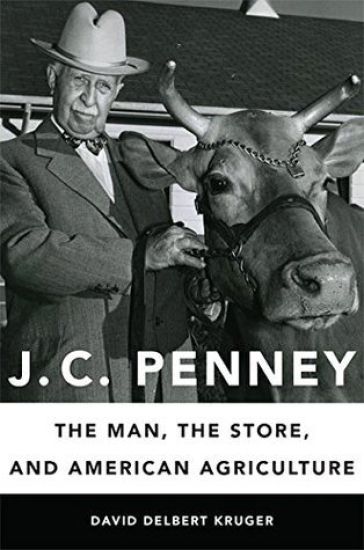
J. C. Penney

J. C. Penney

David Delbert Kruger

University of Oklahoma Press
2017
sidottu
What is now called JCPenney, a fixture of suburban shopping malls, started out as a small-town Main Street store that fused its founder's interests in agriculture, retail business, religion, and philanthropy. This book - at once a biography of Missouri farm boy-turned-business icon James Cash Penney and the story of the company he started in 1902 - brings to light the little-known agrarian roots of an American department store chain. David Delbert Kruger explores how the company, its stores, and their famous founder shaped rural America throughout the twentieth century. ""Most of our stores,"" Penney explained in 1931, ""are located in agricultural regions where the tide of merchandising rises and falls with the prosperity of the farmers."" Despite the growth of cities in the early twentieth century, Penney maintained his stores' commitment to serving the needs of farmers and small-town folk. Tracing this dedication to Penney's rural upbringing, Kruger describes how, from one store in the sheep-ranching and mining town of Kemmerer, Wyoming, J. C. Penney Co. became a familiar chain on Main Street, USA, purveying value, providing good jobs, and marking rites of passage in many an American childhood. Kruger paints a biographical and historical picture of an American business mogul distinctly different from comparable capitalists such as Andrew Carnegie, Henry Ford, or Sam Walton. Despite his chain's corporate structure, Penney imbued each store with a Golden Rule philosophy that demanded mutual respect between customers, employees, competitors, suppliers, and communities. By tracing that spirit to its agrarian source, and following it through the twentieth century, J. C. Penney: The Man, the Store, and American Agriculture provides a new perspective on this American cultural institution - and on its founder's unique brand of American capitalism.
J. Robert Oppenheimer, the Cold War, and the Atomic West

J. Robert Oppenheimer, the Cold War, and the Atomic West

Jon Hunner

University of Oklahoma Press
2019
nidottu
In 1922, the teenage son of a Jewish immigrant ventured from Manhattan to New Mexico for his health. It was the first of many trips to the Sangre de Cristo Mountains, a western retreat where J. Robert Oppenheimer would eventually hold pathbreaking discussions with world-renowned scientists about atomic physics. Oppenheimer came to feel at home in the American West, and while extensive studies have been made of the man, this is the first book to explicitly link him with the region. J. Robert Oppenheimer, the Cold War, and the Atomic West explores how the West influenced Oppenheimer as a scientist and as a person - and the role he played in influencing it.Jon Hunner's concise account of Oppenheimer's life and the emergence of an Atomic West distills a vast literature for students and general readers. In this brisk, engaging biography, the author recounts how Oppenheimer helped locate the atomic weapons research lab at Los Alamos, New Mexico, and helped establish leading physics departments at the University of California-Berkeley and Caltech. By taking part in moving atomic physics west of the Mississippi, Oppenheimer bolstered the establishment of research labs, uranium mines, nuclear reactors, and more, bringing talented people - and billions of dollars in federal contracts - to the region.Interwoven into this atomic tale are insights into the physicist's troubled growing-up years, his marriage and family life, the bombing of Hiroshima and Nagasaki, and Oppenheimer's eventual downfall. After the first atomic bomb burst over the New Mexican desert in 1945 and as the Cold War developed, the American myth of the Wild West expanded to encompass atomic sheriffs saving the world for democracy - even as powerful opponents began questioning Oppenheimer's place in that story. Against the backdrop of the physicist's life twining with the region's history, Hunner explores the promise and peril of the Atomic Age.

J. Edgar Hoover: A Graphic Biography
A biography in the format of a graphic novel offers a fascinating portrait of the life and career of J. Edgar Hoover, his service under eight presidents--from Calvin Coolidge to Richard Nixon--his place in the creation of the FBI, his often turbulent personal life, and his role during Prohibition, the Cold War, the civil rights movement, and more.
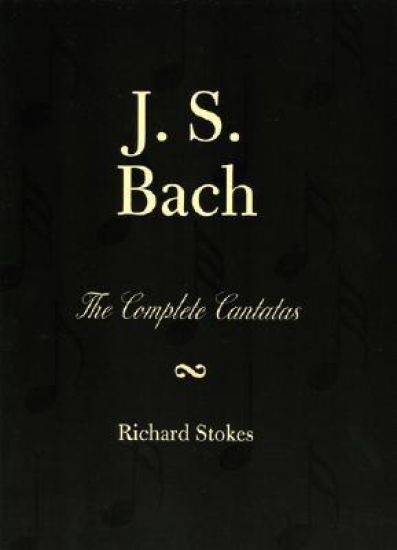
J.S. Bach

J.S. Bach

Richard Stokes; Martin Neary

Scarecrow Press
2000
nidottu
This volume contains parallel texts and translations of all Bach's church and secular cantatas that have come down to us complete. They have been translated into an accurate and readable English style that does not attempt to render the rhythm and rhyme scheme of the original German texts but allows the reader to appreciate the beauty and atmosphere of the poetry set by Bach. The volume also includes a short glossary of geographical and mythological names, a list of dedicatees of the secular cantatas, a list of the poets with their dates, and an introduction to the cantatas by Martin Neary, former organist of Winchester Cathedral and Westminster Abbey. This corrected and revised printing incorporates a number of corrections to the text and a new alphabetical index of the cantatas by title.
J.S. Bach's Major Works for Voices and Instruments
Designed for the music lover in need of a better understanding of the dramatic thrust of Bach's four major works for voices and instruments, this guide is based on extensive program notes prepared for the renowned Baldwin-Wallace College Bach Festival, an annual event with a tradition of presenting the four masterworks in cyclical fashion going back to the festival's founding in 1933 by Albert Riemenschneider. Giving priority to the most prominent auditory and dramatic features of the music, it guides the listener through each work, movement by movement, and with an integrated presentation of commentary and text-translation. Particular attention is given to the interaction of text and music, suggesting reasons for Bach's musical choices. The libretti are rendered according to the new critical edition of Bach's works (Neue Bach-Ausgabe). Scriptural texts appear in italics; chorale (hymn) texts are printed in bold. The book also includes a helpful glossary of terms, an index of movements, and a bibliography.
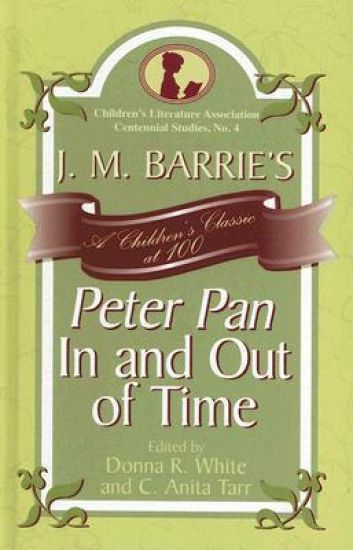
J. M. Barrie's Peter Pan In and Out of Time
Celebrating 100 years of Peter Pan, this fourth volume in the Centennial Studies series explores the cultural contents of Barrie's creation and the continuing impact of Peter Pan on children's literature and popular culture today, especially focusing on the fluctuations of time and narrative strategies. This collection of essays on Peter Pan is separated into four parts. The first section is comprised of essays placing Barrie's in its own time period, and tackles issues such as the relationship between Hook and Peter in terms of child hatred, the similarities between Peter and Oscar Wilde, Peter Pan's position as an exemplar of the Cult of the Boy Child is challenged, and the influence of pirate lore and fairy lore are also examined. Part two features an essay on Derrida's concept of the grapheme, and uses it to argue that Barrie is attempting to undermine racial stereotypes. The third section explores Peter Pan's timelessness and timeliness in essays that examine the binary of print literacy and orality; Peter Pan's modular structure and how it is ideally suited to video game narratives; the indeterminacy of gender that was common to Victorian audiences, but also threatening and progressive; Philip Pullman and J.K. Rowling, who publicly claim to dislike Peter Pan and the concept of never growing up, but who are nevertheless indebted to Barrie; and a Lacanian reading of Peter Pan arguing that Peter acts as "the maternal phallus" in his pre-Symbolic state. The final section looks at the various roles of the female in Peter Pan, whether against the backdrop of British colonialism or Victorian England. Students and enthusiasts of children's literature will find their understanding of Peter Pan immensely broadened after reading this volume.
J. S. Bach's 'Leipzig' Chorale Preludes
In 2007, the great Bach scholar Anne Leahy died at the age of 46. She was a leading light in Bach studies and lecturer at the Dublin Institute of Technology (DIT) Conservatory of Music and Drama. Posthumously edited by renowned Bach scholar Robin A. Leaver, Leahy's dissertation research forms the basis for this original study of the preludes to Bach's Leipzig chorales. Originally composed in Weimar and later revised in Leipzig, Bach's compositions have been a source of some puzzlement. As Leahy notes, "the original intentions of Bach and the possible purpose of this collection might be regarded as speculative." Working from available sources, however, she argues that through the careful examination of the links among the music, hymn texts, and theological sources some answers may be had. From Bach's personal and deep interest in Lutheran theology to his enormous musical passion, Leahy considers closely a series of critical questions: does the original manuscript for the chorales simply reflect a random gathering of compositions or is there a common theme in setting? How critical is the order of the chorales and what is the theological significance of that order? Were the chorales a unified collection, and if so, which parts were to be included and which not? Indeed, were the chorales themselves part of a possibly larger corpus? As Leahy makes evident, there are no simple answers, which is why she considers critical the relationship the texts of the hymns to the chorales and to one another, outlining a theological pattern that is vital to fully grasping the guiding philosophy of these compositions. J. S. Bach's "Leipzig" Chorale Preludes: Music, Text, Theology is ideally suited for Bach scholars and those with a general interest in the intricate connections between text and music in the composition of religious music.
J C Leyendecker

J C Leyendecker

Laurence S. Cutler; Judy Goffman Cutler

Abrams
2008
sidottu
One of the most prolific and successful artists of the Golden Age of American Illustration, J. C. Leyendecker captivated audiences throughout the first half of the 20th century. Leyendecker is best known for his creation of the archetype of the fashionable American male with his advertisements for Arrow Collar. These images sold to an eager public the idea of a glamorous lifestyle, the bedrock upon which modern advertising was built. He also was the creator instantly recognizable icons, such as the New Year’s baby and Santa Claus, that are to this day an integral part of the lexicon of Americana and was commissioned to paint more Saturday Evening Post covers than any other artist. Leyendecker lived for most of his adult life with Charles Beach, the Arrow Collar Man, on whom the stylish men in his artwork were modeled. The first book about the artist in more than 30 years, J. C. Leyendecker features his masterworks, rare paintings, studies, and other artwork, including the 322 covers he did for the Post. With a revealing text that delves into both his artistic evolution and personal life, J. C. Leyendecker restores this iconic image maker’s rightful position in the pantheon of great American artists.
J'Accuse

J'Accuse

Aharon Shabtai

New Directions Publishing Corporation
2003
nidottu
Playing on Zola's famous letter denouncing the anti-Semitism of the French government throughout the Dreyfus affair, Aharon Shabtai's title can be taken literally: it charges his government and his people with crimes against the humanity of their neighbors. Here we find snipers shooting children, spin-masters trying to whitewash blood baths, ammunition "distributed like bars of chocolate," and "technicians of slaughter" for whom morality is merely "a pain in the ass." With a splendid lyrical physicality that accentuates Shabtai's terse immediacy and matter-of-fact scorn, the poems cover a period of six yearsfrom the 1996 election of Netanyahu as prime minister through the curfews, lynchings, riots, sieges, and bombings of the second intifada. But at the heart of J'Accuse is the fate of the ethical Hebrew culture in which the poet was raised: Shabtai refuses to abandon his belief in the moral underpinnings of Israeli society or to be silent before the barbaric and brutal. He witnesses, he protests, he warns. Above all, he holds up a mirror to his nation.
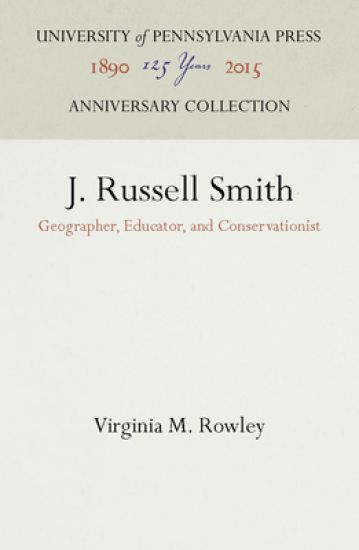
J. Russell Smith

J. Russell Smith

Virginia M. Rowley

University of Pennsylvania Press
1964
sidottu
At the end of the nineteenth century, revolutionary developments began to take place in American geography. The humanization of the subject proceeded at a rapid pace, as did the application of geography to other fields. The changes were initiated at the college level, particularly in the schools of business, and later permeated the secondary and elementary levels. J. Russell Smith, Geographer, Educator, and Conservationist is a two-fold study of these developments. In part, it is an historical-geographical analysis of the development of human and economic geography in the United States. Essentially, its purpose is to evaluate the role of J. Russell Smith in the evolution of American geographic thought. Through his texts, ranging from the elementary to the college level, and his articles in both professional journals and popular magazines, Smith helped to formulate and publicize the concept, philosophy, and mechanics of human-economic geography. Through his establishment of departments of geography in the Wharton School of the University of Pennsylvania and the School of Business of Columbia University, he helped lay the foundation for the training of professional geographers, as well as for the application of geography to the fields of economics and business. Finally his love of the land led him to crusade for the conservation of natural resources and to experiment with new plants and trees which gave promise of saving the land and yielding good economic returns. At the same time, his broad humanitarian vision also led him to support actively such causes as world peace and international citizenship. An extensive bibliography is included as well as a complete listing of all of Smith's writings. His wide range of interests makes this book meaningful, not only to individual readers, but also to many organizations, religious and philanthropic. Colleges and universities as well as the business world will also find this book appealing. Its clear organization, its pleasant style, and its humane concern combine to create a vivid account of an important subject and an excellent man.
J. D. Salinger: A Life

J. D. Salinger: A Life

Kenneth Slawenski

Random House Trade
2012
nidottu
NATIONAL BESTSELLER - The inspiration for the major motion picture Rebel in the Rye One of the most popular and mysterious figures in American literary history, the author of the classic Catcher in the Rye, J. D. Salinger eluded fans and journalists for most of his life. Now he is the subject of this definitive biography, which is filled with new information and revelations garnered from countless interviews, letters, and public records. Kenneth Slawenski explores Salinger's privileged youth, long obscured by misrepresentation and rumor, revealing the brilliant, sarcastic, vulnerable son of a disapproving father and doting mother. Here too are accounts of Salinger's first broken heart--after Eugene O'Neill's daughter, Oona, left him--and the devastating World War II service that haunted him forever. J. D. Salinger features this author's dramatic encounters with luminaries from Ernest Hemingway to Elia Kazan, his office intrigues with famous New Yorker editors and writers, and the stunning triumph of The Catcher in the Rye, which would both make him world-famous and hasten his retreat into the hills of New Hampshire. J. D. Salinger is this unique author's unforgettable story in full--one that no lover of literature can afford to miss. Praise for J. D. Salinger: A Life "Startling . . . insightful . . . a] terrific literary biography."--USA Today "It is unlikely that any author will do a better job than Mr. Slawenski capturing the glory of Salinger's life."--The Wall Street Journal "Slawenski fills in a great deal and connects the dots assiduously; it's unlikely that any future writer will uncover much more about Salinger than he has done."--Boston Sunday Globe "Offers perhaps the best chance we have to get behind the myth and find the man."--Newsday " Slawenski has] greatly fleshed out and pinned down an elusive story with precision and grace."--Chicago Sun-Times "Earnest, sympathetic and perceptive . . . Slawenski] does an evocative job of tracing the evolution of Salinger's work and thinking."--The New York Times
The Rev. J. W. Loguen, as a Slave and as a Freeman

The Rev. J. W. Loguen, as a Slave and as a Freeman

J.W. Loguen

Syracuse University Press
2016
nidottu
The Rev. Jermain Wesley Loguen was a pioneering figure in early nineteenthcentury abolitionism and African American literature. A highly respected leader in the AME Zion Church, Rev. Loguen was popularly known as the ""Underground Railroad King"" in Syracuse, where he helped over 1,500 fugitives escape from slavery. With a charismatic and often controversial style, Loguen lectured alongside Frederick Douglass and worked closely with well-known abolitionists such as Harriet Tubman, William Wells Brown, and William Lloyd Garrison, among others. Originally published in 1859, The Rev. J. W. Loguen chronicles the remarkable life of a tireless young man and a passionate activist. The narrative recounts Loguen’s early life in slavery, his escape to the North, and his successful career as a minister and abolitionist in New York and Canada. Given the text’s third-person narration and novelistic style, scholars have long debated its authorship. In this edition, Williamson uncovers new research to support Loguen as the author, providing essential biographical information and buttressing the significance of his life and writing. The Rev. J. W. Loguen represents a fascinating literary hybrid, an experiment in voice and style that enlarges our understanding of the slave narrative.
J. S. Wooley

J. S. Wooley

Syracuse University Press
2018
sidottu
In 1880, Jesse Sumner Wooley, an energetic and entrepreneurial thirteen-year-old farm boy from Saratoga County, took a job as an errand boy for a pair of town photographers. This summer job led to a career that would define Wooley’s life. From that early start, Wooley went on to become a prominent businessman and inventive photographer in Upstate New York.This volume tells the fascinating story of Wooley’s rise from his impoverished rural roots to a position of success and prosperity as an artist who illuminated twentieth-century bourgeois American culture through his photography. Including more than one hundred color and duotone photographs from his corpus, including a gallery of images from Matt Finley’s private collection, the book reveals the range of Wooley’s work: Adirondack panoramas, architectural studies, travel shows depicting the American west and Europe, and documentary photographs of contemporary events. Wooley’s career is situated within the context of late nineteenth- and early twentieth-century town photography, a field dominated by male commercial photographers who captured the day-to-day events of rural and town life. Like many of these professional photographers, Wooley embraced innovations in cameras, producing photo postcards and panoramic photography to satisfy the growing demand for images as souvenirs.J. S. Wooley showcases the beauty of the Adirondack region as Wooley experienced it, the vital importance of town photographers, and the emergence of photography as a powerful medium to expose the American landscape.
J. M. Synge and Travel Writing of the Irish Revival

J. M. Synge and Travel Writing of the Irish Revival

Giulia Bruna

Syracuse University Press
2017
nidottu
Between the late 1890s and the early 1900s, the young Irish writer John Millington Synge journeyed across his home country, documenting his travels intermittently for ten years. His body of travel writing includes the travel book The Aran Islands, his literary journalism about West Kerry and Wicklow published in various periodicals, and his articles for the Manchester Guardian about rural poverty in Connemara and Mayo. Although Synge’s nonfiction is often considered of minor weight compared with his drama, Bruna argues persuasively that his travel narratives are instances of a pioneering ethnographic and journalistic imagination. J. M. Synge and Travel Writing of the Irish Revival is the first comprehensive study of Synge’s travel writing about Ireland, compiled during the zeitgeist of the preindependence Revival movement. Bruna argues that Synge’s nonfiction subverts inherited modes of travel writing that put an emphasis on Empire and Nation. Synge’s writing challenges these grand narratives by expressing a more complex idea of Irishness grounded in his empathetic observation of the local rural communities he traveled amongst. Drawing from critically neglected revivalist travel literature, newspapers and periodicals, and visual and archival documents, Bruna sketches a new portrait of a seminal Irish Literary Renaissance figure and sheds new light on the itineraries of activism and literary engagement of the broader Revival movement.
J.D. Salinger - American Writers 51

J.D. Salinger - American Writers 51

UNIVERSITY OF MINNESOTA PRESS
1965
nidottu
J.D. Salinger - American Writers 51 was first published in 1965. Minnesota Archive Editions uses digital technology to make long-unavailable books once again accessible, and are published unaltered from the original University of Minnesota Press editions.
J. Walter Malone

J. Walter Malone

J.Walter Malone

University Press of America
1993
sidottu
Reports the life stories of turn-of-the-century Quaker evangelist and social activist, J. Walter Malone. Drawing from two unfinished manuscripts produced by Malone in the 1920s, Oliver links historical details with the inner story of Malon's spiritual sojourn.
J. M. Coetzee and the Idea of the Public Intellectual
In September 2003 the South African novelist J. M. Coetzee was awarded the Nobel Prize for Literature, confirming his reputation as one of the most influential writers of our time. J. M. Coetzee and the Idea of the Public Intellectual addresses the contribution Coetzee has made to contemporary literature, not least for the contentious forays his work makes into South African political discourse and the field of postcolonial studies. Taking the author’s ethical writing as its theme, the volume is an important addition to understanding Coetzee’s fiction and critical thinking. While taking stock of Coetzee’s singular, modernist response to the apartheid and postapartheid situations in his early fiction, the volume is the first to engage at length with the later works, Disgrace, The Lives of Animals, and Elizabeth Costello. J. M. Coetzee and the Idea of the Public Intellectual explores Coetzee’s roles as a South African intellectual and a novelist; his stance on matters of allegory and his evasion of the apartheid censor; his tacit critique of South Africa’s Truth and Reconciliation Commission; his performance of public lectures of his alter ego, Elizabeth Costello; and his explorations into ecofeminism and animal rights. The essays collected here, which include an interview with the Nobel Laureate, provide new vantages from which to consider Coetzee’s writing.