Kirjojen hintavertailu. Mukana 11 377 431 kirjaa ja 12 kauppaa.

Kirjahaku

Etsi kirjoja tekijän nimen, kirjan nimen tai ISBN:n perusteella.

1000 tulosta hakusanalla JAMES LINDSAY

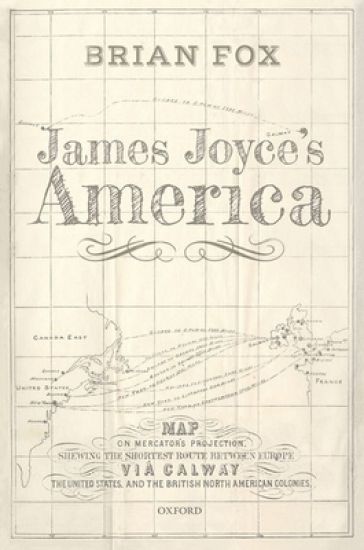
James Joyce's America

James Joyce's America

Brian Fox

Oxford University Press
2019
sidottu
James Joyce's America is the first study to address the nature of Joyce's relation to the United States. It challenges the prevalent views of Joyce as merely indifferent or hostile towards America, and argues that his works show an increasing level of engagement with American history, culture, and politics that culminates in the abundance of allusions to the US in Finnegans Wake, the very title of which comes from an Irish-American song and signals the importance of America to that work. The volume focuses on Joyce's concept of America within the framework of an Irish history that his works obsessively return to. It concentrates on Joyce's thematic preoccupation with Ireland and its history and America's relation to Irish post-Famine history. Within that context, it explores first Joyce's relation to Irish America and how post-Famine Irish history, as Joyce saw it, transformed the country from a nation of invasions and settlements to one spreading out across the globe, ultimately connecting Joyce's response to this historical phenomenon to the diffusive styles of Finnegans Wake. It then discusses American popular and literary cultures in terms of how they appear in relation to, or as a function of, the British-Irish colonial context in the post-Famine era, and concludes with a consideration of how Joyce represented his American reception in the Wake.
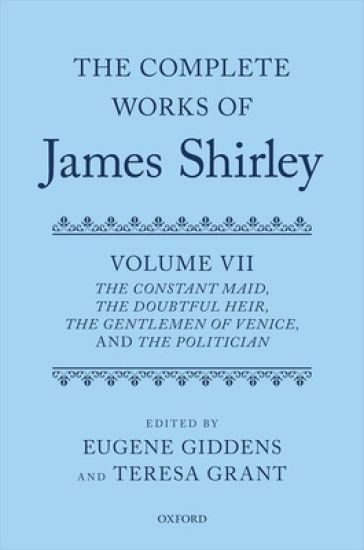
The Complete Works of James Shirley: Volume 7

The Complete Works of James Shirley: Volume 7

James Shirley

Oxford University Press
2022
sidottu
The Complete Works of James Shirley contains a corpus of around 50 works, including plays, poems, grammars and prose. Shirley (1596-1666) is arguably the most significant dramatic writer of the late English Renaissance, but the last scholarly collections of his plays appeared in the nineteenth century and this Oxford edition is the first to provide a complete works. Shirley was a quintessentially Caroline writer whose work echoes and builds upon the art of his Elizabethan and Jacobean predecessors. Caroline drama would be unthinkable without Shirley, who enjoyed a great reputation as a playwright both at court and in the theatres. This comprehensive scholarly edition provides well-annotated modernized texts of the full range of Shirley's remarkable output, not just of his favourite plays. Each work is introduced by an essay examining dating and background, sources, context and performance, and by one which discusses the textual situation and production of the early editions. An extensive footnoted commentary is provided for all texts, to help the modern reader with difficult passages, explain historical usage and customs and to clarify meaning in context. Volume 7 contains four plays written between c. 1636 and 1639, The Constant Maid, The Doubtful Heir, The Gentleman of Venice and The Politician. The plays were probably staged in Ireland during Shirley's time as resident dramatist for the Werburgh Street Theatre in Dublin from 1636 to 1640, though they were not printed until his return to London in 1640 for The Constant Maid and in the 1650s for the others. Shirley's full generic range can been seen in this volume: The Constant Maid is a London-based comedy, The Doubtful Heir and The Gentleman of Venice are tragi-comedies set in Europe and The Politician draws on Hamlet for both its Scandinavian setting and its tragic genre.
James Ussher

James Ussher

Alan Ford

Oxford University Press
2007
sidottu
Though known today largely for dating the creation of the world to 4004BC, James Ussher (1581-1656) was an important scholar and ecclesiastical leader in the seventeenth century. As Professor of Theology at Trinity College Dublin, and Archbishop of Armagh from 1625, he shaped the newly protestant Church of Ireland. Tracing its roots back to St Patrick, he gave it a sense of Irish identity and provided a theology which was strongly Calvinist and fiercely anti-Catholic. In exile in England in the 1640s he advised both king and parliament, trying to heal the ever-widening rift by devising a compromise over church government. Forced finally to choose sides by the outbreak of civil war in 1642, Ussher opted for the royalists, but found it difficult to combine his loyalty to Charles with his detestation of Catholicism. A meticulous scholar and an extensive researcher, Ussher had a breathtaking command of languages and disciplines - 'learned to a miracle' according to one of his friends. He worked on a series of problems: the early history of bishops, the origins of Christianity in Ireland and Britain, and the implications of double predestination, making advances which were to prove of lasting significance. Tracing the interconnections between this scholarship and his wider ecclesiastical and political interests, Alan Ford throws new light on the character and attitudes of a seminal figure in the history of Irish Protestantism.
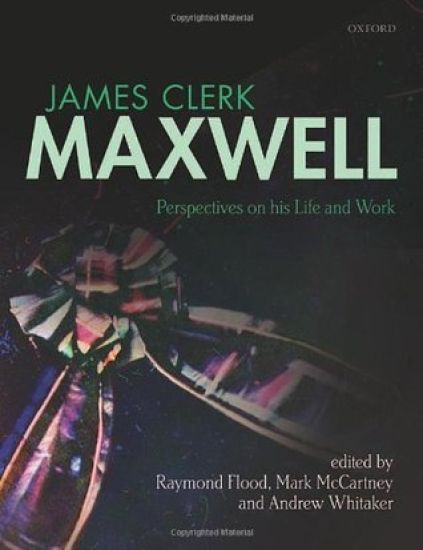
James Clerk Maxwell

James Clerk Maxwell

Oxford University Press
2014
sidottu
James Clerk Maxwell (1831-1879) had a relatively brief, but remarkable life, lived in his beloved rural home of Glenlair, and variously in Edinburgh, Aberdeen, London and Cambridge. His scholarship also ranged wide - covering all the major aspects of Victorian natural philosophy. He was one of the most important mathematical physicists of all time, coming only after Newton and Einstein. In scientific terms his immortality is enshrined in electromagnetism and Maxwell's equations, but as this book shows, there was much more to Maxwell than electromagnetism, both in terms of his science and his wider life. Maxwell's life and contributions to science are so rich that they demand the expertise of a range of academics - physicists, mathematicians, and historians of science and literature - to do him justice. The various chapters will enable Maxwell to be seen from a range of perspectives. Chapters 1 to 4 deal with wider aspects of his life in time and place, at Aberdeen, King's College London and the Cavendish Laboratory. Chapters 5 to 12 go on to look in more detail at his wide ranging contributions to science: optics and colour, the dynamics of the rings of Saturn, kinetic theory, thermodynamics, electricity, magnetism and electromagnetism with the concluding chapters on Maxwell's poetry and Christian faith.
James Joseph Sylvester

James Joseph Sylvester

Karen Hunger Parshall

Oxford University Press
2013
nidottu
In the folklore of mathematics, James Joseph Sylvester (1814-1897) is the eccentric, hot-tempered, sword-cane-wielding, nineteenth-century British Jew who, together with the taciturn Arthur Cayley, developed a theory and language of invariants that then died spectacularly in the 1890s as a result of David Hilbert's groundbreaking, 'modern' techniques. This, like all folklore, has some grounding in fact but owes much to fiction. The present volume brings together for the first time 140 letters from Sylvester's correspondence in an effort to establish the true picture. It reveals - through the letters as well as through the detailed mathematical and historical commentary accompanying them - Sylvester the friend, man of principle, mathematician, poet, professor, scientific activist, social observer, traveller. It also provides a detailed look at Sylvester's thoughts and thought processes as it shows him acting in both personal and professional spheres over the course of his eighty-two year life. The Sylvester who emerges from this analysis - unlike the Sylvester of the folkloric caricature - offers deep insight into the development of the technical and social structures of mathematics.
Bible and Interpretation: The Collected Essays of James Barr
This is the first volume of a three volume collection which collates the most important published papers of James Barr (1924-2006). The papers deal with questions of theology (especially biblical theology), biblical interpretation and ideas about biblical inspiration and authority, and questions to do with biblical Hebrew and Greek, along with several lexicographical studies, essays and obituaries on major figures in the history of biblical interpretation, and a number of important reviews. Many of pieces collected here have hitherto been available only in journals and hard-to-access collections. This collection will prove indispensable for anyone seeking a rounded picture of Barr's work. It incorporates work from every period of his academic life, and includes a number of discussions of fundamentalism and conservative biblical interpretation. Some pieces also shed light on less well-known aspects of Barr's work, such as his abiding interest in biblical chronology. Barr's characteristic incisive, clear, and forthright style is apparent throughout the collection. The three volumes are thematically compiled. Each is accompanied by an introduction by John Barton, providing a guide to the contents. Volume 1 begins with a biographical essay by Ernest Nicholson and John Barton. It contains major articles on theology in relation to the Bible, programmatic studies of the past and future of biblical study, and reflections on specific topics in the study of the Old Testament. Volume 2 is concerned with detailed biblical interpretation and with the history of the discipline. It also contains material on biblical fundamentalism. Volume 3 is a collection of Barr's extensive papers on linguistic matters relating to Biblical Hebrew and Greek, and to biblical translation in the ancient and the modern world.
Bible and Interpretation: The Collected Essays of James Barr
This is the second volume of three volume collection which collates the most important published papers of James Barr (1924-2006). The papers deal with questions of theology (especially biblical theology), biblical interpretation and ideas about biblical inspiration and authority, and questions to do with biblical Hebrew and Greek, along with several lexicographical studies, essays and obituaries on major figures in the history of biblical interpretation, and a number of important reviews. Many of pieces collected here have hitherto been available only in journals and hard-to-access collections. This collection will prove indispensable for anyone seeking a rounded picture of Barr's work. It incorporates work from every period of his academic life, and includes a number of discussions of fundamentalism and conservative biblical interpretation. Some pieces also shed light on less well-known aspects of Barr's work, such as his abiding interest in biblical chronology. Barr's characteristic incisive, clear, and forthright style is apparent throughout the collection. The three volumes are thematically compiled. Each is accompanied by an introduction by John Barton, providing a guide to the contents. Volume 1 begins with a biographical essay by Ernest Nicholson and John Barton. It contains major articles on theology in relation to the Bible, programmatic studies of the past and future of biblical study, and reflections on specific topics in the study of the Old Testament. Volume 2 is concerned with detailed biblical interpretation and with the history of the discipline. It also contains material on biblical fundamentalism. Volume 3 is a collection of Barr's extensive papers on linguistic matters relating to Biblical Hebrew and Greek, and to biblical translation in the ancient and the modern world.
Bible and Interpretation: The Collected Essays of James Barr
This is the third volume of a three volume collection which collates the most important published papers of James Barr (1924-2006). The papers deal with questions of theology (especially biblical theology), biblical interpretation and ideas about biblical inspiration and authority, and questions to do with biblical Hebrew and Greek, along with several lexicographical studies, essays and obituaries on major figures in the history of biblical interpretation, and a number of important reviews. Many of pieces collected here have hitherto been available only in journals and hard-to-access collections. This collection will prove indispensable for anyone seeking a rounded picture of Barr's work. It incorporates work from every period of his academic life, and includes a number of discussions of fundamentalism and conservative biblical interpretation. Some pieces also shed light on less well-known aspects of Barr's work, such as his abiding interest in biblical chronology. Barr's characteristic incisive, clear, and forthright style is apparent throughout the collection. The three volumes are thematically compiled. Each is accompanied by an introduction by John Barton, providing a guide to the contents. Volume 1 begins with a biographical essay by Ernest Nicholson and John Barton. It contains major articles on theology in relation to the Bible, programmatic studies of the past and future of biblical study, and reflections on specific topics in the study of the Old Testament. Volume 2 is concerned with detailed biblical interpretation and with the history of the discipline. It also contains material on biblical fundamentalism. Volume 3 is a collection of Barr's extensive papers on linguistic matters relating to Biblical Hebrew and Greek, and to biblical translation in the ancient and the modern world. Contents List
The Papers of James Madison, Volume 6

The Papers of James Madison, Volume 6

James Madison

University of Chicago Press
1967
sidottu
During the first four months of 1783, when the United States was neither wholly at war nor wholly at peace, a cluster of difficult problems confronted James Madison and his fellow delegates in Congress. Faced with the interlocking issues of finance, demobilization, and foreign affairs, Congress held many contentious sessions early in the year. The sparseness of the official journal enhances the value of the notes on debates, recorded by Madison, for illuminating the discussions.
The Papers of James Madison

The Papers of James Madison

James Madison

University of Chicago Press
1970
sidottu
During the first six of the ten months covered by this volume, Madison completed his initial period of service as a delegate from Virginia in the Congress of the Confederation. His correspondence with Thomas Jefferson and Edmund Randolph, as well as his other papers, reveal the mounting difficulties besetting him and his fellow nationalists who sought to preserve a union among the thirteen states. The major problems, which included demobilizing the discontented army, obtaining public revenue, funding the Confederation debt, pressing the British to evacuate their military posts, enforcing the preliminary articles of peace, creating a public domain in the West, locating a provisional or permanent capital of the Confederation, and negotiating commercial treaties with European powers, fostered sectionalism, factionalism, and an emphasis upon state sovereignty. As a prominent member of Congress, Madison sought legislative and constitutional remedies for this menacing divisiveness. To him the maintenence of the new nation embodied the greatest trust ever confided to a political society, for it was the last and fairest experiment in favor of the rights of human nature. Early in December, after an absence of over three years, Madison returned to Montpelier, his father's estate. There during the winter of 1783-1784, he studied law, renewed old friendships, and canvassed the residents of Orange County for support of his candidacy for election to the House of Delegates of the Virginia General Assembly. maintenance
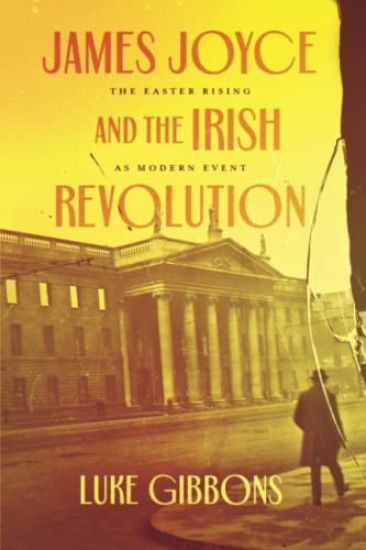
James Joyce and the Irish Revolution

James Joyce and the Irish Revolution

Luke Gibbons

THE UNIVERSITY OF CHICAGO PRESS
2023
sidottu
A provocative history of Ulysses and the Easter Rising as harbingers of decolonization. When revolutionaries seized Dublin during the 1916 Easter Rising, they looked back to unrequited pasts to point the way toward radical futures—transforming the Celtic Twilight into the electric light of modern Dublin in James Joyce’s Ulysses. For Luke Gibbons, the short-lived rebellion converted the Irish renaissance into the beginning of a global decolonial movement. James Joyce and the Irish Revolution maps connections between modernists and radicals, tracing not only Joyce’s projection of Ireland onto the world stage, but also how revolutionary leaders like Ernie O’Malley turned to Ulysses to make sense of their shattered worlds. Coinciding with the centenary of both Ulysses and Irish independence, this book challenges received narratives about the rebellion and the novel that left Ireland changed, changed utterly.
James Joyce and the Irish Revolution

James Joyce and the Irish Revolution

Luke Gibbons

THE UNIVERSITY OF CHICAGO PRESS
2023
nidottu
A provocative history of Ulysses and the Easter Rising as harbingers of decolonization. When revolutionaries seized Dublin during the 1916 Easter Rising, they looked back to unrequited pasts to point the way toward radical futures—transforming the Celtic Twilight into the electric light of modern Dublin in James Joyce’s Ulysses. For Luke Gibbons, the short-lived rebellion converted the Irish renaissance into the beginning of a global decolonial movement. James Joyce and the Irish Revolution maps connections between modernists and radicals, tracing not only Joyce’s projection of Ireland onto the world stage, but also how revolutionary leaders like Ernie O’Malley turned to Ulysses to make sense of their shattered worlds. Coinciding with the centenary of both Ulysses and Irish independence, this book challenges received narratives about the rebellion and the novel that left Ireland changed, changed utterly.
James the Minimalist

James the Minimalist

John Brenkman

THE UNIVERSITY OF CHICAGO PRESS
2026
sidottu
An experiment in criticism that explores Henry James’s late works through the lens of minimalism. Henry James’s last completed novels—The Ambassadors, The Wings of the Dove, and The Golden Bowl—are among the greatest and most demanding achievements of modern fiction. The stories they tell are perverse: characters are compelling even at their most cruel, their actions often calculating and loving at the same time. The novels draw on deep-seated myths but end with an unsettling lack of finality. And their dense, involuted language tracks the movements of consciousness with uncompromising artistry—the ultimate flowering of the Late James style. In this work of experimental criticism, John Brenkman is concerned with minimalism in two senses. First, with James’s own minimalism—his intense scrutiny of couples and their erotic energies to the exclusion of so much else. And second, through a kind of minimalization in literary critical reading, Brenkman cuts through James’s amplifications to find the essence that churns beneath the intricate prose of the late novels. Showing how James evokes not only protagonists’ subjectivity but more importantly what only exists in-between—that is, between lovers, between spouses, between rivals—Brenkman reveals James’s transformation of the marriage novel and excavation of the couple form itself.
James the Minimalist

James the Minimalist

John Brenkman

THE UNIVERSITY OF CHICAGO PRESS
2026
nidottu
An experiment in criticism that explores Henry James’s late works through the lens of minimalism. Henry James’s last completed novels—The Ambassadors, The Wings of the Dove, and The Golden Bowl—are among the greatest and most demanding achievements of modern fiction. The stories they tell are perverse: characters are compelling even at their most cruel, their actions often calculating and loving at the same time. The novels draw on deep-seated myths but end with an unsettling lack of finality. And their dense, involuted language tracks the movements of consciousness with uncompromising artistry—the ultimate flowering of the Late James style. In this work of experimental criticism, John Brenkman is concerned with minimalism in two senses. First, with James’s own minimalism—his intense scrutiny of couples and their erotic energies to the exclusion of so much else. And second, through a kind of minimalization in literary critical reading, Brenkman cuts through James’s amplifications to find the essence that churns beneath the intricate prose of the late novels. Showing how James evokes not only protagonists’ subjectivity but more importantly what only exists in-between—that is, between lovers, between spouses, between rivals—Brenkman reveals James’s transformation of the marriage novel and excavation of the couple form itself.
James Clarke Hook

James Clarke Hook

Juliet McMaster; Robin Simon

MCGILL-QUEEN'S UNIVERSITY PRESS
2023
sidottu
Though his father had faced bankruptcy, James Clarke Hook (1819–1907) nevertheless managed to paint himself into country-gentlemanhood, becoming famous for his landscapes of British coastal scenes and his ability to evoke not just the sights but also the sounds and even the smell of the sea.James Clarke Hook, Juliet McMaster’s lively biography of the brilliant but underappreciated Victorian painter, brings the reader through Hook’s rigorous training at the Royal Academy Schools, his travelling studentship in Florence and Venice, and his work as a historical painter, to the discovery of his métier as a painter of contemporary rural and coastal scenes. Part of the secret of Hook’s success was his resolution to paint the final large canvas of his seascapes onsite, braving wind and weather – for which he invented an easel that was adaptable to uneven terrain. McMaster’s research led her to retrace the painter’s footsteps to the rocky headlands and sheltered bays where, over a hundred years ago, Hook had set up his easel to capture the tang of sea. McMaster connects Hook, an academician for half a century, with the major figures and movements of Victorian art – including the Pre-Raphaelites John Everett Millais and Holman Hunt, the etcher Samuel Palmer, and the painter and sculptor G.F. Watts.James Clarke Hook worked alongside the fishermen and rural families who populate and enliven his canvases; this book reinvigorates our understanding of his artistic process and unique sense of place.
James Joyce and the Revolt of Love

James Joyce and the Revolt of Love

J. Utell

Palgrave Macmillan
2012
sidottu
This study examines the representation of marital and extramarital relations in James Joyce's texts, with reference to context and to Joyce's biography. Utell claims that Joyce uses these relations to imagine a different kind of love, one based in a radical acceptance and a rejection of a utilitarian and sexually repressive stance towards marriage.
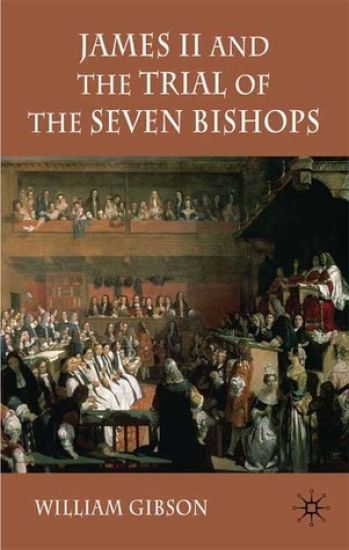
James II and the Trial of the Seven Bishops
The trial of the seven bishops in 1688 was a signifcant prelude to the Glorious Revolution, as popular support for the bishops led to a widespread welcome for William of Orange's invasion. Their prosecution showed James II at his most intolerant, and threatened the only institution for which most English people felt more loyalty than the monarchy.
James Baldwin and Toni Morrison: Comparative Critical and Theoretical Essays
This collection of comparative critical and theoretical essays examines James Baldwin and Toni Morrison's reciprocal literary relationship. By reading these authors side-by-side, this collection forges new avenues of discovery and interpretation related to their representations of African American and American literature and cultural experience.