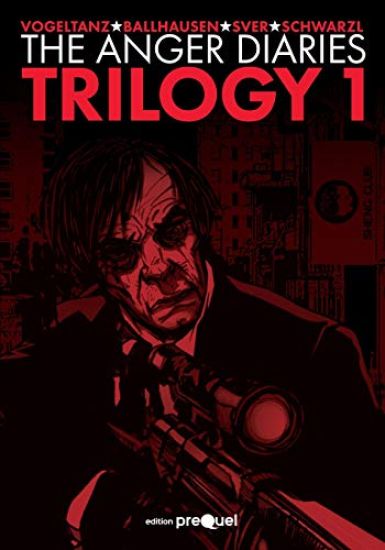
edition preQuel's successful graphic novel-series, the Anger Diaries, as a part of a cross media epic project about a sinister secret time- and world-dominating society called "Sheng", were originally created by in 1998. The diaries are based on the memories of John F. Sebastian, a deranged sheng-hitman. This album features the first three issues (2002-2009) including the out-of-stock part one ("The Citoyen") in one trilogy plus bonus material. "Vogeltanz offers a fully mature and relentlessly explicit drawing style in order to illuminate the most degraded sites in this world: his exuberant page compositions are bathed in bright colors; his backgrounds threaten to engulf the single images or allow them to appear briefly, emerging on the visible page surfaces. A visually exhilarating reading experience." (Paul Gravett)
During World War II, after being commissioned as a Naval Reserve officer, Dille was involved in the training of new recruits at the Great Lakes Naval Training Station north of Chicago. In 1942, with the influx of thousands of black sailors among the recruits, Dille volunteered to be involved in their training and served as a battalion commander. In early 1944, 16 black sailors reported to Great Lakes to undergo a two-and-a-half month training program to become officers. During that time when the black men were under a great deal of pressure, Dille served as a mentor and a source of moral support and encouragement. They were commissioned in March 1944 and subsequently became known as the Golden Thirteen. They chose Dille as an honorary member of the group and in later years attended reunions with them. After leaving Great Lakes in 1944, Dille served at an ammunition depot in Hawaii and later as an information officer to publicize the achievements of black sailors in the war effort. Following the war, Dille worked for the National Newspaper Service and later became publisher of The Elkhart Truth, a newspaper in Elkhart, Indiana, and owner of radio and television stations.
Thinking about praying the Liturgy of the Hours, the Catholic Church's official daily prayers? Many people are intimidated by the common hurdles associated with this noble task: The multiple volumes, the flipping back and forth to the correct page, not to mention the cost. Fear not Enter "The Little Office of the Blessed Virgin Mary," a daily cycle of liturgical prayer almost as old as the longer Liturgy of the Hours, but much shorter and easier to incorporate into your daily prayer life. This version of the "Little Office" is adapted from the 1867 Fowler edition. What elevates this version above all the others is the touching meditations at the beginning of each hour. For example, from the hour of Terce: O divine and adorable Lord, Jesus Christ, who has graciously redeemed us by thy bitter passion and death, we offer up this hour of Terce to thy honor and glory, and most humbly beseech thee through the torments thou didst endure in being cruelly scourged at a pillar, crowned with thorns, and unjustly condemned to be crucified, to grant us patience and longanimity under the scourges of temporal afflictions, courage to walk in the thorny road to the narrow gate, which opens to bliss, and perseverance under all the crosses of this life, which are the portion of the elect, that by suffering for our sins we may fully satisfy thy divine justice on earth, and may enter into thy glory immediately after death. Amen. As an added benefit, those who love Our Lady will appreciate that these short prayers allow them not only to sanctify the day, but to do it using a text that is at reverent and readable; the language exemplifies noble simplicity and unembellished piety, in the most beautiful tradition of good liturgical prayer. It is appropriate both to those who attend the ordinary and extraordinary forms of Catholic Mass. This updated version restores the traditional ordering of the prayers and places it in a user-friendly format that eliminates that distracting flipping pages back and forth. Why Pray the Little Office?People pray the Little Office of the Blessed Virgin Mary for various reasons, some of which include: Devotion to the Blessed Virgin Mary: The Little Office is a way for the faithful to express their love and devotion to the Mother of God. Through these prayers, they seek her intercession, guidance, and protection in their lives.Spiritual enrichment: The prayers and hymns in the Little Office offer a rich source of meditation and contemplation, helping individuals to deepen their spiritual life and grow in their relationship with God.Structured prayer routine: Praying the Little Office provides a daily routine of prayer, helping individuals maintain a consistent and disciplined prayer life. By incorporating this practice into their daily schedule, they can build a strong foundation for their spiritual growth. Connection to tradition: The Little Office has been a part of Catholic tradition for centuries. Praying it allows individuals to connect with the rich history of Marian devotion in the Church and join countless other believers throughout time who have also turned to Mary for her intercession and guidance.Meditation on the mysteries of Mary's life: The prayers and readings in the Little Office invite individuals to reflect on the various aspects of Mary's life and her role in salvation history. Through this meditation, they can gain a deeper understanding of Mary's virtues, her role as the Mother of God, and her importance in the Christian faith.
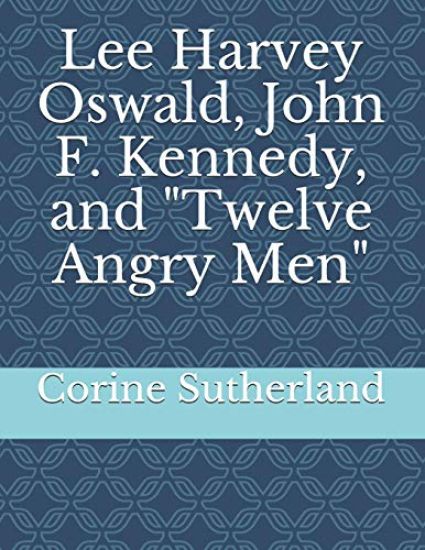
"Lee Harvey Oswald, John F. Kennedy, and 'Twelve Angry Men'" is an argument that Lee Harvey Oswald is not the shooter of President Kennedy, but was set up as a patsy based on steps he was directed to follow identical to the path of events of the youth in the play "Twelve Angry Men." It is argued in this writing that the person who authored the assassination plot against Kennedy found a clever way through a play to create such a plot as assassination in a way that a number of clues used from the story "Twelve Angry Men" were not entirely disguised, that someone may recognize the similarity of the actions of both Oswald and the youth in the play through these undisguised clues to find out through the disguised clues who the true author of the assassination was and why. That is, a Turncoat existed in the Intelligence area, unbeknownst to all others involved in the conspiracy, a gentle giant of a turncoat who simply wanted the people to know who the main conspirator against President Kennedy was.
Explore the Lives and Relationship of John and Jackie Two captivating manuscripts in one book: John F. Kennedy: A Captivating Guide to the Life of JFKJackie Kennedy: A Captivating Guide to the Life of Jacqueline Kennedy OnassisPart 1: Explore the Fascinating Life of John F. Kennedy Gallup's List of Widely Admired People of the Twentieth Century places President John F. Kennedy in the third slot, behind Martin Luther King, Jr., and Mother Teresa. Needless to say, President Kennedy's name is one that will not soon be forgotten. Many people will simply recall him as the handsome president who reigned for a short while before his unfortunate death at the hands of an assassin in Dallas, Texas. They may recall he was the youngest president to have been sworn into the presidential office or he dealt with issues such as the Cuban Missile Crisis. The general American public and the world know much about the surface of JFK's life-they know of his affairs and his ill health-but they often do not recall anything about who he was as a person or how he interacted with his wife and family. This book aims to unveil all this information along with many more captivating facts about the life of John F. Kennedy. Some of the topics covered in the first part of this book include: Childhood and EducationPersonal LifeRelationship with Jackie KennedyNaval ServiceCongressional Career1960 Presidential RaceForeign PolicyDomestic PolicyAssassinationLegacyAnd a Great Deal More that You don't Want to Miss out on Part 2: Explore the Fascinating Life of Jackie Kennedy Without a doubt, the name Jackie Kennedy draws multiple thoughts to mind; she is, perhaps, most well-known in her service as the first lady of the United States, as her husband, John F. Kennedy, took office as the president, and her role in restoring the White House. Then, of course, other people remember Jacqueline for her role in the fashion industry, particularly her pink Chanel suit and matching pillbox hat, which became a symbol of her husband's assassination. Jackie is so renowned and beloved that she ranks as one of the most popular first ladies. In fact, Jacqueline was named in 1999 on Gallup's list of Most Admired Men and Women in twentieth-century America. While she made major impacts on the White House, Jackie was much more than her title as first lady. Some of the topics covered in the second part of this book include: Childhood and Early EducationCollege and Early CareerThe Relationship with John F. KennedyMotherhoodCampaign for PresidencyFirst LadyThe Kennedy AssassinationLife Following the AssassinationOngoing Iconic FigureAnd a Great Deal More that You don't Want to Miss out on Get the book now and learn more about John and Jackie
*Includes dozens of pictures of Lincoln, Kennedy, and other important people, places, and events. *Explains how Booth's plot against Lincoln evolved and the political circumstances that compelled Kennedy to make his fateful trip to Dallas. *Covers the aftermath of both assassinations, including the manhunt for Booth and the investigations of the Kennedy assassination. *Discusses the conspiracy theories surrounding the Kennedy assassination and the similarities and differences between Kennedy, Lincoln and their assassinations. In the annals of American history, few moments have been so thoroughly seared into the nation's conscience that Americans can remember exactly where and when they heard about an earth-shattering event. In the 19th century, there was the assassination of Abraham Lincoln, and in the 20th century there was Pearl Harbor and the assassination of President John F. Kennedy. Until April 14, 1865, John Wilkes Booth was one of the most famous actors of his time, and President Abraham Lincoln had even watched him perform. But his most significant performance at a theater did not take place on the stage. That night, Booth became one of history's most infamous assassins when he assassinated President Lincoln at Ford's Theatre in Washington, D.C. Although Robert E. Lee's Army of Northern Virginia had surrendered days earlier, Booth believed the war was not yet over because Confederate General Joseph E. Johnston's army was still fighting the Union Army, so he and his group of conspirators plotted to kill Lincoln and other top officials in a bid to decapitate the federal government and help the South. Perhaps not surprisingly, the actor's flair for the dramatic came at a cost to the plot. It took almost no time for the shocked public and the federal government to begin unraveling Booth's conspiracy, which had mostly faltered from the beginning. Following the shooting, America's most famous manhunt commenced, which itself became the stuff of legends. November 22, 1963 started as a typical Friday, and many Americans were unaware that President Kennedy was even heading to Dallas, Texas. John and Jackie arrived in Dallas in the morning, with Texas Governor John Connally alongside them and Vice President Lyndon B. Johnson due to arrive later to meet them there. As the First Couple rode with the Connallys in an open motorcade en route to a speech Kennedy would deliver later. As they waved to the people lining the streets, around 12:30 p.m. Central Standard Time, Governor Connally's wife turned around to the first couple and said, "Mr. President, you can't say Dallas doesn't love you." Moments later, the most controversial assassination in American history took place as a series of shots were fired at the motorcade. The indelible images provided by the Zapruder film of Kennedy being hit in the throat and head, followed by Jackie crawling over the backseat toward the trunk are now instantly recognizable. Within minutes, the news of the shooting began to spread from Dallas across the nation, and everyone's worst fears were confirmed when the President was declared dead about half an hour after the shooting. In the wake of the shooting, Lee Harvey Oswald was arrested, proclaimed his innocence, and was then murdered himself by Jack Ruby two days later. The day after that, the President was given a state funeral and procession. The unbelievable chain of events that took place in those 72 hours understandably left the nation shell-shocked. Killing The President chronicles the two most shocking assassinations in American history, the chaos that ensued in the immediate aftermath, and their similarities and differences. Along with dozens of pictures, you will learn about the assassinations of Lincoln and Kennedy like you never have before.
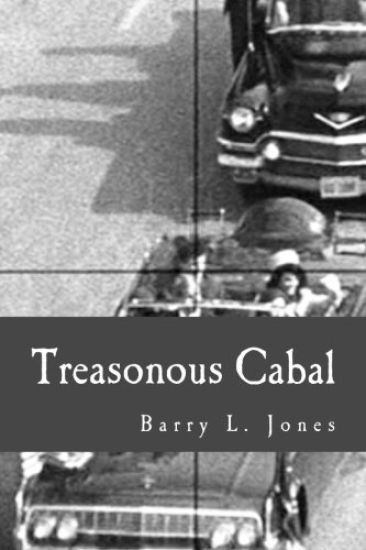
As assassinations go, the JFK assassination was unique for at LEAST a few reasons. First, the very nature of the crime was astonishingly brutal...and visible. Second, an alarming number of key assassination witnesses died violent...and unexplained deaths. Third, the subsequent investigations created more questions than answers. This book is an attempt to answer three of those questions. Why was President Kennedy killed? Who benefited? And who had the power to cover it up?
After graduating from the Naval Academy in 1929, Admiral Davidson served in the battleships Utah (BB-31) and Arizona (BB-39). From 1933, when he entered submarine school, through World War II, his life was submarines, with service in the USS Cachalot (SS-170) and S-45 (SS-156), and command of the S-44 (SS-155), Mackerel (SS-204), and Blackfish (SS-221). One of his talented junior officers in the Blackfish was Eugene Wilkinson, later the first skipper of the nuclear-powered submarine USS Nautilus (SSN-571). Davidson discusses war patrols in both Atlantic and Pacific. Another thread running through his career was the detailing of officers, a difficult business that Davidson tackled with finesse. After serving as a department head at the Naval Academy in the early 1950s and commanding the heavy cruiser USS Albany (CA-123), he returned to Annapolis as Superintendent in the early 1960s. He offers many reflections on the joys and trials of that position, including reminiscences of many top political and military leaders. Admiral Davidson has an engaging style that makes his oral history a particular pleasure to read.










![Worthy. A study of friendship. [Edited by John F. Cadell.]](/covers/9781241216924.jpg)