Kirjahaku
Etsi kirjoja tekijän nimen, kirjan nimen tai ISBN:n perusteella.
1000 tulosta hakusanalla Jonathan Driskell


The Works Of Jonathan Edwards V2, Part 2 (1839)
Jonathan Edwards
KESSINGER PUBLISHING, LLC
2010
pokkari
The Works Of Jonathan Edwards V2, Part 1 (1839)
Jonathan Edwards
KESSINGER PUBLISHING, LLC
2010
pokkari
Jonathan Coe is one of the most popular and critically acclaimed contemporary British writers. This comprehensive introduction places his work in clear historical and theoretical context, offering extensive readings of the author's ten novels from The Accidental Woman to Expo 58, including the remarkable What a Carve Up! The book explores Coe's biography and his experimentations with narrative, genre and comedy, as well as his thematic preoccupations with history, memory, loss and nostalgia. The first volume devoted entirely to Coe, this book includes: - A supporting timeline of key dates in literature and current events - An examination of the critical reception to Coe's works - An exclusive interview with Jonathan Coe himself
Jonathan Coe is one of the most popular and critically acclaimed contemporary British writers. This comprehensive introduction places his work in clear historical and theoretical context, offering extensive readings of the author's ten novels from The Accidental Woman to Expo 58, including the remarkable What a Carve Up! The book explores Coe's biography and his experimentations with narrative, genre and comedy, as well as his thematic preoccupations with history, memory, loss and nostalgia. The first volume devoted entirely to Coe, this book includes:- A supporting timeline of key dates in literature and current events- An examination of the critical reception to Coe's works- An exclusive interview with Jonathan Coe himself

This collection of critical thinking situates the satire of Jonathan Swift within both its eighteenth-century contexts and our modern anxieties about personal identity and communication. Augustan satire at its most provocative is not simply concerned with the public matters of politics or religion, but also offers a precise medium in which to express the paradox of ironic detachment amidst deep conviction. The critics chosen for this volume demonstrate the complexity of Swift's work. Its four sections explore matters of authorial identity, the relation between Swift's writing and its historical context, the full range of his comments on gender, and his deployment of metaphor and irony to engage the reader. Swift has often been regarded as a writer who anticipated many twentieth-century cultural preoccupations, and this volume provides an opportunity to test just how modern he actually was. It also provides an answer to those who would wish to simplify his writing as that of Tory and misogynist. The theoretical perspectives of the contributors are lucidly explained and their critical terms located in the wider contexts of contemporary theory in the introduction and headnotes. The volume places Swift historically within the philosophical and religious traditions of eighteenth-century thought.
Jonathan Edwards (1703-1758) is widely regarded as America's greatest philosopher-theologian. In the last half century there has been a resurgence of interest in Edwards' work from historians, theologians and philosophers, aided by the publication of the Yale edition of Edwards' Works. Edwards' thinking on sin has long been a mystery to scholars trying to fit his thought into the traditional categories of Reformed theology. What this study shows is that Edwards' theory of sin was an original contribution to philosophical theology, which can only be understood when read on its own terms as a philosophical theory about the nature of sin, its origin and transmission. This constitutes a substantial contribution to the literature on Edwards and, more broadly, to philosophical theology in general.
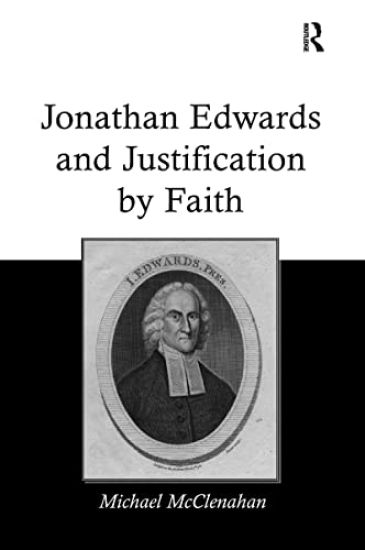
Jonathan Edwards (1703-1758) is widely regarded as North America's most influential theologian. Throughout the early decades of his ministry he engaged in a public and sustained debate with 'Arminian' theology, a crusade that contributed significantly to the events of the Great Awakening. This book investigates the contours and substance of this theological war. In establishing a clearer historical context for this polemic, McClenahan seeks to overturn the scholarly consensus that Edwards' own theology was a twisting of the Reformed tradition. By demonstrating that Edwards' interlocutor was the dead English Archbishop, John Tillotson, McClenahan provides the hermeneutical key for many of Edwards' most significant works. Justification by faith is one of the most contested doctrines in contemporary theology and Jonathan Edwards, referred to as America's Augustine, wrote extensively on this area. His is a voice that many people are keen to hear.
This title was first published in 2003. It has often been claimed that Jonathan Edwards (1703-1758) was America's greatest philosopher and theologian. From literary criticism of his sermons to philosophical assessments of his metaphysics, there has been a burgeoning industry in Edwardsian studies, but there has been no one place where an exploration of the theology and philosophy of Edwards has been brought together. 2003 marks the tercentenary date of the birth of Jonathan Edwards. This book draws together specially-commissioned contributions from philosophers and theologians from the USA and UK, to present new analytic philosophical and theological thinking on Edwards in a way that reflects Edwards' own concerns, as well as those current in the academy.
This title was first published in 2003. It has often been claimed that Jonathan Edwards (1703-1758) was America's greatest philosopher and theologian. From literary criticism of his sermons to philosophical assessments of his metaphysics, there has been a burgeoning industry in Edwardsian studies, but there has been no one place where an exploration of the theology and philosophy of Edwards has been brought together. 2003 marks the tercentenary date of the birth of Jonathan Edwards. This book draws together specially-commissioned contributions from philosophers and theologians from the USA and UK, to present new analytic philosophical and theological thinking on Edwards in a way that reflects Edwards' own concerns, as well as those current in the academy.
First published in 1984, this biography gives an account of Jonathan Swift’s political ideas and provides a critical commentary on his major works. With its emphasis on Swift as a political writer, the title offers a revision of the prevailing view of Swift’s politics and its application in the study of his works. Alan Downie argues that in terms of the party politics of the day Swift is neither a Whig nor Tory. Swift thought of himself as an ‘Old Whig’, and said he was ‘of the old Whig principles, without the modern articles and refinements’. Downie shows how Swift’s writings consistently make political points about society’s deviation from an ideal. As Swift’s views on morality, religion and politics are so closely linked, an understanding of his political ideas is vital; this reissue provides a detailed analysis of this aspect of Swift’s writings and views, and as such will be of great interest to any students researching his satire.
First published in 1984, this biography gives an account of Jonathan Swift’s political ideas and provides a critical commentary on his major works. With its emphasis on Swift as a political writer, the title offers a revision of the prevailing view of Swift’s politics and its application in the study of his works. Alan Downie argues that in terms of the party politics of the day Swift is neither a Whig nor Tory. He never called himself a Tory, and yet he is constantly called one by his modern critics. Swift termed himself an ‘Old Whig’, and said he was ‘of the old Whig principles, without the modern articles and refinements’. Downie shows how Swift’s writings consistently make political points about how society is deviating from an ideal. As Swift’s views on morality, religion and politics are so closely linked, an understanding of his political ideas is vital; this reissue provides a detailed analysis of this aspect of Swift’s writings and views, and as such will be of great interest to any students researching his satire.
Sermons to Young Men. in Two Volumes. by Jonathan Mayhew, D.D. ... Volume 2 of 2
Jonathan Mayhew
Gale Ecco, Print Editions
2010
pokkari
Sermons to young men. In two volumes. By Jonathan Mayhew, D.D. ... Volume 1 of 2
Jonathan Mayhew
Gale Ecco, Print Editions
2010
pokkari