Kirjojen hintavertailu. Mukana 12 016 292 kirjaa ja 12 kauppaa.

Kirjahaku

Etsi kirjoja tekijän nimen, kirjan nimen tai ISBN:n perusteella.

1000 tulosta hakusanalla Jonathan Edwards

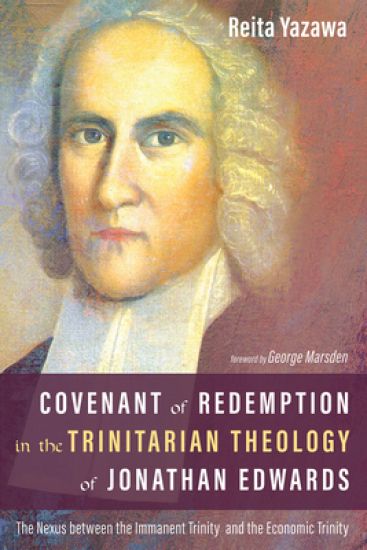
Covenant of Redemption in the Trinitarian Theology of Jonathan Edwards

Covenant of Redemption in the Trinitarian Theology of Jonathan Edwards

Reita Yazawa; George Marsden

Pickwick Publications
2019
sidottu
Recently, the immanent Trinity (God as in himself) has been criticized as abstract and impractical as opposed to the economic Trinity (God in relation to the world). Many scholars argue that the immanent Trinity is detached from the real life of believers and God's economic work of redemption and thus abstract and impractical. But is this assumption itself really true? What if the blueprint of God's work of redemption is already located in the immanent Trinity as the divine idea? What if Jonathan Edwards, arguably the American greatest theologian, expounds this doctrine as a vital driving force in his theology? Rediscovering the doctrine of the covenant of redemption will help us to see that the immanent Trinity actually is not abstract, but highly practical, simply because the redemption of the believers hinges on the divine plan located there. This study is a fruit of the recent convergence of the resurging doctrine of the Trinity and the renaissance of studies of Jonathan Edwards.
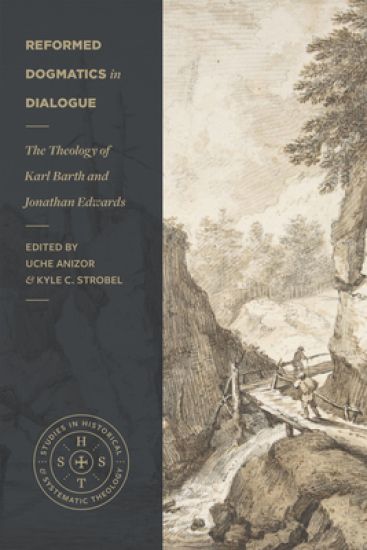
Reformed Dogmatics in Dialogue – The Theology of Karl Barth and Jonathan Edwards
Two Reformed giants in conversationEdited by Uche Anizor and Kyle C. Strobel, Reformed Dogmatics in Dialogue engages Edwards and Barth for constructive dogmatics. Chapters include: Edwards and Barth in Conversation: Uche Anizor and Kyle StrobelGod: Kyle StrobelScripture: Doug Sweeney and Kevin VanhoozerElection: Christina N. LarsenChrist: Darren SumnerHoly Spirit: Seng Kong TanCreation: Uche AnizorAesthetics: Amy Plantinga PauwPhilosophy: Kenneth OakesHumanity: Kyle StrobelSin: Marc Cortez and Daniel HouckAtonement: Adam J. JohnsonMoral Theology: Kirk J. NolanChurch: Matt JensonLast Things: Nathan HitchcockJonathan Edwards and Karl Barth are widely considered to be the greatest North American and Swiss theologians, respectively. Though situated in vastly different contexts and separated by nearly two hundred years, they shared intriguing similarities. Both employed exegesis, theology, and philosophy with ease. Both reasoned with unique quality, depth, and timelessness. Both resisted liberal shifts of their day while remaining creative thinkers. And both were Reformed without uncritically assuming the tradition.Each chapter brings these theologians into conversation on classic theological categories, such as the doctrine of God, atonement, and ecclesiology, as well as topics of particular interest to both, such as aesthetics and philosophy. As with all great theologians, Edwards and Barth continue to illuminate Christian doctrine. Readers will appreciate their rigor of thought and devotion to Christ.
Cotton Mather, Jonathan Edwards, and the Quest for Evangelical Enlightenment

Cotton Mather, Jonathan Edwards, and the Quest for Evangelical Enlightenment

Ryan P. Hoselton

Springer International Publishing AG
2023
sidottu
This book explores the early evangelical quest for enlightenment by the Spirit and the Word. While the pursuit originated in the Protestant Reformation, it assumed new forms in the long eighteenth-century context of the early Enlightenment and transatlantic awakened Protestant reform. This work illuminates these transformations by focusing on the dynamic intersection of experimental philosophy and experimental religion in the biblical practices of early America’s most influential Protestant theologians, Cotton Mather (1663-1728) and Jonathan Edwards (1703-1758). As the first book-length project to treat Mather and Edwards together, this study makes an important contribution to the extensive scholarship on these figures, opening new perspectives on the continuities and complexities of colonial New England religion. It also provides new insights and interpretive interventions concerning the history of the Bible, early modern intellectual history, and evangelicalism’s complex relationship to the Enlightenment.
Cotton Mather, Jonathan Edwards, and the Quest for Evangelical Enlightenment

Cotton Mather, Jonathan Edwards, and the Quest for Evangelical Enlightenment

Ryan P. Hoselton

Springer International Publishing AG
2024
nidottu
This book explores the early evangelical quest for enlightenment by the Spirit and the Word. While the pursuit originated in the Protestant Reformation, it assumed new forms in the long eighteenth-century context of the early Enlightenment and transatlantic awakened Protestant reform. This work illuminates these transformations by focusing on the dynamic intersection of experimental philosophy and experimental religion in the biblical practices of early America’s most influential Protestant theologians, Cotton Mather (1663-1728) and Jonathan Edwards (1703-1758). As the first book-length project to treat Mather and Edwards together, this study makes an important contribution to the extensive scholarship on these figures, opening new perspectives on the continuities and complexities of colonial New England religion. It also provides new insights and interpretive interventions concerning the history of the Bible, early modern intellectual history, and evangelicalism’s complex relationship to the Enlightenment.
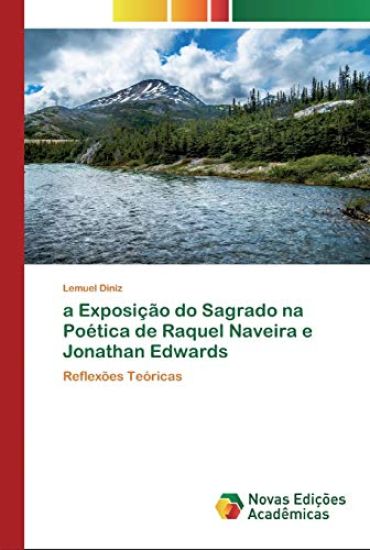
a Exposição do Sagrado na Poética de Raquel Naveira e Jonathan Edwards
Esse livro mostra a exposi o do sagrado na po tica da escritora brasileira Raquel Naveira e nos discursos de Jonathan Edwards. Raquel Naveira nasceu em Campo Grande, Mato Grosso do Sul, no dia 23 de setembro de 1957. Formou-se em Direito e Letras pela FUCMT, atual Universidade Cat lica Dom Bosco, onde exerceu o magist rio (Literatura Portuguesa e Literatura Latina). Publicou in meros livros de poemas, entre eles Abadia e Casa de Tecla, indicados para o Pr mio Jabuti de Poesia, pela C mara Brasileira do Livro, em 1996 e 1999, respectivamente. Jonathan Edwards (1703-1758) foi um expoente da cultura inglesa, um leg timo representante da heran a puritana. Ele e Raquel Naveira tem em comum uma reinterpreta o peculiar do sagrado. O livro est disposto em tr s cap tulos, nesses termos.
That Which They Can't See: A Retrieval of Jonathan Edwards' Homiletical Use of Imagination
In this retrieval study David Van Brugge addresses how the current understanding of a homiletical use of imagination for expository preaching might be strengthened. The current need for strengthening becomes apparent when the various understandings of imagination and their implications for practical theology are realized. This is compounded as trends in homiletics seem to minimize the imagination or embrace it in modern or postmodern ways. The original contribution of this study is recognizing that the homiletical use of imagination can be strengthened by retrieving the Puritan baroque characteristics of Jonathan Edwards' imagination as evidenced in his sermons to the Stockbridge Indians of 1751-1758. Edwards drew on a rich background to display an imagination that synthesized thoughts and ideas, thought beyond the senses, and that, by the grace of God, transformed thought and practice. Through that creative thought, Edwards maintained Biblical exposition and appeal to the affections. Van Brugge further develops and evaluates the idea of Puritan baroque characteristics, concluding that it is a helpful characterization of Edwards' Stockbridge Indian sermons. In these sermons Edwards imaginatively used imagery, light, space, movement, and glorification for the ultimate goal of directing the affections of his audience towards God. Such a use of imagination for affective purpose becomes a key for the strengthening of a homiletical use of imagination today.
Formed for the Glory of God – Learning from the Spiritual Practices of Jonathan Edwards
Jesus said we should focus our minds and hearts on God above all else. No small task! Is there someone we can turn to for help? "Wisdom tells us to sit at the feet of our elders rather than the latest ministry fad," notes author Kyle Strobel. And is there a better elder to guide us than Jonathan Edwards? In Edwards, the eighteenth-century Puritan pastor and theologian, we find deep thought balanced with deep passion. Through his writings and practices, Edwards provides us with the tools—the "means of grace"—that make us receptive to God's work in our lives as we learn to abide in Christ. Here we find a well-rounded account of being formed for the glory of God.
Portrayals of "Man's Humiliation" in the Works of John Bunyan and Jonathan Edwards
A thrilling, comparative study on "Portrayals of Man's Humiliation" in the writings of the Puritan authors John Bunyan and Jonathan Edwards. It becomes obvious that one recurrent theme of both authors is man's depravity. What catches the eye is the way the two writers deal with this topic and how they present it. Both authors employ vivid pictures, using the power of imagery to paint the most impressive portrayals of man's precarious state. Each of them outdoes himself in employing all literary tools at hand to effect a deep, profound and lasting impact that sticks in one's mind. To arrive at a "right" concept of man's nature seems to be of paramount importance to the two of them. Undoubtedly, they have succeeded in leaving an impact not only on theology, but also on literature. As a transnational project this study turns its attention to portrayals of man's humiliation as conceived by J. Bunyan and J. Edwards and the role of spiritual autobiography and self-expression within this context.
The Infinite Merit of Christ: The Glory of Christ's Obedience in the Theology of Jonathan Edwards
God is infinitely excellent, and that excellence is most profoundly displayed in the person and saving work of Jesus Christ. The heart of Edwards' theology radiates the glory of God as displayed in Christ's saving of unworthy sinners through perfect obedience to God's unchanging rule of righteousness. The whole of Edwards' theology stands on the beauty and redemptive work of Christ as revealing and communicating the marvelous perfections of the Trinity. Salvation of a single soul apart from perfect conformity to God's rule of righteousness would render God unrighteous and abolish His ultimate purpose to display and communicate His glory. Indeed, God could not be God. Revisionist interpretations of Edwards' soteriology as inclusive or Catholic, therefore, are untenable without an overthrow and rewrite of the entirety of Edwards' theology.Chapter One examines the ultimate Trinitarian purpose to display and communicate His glory through the Father's gift of a bride for His Son, and the Son's purchase of His bride by His perfect obedience to God's rule of righteousness. Indeed, all of creation serves as the stage of God's purpose and plan in Christ, leading to the ultimate goal of the saints' happiness in heaven as they enjoy the infinite blessings of Christ's exaltation and glory.Chapter Two probes the pre-temporal Trinitarian and covenantal foundation of Christ's obedience, highlighting the Father's love in His purpose to save a people, and the Son's love in freely undertaking to accomplish it. Initiated by the Father, and mutually accepted by Christ and the Father, the terms of the Covenant of Redemption provide for the purchase of Christ's bride without injury to God's perfections, most notably His righteous justice. And as Christ voluntarily accepted the terms of the covenant, the entirety of Christ's saving work earned infinite merit for those He represented and purchased. Chapter Three examines the command to Adam as representative of God's unchanging rule of righteousness that requires perfect obedience for the obtaining of eternal life. All of God's commands are comprehended in this one great and unchanging rule of righteousness, as it reflects the very character of God. Chapter Four probes the absolute need for Christ's perfect obedience in light of Adam's sin as the representative of mankind, the immutability of God's righteousness and law despite Adam's sin, the infinite guilt of sin and the need of an infinite remedy, God's requirement of a perfect positive righteousness and exclusion of an imperfect righteousness for justification, Christ's perfect satisfaction of God's unalterable rule of righteousness, and God's nature as a righteous judge to uphold eternally His rule of perfect righteousness. Considered apart from Christ, the best of our works are sinful and unable to satisfy God's requirement of righteousness. And as a righteous judge, God can never justify an imperfect righteousness. Chapter Five examines the basis and infinite extent of the merit Christ earned by His obedience, the obedience comprising the righteousness by which sinners are justified, the free act of Christ giving His life as His greatest meritorious act, the propitiatory and meritorious nature of all of Christ's incarnate acts, and the rewards earned on behalf of the elect. In these, Christ accomplished God's ultimate purpose to display and communicate His glory, consummated in heaven in the marriage of Christ to His bride, to the enjoyment of God's glory forever.
A Full Answer to the Arguments of the Reverend Dr. Jonathan Edwards, for the Opinion of St. Austin Concerning the Imputation of the First sin of Adam, for Guilt to all his Posterity; ... By Daniel Whitby,
The 18th century was a wealth of knowledge, exploration and rapidly growing technology and expanding record-keeping made possible by advances in the printing press. In its determination to preserve the century of revolution, Gale initiated a revolution of its own: digitization of epic proportions to preserve these invaluable works in the largest archive of its kind. Now for the first time these high-quality digital copies of original 18th century manuscripts are available in print, making them highly accessible to libraries, undergraduate students, and independent scholars.The Age of Enlightenment profoundly enriched religious and philosophical understanding and continues to influence present-day thinking. Works collected here include masterpieces by David Hume, Immanuel Kant, and Jean-Jacques Rousseau, as well as religious sermons and moral debates on the issues of the day, such as the slave trade. The Age of Reason saw conflict between Protestantism and Catholicism transformed into one between faith and logic -- a debate that continues in the twenty-first century.++++The below data was compiled from various identification fields in the bibliographic record of this title. This data is provided as an additional tool in helping to insure edition identification: ++++British LibraryT073038With two final advertisement leaves.London: printed for John Wyat, 1712. xxxi, 1],196, 4]p.; 8
Nathaniel Taylor, New Haven Theology, and the Legacy of Jonathan Edwards
Nathaniel Taylor was arguably the most influential and the most frequently misrepresented American theologian of his generation. While he claimed to be an Edwardsian Calvinist, very few people believed him. This book attempts to understand how Taylor and his associates could have counted themselves Edwardsians. In the process, it explores what it meant to be an Edwardsian minister and intellectual in the 19th century.
An Account of the Life of Mr. David Brainerd, Missionary ... & Pastor of a Church of Christian Indians in New-Jersey. Published by Jonathan Edwards, A.M. with MR Brainerd's Public Journal
The 18th century was a wealth of knowledge, exploration and rapidly growing technology and expanding record-keeping made possible by advances in the printing press. In its determination to preserve the century of revolution, Gale initiated a revolution of its own: digitization of epic proportions to preserve these invaluable works in the largest archive of its kind. Now for the first time these high-quality digital copies of original 18th century manuscripts are available in print, making them highly accessible to libraries, undergraduate students, and independent scholars.The Age of Enlightenment profoundly enriched religious and philosophical understanding and continues to influence present-day thinking. Works collected here include masterpieces by David Hume, Immanuel Kant, and Jean-Jacques Rousseau, as well as religious sermons and moral debates on the issues of the day, such as the slave trade. The Age of Reason saw conflict between Protestantism and Catholicism transformed into one between faith and logic -- a debate that continues in the twenty-first century.++++The below data was compiled from various identification fields in the bibliographic record of this title. This data is provided as an additional tool in helping to insure edition identification: ++++National Library of ScotlandT164057Autobiographical. 'The journal of a two-months tour' has a separate titlepage, with the imprint: Edinburgh: printed by T. MacCleish and Co. and for J. Ogle, 1798, and separate pagination and register. Includes: 'A sermon preached in Newark, June 12, 1744, .. By E. Pemberton, ..' as pp. 525-560.London: printed for R. Ogle, 1798. 2],560,56p.; 8