Following Common Core Standards, this lesson plan for William Shakespeare's, "Julius Caesar" is the perfect solution for teachers trying to get ideas for getting students excited about a book. BookCaps lesson plans cover five days worth of material. It includes a suggested reading schedule, discussion questions, essay topics, homework assignments, and suggested web resources.
What if Shakespeare's political thriller read like a modern novel-gripping, intense, and impossible to put down?Shakespeare's plays are legendary on stage, but when read as scripts, their energy and emotion can sometimes get lost. This novelization of Julius Caesar transforms the iconic play into a fast-paced, action-filled story-told in modern language that captures the power struggles, betrayals, and consequences at the heart of the original.Set in ancient Rome, the story follows the conspiracy against Julius Caesar, his brutal assassination, and the chaos that follows. As friends become enemies and loyalties are tested, the fate of an empire hangs in the balance. With political scheming, stirring speeches, and dramatic battles, this retelling brings the classic to life as a page-turning historical drama.Whether you're a student, a fan of historical fiction, or someone discovering Shakespeare for the first time, this adaptation makes the story of Julius Caesar more thrilling-and more accessible-than ever.Part of an expanding series that transforms Shakespeare's greatest works into modern, novel-style fiction.
Even if you are not the kind of person that loves history, there is a pretty good chance that you will have heard of Julius Caesar even though he walked on the Earth over 2,000 years ago. Quite simply, he is the most well known Roman citizen who ever lived and is the one Emperor that has stuck in the minds of people for thousands of years due to his actions throughout his reign.Such was his power, and the desire of others to emulate him, that even his name spawned terms such as Czar and Kaiser, which have been used by other emperors centuries later to announce that they had absolute power. In other words, Julius Caesar has been held in high regard by almost anybody that wished to follow in his footsteps in some way and the fact that his name has entered into common language is testimony to the skill of the man himself.Throughout this amazing book, we will explore his early life and show how that shaped his character and then, eventually, his entire career. We will explore the highs and severe lows of his life from being forced into the army to effectively save his life, to being captured by pirates, conquests, revolts, civil war, supreme power, and of course his brutal assassination.This book does not go on hearsay, but instead it focuses on details from sources of the time. It charts his rise to power, how brutal he could be at times with people that crossed him or stood up against him. It looks at the very reasons that could have ultimately led to his assassination. Was it because he was getting too much power? Was it due to him making constitutional reforms that led to the rich getting poorer? Was it for the greater good of the Empire or was it all about personal gain'Julius Caesar, Ruler of Rome: The Life And Times of Rome's Most Feared Caesar' by author Cameron White will ultimately tell you the truth of what happened during his life and you will begin to understand why he does indeed deserve the title of Rome's most feared Caesar.
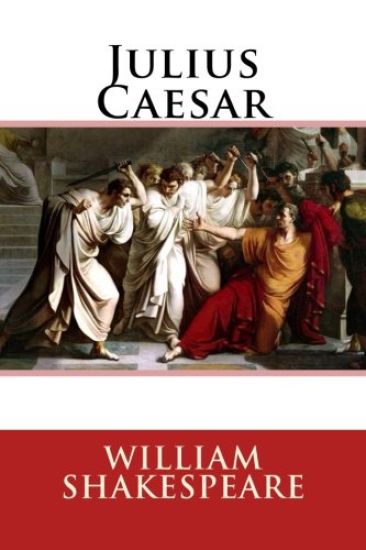
The Tragedy of Julius Caesar is a tragedy by William Shakespeare, believed to have been written in 1599. It portrays the 44 BC conspiracy against the Roman dictator Julius Caesar, his assassination and the defeat of the conspirators at the Battle of Philippi. It is one of several plays written by Shakespeare based on true events from Roman history, which also include Coriolanus and Antony and Cleopatra. The play opens with two tribunes discovering the commoners of Rome celebrating Julius Caesar's triumphant return from defeating the sons of his military rival, Pompey. The tribunes, insulting the crowd for their change in loyalty from Pompey to Caesar, attempt to end the festivities and break up the commoners, who return the insults. During the feast of Lupercal, Caesar holds a victory parade and a soothsayer warns him to "Beware the ides of March", which he ignores. Meanwhile, Cassius attempts to convince Brutus to join his conspiracy to kill Caesar. Although Brutus, friendly towards Caesar, is hesitant to kill him, he agrees that Caesar may be abusing his power. They then hear from Casca that Mark Antony has offered Caesar the crown of Rome three times and that each time Caesar refused it with increasing reluctance. On the eve of the ides of March, the conspirators meet and reveal that they have forged letters of support from the Roman people to tempt Brutus into joining. Brutus reads the letters and, after much moral debate, decides to join the conspiracy, thinking that Caesar should be killed to prevent him from doing anything against the people of Rome if he were ever to be crowned. After ignoring the soothsayer, as well as his wife Calpurnia's own premonitions, Caesar goes to the Senate. The conspirators approach him with a fake petition pleading on behalf of Metellus Cimber's banished brother. As Caesar predictably rejects the petition, Casca and the others suddenly stab him; Brutus is last. At this point, Caesar utters the famous line "Et tu, Brute?" 2] ("And you, Brutus?", i.e. "You too, Brutus?"), concluding with "Then fall, Caesar " The conspirators make clear that they committed this murder for the good of Rome, not for their own purposes, and do not attempt to flee the scene. Brutus delivers an oration defending his own actions, and for the moment, the crowd is on his side. However, Mark Antony makes a subtle and eloquent speech over Caesar's corpse, beginning with the much-quoted "Friends, Romans, countrymen, lend me your ears " 3] In this way, he deftly turns public opinion against the assassins by manipulating the emotions of the common people, in contrast to the rational tone of Brutus's speech, yet there is method in his rhetorical speech and gestures: he reminds them of the good Caesar had done for Rome, his sympathy with the poor, and his refusal of the crown at the Lupercal, thus questioning Brutus's claim of Caesar's ambition; he shows Caesar's bloody, lifeless body to the crowd to have them shed tears and gain sympathy for their fallen hero; and he reads Caesar's will, in which every Roman citizen would receive 75 drachmas. Antony, even as he states his intentions against it, rouses the mob to drive the conspirators from Rome. Amid the violence, an innocent poet, Cinna, is confused with the conspirator Lucius Cinna and is taken by the mob, which kills him for such "offenses" as his bad verses. Brutus next attacks Cassius for supposedly soiling the noble act of regicide by having accepted bribes. ("Did not great Julius bleed for justice' sake? / What villain touch'd his body, that did stab, / And not for justice?" 4]) The two are reconciled, especially after Brutus reveals that his beloved wife committed suicide under the stress of his absence from Rome; they prepare for a civil war against Mark Antony and Caesar's adopted son, Octavius, who have formed a triumvirate in Rome with Lepidus. That night, Caesar's ghost appears to Brutus with a warning of defeat.
Julius Caesar is a tragedy by William Shakespeare. It portrays the conspiracy against the Roman dictator of the same name, his assassination and its aftermath. It is one of several Roman plays that he wrote, based on true events from Roman history, which also include Coriolanus and Antony and Cleopatra.Although the title of the play is Julius Caesar, Caesar is not the central character in its action; he appears in only three scenes, and is killed at the beginning of the third act. The protagonist of the play is Marcus Brutus, and the central psychological drama is his struggle between the conflicting demands of honour, patriotism, and friendship.
Julius Caesar may have been a "dictator" but he was deeply loved by his people. Why is that? How come a Roman general and dictator is well loved by everyone in the nation? This biography book will allow you to really know Julius Caesar and understand why he was loved. There are a lot of lessons to learn from this biography book. Start learning today
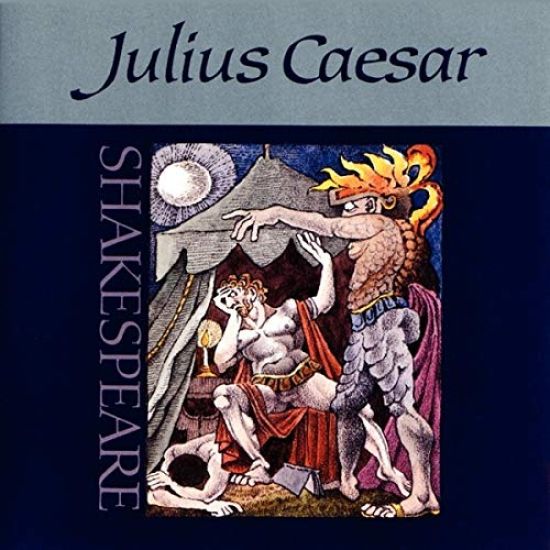
The most famous of Shakespeare's Roman tragedies, Julius Caesar was written and first performed in 1599 and was apparently one the plays Shakespeare's contemporaries enjoyed the most. Recounting the death of Caesar on the steps of the Senate house, the play offers some of Shakespeare's finest scenes: Antony's skillful speech at Caesar's funeral and the quarrel and reconciliation between Brutus and Cassius with the news of Portia's death.
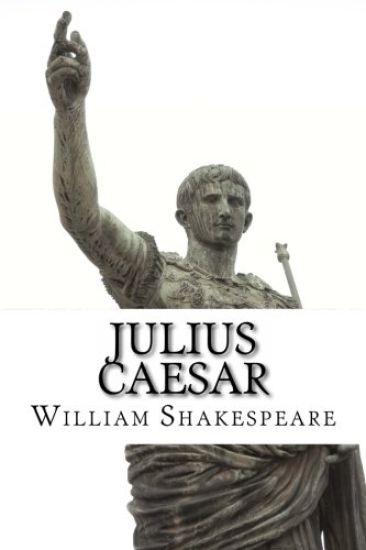
Julius Caesar is a tragedy that explores political ambition, betrayal, and the moral complexities of power. The play opens with two tribunes discovering the commoners of Rome celebrating Julius Caesar's triumphant return from defeating the sons of his military rival, Pompey. Fearing Caesar's growing power and potential tyranny, a faction of Roman senators, including Cassius and the morally conflicted Brutus, conspire to assassinate him. After the assassination, Mark Antony, Caesar's loyal ally, stirs up hostility against the conspirators, leading to a dramatic civil war.William Shakespeare's plays are a cornerstone of global culture, blending timeless human themes like love, ambition, and identity with masterful storytelling and linguistic brilliance. His works revolutionized theater, introduced phrases and words still used today, and bridged the gap between popular entertainment and profound artistry. By capturing the spirit of his era while remaining universally relevant, Shakespeare's plays continue to inspire, challenge, and captivate audiences worldwide.This case laminate collector's edition includes a Victorian inspired dust-jacket.
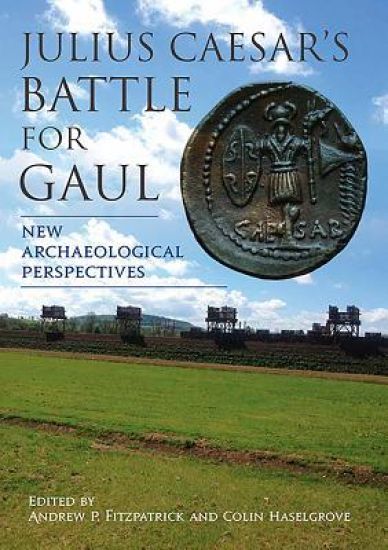
Between 58 and 51 BC Julius Caesar conquered Gaul. He campaigned across much of present day France and the Low Countries, crossed the Rhine to Germany, and sailed the Channel to invade Britain. In doing this he achieved immense personal wealth and glory and the loyalty of a battle-hardened army of veterans. Caesar’s eventual return to Rome began with the crossing of the Rubicon which started a bloody civil war from which he emerged victorious and as dictator.Roman historians have little to say on the consequences of the war on the Iron Age communities of north-west Europe. Their story is told instead by archaeology and numismatics. Huge numbers were involved in the war, at a vast cost in people and wealth. In the aftermath, leaders sympathetic to Rome were installed and sometimes whole peoples were resettled. The diplomatic relations created at this time directly affected the eventual incorporation of these peoples into the Roman Empire.This book presents the latest archaeological research on the Battle for Gaul and its aftermath. Based on an acclaimed 2017 conference, it is the first Europe-wide overview and much of the research is published here in English for the first time. After an introduction to recent trends in historical studies, thematic studies and regional surveys analyse the archaeological and numismatic evidence from across north-west Europe. Comparative evidence for the Roman conquest of Spain is also examined, along with the fundamental role that the study of the Battle for Gaul played in shaping the development of Iron Age archaeology. Written by leading international experts, this book will be of interest to archaeologists, numismatists, ancient historians and military historians.
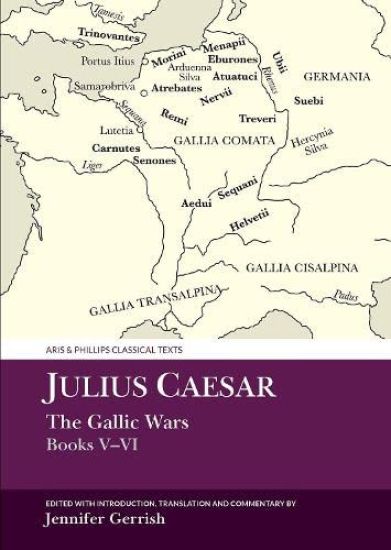
Books V-VI of Julius Caesar’s The Gallic War narrate Caesar’s campaigns in Britain, Gaul, and Germany in 55 and 54 BCE. His political rival Pompey was at the height of his popularity in Rome, making it all the more incumbent upon Caesar to deliver exciting news of victories. Book V should have been the tale of triumphant conquest in Britain, but Caesar’s campaign was underwhelming; Caesar the politician and general thus needed assistance from Caesar the author. In Books V and VI Caesar masterfully compensates for the lacklustre British campaign with a dramatic account of his forceful suppression of Ambiorix’s revolt and new incursions into Germany; the narrative is further enlivened with speeches and digressions on the Britons, Germans, and the wonders of the Hercynian Forest. This English translation faithfully represents the clarity and precision of Caesar’s Latin while also conveying the drama of Caesar’s narrative in a voice that modern readers will find lively and accessible. A substantial introduction orients the reader to the historical and literary context of The Gallic War as well as to the complicated political and authorial career of Julius Caesar. The commentary covers topics of historical, literary, and linguistic interest, providing support to readers of both the English and Latin texts.
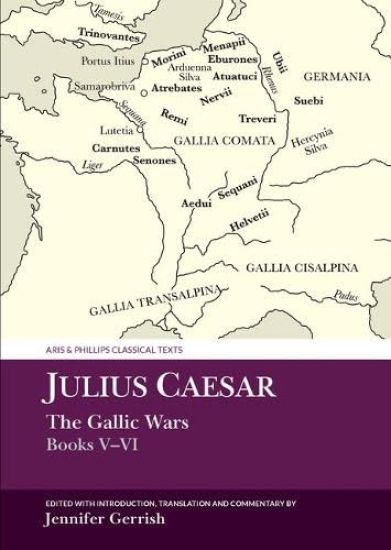
Books V-VI of Julius Caesar’s The Gallic War narrate Caesar’s campaigns in Britain, Gaul, and Germany in 55 and 54 BCE. His political rival Pompey was at the height of his popularity in Rome, making it all the more incumbent upon Caesar to deliver exciting news of victories. Book V should have been the tale of triumphant conquest in Britain, but Caesar’s campaign was underwhelming; Caesar the politician and general thus needed assistance from Caesar the author. In Books V and VI Caesar masterfully compensates for the lacklustre British campaign with a dramatic account of his forceful suppression of Ambiorix’s revolt and new incursions into Germany; the narrative is further enlivened with speeches and digressions on the Britons, Germans, and the wonders of the Hercynian Forest. This English translation faithfully represents the clarity and precision of Caesar’s Latin while also conveying the drama of Caesar’s narrative in a voice that modern readers will find lively and accessible. A substantial introduction orients the reader to the historical and literary context of The Gallic War as well as to the complicated political and authorial career of Julius Caesar. The commentary covers topics of historical, literary, and linguistic interest, providing support to readers of both the English and Latin texts.
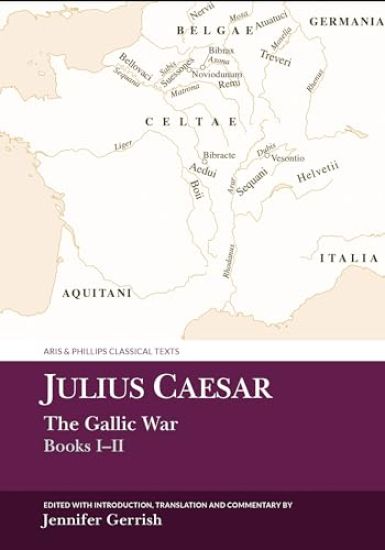
Books I-II of Julius Caesar’s The Gallic War narrate the campaigns of Caesar’s first two years in Gaul (58-57 BCE). These first years saw great success for Caesar. He repelled the Helvetii, who were attempting to migrate through Roman territory; he defeated the German tribes who had crossed the Rhine under the leadership of the arrogant Ariovistus, who had designs on conquering all of Gaul in his own name; and he suppressed an uprising among the Belgic tribes. Caesar portrays these victories as hard-fought against fierce enemies; through reported speeches and dispatches he demonstrates Ariovistus’ bold ambition, and he narrates his near-defeat at the Sabis River in vivid detail. Nevertheless, by the end his second year in the province, Caesar claimed that all of Gaul had been pacified, and he was awarded a fifteen-day thanksgiving by the senate. This English translation faithfully represents the clarity and precision of Caesar’s Latin while also conveying the drama of Caesar’s narrative in a voice that modern readers will find lively and accessible. A substantial introduction orients the reader to the historical and literary context of The Gallic War as well as to the complicated political and authorial career of Julius Caesar. The commentary covers topics of historical, literary, and linguistic interest, providing support to readers of both the English and Latin texts.