Kirjojen hintavertailu. Mukana 11 717 486 kirjaa ja 12 kauppaa.

Kirjahaku

Etsi kirjoja tekijän nimen, kirjan nimen tai ISBN:n perusteella.

1000 tulosta hakusanalla Lester Bangs

Eco-Economy

Eco-Economy

Lester R. Brown

WW Norton Co
2001
pokkari
In 1543, Polish astronomer Nicolaus Copernicus challenged the view that the Sun revolved around the Earth, arguing instead that the Earth revolved around the Sun. His paper led to a revolution in thinking to a new worldview. "Eco-Economy" discusses the need today for a similar shift in our worldview. The issue now is whether the environment is part of the economy or the economy is part of the environment. Lester R. Brown argues the latter, pointing out that treating the environment as part of the economy has produced an economy that is destroying its natural support systems. Brown notes that if China were to have a car in every garage, American style, it would need 80 million barrels of oil a day more than the world currently produces. If paper consumption per person in China were to reach the U.S. level, China would need more paper than the world produces. There go the world's forests. If the fossil fuel-based, automobile-centered, throwaway economic model will not work for China, it will not work for the other 3 billion people in the developing world and it will not work for the rest of the world. But Brown is optimistic as he describes how to restructure the global economy to make it compatible with the Earth's ecosystem so that economic progress can continue. In the new economy, wind farms replace coal mines, hydrogen-powered fuel cells replace internal combustion engines, and cities are designed for people, not cars. Glimpses of the new economy can be seen in the wind farms of Denmark, the solar rooftops of Japan, and the bicycle network of the Netherlands. "Eco-Economy" is a road map of how to get from here to there."
Earth Policy Reader

Earth Policy Reader

Lester R. Brown; Janet Larsen; Bernie Fischlowitz-Roberts

W. W. Norton Company
2002
nidottu
Brown explains, for example, why wind-generated electricity with its abundance and falling cost is emerging as the foundation of the new post-fossil fuel energy economy: now cheaper than electricity from coal, oil, or natural gas, it can be used to electrolyze water and produce hydrogen, the fuel of choice for the new fuel cell engines that every major automobile manufacturer is working on. And since an eco-economy relies heavily on recycling materials already in the system, such as steel and aluminum, we learn how, in this new economy, recycling industries will largely replace mining industries. Bringing together in one volume the essential Eco-Economy Updates that are distributed worldwide over the Internet and published in the world's leading newspapers, The Earth Policy Reader monitors the shift from the old economy to the new.
Outgrowing the Earth: The Food Security Challenge in an Age of Falling Water Tables and Rising Temperatures
Ever since 9/11, many have considered al Queda to be the leading threat to global security, but falling water tables in countries that contain more than half the world's people and rising temperatures worldwide pose a far more serious threat. Spreading water shortages and crop-withering heat waves are shrinking grain harvests in more and more countries, making it difficult for the world's farmers to feed 70 million more people each year. The risk is that tightening food supplies could drive up food prices, destabilizing governments in low-income grain-importing countries and disrupting global economic progress. Future security, Brown says, now depends on raising water productivity, stabilizing climate by moving beyond fossil fuels, and stabilizing population by filling the family planning gap and educating young people everywhere. If Osama bin Laden and his colleagues succeed in diverting our attention from the real threats to our future security, they may reach their goals for reasons that even they have not imagined.
Plan B 4.0

Plan B 4.0

Lester R. Brown

WW Norton Co
2009
nidottu
As fossil fuel prices rise, oil insecurity deepens, and concerns about climate change cast a shadow over the future of coal, a new energy economy is emerging. Wind, solar, and geothermal energy are replacing oil, coal, and natural gas, at a pace and on a scale we could not have imagined even a year ago. For the first time since the Industrial Revolution, we have begun investing in energy sources that can last forever. Plan B 4.0 explores both the nature of this transition to a new energy economy and how it will affect our daily lives.
World on the Edge

World on the Edge

Lester R. Brown

WW Norton Co
2011
pokkari
We are in a race between political and natural tipping points. Can we close coal-fired power plants fast enough to save the Greenland ice sheet and avoid catastrophic sea level rise? Can we raise water productivity fast enough to halt the depletion of aquifers and avoid water-driven food shortages? Can we cope with peak water and peak oil at the same time? These are some of the issues Lester R. Brown skillfully distills in World on the Edge. Bringing decades of research and analysis into play, he provides the responses needed to reclaim our future.
Full Planet, Empty Plates

Full Planet, Empty Plates

Lester R. Brown

WW Norton Co
2012
pokkari
With food scarcity driven by falling water tables, eroding soils and rising temperatures, control of arable land and water resources is moving to centre stage in the global struggle for food security. "In this era of tightening world food supplies, the ability to grow food is fast becoming a new form of geopolitical leverage. Food is the new oil.", Lester R. Brown writes. Here, Brown, "One of the world's most influential thinkers" (Washington Post), discusses what the geopolitics of food will look like in a new era dominated by scarcity and food nationalism. He outlines the political implications of land acquisitions by grain-importing countries in Africa and elsewhere as well as the world's shrinking buffers against poor harvests. With wisdom accumulated over decades of tracking agricultural issues, Brown exposes the increasingly volatile food situation the world is facing.
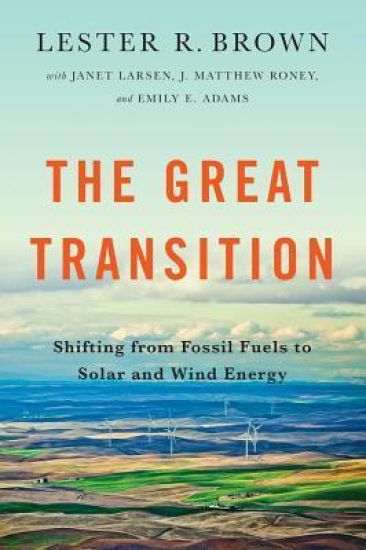
The Great Transition

The Great Transition

Lester R. Brown

WW Norton Co
2015
nidottu
As oil insecurity deepens, the extraction risks of fossil fuels rise and concerns about climate instability cast a shadow over the future of coal, a new world energy economy is emerging. The old economy, fuelled by oil, natural gas and coal is being replaced with one powered by wind, solar and geothermal energy.
An Introduction to Film Genres

An Introduction to Film Genres

Lester Friedman; David Desser; Sarah Kozloff; Martha Nochimson; Stephen Prince

WW Norton Co
2013
nidottu
An Introduction to Film Genres, written by leading film scholars specifically for undergraduates who are new to the study of film, provides an introduction that helps students see thirteen film genres in a new light---to help them identify the themes, iconography, and distinctive stylistic traits of each genre.
A Porcupine Named Fluffy

A Porcupine Named Fluffy

Lester Helen

HOUGHTON MIFFLIN
1988
nidottu
What's in a name? A modern, funny fable about a misnamed porcupine who learns to accept himself, and his name, just as he is. Fluffy doesn't feel at home in his name. His quills are sharp and pointy. Not fluffy at all He tries everything he can think of to make himself fluffy, but nothing works. It takes making a new friend--an equally misnamed rhinocerous--to learn to laugh at, and accept, the things he cannot change.
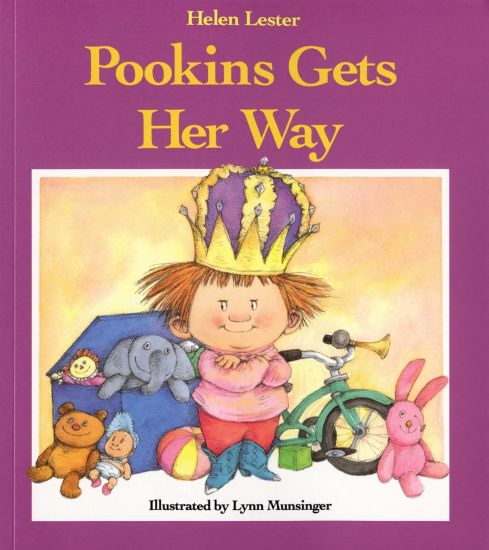
Pookins Gets Her Way

Pookins Gets Her Way

Lester Helen

HOUGHTON MIFFLIN
1990
nidottu
Pookins always gets her way. If she doesn't, she makes faces, she throws apples, and she yells very loudly But when Pookins finds a magic gnome who grants her three wishes, she has seconds thoughts when she wishes to be a flower, and realizes that maybe being a bully isn't a good idea.
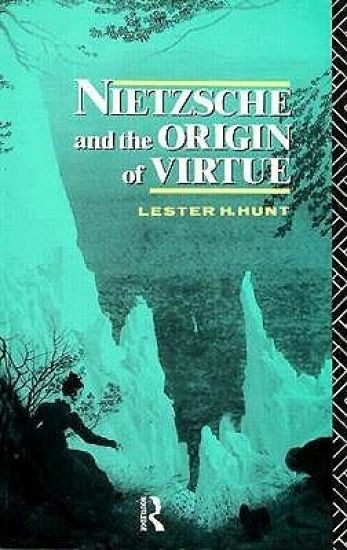
Nietzsche and the Origin of Virtue

Nietzsche and the Origin of Virtue

Lester H. Hunt

Routledge
1993
nidottu
In Ecce Homo (1908) Friedrich Nietzsche calls himself "the first immoralist" and adds "that makes me the annihilator par excellence". Lester Hunt examines this and other radical claims in order to show that Nietzsche does have a coherent ethical and political philosophy. He uses Nietzsche's writings as a starting point for a critique of a wider, contemporary ethical project - one that should inform our lives as well as our thoughts.
Ezra-Nehemiah

Ezra-Nehemiah

Lester L. Grabbe

Routledge
1998
nidottu
In this provocative study, Lester Grabbe presents a unique approach to Ezra-Nehemiah with the combination of a literary and historical approach. Lester Grabbe challenges commonly held assumptions about Joshua and Zerubbabel, the initial resettlement of land after the exile, the figure of Ezra and the activities of Nehemiah. Controversially, the challenge comes, not from radical theory but from paying careful attention to the text of the Bible itself.
Judaic Religion in the Second Temple Period
The developments in Judaism which occurred during the Second Temple period (c. 550 BC to 100 AD) were of great importance for the nature of Jewish religion in later centuries, yet few studies have examined the era in full. Now Lester L. Grabbe's lucid and accessible volume provides a much-needed encyclopedic study and holistic interpretation of the period. Topics examined include: * views about God and the spirit world * the temple and priesthood * scripture and synagogue * the main religious sects and revolutionary movements * eschatology and messianism * magic and predicting the future * religion in the Jewish diaspora * converts and 'Godfearers'. With an extensive, up-to-date bibliography, plus numerous helpful cross-references, summaries and syntheses, this book is essential reading for scholars and students of the history of Jewish religion. It will also be of great value as a reference tool.
Social Work and Social Care

Social Work and Social Care

Lester Parrott

Routledge
2001
nidottu
Social Work and Social Care has been revised and updated to take into account the profound changes that have occurred in social work over the past two years, in particular the extensive legislative changes to childrens and community care services. A new chapter examines the relevance of social exclusion for social work and continues to affirm the importance of equal opportunities and anti-discriminatory practice within social work.Social Work and Social Care: * outlines the importance of social policy for social work * describes the powerful ideological forces that underpin current practice * considers the future of social work and social care within * altered social and political contexts * covers all main areas of social work * includes a glossary and useful website addresses. This book is essential reading for students approaching the study of social work, social care and social policy and includes the most current research available.
The Core Theory in Economics

The Core Theory in Economics

Lester Telser

Routledge
2009
nidottu
An important tenet of game theory, core theory has nonetheless been all but ignored by the mainstream. Its basic premise is that individuals band together in order to promote their interests as much as possible. The return to an individual depends on competition among various coalitions for its membership, and a group of people can obtain a joint maximum by suitable coordinated actions.In this key title, Lester Telser investigates the following issues:Markets Multiproduct Industry Total Cost Functions with Avoidable Costs Critical Analyses of Noncooperative Equilibria.Through these distinct sections, Telser skilfully brings the ideas of core theory to bear on a range of issues within economics – with particular emphasis on supply and demand and the way markets function.
Judaic Religion in the Second Temple Period
The developments in Judaism which occurred during the Second Temple period (c. 550 BC to 100 AD) were of great importance for the nature of Jewish religion in later centuries, yet few studies have examined the era in full. Now Lester L. Grabbe's lucid and accessible volume provides a much-needed encyclopedic study and holistic interpretation of the period. Topics examined include: * views about God and the spirit world * the temple and priesthood * scripture and synagogue * the main religious sects and revolutionary movements * eschatology and messianism * magic and predicting the future * religion in the Jewish diaspora * converts and 'Godfearers'. With an extensive, up-to-date bibliography, plus numerous helpful cross-references, summaries and syntheses, this book is essential reading for scholars and students of the history of Jewish religion. It will also be of great value as a reference tool.
The Core Theory in Economics

The Core Theory in Economics

Lester Telser

Routledge
2006
sidottu
An important tenet of game theory, core theory has nonetheless been all but ignored by the mainstream. Its basic premise is that individuals band together in order to promote their interests as much as possible. The return to an individual depends on competition among various coalitions for its membership, and a group of people can obtain a joint maximum by suitable coordinated actions.In this key title, Lester Telser investigates the following issues:Markets Multiproduct Industry Total Cost Functions with Avoidable Costs Critical Analyses of Noncooperative Equilibria.Through these distinct sections, Telser skilfully brings the ideas of core theory to bear on a range of issues within economics – with particular emphasis on supply and demand and the way markets function.
Chronological History of U.S. Foreign Relations
More than a timeline, the Chronological History allows readers to follow themes and compare time periods via extensive chronological listings, numerous cross-references, and thorough index. This comprehensive resource also includes 38 new maps to provide perspectives on the complex territorial disputes in which the US has played a role. With over one third new material, along with updated and revised entries and maps, this second edition is essential for all students of political science, history, and international relations. Also includes 38 maps.
Chronology of the Cold War

Chronology of the Cold War

Lester Brune

Routledge
2005
sidottu
More than just a timeline, the Chronology of the Cold War is in-depth chronological narrative organized into sections. Each section carries a clear date and summary heading. The five major sections are I. Cold Peace, 1917-1940II. The Strange Alliance, 1941-1945III. Containment and Détente, 1946-1975IV. Confrontation & Conciliation, 1976-1991V. EpilogueBased on sections of the Chronological History of U.S. ForeignRelations (Routledge 2003), the book includes significant additional material on Russia, China, arms control, and the Cold War in the Third World. This easy-to-use reference also includes an introductory section reviewing the history leading up to the Cold War from 1917 to 1945, a general bibliography of resources on the Cold War and is illustrated with photographs from presidential libraries and 18 maps.