
Kirjahaku
Etsi kirjoja tekijän nimen, kirjan nimen tai ISBN:n perusteella.
1000 tulosta hakusanalla M Grainger

Superstar singer, songwriter, and artist M.I.A. (“Maya” to her friends) has come a long way from humble beginnings. Born in Britain, she lived most of her young life in the birthplace of her parents, Sri Lanka, while it was torn by civil war. After returning to Britain, she rose to fame as a multi-talented composer, performer, graphic designer, and music producer with millions of fans worldwide.
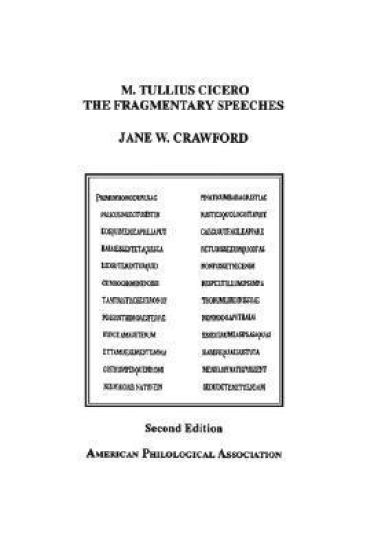
M. Tullius Cicero, the Fragmentary Speeches
Jane W. Crawford
Oxford University Press Inc
1994
nidottu
This volume contains testimonia and fragments of Cicero's speeches that circulated in antiquity but which have since been lost. This edition includes the fragmenta incertae sedis and an appendix on falsely identified oratorical fragments.
M-Theory and Quantum Geometry
Springer
2000
sidottu
The fundamental structure of matter and spacetime at the shortest length scales remains an exciting frontier of basic research in theoretical physics. A unifying theme in this area is the quantization of geometrical objects. The majority of lectures at the Advanced Study Institute on Quantum Ge ometry in Akureyri was on recent advances in superstring theory, which is the leading candidate for a unified description of all known elementary par ticles and interactions. The geometric concept of one-dimensional extended objects, or strings, has always been at the core of superstring theory but in recent years the focus has shifted to include also higher-dimensional ob jects, so called D-branes, which play a key role in the non-perturbative dynamics of the theory. A related development has seen the strong coupling regime of a given string theory identified with the weak coupling regime of what was previ ously believed to be a different theory, and a web of such" dualities" that interrelates all known superstring theories has emerged. The resulting uni fied theoretical framework, termed M-theory, has evolved at a rapid pace in recent years.
M-Theory and Quantum Geometry
Springer
2000
nidottu
The fundamental structure of matter and spacetime at the shortest length scales remains an exciting frontier of basic research in theoretical physics. A unifying theme in this area is the quantization of geometrical objects. The majority of lectures at the Advanced Study Institute on Quantum Ge ometry in Akureyri was on recent advances in superstring theory, which is the leading candidate for a unified description of all known elementary par ticles and interactions. The geometric concept of one-dimensional extended objects, or strings, has always been at the core of superstring theory but in recent years the focus has shifted to include also higher-dimensional ob jects, so called D-branes, which play a key role in the non-perturbative dynamics of the theory. A related development has seen the strong coupling regime of a given string theory identified with the weak coupling regime of what was previ ously believed to be a different theory, and a web of such" dualities" that interrelates all known superstring theories has emerged. The resulting uni fied theoretical framework, termed M-theory, has evolved at a rapid pace in recent years.

M.Caracassi- 25 Melodies&Progessive Studies Op 60
Hal Leonard Corporation
1993
nidottu
(Fretted). One of Carcassi's (1792-1853) most famous collections of classical guitar music indispensable for the modern guitarist's musical and technical development. Performed by Paul Henry. Book includes audio demos of each study for 49-minutes of audio. The audio is accessed online using the unique code inside each book and can be streamed or downloaded. The audio files include PLAYBACK+, a multi-functional audio player that allows you to slow down audio without changing pitch, set loop points, change keys, and pan left or right.

M.O.M.––Master Organizer of Mayhem – Simple Solutions to Organize Chaos and Bring More Joy into Your Home
Kristi Clover
Baker Books, a division of Baker Publishing Group
2019
nidottu
Getting--and staying--organized is a challenge in and of itself. Add motherhood to the mix, and you've got a whole new dimension of difficulty. So how does a busy mom stay on top of the daily chaos that children inevitably bring along with them?No matter what your situation is, Kristi Clover's home organization systems will work for you. Her foundational rules are highly adaptable and will help you make your home more efficient no matter where you live or how many kids you have (and how messy they are). She helps you prioritize, break down big jobs, declutter, develop age-appropriate chores for your kids, tackle the endless piles of laundry, and so much more. If you long to have a functional and fabulous home for your family and you're tired of feeling overwhelmed by all the work, this life-changing book is for you!
Brace yourself for an "Electrifying and thoroughly satisfying" read (Publishers Weekly) from #1 New York Times bestselling author Sue Grafton "M" is for money. Lots of it. "M" is for Malek Construction, the $40 million company that grew out of modest soil to become one of the big three in California construction, one of the few still in family hands. "M" is for the Malek family: four sons now nearing middle age who stand to inherit a fortune--four men with very different outlooks, temperaments, and needs, linked only by blood and money. Eighteen years ago, one of them--angry, troubled, and in trouble--went missing. "M" is for Millhone, hired to trace that missing black sheep brother. "M" is for memories, none of them happy. The bitter memories of an embattled family. This prodigal son will find no welcome at his family's table. "M" is for malice. And in brutal consequence, "M" is for murder, the all-too-common outcome of familial hatreds. "M" is for malice . . . and malice kills. "A" Is for Alibi"B" Is for Burglar"C" Is for Corpse"D" Is for Deadbeat"E" Is for Evidence"F" Is for Fugitive"G" Is for Gumshoe"H" Is for Homicide"I" Is for Innocent"J" Is for Judgment"K" Is for Killer"L" is for Lawless"M" Is for Malice"N" Is for Noose"O" Is for Outlaw"P" Is for Peril "Q" Is for Quarry"R" Is for Ricochet "S" Is for Silence "T" Is for Trespass"U" Is for Undertow "V" Is for Vengeance "W" Is for Wasted "X"

This companion to M.E. Saltykov-Shchedrin's The Golovlyovs opens with a general introduction discussing the work in the context of Saltykov-Shchedrin's oeuvre as well as its place within the Russian literary tradition. Also included are primary sources, background materials, an annotated bibliography, and considerations of the work by leading scholars.
John Peck is a member of the remarkable generation of poets, including Robert Hass, Robert Pinsky, and James McMichael, who studied with Yvor Winters at Stanford in the 1960s. His recent work expresses a sharp sense of vulnerability and of the tenacity of human life, both natural and moral.
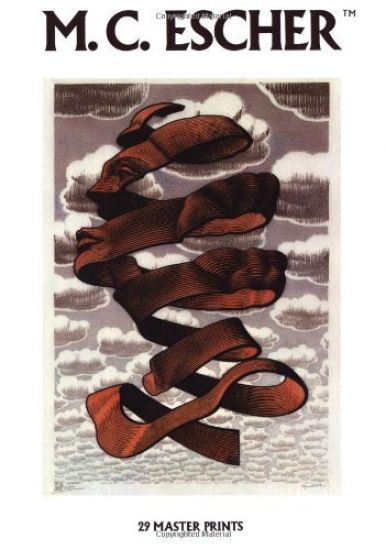
Twenty-nine woodcuts and lithographs make use of optical illusions and unusual perspectives and are accompanied by the artist's comments.

This paperback edition of M.I.A. or Mythmaking in America adds major new material about Ross Perot's role, the 1991-1992 Senate investigation, and illegal operations authorized by Ronald Reagan.
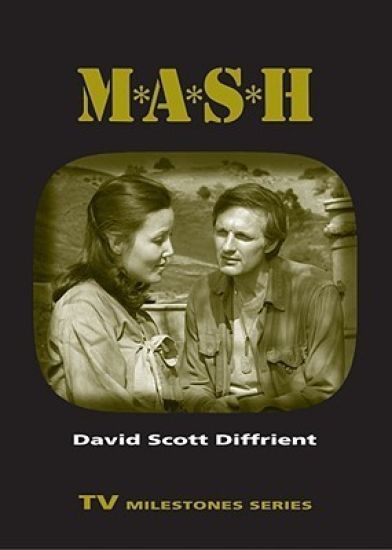
Few American television series are as deeply entrenched in twentieth-century popular culture as M*A*S*H, a Korean War medical comedy characterized by its dark tone and finesse in tackling serious social and political issues. By the end of its run, M*A*S*H had been a mainstream hit for several seasons and won fourteen Emmys, leading it to be called "the most popular pre-Seinfeld series in television history." In this comprehensive study of M*A*S*H, David Scott Diffrient analyzes the series’ contextual issues—such as its creation, reception, and circulation—as well as textual issues like its formal innovations, narrative strategies, and themes.While numerous episode summaries, cast interviews, trivia books, and even recipe guides have been inspired by M*A*S*H, only one other scholarly study of the series exists. Diffrient breaks new ground by fully addressing the wealth of complexities and contradictions in the series and exploring how they are rooted in the cultural ethos of the Vietnam War era. He examines the origins of M*A*S*H and the history surrounding its original broadcast, eventual syndication, and its reception, and he unpacks its narrative strategies, thematic motifs, and questions of identity and identification. In particular, Diffrient explores how the series was able to transcend the traditional boundaries of the sitcom and tackle issues like racial injustices, gender biases, bureaucratic mismanagement, and military snafus.In his exhaustive analysis, Diffrient draws extensively on archival materials including original scripts, memos, and personal correspondence of the show’s writers. He also considers the show’s links to antiwar fiction and its influential and critically overlooked representation of Koreans and the Korean War. Students and teachers of film and television studies, as well as readers interested in M*A*S*H will enjoy this installment in the TV Milestones Series.

Illustrated entries for each letter of the alphabet present information about the history, geography, natural resources, and important sights of Minnesota

M/E/a/N/I/N/G
Duke University Press
2000
sidottu
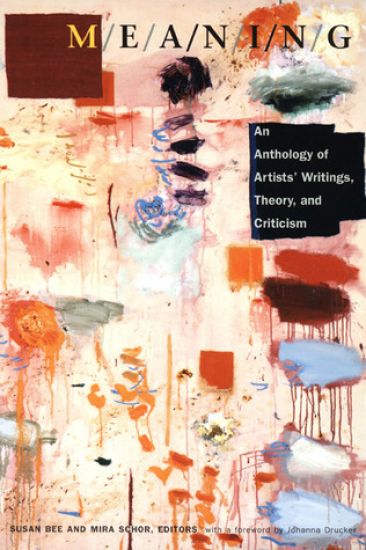
M/E/A/N/I/N/G brings together essays and commentary by over a hundred artists, critics, and poets, culled from the art magazine of the same name. The editors-artists Susan Bee and Mira Schor-have selected the liveliest and most provocative pieces from the maverick magazine that bucked commercial gallery interests and media hype during its ten-year tenure (1986–96) to explore visual pleasure with a culturally activist edge.With its emphasis on artists’ perspectives of aesthetic and social issues, this anthology provides a unique opportunity to enter into the fray of the most hotly contested art issues of the past few decades: the visibility of women artists, sexuality and the arts, censorship, art world racism, the legacies of modernism, artists as mothers, visual art in the digital age, and the rewards and toils of a lifelong career in art. The stellar cast of contributing artists and art writers includes Nancy Spero, Richard Tuttle, David Humphrey, Thomas McEvilley, Laura Cottingham, Johanna Drucker, David Reed, Carolee Schneemann, Whitney Chadwick, Robert Storr, Leon Golub, Charles Bernstein, and Alison Knowles. This compelling and theoretically savvy collection will be of interest to artists, art historians, critics, and a general audience interested in the views of practicing artists.
M/E/a/N/I/N/G
Duke University Press
2000
pokkari
M/E/A/N/I/N/G brings together essays and commentary by over a hundred artists, critics, and poets, culled from the art magazine of the same name. The editors-artists Susan Bee and Mira Schor-have selected the liveliest and most provocative pieces from the maverick magazine that bucked commercial gallery interests and media hype during its ten-year tenure (1986–96) to explore visual pleasure with a culturally activist edge.With its emphasis on artists’ perspectives of aesthetic and social issues, this anthology provides a unique opportunity to enter into the fray of the most hotly contested art issues of the past few decades: the visibility of women artists, sexuality and the arts, censorship, art world racism, the legacies of modernism, artists as mothers, visual art in the digital age, and the rewards and toils of a lifelong career in art. The stellar cast of contributing artists and art writers includes Nancy Spero, Richard Tuttle, David Humphrey, Thomas McEvilley, Laura Cottingham, Johanna Drucker, David Reed, Carolee Schneemann, Whitney Chadwick, Robert Storr, Leon Golub, Charles Bernstein, and Alison Knowles. This compelling and theoretically savvy collection will be of interest to artists, art historians, critics, and a general audience interested in the views of practicing artists.
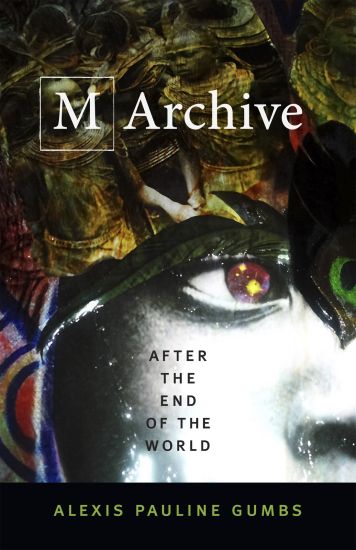
Following the innovative collection Spill, Alexis Pauline Gumbs's M Archive-the second book in a planned experimental triptych-is a series of poetic artifacts that speculatively documents the persistence of Black life following a worldwide cataclysm. Engaging with the work of the foundational Black feminist theorist M. Jacqui Alexander, and following the trajectory of Gumbs's acclaimed visionary fiction short story “Evidence,” M Archive is told from the perspective of a future researcher who uncovers evidence of the conditions of late capitalism, antiblackness, and environmental crisis while examining possibilities of being that exceed the human. By exploring how Black feminist theory is already after the end of the world, Gumbs reinscribes the possibilities and potentials of scholarship while demonstrating the impossibility of demarcating the lines between art, science, spirit, scholarship, and politics.
Following the innovative collection Spill, Alexis Pauline Gumbs's M Archive-the second book in a planned experimental triptych-is a series of poetic artifacts that speculatively documents the persistence of Black life following a worldwide cataclysm. Engaging with the work of the foundational Black feminist theorist M. Jacqui Alexander, and following the trajectory of Gumbs's acclaimed visionary fiction short story “Evidence,” M Archive is told from the perspective of a future researcher who uncovers evidence of the conditions of late capitalism, antiblackness, and environmental crisis while examining possibilities of being that exceed the human. By exploring how Black feminist theory is already after the end of the world, Gumbs reinscribes the possibilities and potentials of scholarship while demonstrating the impossibility of demarcating the lines between art, science, spirit, scholarship, and politics.

M. O. V. E. Crisis in Philadelphia
Hizkias Assefa; P. Wahrhaftig
University of Pittsburgh Press
1990
nidottu
In 1985, police bombed the Philadelphia community occupied by members of the black counterculture group MOVE (short for "The Movement"). What began fifteen years earlier as a neighborhood squabble provoked by conflicting lifestyles ended in the destruction of sixty-one homes and the death of eleven residents - five of them children. Some 250 people were left homeless.Was this tragedy the only solution to the conflict? Were John Africa and his morally and ecologically idealistic followers "too crazy" to negotiate with? The authors interviewed MOVE members and their neighbors, third-party intervenors, and representatives of the Philadelpia administration in the 1970s, and draw on their own knowledge of the field of dispute resolution. More than simply describing a terrible event, they examine the dynamics of conflict, analyzing attempts at third-party mediation and the possibility of resolution without violence. Their analytical approach provides insight into other major conflicts, such as the problems of perception and misperception in U.S. - Iranian relations.In an age when terrorism and hostage-taking are regular features on the six o'clock news, their questioning of traditional views on negotiation with "irrational" adversaries is especially important.