In this first book of essays devoted entirely to Nathaniel Mackey's work, prominent critics respond to a major oeuvre that is at once affirmative and utopic, negational and dystopic. Drawing on multiple genealogies and traditions, primarily from African and African diaspora histories and cultures, Mackey's work envisions cultural creation as cross-cultural, based in the damaging relationships of Africans brought against their will to the Americas and the resulting innovations of New World African literatures and music. This collection is organized through broad topics in order to provide entrances into his challenging work: myth, literature, and seriality; music, performance, and collaboration; syncretism, synopsis, and what-saying. It engages Mackey's spiritual and esoteric disposition along with his attention to what Amiri Baraka called the “enraged sociologies” of Black music. In his manifesto “Destination Out,” Mackey describes his work as “wanting to bid all givens goodbye” and as “centrifugal.” It is also centripetal, manifesting a reflexive interiority that creates itself through recurring forms. Contributors: Maria Damon, Joseph Donahue, Rachel Blau DuPlessis, Norman Finkelstein, Luke Harley, Paul Jaussen, Adalaide Morris, Fred Moten, Peter O'Leary, Anthony Reed
In 1933, President Franklin Roosevelt's New Deal launched the Tennessee Valley Authority and the Subsistence Homesteads Division to help bring economic relief to families and communities devastated by the Great Depression. With the creation of these new programs came a need for the infrastructure that could support them, and for this, the Roosevelt administration turned to William Macy Stanton. Born to a Quaker family in Ohio in 1888, Stanton worked as an instructor of drawing and design at the University of Illinois School of Architecture before establishing an independent practice in Philadelphia in the early 1920s. During the Depression, he worked on architectural projects in Tennessee for the TVA—including the town of Norris, where the builders of Norris Dam would live. As the New Deal era dawned, Stanton moved to Crossville to design the proposed Cumberland Homesteads. In addition to this work, Stanton is widely regarded for his hotel designs, including The Lafayette and James Madison Hotels in Atlantic City, as well as his restoration of Quaker meetinghouses. In this new biography, Delos D. Hughes weaves the story of Stanton's life and career together with the broader historical context of the Great Depression and New Deal initiatives. The book is divided into three parts, exploring Stanton's life and work before, during, and after his involvement with the Cumberland Homesteads; Hughes examines the intersection of architecture and social policy throughout. Rich with historical photographs, Stanton's own architectural drawings, and other original imagery on nearly every page, Hughes's work will delight architectural history enthusiasts and Tennessee history scholars.
Axel Maxey is a magical character who flies to experience adventurous places. As a dedicated traveler he finds unique places that include the glow worm caves in New Zealand, a cenote in the Yucatan Peninsula in Mexico, the vegetable and fruit boat sellers in Thailand, and a waterfall in Oregon. He revisits the glow worm cave, remembering meeting a glow worm named Wiggles. He snorkels in the cenote and tastes mangosteen in Thailand. He stands behind a waterfall to feel the mist and hear the sound of falling water. Axel camps beneath the stars remembering his adventures and dreaming of being back home with his friend, the little boy.
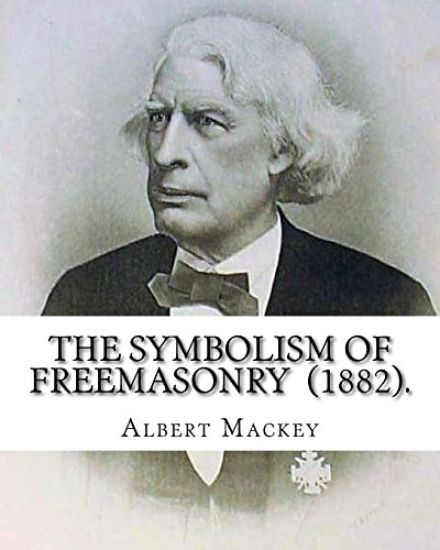
Albert Gallatin Mackey (March 12, 1807 - June 20, 1881) was an American medical doctor and author. He is best known for his writing many books and articles about freemasonry, particularly the Masonic Landmarks. Biography: Grave of Albert Mackey at Glenwood Cemetery in Washington, D.C. Albert Gallatin Mackey was born in Charleston, South Carolina, the son of John Mackey (1765 - December 14, 1831), a physician, journalist and educator, and his wife. His father published The American Teacher's Assistant and Self-Instructor's Guide, containing all the Rules of Arithmetic properly Explained, etc. (Charleston, 1826), the most comprehensive work on arithmetic that had been published in the United States.His brother was Edmund William McGregor Mackey, later a member of the U.S. House of Representatives from South Carolina. After completing his early education, Albert Mackey taught school for some time to earn money for medical school. He graduated from the medical department of the College of South Carolina in 1832. He settled in Charleston, South Carolina. In 1838 he was appointed demonstrator of anatomy in that institution. In 1844 he abandoned the practice of medicine. For the rest of his life, he wrote on a variety of subjects, but specialized in the study of several languages, the Middle Ages, and Freemasonry. After being connected with several Charleston journals, he established in 1849 The Southern and Western Masonic Miscellany, a weekly magazine. He maintained it for three years, mostly by his own expense. He conducted a Quarterly 1858-1860 which he devoted to the same interests. He acquired the Greek, Latin, Hebrew, and continental languages almost unaided, and lectured frequently on the intellectual and moral development of the Middle Ages. Subsequently, he turned his attention exclusively to the investigation of abstruse symbolism, and to cabalistic and Talmudic researches. He served as Grand Lecturer and Grand Secretary of The Grand Lodge of South Carolina, as well as Secretary General of the Supreme Council of the Ancient and Accepted Scottish Rite for the Southern Jurisdiction of the United States. Mackey was a Union sympathizer during the Civil War and in July, 1865, President Andrew Johnson appointed him Collector of the Port of Charleston. He ran for the United States Senate in South Carolina in 1868, but was narrowly defeated by Republican Frederick A. Sawyer. Mackey moved to Washington, D.C. in 1870. He died in Fortress Monroe, Virginia in 1881....
Every girl should believe in her bright future See that girl always dreaming and imagining her happy-ever-after life in adulthood? She's gonna LOVE her personal copy from this Preserve the Memories series, created especially for young dreamers between 9 and 14 years of age.Hope Faith has created this book as an 8.5 by 11 inch, perfect journal book form. Plenty of pages to explore her ideas as well as loads of room to keep track of her progress.There is even space for special lists which makes the sky the limit when it comes to sparking positive action towards future goals.This book is perfect for: encouraging your future selfremembering your dreams to reach forcaptivating the momentcherishing the magic of all possibilityParents love the Preserve the Memories series for these reasons: helps speech developmentincreases literacydevelops a sense of sequencecreates confidencedevelops an appreciation for life and self directionboots creativityOnce you get this book, notice how handy it is - perfect journal size means it's easy to write in and frustration free. All you need is your pencil and ink pen Can't wait to she has been inspried by her Dear Me book
Macy's past won't let her forget. Macy Elmsworth has found herself in a mess. The 18 year old pastor's daughter got in trouble with the law, nearly died, and in the process, damaged her relationship with her family. She now needs to fulfill community service hours. As a last resort, she moves in with her grandparents, where they need a housekeeper at the small motel they own.Feeling broken and defeated, Macy counts down the days her community service hours are over. Until she meets others at the motel. People a lot like her. People with questionable pasts and bleak futures. As friendships are forged, Macy begins to come out of her shell and help her new friends. It is through these new relationships that she begins to repair the broken relationship with her family. But her past isn't about to go away, and Macy is going to have to turn to God for the complete restoration she needs.
Sniff Streetwas the dirtiest, scruffiest street in Bogsley, and Miss Potts' house was the most disgusting and revolting of all the disgusting and revolting houses in it. She seemed to take delight in surrounding the place with rubbish, bottles of rancid milk and maggot-infested garbage. And why did one of her eyes stick out like a glassy golf ball? No wonder eleven-year-old Charlie Mace did his best to keep away from the place. But one day Charlie finds himself cornered by Miss Potts, and is roughly transported into a strange woodland world, a world in which he encounters a very odd collection of beings. They all seem to live in dread of The Stink, a dark, smelly and noisome creature which haunts the forest. Charlie does his best to help his new friends fight back - and then he discovers the shocking link between the Stink and Miss Potts - Charlie Mace and the Big Stink is a vivid, colourful and compelling story for youngsters aged 10-14.
Littafin 'Yar Mace ya kasance fararren al'amari, an rubuta shi a lokacin da wadansu ma'aurata suka kasa samun zaman lafiya a gidan su na aure na kimanin shekaru biyu da kusan rabi. Ya kasance darasi, kuma abin sha'awa ga makaranta, littafin 'Yar Mace ya dauko ainihin tarihin matsalar rayuwar wadannan ma'aurata musamman ma ta yadda auren su ya kasance ya doru akan karyar rayuwa wanda ba zata bulle dasu ko ina ba. Ta wannan hanyar su wadan nan ma'aurata suka iya samar wa da kansu kyakykyawar yarinya wacce ta kasance babbar mahada a tsakanin su wanda kuma rabuwar auren su ta kasance abar kyamata a tare dasu inda kuma suka koma neman mafita domin tabbatar da zaman aure a maimakon rabuwa. Tsana daga surukar Salim dai ita ta sanya auren sa da Salima ke yin tangal tangal wanda kuma aka kasa samun wata mafita, duk da wannan turja turja Rabi ta kasa raba su sakamakon suna da wata alaka ta sirri a tsakanin su wacce babu wanda ya iya sanin ta. A farko dai jama'a da dama sun samu kin amincewa da maganganun Salim inda rijima ke neman shafe su gaba daya. Sai dai daga bisani da yawa sun fuskanci cewar a bangaren rigima da sukurar ta Salim, wasa farin jirki. A bangaren Salim, shi dai a wannan gaba mafita yake nema tare da ita kanta matar tasa wato Salima. A yayin da fadan karshe na auren su ke kusantowa, mahaifiyar Salima wato Rabi ta kasa samun amintuwa da tsarin Shari'ar Musulunci game da yadda za'a warware wannan takardama da taki ci kuma taki cinyewa bayan zaman ofishin Hisbah sau biyu da akayi da kuma zaman kotu da akayi akalla sau takwas.
Sweet Mace - a Sussex legend of the iron times - Vol. 1 is an unchanged, high-quality reprint of the original edition of 1884. Hansebooks is editor of the literature on different topic areas such as research and science, travel and expeditions, cooking and nutrition, medicine, and other genres. As a publisher we focus on the preservation of historical literature. Many works of historical writers and scientists are available today as antiques only. Hansebooks newly publishes these books and contributes to the preservation of literature which has become rare and historical knowledge for the future.
Sweet Mace - a Sussex legend of the iron times - Vol. 3 is an unchanged, high-quality reprint of the original edition of 1884. Hansebooks is editor of the literature on different topic areas such as research and science, travel and expeditions, cooking and nutrition, medicine, and other genres. As a publisher we focus on the preservation of historical literature. Many works of historical writers and scientists are available today as antiques only. Hansebooks newly publishes these books and contributes to the preservation of literature which has become rare and historical knowledge for the future.