Kirjojen hintavertailu. Mukana 12 459 402 kirjaa ja 12 kauppaa.

Kirjahaku

Etsi kirjoja tekijän nimen, kirjan nimen tai ISBN:n perusteella.

1000 tulosta hakusanalla Madison Meadows

Madison Square Garden (1925)

Madison Square Garden (1925)

VDM Publishing House
2010
nidottu
Observera att förlaget som ger ut denna produkt baserar innehållet i sina produkter på fria källor som Wikipedia. Boken är med stor sannolikhet endast ett utdrag ur dessa informationskällor, alltså inte en vanlig bok i den bemärkelsen.
Madison, Nebraska

Madison, Nebraska

VDM Publishing House
2010
nidottu
Observera att förlaget som ger ut denna produkt baserar innehållet i sina produkter på fria källor som Wikipedia. Boken är med stor sannolikhet endast ett utdrag ur dessa informationskällor, alltså inte en vanlig bok i den bemärkelsen.
Madison County

Madison County

Madison County Historical Society; Mary T. Westerhold

Arcadia Publishing (SC)
2013
nidottu
On September 14, 1812, territorial governor Ninian Edwards set aside the third county of the Illinois Territory and named it Madison for his friend Pres. James Madison. The boundaries of the newly created Madison County extended from its current southern border to the northern border of the Illinois territory and from the Wabash River on the east to the Mississippi River on the west. There were only a few settlements, and the daily life of the early pioneers consisted of the hard work required to survive. But the settlers did survive, and the county grew in population while shrinking to its current geographical size. Small settlements became thriving communities, such as Edwardsville, Alton, Collinsville, Highland, Granite City, and many others. In 200 years, the county has moved from an economy based almost completely on agriculture to one that has included railroads, flour mills, coal mines, steel mills, and oil refineries.
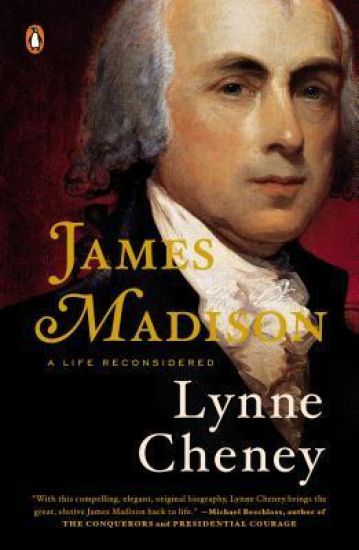
James Madison

James Madison

Lynne Cheney

Penguin USA
2015
nidottu
A major new biography of the fourth U.S. president, from New York Times bestselling author Lynne Cheney James Madison was a true genius of the early republic, the leader who did more than any other to create the nation we know today. This majestic new biography tells his story. Outwardly reserved, Madison was the intellectual driving force behind the Constitution. His visionary political philosophy eloquently presented in the Federalist Papers was a crucial factor behind the Constitution s ratification, and his political savvy was of major importance in getting the new government underway. As secretary of state under Thomas Jefferson, he managed the Louisiana Purchase, doubling the size of the United States. As president, Madison led the country in its first war under the Constitution, the War of 1812. Without precedent to guide him, he would demonstrate that a republic could defend its honor and independence while remaining true to its young constitution."
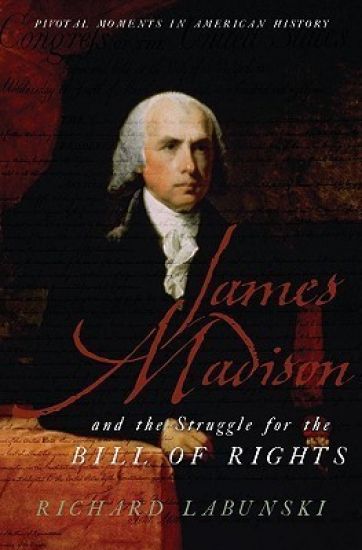
James Madison and the Struggle for the Bill of Rights

James Madison and the Struggle for the Bill of Rights

Richard Labunski

Oxford University Press Inc
2006
sidottu
Today we hold the Constitution in such high regard that we can hardly imagine how hotly contested was its adoption. In fact, many of the thirteen states saw fierce debate over the document, and ratification was by no means certain. Virginia, the largest and most influential state, approved the Constitution by the barest of margins, and only after an epic political battle between James Madison and Patrick Henry. Now Richard Labunski offers a dramatic account of a time when the entire American experiment hung in the balance, only to be saved by the most unlikely of heroes--the diminutive and exceedingly shy Madison. Here is a vividly written account of not one but several major political struggles which changed the course of American history. Labunski takes us inside the sweltering converted theater in Richmond, where for three grueling weeks, the soft-spoken Madison and the charismatic Patrick Henry fought over whether Virginia should ratify the Constitution. The stakes were enormous. If Virginia voted no, George Washington could not become president, New York might follow suit and reject the Constitution, and the young nation would be thrust into political chaos. But Madison won the day by a handful of votes, mollifying Anti-Federalist fears by promising to add a bill of rights to the Constitution. To do this, Madison would have to win a seat in the First Congress. Labunski shows how the vengeful Henry prevented Madison's appointment to the Senate and then used his political power to ensure that Madison would run against his good friend, Revolutionary War hero James Monroe, in a House district teeming with political enemies. Overcoming great odds, Madison won by a few hundred votes, allowing him to attend the First Congress and sponsor the Bill of Rights. Packed with colorful details about life in early America, this compelling and important narrative is the first serious book about Madison written in many years. It will return this under-appreciated patriot to his rightful place among the Founding Fathers and shed new light on a key turning point in our nation's history.
James Madison and the Struggle for the Bill of Rights

James Madison and the Struggle for the Bill of Rights

Richard Labunski

Oxford University Press Inc
2008
nidottu
Today we hold the Constitution in such high regard that we can hardly imagine how hotly contested was its adoption. In fact, many of the thirteen states saw fierce debate over the document, and ratification was by no means certain. Virginia, the largest and most influential state, approved the Constitution by the barest of margins, and only after an epic political battle between James Madison and Patrick Henry. Now Richard Labunski offers a dramatic account of a time when the entire American experiment hung in the balance, only to be saved by the most unlikely of heroes--the diminutive and exceedingly shy Madison. Here is a vividly written account of not one but several major political struggles which changed the course of American history. Labunski takes us inside the sweltering converted theater in Richmond, where for three grueling weeks, the soft-spoken Madison and the charismatic Patrick Henry fought over whether Virginia should ratify the Constitution. The stakes were enormous. If Virginia voted no, George Washington could not become president, New York might follow suit and reject the Constitution, and the young nation would be thrust into political chaos. But Madison won the day by a handful of votes, mollifying Anti-Federalist fears by promising to add a bill of rights to the Constitution. To do this, Madison would have to win a seat in the First Congress. Labunski shows how the vengeful Henry prevented Madison's appointment to the Senate and then used his political power to ensure that Madison would run against his good friend, Revolutionary War hero James Monroe, in a House district teeming with political enemies. Overcoming great odds, Madison won by a few hundred votes, allowing him to attend the First Congress and sponsor the Bill of Rights. Packed with colorful details about life in early America, this compelling and important narrative is the first serious book about Madison written in many years. It will return this under-appreciated patriot to his rightful place among the Founding Fathers and shed new light on a key turning point in our nation's history.
The Papers of James Madison, Volume 6

The Papers of James Madison, Volume 6

James Madison

University of Chicago Press
1967
sidottu
During the first four months of 1783, when the United States was neither wholly at war nor wholly at peace, a cluster of difficult problems confronted James Madison and his fellow delegates in Congress. Faced with the interlocking issues of finance, demobilization, and foreign affairs, Congress held many contentious sessions early in the year. The sparseness of the official journal enhances the value of the notes on debates, recorded by Madison, for illuminating the discussions.
The Papers of James Madison

The Papers of James Madison

James Madison

University of Chicago Press
1970
sidottu
During the first six of the ten months covered by this volume, Madison completed his initial period of service as a delegate from Virginia in the Congress of the Confederation. His correspondence with Thomas Jefferson and Edmund Randolph, as well as his other papers, reveal the mounting difficulties besetting him and his fellow nationalists who sought to preserve a union among the thirteen states. The major problems, which included demobilizing the discontented army, obtaining public revenue, funding the Confederation debt, pressing the British to evacuate their military posts, enforcing the preliminary articles of peace, creating a public domain in the West, locating a provisional or permanent capital of the Confederation, and negotiating commercial treaties with European powers, fostered sectionalism, factionalism, and an emphasis upon state sovereignty. As a prominent member of Congress, Madison sought legislative and constitutional remedies for this menacing divisiveness. To him the maintenence of the new nation embodied the greatest trust ever confided to a political society, for it was the last and fairest experiment in favor of the rights of human nature. Early in December, after an absence of over three years, Madison returned to Montpelier, his father's estate. There during the winter of 1783-1784, he studied law, renewed old friendships, and canvassed the residents of Orange County for support of his candidacy for election to the House of Delegates of the Virginia General Assembly. maintenance