Kirjojen hintavertailu. Mukana 12 180 894 kirjaa ja 12 kauppaa.

Kirjahaku

Etsi kirjoja tekijän nimen, kirjan nimen tai ISBN:n perusteella.

1000 tulosta hakusanalla Maria R Bottermann-Broj

The Eating Enigma

The Eating Enigma

R H N Maria Ayne

Crown Oak Press
2017
pokkari
In this groundbreaking book, holistic nutritionist and behaviour specialist Maria Ayne reveals how to overcome the biggest obstacle on the road to wellness--the food cravings For anyone who struggles with an unhealthy relationship with food--from food addiction, binge eating, compulsive eating, overeating, to intake restriction, The Eating Enigma will forever transform your unhealthy relationship with food while guiding you to create new, healthy habits. Maria's approach is not about counting calories; it's not about food deprivation, following complex diet plans, or any other practices that ultimately lead to increased anxiety around mealtime. Rather, the aim is to re-establish the innate connection among mind, body, and food that we are all naturally born with but have been trained to reject. You will learn how to: Make the right nutritional choices for your own body Overcome cravings, and work to reduce or eliminate the onset of cravings Eliminate destructive lifestyle habits while instilling new, empowering habits Reprogram the subconscious mind to end self-sabotage Balance emotions and maintain a more peaceful, relaxed state Based on the latest scientific research and filled with powerful insights, The Eating Enigma provides easy-to-follow advice on obtaining holistic health. Using her own personal story and citing copious amounts of scientific research, Maria has written an immensely moving and inspiring book that will drastically alter your perception of your mind, body, and food.
The Eating Enigma

The Eating Enigma

R H N Maria Ayne

Crown Oak Press
2017
sidottu
In this groundbreaking book, holistic nutritionist and behaviour specialist Maria Ayne reveals how to overcome the biggest obstacle on the road to wellness--the food cravings For anyone who struggles with an unhealthy relationship with food--from food addiction, binge eating, compulsive eating, overeating, to intake restriction, The Eating Enigma will forever transform your unhealthy relationship with food while guiding you to create new, healthy habits. Maria's approach is not about counting calories; it's not about food deprivation, following complex diet plans, or any other practices that ultimately lead to increased anxiety around mealtime. Rather, the aim is to re-establish the innate connection among mind, body, and food that we are all naturally born with but have been trained to reject. You will learn how to: Make the right nutritional choices for your own body Overcome cravings, and work to reduce or eliminate the onset of cravings Eliminate destructive lifestyle habits while instilling new, empowering habits Reprogram the subconscious mind to end self-sabotage Balance emotions and maintain a more peaceful, relaxed state Based on the latest scientific research and filled with powerful insights, The Eating Enigma provides easy-to-follow advice on obtaining holistic health. Using her own personal story and citing copious amounts of scientific research, Maria has written an immensely moving and inspiring book that will drastically alter your perception of your mind, body, and food.
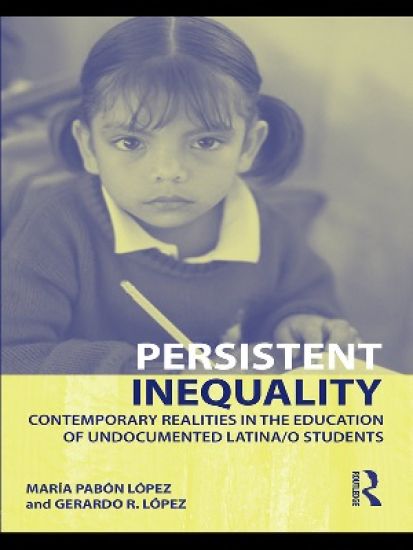
Persistent Inequality

Persistent Inequality

Maria Pabon Lopez; Gerardo R. Lopez

Routledge
2009
sidottu
The children of undocumented migrants in the U.S. are trapped at the intersection of two systems in crisis: the public education system and the immigration law system. Based on a long tradition of scholarship in Latino education and on newer critical race theory ideas, Persistent Inequality answers burning questions about how educational policy has to rise to meet the unique challenges of undocumented students’ lives as well as those which face nearly all Latinos in the U.S. educational system. How solid is the Supreme Court precedent, Plyler v. Doe, that allows undocumented children the opportunity to attend public school K-12 free of charge? What would happen if the Supreme Court overruled it? What is the DREAM Act and how would this proposed federal law affect the lives of undocumented students? How have immigration raids affected public school children and school administrators? To shed some light on these vital questions, the authors provide a critical analysis of the various legal and policy aspects of the U.S. educational system, asserting that both the legal and educational systems in this country need to address the living and working conditions of undocumented Latino students and remove the obstacles to educational achievement which these students struggle with daily.
Persistent Inequality

Persistent Inequality

Maria Pabon Lopez; Gerardo R. Lopez

Routledge
2009
nidottu
The children of undocumented migrants in the U.S. are trapped at the intersection of two systems in crisis: the public education system and the immigration law system. Based on a long tradition of scholarship in Latino education and on newer critical race theory ideas, Persistent Inequality answers burning questions about how educational policy has to rise to meet the unique challenges of undocumented students’ lives as well as those which face nearly all Latinos in the U.S. educational system. How solid is the Supreme Court precedent, Plyler v. Doe, that allows undocumented children the opportunity to attend public school K-12 free of charge? What would happen if the Supreme Court overruled it? What is the DREAM Act and how would this proposed federal law affect the lives of undocumented students? How have immigration raids affected public school children and school administrators? To shed some light on these vital questions, the authors provide a critical analysis of the various legal and policy aspects of the U.S. educational system, asserting that both the legal and educational systems in this country need to address the living and working conditions of undocumented Latino students and remove the obstacles to educational achievement which these students struggle with daily.
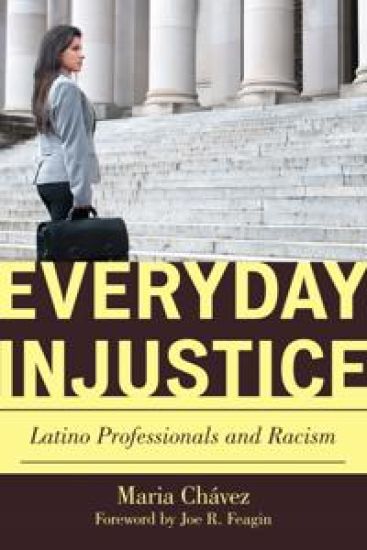
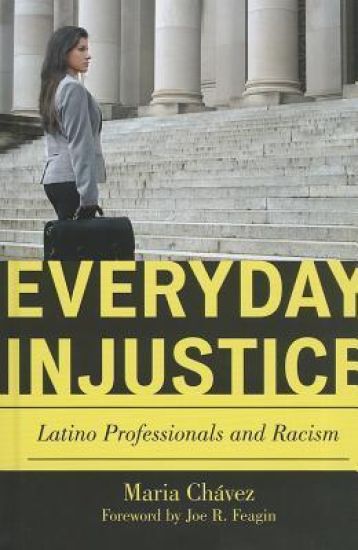
Everyday Injustice

Everyday Injustice

Maria Chávez; Joe R. Feagin

Rowman Littlefield Publishers
2017
nidottu
As members of the fastest-growing demographic group in America, Latinos are increasingly represented in the professional class, but they continue to face significant racism. Everyday Injustice introduces readers to the challenges facing Latino professionals today. Examining the experiences of many of the most privileged members of the largest racial and ethnic community in the United States, Maria Chávez provides important insights into the challenges facing racialized groups, particularly Latinos, in the United States. Her study looks at Latino lawyers in depth, weaving powerful personal stories and interview excerpts with a broader analysis of survey research and focus groups. The book examines racial framing in America, the role of language and culture among Latino professionals, the role of Latinos in the workplace, their level of civic participation, and the important role that education plays in improving their experiences. One chapter discusses the unique challenges that Latinas face in the workplace as both women and people of color. The findings outlined in Everyday Injustice suggest that despite considerable success in overcoming educational, economic, and class barriers, Latino professionals still experience marginalization. A powerful illustration of racism and inequality in America.
Everyday Injustice

Everyday Injustice

Maria Chávez; Joe R. Feagin

Rowman Littlefield
2011
sidottu
As members of the fastest-growing demographic group in America, Latinos are increasingly represented in the professional class, but they continue to face significant racism. Everyday Injustice introduces readers to the challenges facing Latino professionals today. Examining the experiences of many of the most privileged members of the largest racial and ethnic community in the United States, Maria Chávez provides important insights into the challenges facing racialized groups, particularly Latinos, in the United States. Her study looks at Latino lawyers in depth, weaving powerful personal stories and interview excerpts with a broader analysis of survey research and focus groups. The book examines racial framing in America, the role of language and culture among Latino professionals, the role of Latinos in the workplace, their level of civic participation, and the important role that education plays in improving their experiences. One chapter discusses the unique challenges that Latinas face in the workplace as both women and people of color. The findings outlined in Everyday Injustice suggest that despite considerable success in overcoming educational, economic, and class barriers, Latino professionals still experience marginalization. A powerful illustration of racism and inequality in America.
CHCAC316D Provide food services: This unit describes the knowledge and skills required by the worker to apply basic food safety practices including pe
This unit describes the knowledge and skills required by the worker to apply basic food safety practices including personal hygiene and conduct when working in a food service environment in a residential setting. It contains Employability Skills This unit supports the implementation of national and state food safety legislation and regulations and is based on the national Food Safety Guideline Units of competency. Available on Amazon and Kindle. It will teach you to do the following; 1.1Carry out food handling according to the food safety program 1.2Identify and report processes or practices which are not consistent with the food safety program 1.3Take corrective action within the level of responsibility, according to the food safety program 1.4Maintain the workplace in a clean and tidy order to meet workplace standards 2.1Ensure personal hygiene meets the requirements of the food safety program 2.2Report health conditions and/or illness as required by the food safety program 2.3Wear clothing and footwear appropriate for food handling task and to meet requirements of the food safety program 2.4Ensure storage area is kept free from contaminants 3.1Receive and check food deliveries against organisation records 3.2Transport food safely and hygienically 3.3Ensure selected food storage environments are appropriate to specific food type 3.4Maintain appropriate environmental conditions for specific food types 3.5Prior to meal delivery, check each meal against appropriate documentation 3.6Reheat meals, if required, according to food regulations 3.7Complete meal tray assembly and check for accuracy according to established routines and procedures 3.8Prepare beverage utensils for use 3.9Deliver meals and/or beverages and leave in the appropriate place for client within the designated timeframe 3.10Replace missing or incorrect meals and/or beverages with appropriate meals and/or beverages 3.11Refill water jugs to address specific client requirements according to established policy and procedure 3.12Check room numbers, bed numbers and client name against appropriate documentation 3.13Assist client to sit up if required, in accordance with organisation policy and under the direction of an appropriate health professional 4.1Collect trays and all utensils after client has finished eating 4.2Check tray for foreign objects and stack safely on trolley 4.3Return dirty beverage utensils for cleaning 4.4Maintain stock of clean beverage utensils 4.5Collect empty water jugs 4.6Depending upon the scope of the work role, report insufficient food or fluid intake to the appropriate personnel according to enterprise procedures 4.7Seek client feedback on general acceptance/ satisfaction with meals and report to appropriate personnel according to enterprise procedures 5.1Identify a range of foods to meet the nutritional needs of the client groups 5.2Accurately follow standard recipes to ensure product consistency, nutritional integrity and to minimise wastage 5.3Prepare appropriate meals for specific client groups in an appetising and attractive manner 5.4Modify food texture to meet the needs of client groups and to meet enterprise standards 5.5Serve/plate meals appropriate to the setting, using appropriate portion control equipment as required 5.6Evaluate meals against organisation standards You will learn about; The food safety requirements and procedures related to own work. These depend on the nature of food handled and food handling responsibilities Possible consequences of not following these procedures Legal responsibilities relating to personal hygiene practices and the reporting of illness as required by the food safety program Including restrictions on; Clothing & footwear Personal clothing maintenance, laundering and storage Appropriate bandages and dressings Suitable standard for materials, equipment Responsibilities for maintaining a work area Use and store cleaning equipment Waste collection
CHCAC317A Support older people to maintain their independence: This unit describes the knowledge and skills required by the worker to support the olde
1.1 Encourage older people to utilise support services where appropriate 1.2 Clearly explain the scope of the service to be provided to the older person and/or their advocate 1.3 Identify the needs of the older person from the service delivery plan and from consultation with a supervisor 1.4 Ensure visits and service delivery accommodate the older person's established routines and customs where possible 1.5 Perform work in a manner that acknowledges that the services are being provided in the client's own home 1.6 Provide services in a manner that enables the older person to direct the processes where appropriate 1.7 Provide support/assistance in accordance with organisation policy, protocols and procedures 1.8 Demonstrate appropriate use of equipment to support/assist the older person with activities of living within work role and responsibility 2.1 Monitor the older person's activities and environment to identify increased need for support/assistance with activities of living 2.2 Report to a supervisor the older person's inability to undertake activities of living independently 2.3 Support/assist the older person to modify or adapt the environment or activity to facilitate independence 2.4 Seek aids and/or equipment to support/assist the older person undertake activities of living independently 3.1 Encourage and support/assist the older person to maintain their environment 3.2 Provide support to promote security of the older person's environment 3.3 Adapt or modify the environment, in consultation with the older person, to maximise safety and comfort 3.4 Recognise hazards and address in accordance with organisation policy and protocols 4.1 Recognise signs that older person is experiencing grief and report to appropriate person 4.2 Use appropriate communication strategies when older person is expressing their fears and other emotions associated with loss and grief 4.3 Provide older person and/or their support network with information regarding relevant support services as required Workers in this field must be able to demonstrate essential knowledge required to effectively perform task skills; task management skills; contingency management skills and job/role environment skills as outlined in elements and performance criteria of this unit These include knowledge of: -Relevant policies, protocols and practices of the organisation in relation to Unit Descriptor and work role -The importance of community engagement and the ability to undertake instrumental activities of living for older people -Principles and practices of confidentiality and privacy -Principles and practices associated with providing services in a client's own living environment -Strategies for supporting/assisting an older person to undertake instrumental activities of living independently -Services and aids available to support independence with instrumental activities of living -Referral mechanisms -Safety and security risks associated with ageing -Hazards in an older person's environment -Strategies for minimising hazards in older person's environments -Stages of loss and grief and impact of ageing on person's experiences of loss and grief Essential skills: -Apply demonstrated understanding of own work role and responsibilities -Follow organisation policies and protocols -Liaise and report appropriately to supervisor -Adhere to own work role and responsibilities -Monitor older people's ability to undertake instrumental activities of living and providing support/assistance in accordance with service delivery plans -Accommodate older people's established routines and customs -Apply reading and writing skills required to fulfil work role -Apply oral communication skills -Apply numeracy skills required -Apply basic problem solving skills to resolve problems -Work effectively with clients, social networks, colleagues and supervisors
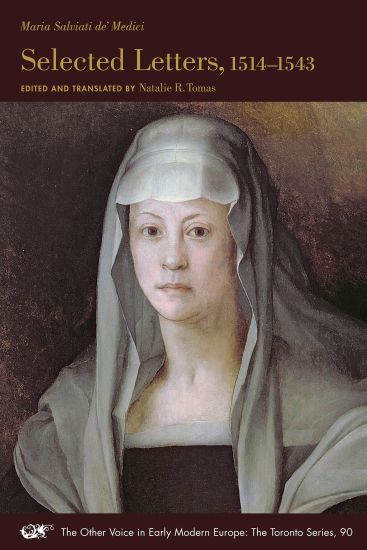
Selected Letters, 1514–1543

Selected Letters, 1514–1543

Maria Salviati De Medici; Natalie R. Tomas

Iter Press
2022
nidottu
The voluminous correspondence of Maria Salviati de’ Medici. In recent years, there has been an upsurge of interest in Maria Salviati de’ Medici, specifically, in her role in Medici governance and her relationships with other members of the Medici court. Maria Salviati’s surviving correspondence documents a life spent close to the centers of Medici power in Florence and Rome, giving witness to its failures, resurrection, and eventual triumph. Presented here for the first time in English, this book is a representative sample of Maria’s surviving letters that document her remarkable life through a tumultuous period of Italian Renaissance history. While she earned the exasperation of some, she gained the respect of many more. Maria ended her life as an influential dowager, powerful intercessor for local Tuscans of all strata, and wise elder in Duke Cosimo I’s court. The first critical, analytical, biographical work on Maria Salviati de’ Medici’s life and letter-writing in English.
Decarbonization as a Route Towards Sustainable Circularity

Decarbonization as a Route Towards Sustainable Circularity

Maria Magdalena Ramirez-Corredores; Mireya R. Goldwasser; Eduardo Falabella de Sousa Aguiar

Springer International Publishing AG
2023
nidottu
This book surveys the current research on CO2 conversion processes and shows that these can close the carbon cycle as part of a circular economy. The technical and economic feasibility of these processes are examined together and current scientific challenges are signposted, which will guide future R&D. Technology sustainability is key for meeting and keeping decarbonization goals in the long term. However, considering economic and environmental sustainability individually is not enough. An integral view of sustainability that incorporates an energy term in the equation is needed. This book brings this concept to the fore.