Kirjojen hintavertailu. Mukana 12 352 136 kirjaa ja 12 kauppaa.

Kirjahaku

Etsi kirjoja tekijän nimen, kirjan nimen tai ISBN:n perusteella.

1000 tulosta hakusanalla Michael a. Innes

Mergers and Acquisitions

Mergers and Acquisitions

Michael A. Hitt; Jeffrey S. Harrison; R. Duane Ireland

Oxford University Press Inc
2001
sidottu
In 1999, MCI WorldComm and Sprint agreed to merge. Valued at $129 billion, this expected transaction was the largest in history. However, it fell victim to regulators in Europe concerned with the potential monopoly power of the merged firm. This M&A action was merely the latest in a growing trend of "blockbuster" mergers over the past several years. Once a phenomenon seen primarily in the United States, mergers and acquisitions are increasingly being pursued across national boundaries. In short, acquisition strategies are among the most important corporate-level strategies in the new millennium. The need for clear, complete, and up-to-date guide to successful mergers and acquisitions had never been greater. This book more than fills that need. Looking at successful--and unsuccessful--mergers and acquisitions in a number of different industries, Mergers and Acquisitions: A Guide to Creating Value explains how to conduct an acquisition and how to avoid pitfalls that have doomed many such ventures. The authors take the reader step-by-step through the process, starting with the elements of a successful merger, due diligence to ensure that the target firm is sound and fits well with the acquiring firm, and how mergers and acquisitions are financed. They move on to explore how firms find partners/targets for acquisitions that have complementary resources and how to find partners with which integration and synergy can be achieved. Finally, they discuss the potential hazards found in M&A's and how to avoid them, how to conduct successful cross-border acquisitions, and how to ensure that ethical principles aren't breached during the process. Based on 15 years of research, this essential guide goes beyond specific case studies to cover all aspects of these ventures, making it required reading for all managers seeking to build a successful strategy.
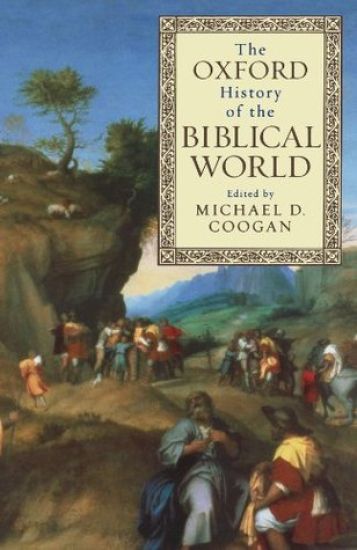
The Oxford History of the Biblical World

The Oxford History of the Biblical World

Michael A. Coogan

Oxford University Press Inc
2001
nidottu
This is a text-only paperback edition of The Oxford History of the Biblical World. a comprehensive survey of the world from which the Bible emerged. Chronologically ordered, it is an authoritative synthesis written by leading scholars and incorporating the latest archeological discoveries and current methodologies. Chapters present a readable and integrated study of the history, art, architecture, languages, literature, and religion of biblical Israel and early Judaism and Christianity in their larger cultural context. For the paperback edition the maps and tables will remain intact. However, Coogan selects an eight-page black and white insert from the original art program. The art insert compiles the most visually compelling and historical important items that are illustrative of the text.
Epistemology and the Psychology of Human Judgment

Epistemology and the Psychology of Human Judgment

Michael A Bishop; J. D. Trout

Oxford University Press Inc
2005
sidottu
Bishop and Trout here present a unique and provocative new approach to epistemology (the theory of human knowledge and reasoning). Their approach aims to liberate epistemology from the scholastic debates of standard analytic epistemology, and treat it as a branch of the philosophy of science. The approach is novel in its use of cost-benefit analysis to guide people facing real reasoning problems and in its framework for resolving normative disputes in psychology. Based on empirical data, Bishop and Trout show how people can improve their reasoning by relying on Statistical Prediction Rules (SPRs). They then develop and articulate the positive core of the book. Their view, Strategic Reliabilism, claims that epistemic excellence consists in the efficient allocation of cognitive resources to reliable reasoning strategies, applied to significant problems. The last third of the book develops the implications of this view for standard analytic epistemology; for resolving normative disputes in psychology; and for offering practical, concrete advice on how this theory can improve real people's reasoning. This is a truly distinctive and controversial work that spans many disciplines and will speak to an unusually diverse group, including people in epistemology, philosophy of science, decision theory, cognitive and clinical psychology, and ethics and public policy.
Epistemology and the Psychology of Human Judgment

Epistemology and the Psychology of Human Judgment

Michael A Bishop; J. D. Trout

Oxford University Press Inc
2005
nidottu
Bishop and Trout here present a unique and provocative new approach to epistemology (the theory of human knowledge and reasoning). Their approach aims to liberate epistemology from the scholastic debates of standard analytic epistemology, and treat it as a branch of the philosophy of science. The approach is novel in its use of cost-benefit analysis to guide people facing real reasoning problems and in its framework for resolving normative disputes in psychology. Based on empirical data, Bishop and Trout show how people can improve their reasoning by relying on Statistical Prediction Rules (SPRs). They then develop and articulate the positive core of the book. Their view, Strategic Reliabilism, claims that epistemic excellence consists in the efficient allocation of cognitive resources to reliable reasoning strategies, applied to significant problems. The last third of the book develops the implications of this view for standard analytic epistemology; for resolving normative disputes in psychology; and for offering practical, concrete advice on how this theory can improve real people's reasoning. This is a truly distinctive and controversial work that spans many disciplines and will speak to an unusually diverse group, including people in epistemology, philosophy of science, decision theory, cognitive and clinical psychology, and ethics and public policy.
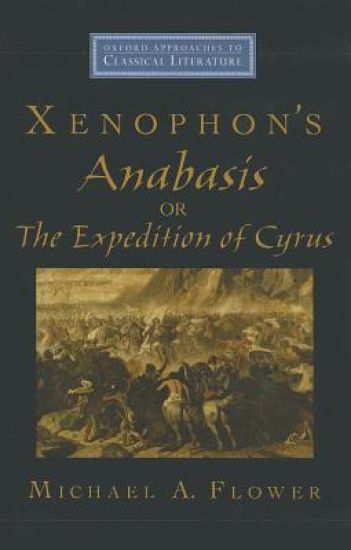
Xenophon's Anabasis, or The Expedition of Cyrus

Xenophon's Anabasis, or The Expedition of Cyrus

Michael A. Flower

Oxford University Press Inc
2012
sidottu
Xenophon's Anabasis, or The Expedition of Cyrus, is one of the most exciting historical narratives--as well as the most important autobiographical work--to have survived from ancient Greece. It tells the story of Cyrus, a young and charismatic Persian prince, who in 401 BC enlisted more than ten thousand Greek mercenaries in an attempt to seize the vast Persian empire for himself. Cyrus was killed in a great battle, most of the Greek commanders subsequently fell victim to treachery, and an Athenian aristocrat by the name of Xenophon found himself in the unexpected position of taking charge and leading the Greeks from the vicinity of Babylon in modern Iraq back to the Greek cities in Turkey. This book both places the Anabasis in its historical and literary context and, by employing a variety of critical methods, opens up for the reader different ways of interpreting its major themes. Interrelated chapters investigate Xenophon's self-representation as a model leader, his possible didactic and apologetic purposes for writing, the generic expectations of his contemporary audience, the factual accuracy of the Anabasis, and the ways in which the gods are depicted as intervening in human affairs. This book unveils the literary artistry and narrative strategies that have gone into shaping one of the greatest survival stories of all time.
Xenophon's Anabasis, or The Expedition of Cyrus

Xenophon's Anabasis, or The Expedition of Cyrus

Michael A. Flower

Oxford University Press Inc
2012
nidottu
Xenophon's Anabasis, or The Expedition of Cyrus, is one of the most exciting historical narratives--as well as the most important autobiographical work--to have survived from ancient Greece. It tells the story of Cyrus, a young and charismatic Persian prince, who in 401 BC enlisted more than ten thousand Greek mercenaries in an attempt to seize the vast Persian empire for himself. Cyrus was killed in a great battle, most of the Greek commanders subsequently fell victim to treachery, and an Athenian aristocrat by the name of Xenophon found himself in the unexpected position of taking charge and leading the Greeks from the vicinity of Babylon in modern Iraq back to the Greek cities in Turkey. This book both places the Anabasis in its historical and literary context and, by employing a variety of critical methods, opens up for the reader different ways of interpreting its major themes. Interrelated chapters investigate Xenophon's self-representation as a model leader, his possible didactic and apologetic purposes for writing, the generic expectations of his contemporary audience, the factual accuracy of the Anabasis, and the ways in which the gods are depicted as intervening in human affairs. This book unveils the literary artistry and narrative strategies that have gone into shaping one of the greatest survival stories of all time.
Mild Traumatic Brain Injury and Postconcussion Syndrome

Mild Traumatic Brain Injury and Postconcussion Syndrome

Michael A. Mccrea

Oxford University Press Inc
2007
nidottu
This is the first neuropsychology book to translate exciting findings from the recent explosion of research on sport-related concussion to the broader context of mild traumatic brain injury (MTBI) and post-concussive syndrome (PCS) in the general population. Traumatic brain injuries constitute a major global public health problem, but until now MTBIs, which constitute up to 90 percent of all treated TBIs, have been difficult to evaluate and manage clinically because of the absence of a viable model. This book provides a welcome evidence base for all clinicians involved in the clinical diagnosis and treatment of MTBI. Each section of the book ends with a helpful summary of the 'Top 10' conclusions. The book includes a Continuing Education (CE) component administered by the American Academy of Clinical Neuropsychology.
Innovation for the 21st Century

Innovation for the 21st Century

Michael A. Carrier

Oxford University Press Inc
2009
sidottu
In recent years, innovation has been threatened by the United States legal system. Much of the blame can be attributed to the antitrust and intellectual property laws. Innovation for the 21st Century seeks to reverse this trend, offering ten revolutionary proposals, from pharmaceuticals to peer-to-peer software, to help foster innovation. Michael A. Carrier illustrates the benefits of improving the patent system and incorporating innovation into copyright and antitrust law. He also dips into a rich business literature to import ideas on "disruptive innovation" and "user innovation." And he replaces the 20th-century view that the IP and antitrust laws are in conflict with a new 21st-century framework that treats them as collaborators. Innovation for the 21st Century: Harnessing the Power of Intellectual Property and Antitrust Law provides a comprehensive framework for the patent, copyright, and antitrust laws to promote innovation.
Reviving Rationality

Reviving Rationality

Michael A. Livermore; Richard L. Revesz

Oxford University Press Inc
2021
sidottu
For decades, administrations of both political parties have used cost-benefit analysis to evaluate and improve federal policy in a variety of areas, including health and the environment. Today, this model is under grave threat. In Reviving Rationality, Michael Livermore and Richard Revesz explain how Donald Trump has destabilized the decades-long bipartisan consensus that federal agencies must base their decisions on evidence, expertise, and analysis. Administrative agencies are charged by law with protecting values like stable financial markets and clean air. Their decisions often have profound consequences, affecting everything from the safety of workplaces to access to the dream of home ownership. Under the Trump administration, agencies have been hampered in their ability to advance these missions by the conflicting ideological whims of a changing cast of political appointees and overwhelming pressure from well-connected interest groups. Inconvenient evidence has been ignored, experts have been sidelined, and analysis has been used to obscure facts, rather than inform the public. The results are grim: incoherent policy, social division, defeats in court, a demoralized federal workforce, and a loss of faith in government's ability to respond to pressing problems. This experiment in abandoning the norms of good governance has been a disaster. Reviving Rationality explains how and why our government has abandoned rationality in recent years, and why it is so important for future administrations to restore rigorous cost-benefit analysis if we are to return to a policymaking approach that effectively tackles the most pressing problems of our era.
City of Song

City of Song

Michael A. Figueroa

OXFORD UNIVERSITY PRESS INC
2022
nidottu
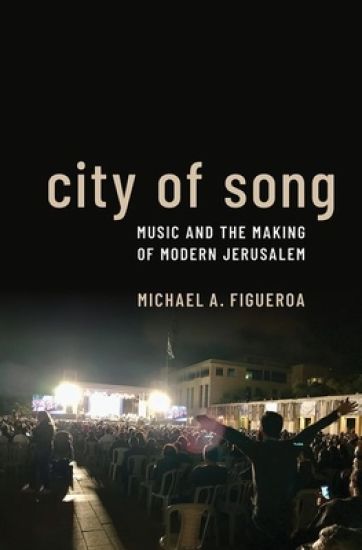
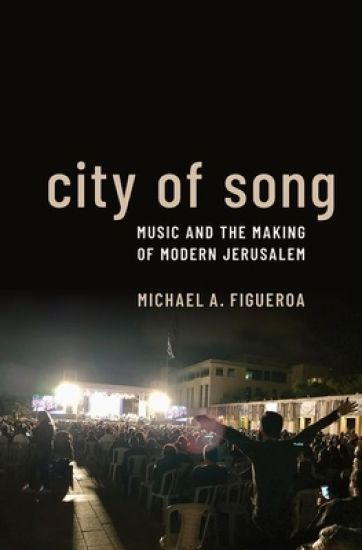
Modern Jerusalem, a city central to Jewish, Muslim, and Christian religious imaginaries and the political epicenter of the Israeli-Palestinian crisis, is to put it mildly a highly contested space. More surprising, perhaps, is that its musical landscape not only reflects these rifts but also helped to define them as the ancient city transitioned to modernity during the twentieth century. In City of Song: Music and the Making of Modern Jerusalem, author Michael A. Figueroa argues that musical renderings of Jerusalem have been critical to the formation of Israeli political consciousness. The book demonstrates how Israeli songwriters helped to shape their public's territorial imagination-- creating images of a city at once heavenly and earthly, that dwells in longing, that must not be forgotten, that compels one to bereave the dead, that represents the fulfilment of prophecy, and that is the site of immense cultural diversity. The dynamic history of its representation in lyrics and music helps dispel any notion that the Israeli-Palestinian crisis is timeless, intractable, and based on static, essential identities; while there are continuities across historical divides, radical change constantly transpires. City of Song combines analyses of musical meaning, political discourse, and public performance over the long twentieth century (1880s-2010) to reveal how the Israeli-Palestinian crisis' territorial fixation on Jerusalem has been constructed, historically contingent, and subject to artistic intervention in modernity. Through a musical history of Jerusalem, Figueroa introduces a novel, humanities-centered approach to one of the world's most contested cities, and one of the defining cultural and political questions of our era.
City of Song

City of Song

Michael A. Figueroa

OXFORD UNIVERSITY PRESS INC
2022
sidottu
Modern Jerusalem, a city central to Jewish, Muslim, and Christian religious imaginaries and the political epicenter of the Israeli-Palestinian crisis, is to put it mildly a highly contested space. More surprising, perhaps, is that its musical landscape not only reflects these rifts but also helped to define them as the ancient city transitioned to modernity during the twentieth century. In City of Song: Music and the Making of Modern Jerusalem, author Michael A. Figueroa argues that musical renderings of Jerusalem have been critical to the formation of Israeli political consciousness. The book demonstrates how Israeli songwriters helped to shape their public's territorial imagination— creating images of a city at once heavenly and earthly, that dwells in longing, that must not be forgotten, that compels one to bereave the dead, that represents the fulfilment of prophecy, and that is the site of immense cultural diversity. The dynamic history of its representation in lyrics and music helps dispel any notion that the Israeli-Palestinian crisis is timeless, intractable, and based on static, essential identities; while there are continuities across historical divides, radical change constantly transpires. City of Song combines analyses of musical meaning, political discourse, and public performance over the long twentieth century (1880s-2010) to reveal how the Israeli-Palestinian crisis' territorial fixation on Jerusalem has been constructed, historically contingent, and subject to artistic intervention in modernity. Through a musical history of Jerusalem, Figueroa introduces a novel, humanities-centered approach to one of the world's most contested cities, and one of the defining cultural and political questions of our era.
Unconventional Combat

Unconventional Combat

Michael A. Messner

Oxford University Press Inc
2021
nidottu
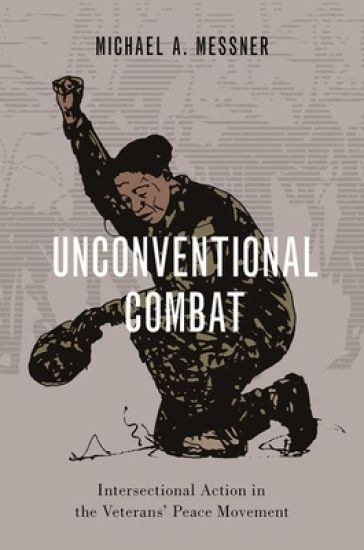
In recent decades, there has been a generational shift of the US veterans' peace movement, from one grounded mostly in the experiences of older white men of the Vietnam War era, to one informed by a young, diverse cohort of post-9/11 veterans. In Unconventional Combat, Michael A. Messner traces this transformation through the life-history interviews of six veterans of color to show how their experiences of sexual and gender harassment, sexual assault, racist and homophobic abuse during their military service has shaped their political views and action. Drawing upon participant observation with the Veterans For Peace and About Face organizations and interviews with older male veterans as his backdrop, Messner shows how veterans' military experiences form their collective "situated knowledge" of intersecting oppressions. This knowledge, Messner argues, further shapes their intersectional praxis, which promises to transform the veterans' peace movement and potentially link their anti-militarist work with other movement groups working for change. As intersectionality has increasingly become central to the conversation on social movements, Unconventional Combat is not only a story about the US veterans' peace movement, but it also offers broad relevance to the larger world of social justice activism.
Dangerous Instrument

Dangerous Instrument

Michael A. Robinson

OXFORD UNIVERSITY PRESS INC
2023
sidottu
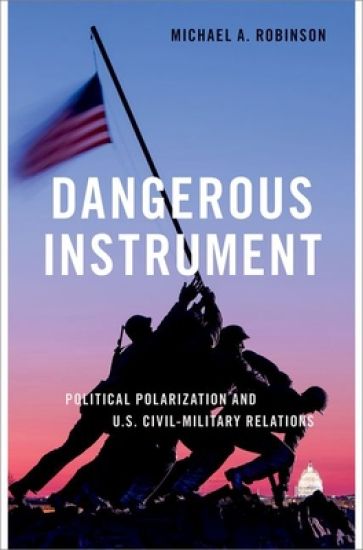
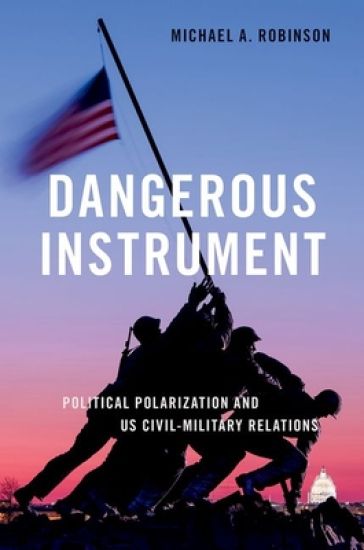
As increasingly contentious politics in the United States raise concerns over the "politicization" of traditionally non-partisan institutions, many have turned their attention to how the American military has been--and will be--affected by this trend. Since a low point following the end of the Vietnam War, the U.S. military has experienced a dramatic reversal of public opinion, becoming one of the most trusted institutions in American society. However, this trend is more complicated than it appears: just as individuals have become fonder of their military, they have also become increasingly polarized from one another along partisan lines. The result is a new political environment rife with challenges to traditional civil-military norms. In a data-driven analysis of contemporary American attitudes, Dangerous Instrument examines the current state of U.S. civil-military affairs, probing how the public views their military and the effect that partisan tribalism may have on that relationship in the future. Michael A. Robinson studies the sources and potential limits of American trust in the armed services, focusing on the interplay of the public, political parties, media outlets, and the military itself on the prospect of politicization and its associated challenges. As democratic institutions face persistent pressure worldwide, Dangerous Instrument provides important insights into the contemporary arc of American civil-military affairs and delivers recommendations on ways to preserve a non-partisan military.
Dangerous Instrument

Dangerous Instrument

Michael A. Robinson

OXFORD UNIVERSITY PRESS INC
2023
nidottu
As increasingly contentious politics in the United States raise concerns over the "politicization" of traditionally non-partisan institutions, many have turned their attention to how the American military has been--and will be--affected by this trend. Since a low point following the end of the Vietnam War, the U.S. military has experienced a dramatic reversal of public opinion, becoming one of the most trusted institutions in American society. However, this trend is more complicated than it appears: just as individuals have become fonder of their military, they have also become increasingly polarized from one another along partisan lines. The result is a new political environment rife with challenges to traditional civil-military norms. In a data-driven analysis of contemporary American attitudes, Dangerous Instrument examines the current state of U.S. civil-military affairs, probing how the public views their military and the effect that partisan tribalism may have on that relationship in the future. Michael A. Robinson studies the sources and potential limits of American trust in the armed services, focusing on the interplay of the public, political parties, media outlets, and the military itself on the prospect of politicization and its associated challenges. As democratic institutions face persistent pressure worldwide, Dangerous Instrument provides important insights into the contemporary arc of American civil-military affairs and delivers recommendations on ways to preserve a non-partisan military.
The Ethiopic Text of the Book of Ezekiel

The Ethiopic Text of the Book of Ezekiel

Michael A. Knibb

Oxford University Press
2015
sidottu
Ezekiel is one of the few books of the Ethiopic Old Testament of which no critical edition has hitherto existed, and the aim of this work is to fill that gap. It provides a critical edition of the oldest accessible text of the Geez version and is based on a collation of fifteen manuscripts. The Ethiopic version is a daughter version of the Septuagint, and the work sheds light on the character of the original translation and on its subsequent history. The latter included the revision of the translation in the early mediaeval period, which was in part influenced by a Syriac-based Arabic version, and a further revision of the translation based on the Masoretic text.
Authoritarian Liberalism and the Transformation of Modern Europe

Authoritarian Liberalism and the Transformation of Modern Europe

Michael A. Wilkinson

Oxford University Press
2021
sidottu
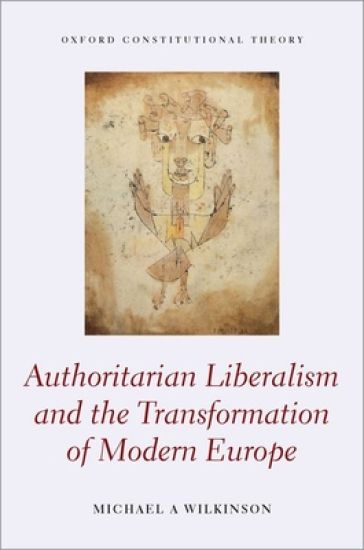
This title recounts the transformation of Europe from the post-war era until the Euro-crisis, using the tools of constitutional analysis and critical theory. The central claim is twofold: Europe has been gradually reconstituted in a manner that combines political authoritarianism with economic liberalism and that this order is now in a critical condition. Authoritarian liberalism is constructed supranationally, through a taming of inter-state relations in the project of European integration; at the domestic level, through the depoliticization of state-society relations; and socially, through the emergence of a new constitutional imaginary based on liberal individualism. In the language of constitutional theory, this transformation can be captured by the substitution of supranationalism for internationalism, technocracy for democracy, and economic for political freedom. Sovereignty is restrained, democracy curtailed, and class struggle repressed. This constitutional trajectory takes time to unfold and develop and it presents continuities and discontinuities. On the one hand, authoritarian liberalism is deepened by the neoliberalism of the Maastricht era and the creation of Economic and Monetary Union. On the other hand, counter-movements then also begin to emerge, geopolitically, in the return of the German question, domestically, in the challenges to the EU presented by constitutional courts, and informally, in the rise of anti-systemic political parties and movements. Sovereignty, democracy, and political freedom resurface, but are then more actively suppressed through the harsher authoritarian liberalism of the Euro-crisis phase. This leads now to an impasse. Anti-systemic politics return but remain uneasily within the EU, suggesting authoritarian liberalism has reached its limits if just about managing to maintain constitutional order. As yet, there has been no definitive rupture, with the possible exception of Brexit.
Staying Power

Staying Power

Michael A. Cusumano

Oxford University Press
2010
sidottu
As we move into an era of simultaneous innovation and commoditization, enabled by digital technologies, managers around the world are asking themselves "how can we both adapt to rapid changes in technology and markets, and still make enough money to survive - and thrive?" To provide answers to these important and urgent questions, MIT Sloan School of Management Professor Michael Cusumano draws on nearly 30 years of research into the practices of global corporations that have been acknowledged leaders and benchmark setters - and Microsoft, Apple, Intel, Google, and others in software, internet services, and consumer electronics, and Toyota in manufacturing. If we look deeply enough, he contends, we can see the ideas that underpin the management practices that make for great companies, and drive their strategic evolution and innovation capabilities. From his deep knowledge of these organizations, Cusumano distils six enduring principles that he believes have been - in various combinations - crucial to their strategy, innovation management practices, and ability to deal with change and uncertainty. The first two principles - platforms (not just products), and services, for product firms - are relatively new and broader ways of thinking about strategy and business models, based on Cusumano's latest research. The other four - capabilities (not just strategy), the "pull" concept, economies of scope, and flexibility (not just efficiency) - all contribute to agility, which is a mix of flexibility and speed. Some practices associated with these ideas, such as dynamic capabilities, just-in-time production, iterative or prototype-driven product development, flexible design and manufacturing, modular architectures, and component reuse, are now commonly regarded as standard best practices. They are also essential to a new world dominated by platforms and technology-enabled services.
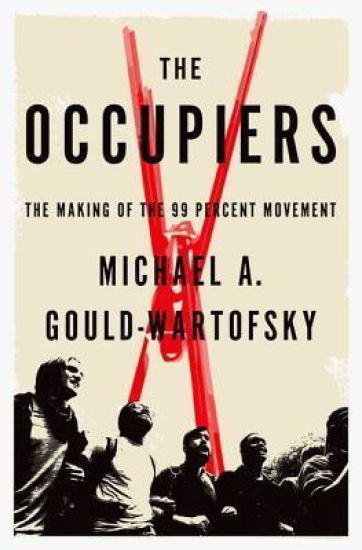
The Occupiers

The Occupiers

Michael A. Gould-Wartofsky

Oxford University Press Inc
2015
sidottu
Occupy Wall Street burst onto the stage of history in the fall of 2011. First by the tens, then by the tens of thousands, protestors filled the streets and laid claim to the squares of nearly 1,500 towns and cities, until, one by one, the occupations were forcibly evicted. In The Occupiers, Michael Gould-Wartofsky--one of the first social scientists on the ground in Zuccotti Park--offers a front-seat view of the action in the streets of New York City and beyond. Painting a vivid picture of everyday life in the square through the use of material gathered in the course of a year of participant observation, Gould-Wartofksy traces the occupation of Zuccotti Park--and some of its counterparts across the United States and around the world--from inception to eviction. He takes up the challenges the occupiers faced, the paradoxes of direct democracy, and the dynamics of direct action and police action and explores the ways in which occupied squares became focal points for an emerging opposition to the politics of austerity, restricted democracy, and the power of corporate America. Much of the discourse on the Occupy phenomenon has treated it as if it lived and died in Zuccotti Park, but Gould-Wartofsky follows the evicted occupiers into exile and charts the evolving strategies of the movement as it seeks to resist, regroup, and reoccupy. Removed from public spaces and news headlines, Occupy has spread out from the financial centers and across an America still struggling to recover in the aftermath of the crisis. Even if the movement fails to achieve radical reform, Gould-Wartofksy maintains, it may well accelerate the pace of change in the United States in the years to come.
Some Men

Some Men

Michael A. Messner; Max A. Greenberg; Tal Peretz

Oxford University Press Inc
2015
sidottu
What does it mean for men to join with women as allies in preventing sexual assault and domestic violence? Based on life history interviews with men and women anti-violence activists aged 22 to 70, Some Men explores the strains and tensions of men's work as feminist allies. When feminist women began to mobilize against rape and domestic violence, setting up shelters and rape crisis centers, a few men asked what they could do to help. They were directed "upstream," and told to "talk to the men" with the goal of preventing future acts of violence. This is a book about men who took this charge seriously, committing themselves to working with boys and men to stop violence, and to change the definition of what it means to be a man. The book examines the experiences of three generational cohorts: a movement cohort of men who engaged with anti-violence work in the 1970s and early 1980s, during the height of the feminist anti-violence mobilizations; a bridge cohort who engaged with anti-violence work from the mid-1980s into the 1990s, as feminism receded as a mass movement and activists built sustainable organizations; a professional cohort who engaged from the mid-1990s to the present, as anti-violence work has become embedded in community and campus organizations, non-profits, and the state. Across these different time periods, stories from life history interviews illuminate men's varying paths--including men of different ethnic and class backgrounds--into anti-violence work. Some Men explores the promise of men's violence prevention work with boys and men in schools, college sports, fraternities, and the U.S. military. It illuminates the strains and tensions of such work--including the reproduction of male privilege in feminist spheres--and explores how men and women navigate these tensions.
Some Men

Some Men

Michael A. Messner; Max A. Greenberg; Tal Peretz

Oxford University Press Inc
2015
nidottu
What does it mean for men to join with women as allies in preventing sexual assault and domestic violence? Based on life history interviews with men and women anti-violence activists aged 22 to 70, Some Men explores the strains and tensions of men's work as feminist allies. When feminist women began to mobilize against rape and domestic violence, setting up shelters and rape crisis centers, a few men asked what they could do to help. They were directed "upstream," and told to "talk to the men" with the goal of preventing future acts of violence. This is a book about men who took this charge seriously, committing themselves to working with boys and men to stop violence, and to change the definition of what it means to be a man. The book examines the experiences of three generational cohorts: a movement cohort of men who engaged with anti-violence work in the 1970s and early 1980s, during the height of the feminist anti-violence mobilizations; a bridge cohort who engaged with anti-violence work from the mid-1980s into the 1990s, as feminism receded as a mass movement and activists built sustainable organizations; a professional cohort who engaged from the mid-1990s to the present, as anti-violence work has become embedded in community and campus organizations, non-profits, and the state. Across these different time periods, stories from life history interviews illuminate men's varying paths--including men of different ethnic and class backgrounds--into anti-violence work. Some Men explores the promise of men's violence prevention work with boys and men in schools, college sports, fraternities, and the U.S. military. It illuminates the strains and tensions of such work--including the reproduction of male privilege in feminist spheres--and explores how men and women navigate these tensions.