Kirjojen hintavertailu. Mukana 12 016 292 kirjaa ja 12 kauppaa.

Kirjahaku

Etsi kirjoja tekijän nimen, kirjan nimen tai ISBN:n perusteella.

1000 tulosta hakusanalla Michelle D. Commander

Clayton's Basic Pharmacology for Nurses

Clayton's Basic Pharmacology for Nurses

Michelle J. Willihnganz; Samuel L. Gurevitz; Bruce D. Clayton

Mosby
2019
nidottu
Master the basic principles of pharmacology and safe medication administration with Clayton's Basic Pharmacology for Nurses, 18th Edition. Known for its impeccably accurate and up-to-date drug content, this best-selling text consistently underscores medication safety as it guides you in applying pharmacology information to the nursing process. Introductory units acquaint you with the basic principles of pharmacology and medication administration, while subsequent body-system units prepare you to apply the nursing process to every major disorder. Clear guidelines cover safe drug handling, the types of drugs used for disorders or to affect body systems, injection and enteral administration, and patient education. From a respected author team, this full-color text also provides an excellent review for the pharmacology questions on the NCLEX® examination. Medication safety is underscored through Medication Safety Alerts and Clinical Pitfall boxes, as well as Do-Not-Confuse and High Alert icons. Unit on medication administration clearly and visually outlines assessment, techniques, procedures, and documentation for safe administration of percutaneous, enteral, and parenteral drugs. Application of the nursing process offers an overview of general principles of nursing care for each disorder as well as specific nursing considerations for the drug treatment. Lifespan Considerations boxes for children and for older adults draw attention to information that would be especially important when giving a specific drug to patients of those age groups. Drug tables clearly outline generic and brand names, availability, and dosage ranges for key medications for each disorder. Clinical Goldmine boxes focus on best practices in the clinical setting. Get Ready for the NCLEX® Examination! section at the end of each chapter covers key points from the chapter as well as review questions to help prepare for course assessments and the NCLEX Examination. Video clips on medication administration procedures provide a visual reference for safe medication administration. Key terms with phonetic pronunciations and text page references are listed at the beginning of each chapter. NEW! Chapter on Neurodegenerative Disorders covers drugs for dementia and Alzheimer's Disease. NEW! Updated guidelines on diabetes, heart failure, asthma, COPD, and cancer ensure readers are versed in the latest treatment protocols. NEW! Accurate and up-to-date coverage includes the most recent FDA approvals, withdrawals, therapeutic uses, and content on cultural considerations related to each drug class.
Clayton's Basic Pharmacology for Nurses

Clayton's Basic Pharmacology for Nurses

Michelle J. Willihnganz; Samuel L. Gurevitz; Bruce D. Clayton

Elsevier - Health Sciences Division
2022
nidottu
Learn safe, effective nursing care for patients receiving drug therapy! Basic Pharmacology for Nurses, 19th Edition helps you understand the principles of pharmacology and apply them to nursing practice. Known for its practical application of the nursing process to drugs and disorders, this book explains how to make informed decisions about drug therapy, educate patients, and administer medications. This edition adds new Next Generation NCLEX® (NGN)-style case studies and questions to prepare you for the critical thinking questions on the NGN exam. Concise and easy to use, this text teaches the basics of medication administration and drug actions. Application of the nursing process includes an overview of general principles of nursing care for each disorder, along with specific nursing considerations for drug treatment. Drug monographs are provided for each major drug class, describing actions, uses, and therapeutic outcomes for each class. Medication Administration unit covers assessment, techniques, procedures, and documentation for the safe administration of percutaneous, enteral, and parenteral drugs. Medication safety is emphasized with Medication Safety Alerts and Clinical Pitfall boxes, as well as Do Not Confuse and High Alert icons. Clinical Goldmine boxes highlight tips and best practices for clinical procedures. Lifespan Considerations boxes draw attention to the implications of drug therapy for children, pregnant and breastfeeding women, and older adults. Drug tables summarize generic and brand names, availability, and dosage ranges for key medications for each disorder.Get Ready for the NCLEX® Examination!?section?at the end of each chapter covers key points as well as?review questions, preparing you for course assessments and the NCLEX Examination. Learning resources on the Evolve website include video clips of medication administration, animations of drug actions, drug calculators, patient teaching guides, and Next Generation NCLEX® review questions. Study guide corresponds to the textbook and offers review questions and clinical scenarios to reinforce your understanding of nursing pharmacology. Available separately. NEW! Next Generation NCLEX® (NGN)-style questions help you develop higher cognitive thinking skills, including clinical judgment, and provide opportunities to practice for the new question formats on the NGN exam. NEW! Updated content is included for newly approved and frequently prescribed pharmaceutical drugs, and for their therapeutic uses. NEW! Unfolding case studies help you translate pharmacological knowledge into nursing practice and provide preparation for the Next Generation NCLEX exam.
Study Guide for Clayton's Basic Pharmacology for Nurses

Study Guide for Clayton's Basic Pharmacology for Nurses

Michelle J. Willihnganz; Samuel L. Gurevitz; Bruce D. Clayton

Elsevier - Health Sciences Division
2022
nidottu
Reinforce your understanding of nursing pharmacology and prepare for success on the NCLEX-PN® exam! With chapters corresponding to the chapters in Basic Pharmacology for Nurses, 19th Edition, this study guide provides a variety of exercises to help you review and practice the LPN/LVN's role in drug therapy and patient care. Review questions make it easier to achieve the chapter objectives from the textbook, and patient scenarios help you develop clinical judgment skills. Now with Next Generation NCLEX® (NGN)-style case studies and questions, this study tool also ensures that you will be ready for the critical thinking questions on the NGN exam. Reader-friendly writing style and organization make it easier to review and practice nursing pharmacology concepts. Variety of exercises reinforce your understanding with multiple-choice, matching, and select-all-that-apply questions, as well as crossword puzzles. Questions on medication administration reinforce your knowledge of drugs and safety in performing procedures. NEW! Next Generation NCLEX® (NGN)-style questions provide practice for the new question formats on the NGN licensure exam. NEW! Case studies in clinical chapters allow you to review, practice, and apply clinical judgment skills. NEW! Updated exercises cover the new content in the text, including newly approved pharmaceutical drugs and treatments.
The Psychotherapy Relationship: Cultural Influences

The Psychotherapy Relationship: Cultural Influences

Michelle S. Abel Horowitz Phd; Robert L. Hatcher Phd; Shanna D. Jackson Phd

Createspace Independent Publishing Platform
2014
nidottu
This second volume in the Monograph Series of Fielding Graduate University features six articles on the cultural ramifications of the psychotherapy relationship, based on recent dissertations by Fielding graduates. Edited by Sherry L. Hatcher, Faculty Chair in the Clinical Psychology Program at Fielding Graduate University, the monograph offers six in-depth studies on some of the unique socio-cultural aspects of the therapy relationship. Jessie Whitehorse Lopez's article, co-authored by Robert Hatcher, tells us about Native American psychotherapy clients: how they evaluate standard measures of alliance, and which criteria they propose to add in order to foster trust in the therapy relationship. Interestingly, Dr. Lopez did not initially gain cooperation from Native American research participants until he happened to show them that he knew how to make tobacco pouches, something his grandfather had taught him. That anecdote, recounted in the paper, also speaks to the analogous importance of an effective research relationship. Christine Mok-Lamm 's article serves to remind us to avoid stereotyping. The article illustrates common expectations about what Chinese American psychotherapy clients want from their therapy, in terms of either cognitive or emotion-based interventions. Dr. Mok-Lamm urges us to look at individual differences within cultures, so as to formulate an appropriate psychotherapy treatment for each patient. Arielle Schwartz takes us into "new age" culture by asking what psychologists think about embedding mind-body methods in their work, such as the use of relaxation techniques, mindfulness practices, and more. She discovered interesting discrepancies between the mind-body techniques that psychologists value personally, and those that they are disinclined to incorporate into their professional work. Shanna Jackson studied parallel cultures of abuse and what happens when therapists, who have themselves suffered abuse and trauma, treat clients with a similar history. The potential for "vicarious traumatization" suggests that methods that typically promote therapist empathy may instead have the potential to unwittingly retraumatize some therapists. Chaya Rubin and Comfort Shields explore the culture of therapists' judgments, based on archival data from a study published by the editor of this issue. They investigate the question of whether the perceived culpability or vulnerability of a psychotherapy client may affect a therapist's ability to empathize with that client. Michelle Horowitz introduces the reader to an exponentially expanding culture of social media and, in particular, how the delivery of electronically-mediated psychotherapy may positively and/or negatively impact the therapeutic relationship. She further addresses ethical issues, including the need for maximizing therapist competency in arranging for confidential delivery of therapy services via technologies such as Skype.
Visual Arts for Secondary Schools Second Edition

Visual Arts for Secondary Schools Second Edition

Allan Sieupresad; Michelle Bright Chin-See; Gabriella D’Abreau

Hachette Learning
2025
nidottu
Confidently navigate the Visual Arts curricula across all secondary school years with a course that unifies foundational skills and CSEC exam practice, featuring clear visual guides and activities tailored for academic success and artistic growth.- Enhance CSEC readiness with a resource that incorporates the latest technologies and syllabus topics, guiding students through reflective journal and portfolio creation for exam success. - Foster accessible learning through the simplification of complex visual arts concepts with student-friendly language and step-by-step guidance, enhancing skill development across student levels. - Improve understanding of chapter content through practical skills and preparation for examination with research-based activities, collaborative and independent projects, and art appreciation or critique.
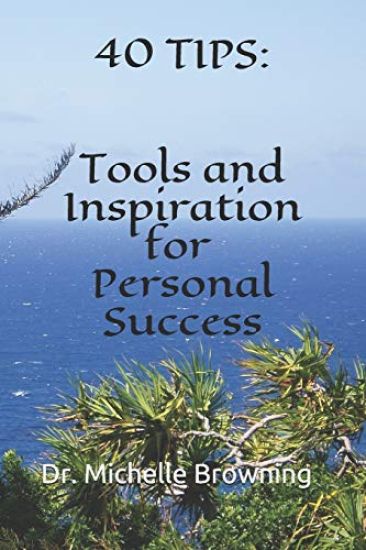
40 Tips: Tools and Inspiration for Personal Success

40 Tips: Tools and Inspiration for Personal Success

Darrel Browning; Michelle Browning Ph. D.

Independently Published
2019
nidottu
"40 TIPS" is a compilation of tools and inspirational stories shared to guide individuals and couples toward greater levels of personal and professional success. Utilizing theories of management including leadership, emotional intelligence, decision making and motivation, Darrel and Michelle Browning share their personal stories of life and love. Having a grateful heart, practicing daily acts of kindness and living a self-empowered life are some of the processes that they regularly embrace. Given the challenges with which many individuals are faced, any one of the "40 TIPS" may serve as a useful source of hope and inspiration in any aspect of one's life. "40 TIPS" is written in celebration of Darrel and Michelle's 40 year happy marriage and in answer to the commonly asked question that they encounter: "What is the secret to your success?"
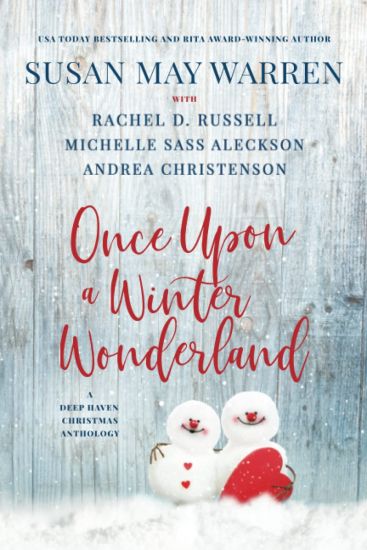
Once Upon a Winter Wonderland

Once Upon a Winter Wonderland

Susan May Warren; Rachel D Russell; Michelle Sass Aleckson

Sunrise Publishing
2022
pokkari
A Deep Haven wedding at Christmas? With snow glistening in the lane, sleigh bells ringing, and all the world a winter wonderland-magical, right?Or maybe not, because the snowstorm of the century has buried their small town, and as Vivien Calhoun and Boone Buckam fight the sleet, snow, and ice, just about everything can-and does-happen to skid their big day into the ditch. It'll take all their friends-and a few strangers-to turn this Christmas wedding from a blizzard to a beautiful sight in this charming collection of novellas.Discover four enchanting stories featuring old friends, and new, who discover that there just might be a happy ending waiting in this winter wonderland-if only they can shovel their way out of trouble. Book 1: A Beautiful Sight by Rachel D. RussellVivien Calhoun has planned the perfect wedding-and it had better be perfect, because the prewedding day jitters have hit her like a snowplow. Boone's recent call-outs with the Deep Haven Crisis Team haven't helped. She just needs a perfect day-and that starts with the perfect dress.The perfect, custom-made dress that she designed, herself. The dress that she left with her seamstress...that has now gone AWOL.It's a race to find it before their date at the altar...but is the dress just an omen for a wedding day disaster? Book 2: We're Happy Tonight by Michelle Sass AlecksonDetective Duke Lowry hates Christmas, and a wedding at Christmas is simply a double whammy. But he'll show up as Boone's best man, and he'll take charge of Boone's beloved Mustang, getting it detailed and ready for Vivien's crazy picture idea. He'll even put up with Vivien's quirky, somewhat annoying friend, Zuri, from New York City.And then the Mustang goes missing, and Zuri's the last one to see it. Suddenly, it's up to Duke and Zuri to save the day. And along the way, Zuri just might change the Grinch into a guy with a heart of gold.Maybe. Book 3: The Snow is Glistening by Susan May Warren"Keep the guests happy and don't burn down anything." These are Owen Christiansen's parting words to his cousin, Romeo Young, before leaving him in charge of the Evergreen Resort-and the Wilder wedding venue-while the family vacations in Florida.But when the blizzard hits, Romeo will have to keep the resort running and the wedding on track. The last thing he needs is a tag-along in the form of a guest. But Owen did say to keep the guests happy...Stella Brown can't believe that she's third-wheeling on her parents' second honeymoon, but what's a girl to do when her life is derailed? Helping Romeo add some Christmas cheer to the resort seems the right answer. But when her "help" turns into horror, has she destroyed yet another bright future? Book 4: Sleigh Bells Ring by Andrea ChristensonPastor Bob Brown feels frozen over. And not just from the Minnesota cold. He's numb from the never-ending problems in his parish. He just needs a break, okay? A getaway with his wife seems the perfect Christmas holiday. And he's delighted to have his daughter, Stella, along. Maybe he'll even get some peace and quiet, and hear, deep in his soul, his now-silent calling.With their best friends recently divorced, and Bob acting, well, weird, Margaret Brown fears the worst. But with this getaway, she intends to put some heat back into her chilly marriage. Thank goodness their daughter seems to have gotten the hint. The only one who remains clueless is Bob.Maybe their love has turned icy, no longer able to hear the love song from the past. But she's not going to give up...
Field Guide to the Flower Flies of Northeastern North America

Field Guide to the Flower Flies of Northeastern North America

Jeffrey H Skevington; Michelle M. Locke; Andrew D. Young; Kevin Moran; William J Crins; Stephen A. Marshall

PRINCETON UNIVERSITY PRESS
2019
nidottu
A groundbreaking guide to flower flies in North America This is the first comprehensive field guide to the flower flies (also known as hover flies) of northeastern North America. Flower flies are, along with bees, our most important pollinators. Found in a varied range of habitats, from backyard gardens to aquatic ecosystems, these flies are often overlooked because many of their species mimic bees or wasps. Despite this, many species are distinctive and even subtly differentiated species can be accurately identified. This handy and informative guide teaches you how.With more than 3,000 color photographs and 400 maps, this guide covers all 416 species of flower flies that occur north of Tennessee and east of the Dakotas, including the high Arctic and Greenland. Each species account provides information on size, identification, abundance, and flight time, along with notes on behavior, classification, hybridization, habitats, larvae, and more.Summarizing the current scientific understanding of our flower fly fauna, this is an indispensable resource for anyone, amateur naturalist or scientist, interested in discovering the beauty of these insects.· 3000+ color photos (field and museum shots)· Multiple images per species, with arrows highlighting key field marks· Grayscale images showing the actual size of the insect· Range maps for each species· Information on size, identification features, abundance, flight times, and more
Gender in Childhood

Gender in Childhood

Christia Spears Brown; Sharla D. Biefeld; Michelle J. Tam

Cambridge University Press
2020
pokkari
Gender is a highly salient and important social group that shapes how children interact with others and how they are treated by others. In this Element, we offer an overview and review of the research on gender development in childhood from a developmental science perspective. We first define gender and the related concepts of sex and gender identity. Second, we discuss how variations in cultural context shape gender development around the world and how variations within gender groups add to the complexity of gender identity development. Third, we discuss major theoretical perspectives in developmental science for studying child gender. Fourth, we examine differences and similarities between girls and boys using the latest meta-analytic evidence. Fifth, we discuss the development of gender, gender identity, and gender socialization throughout infancy, early childhood, and middle childhood. We conclude with a discussion of future directions for the study of gender development in childhood.