This is the extended annotated edition including a rare and extensive biographical essay on the author, as well as an introductory to the book written by George Parsons Lathrop. This book, which the author himself preferred to his previous novel, is of quieter tone than "The Scarlet Letter." It is more minutely elaborated, and its pathos depends more on the peculiar temperaments of its characters. The scene is laid in Salem, and the house, which much efiort has been made to identify, corresponds in many points to an old dwelling formerly standing there, known as the Curwen House, and sometimes called "the old witch-house." Engravings from a picture of it are used as illustrations of the book. Some points in the story corresponding to the history of the Hawthornes were noted in the beginning of this sketch. The character of Clifford and the problem of his strange destiny, the mockery of fate, which, having adapted him so delicately to an existence of sensuous refinement, stripped him in his youth, at one brutal stroke, of everything fair in life, and threw him among the lowest and coarsest surroundings, is the great study of the book. Its pervading thought is the theory of inheritance, the repetition of an original type now and then down a family line, and the curse of wrong-doing, blasting innocent lives when wronger and wronged are dust. The characters of Hepzibah and Phoebe are beautiful types, strongly contrasted on the surface, but having at bottom an intimate kinship in moral uprightness and capacity for devotion. That of Judge Pyncheon also is exquisitely worked out in the subtle self-deception of the hypocrite, -no character being so great a favorite in fiction, and none so often badly drawn, as that of the hypocrite, because it looks so much more easy and uncomplicated than it is.
Three months after his eighteenth birthday, Nathaniel Keene died...And that was only the beginning of his troubles.In this debut novel by Aditi Ramaswamy, the titular character - a soft-spoken honor roll student and budding entomologist - thought he'd spend his senior year studying Kafka and integrals. Well... turns out Fate has other plans for him. Within a month of moving to Lovelace, California, he joins the ranks of the undead, befriends a rather talkative beetle, and becomes the prime suspect in a murder investigation. Can Nat's un-life get any weirder?Yes. Yes, it can.
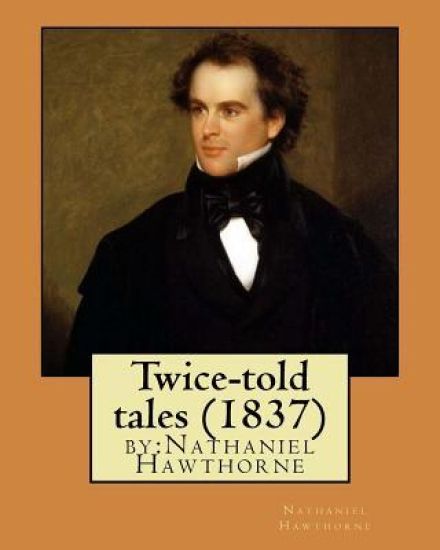
Nathaniel Hawthorne born Nathaniel Hathorne; July 4, 1804 - May 19, 1864) was an American novelist, Dark Romantic, and short story writer. He was born in 1804 in Salem, Massachusetts, to Nathaniel Hathorne and the former Elizabeth Clarke Manning. His ancestors include John Hathorne, the only judge involved in the Salem witch trials who never repented of his actions. Nathaniel later added a "w" to make his name "Hawthorne" in order to hide this relation. He entered Bowdoin College in 1821, was elected to Phi Beta Kappa in 1824, 1] and graduated in 1825. Hawthorne published his first work, a novel titled Fanshawe, in 1828; he later tried to suppress it, feeling it was not equal to the standard of his later work. 2] He published several short stories in periodicals, which he collected in 1837 as Twice-Told Tales. The next year, he became engaged to Sophia Peabody. He worked at the Boston Custom House and joined Brook Farm, a transcendentalist community, before marrying Peabody in 1842. The couple moved to The Old Manse in Concord, Massachusetts, later moving to Salem, the Berkshires, then to The Wayside in Concord. The Scarlet Letter was published in 1850, followed by a succession of other novels. A political appointment as consul took Hawthorne and family to Europe before their return to Concord in 1860. Hawthorne died on May 19, 1864, and was survived by his wife and their three children.
The Marble Faun: Or, The Romance of Monte Beni, also known by the British title Transformation, was the last of the four major romances by Nathaniel Hawthorne, and was published in 1860. The Marble Faun, written on the eve of the American Civil War, is set in a fantastical Italy. The romance mixes elements of a fable, pastoral, gothic novel, and travel guide.This romance focuses on four main characters: Miriam, Hilda, Kenyon, and Donatello. Miriam is a beautiful painter with an unknown past. Throughout the novel, she is compared to many other women including Eve, Beatrice Cenci, Judith, and Cleopatra. Miriam is pursued by a mysterious, threatening man who is her "evil genius" through life. Hilda is an innocent copyist. She is compared to the Virgin Mary and the white dove. Her simple, unbendable moral principles can make her severe in spite of her tender heart. Miriam and Hilda are often contrasted.
The Scarlet Letter: A Romance is an 1850 work of fiction in a historical setting, written by American author Nathaniel Hawthorne. The book is considered to be his "masterwork". 1] Set in 17th-century Puritan Boston, Massachusetts, during the years 1642 to 1649, it tells the story of Hester Prynne, who conceives a daughter through an affair and struggles to create a new life of repentance and dignity. Throughout the book, Hawthorne explores themes of legalism, sin, and guilt.In June 1642, in the Puritan town of Boston, a crowd gathers to witness the punishment of Hester Prynne, a young woman found guilty of adultery. She is required to wear a scarlet "A" ("A" standing for adulteress) on her dress to shame her. She must stand on the scaffold for three hours, to be exposed to public humiliation. As Hester approaches the scaffold, many of the women in the crowd are angered by her beauty and quiet dignity. When demanded and cajoled to name the father of her child, Hester refuses. As Hester looks out over the crowd, she notices a small, misshapen man and recognizes him as her long-lost husband, who has been presumed lost at sea. When the husband sees Hester's shame, he asks a man in the crowd about her and is told the story of his wife's adultery. He angrily exclaims that the child's father, the partner in the adulterous act, should also be punished and vows to find the man. He chooses a new name - Roger Chillingworth - to aid him in his plan.