Kirjojen hintavertailu. Mukana 11 627 220 kirjaa ja 12 kauppaa.

Kirjahaku

Etsi kirjoja tekijän nimen, kirjan nimen tai ISBN:n perusteella.

1000 tulosta hakusanalla Notes Magiques

Notes from the Valley of Slaughter

Notes from the Valley of Slaughter

Aharon Pick

INDIANA UNIVERSITY PRESS
2023
pokkari
Notes from the Valley of Slaughter is an eyewitness journal and diary of the Holocaust, written in the ghetto of Šiauliai, Lithuania, by Dr. Aharon Pick (1872–1944). A physician, scholar, and community leader, Pick was a keen observer of the hardships of ghetto life, and his journal represents a detailed account of the tragic events he witnessed as well as a sensitive, almost poetic personal testament. Pick's journal covers the tumultuous late 1930s, the 1940–41 Soviet occupation of Lithuania, and the catastrophic German invasion and occupation, during which more than 90 percent of Lithuania's Jews were murdered. Pick was among a handful of Šiauliai Jewish physicians spared execution and allowed to work for the occupiers. Although Pick succumbed to illness in spring 1944, shortly before the ghetto was liquidated, his son Tedik buried the manuscript before fleeing the ghetto, retrieved it after liberation, and carried it with him to Israel. Notes from the Valley of Slaughter is one of only a handful of diaries to survive the annihilation of Lithuanian Jewry. Translated for the first time into English and extensively annotated, it conveys Pick's voice to a wider international audience for the first time.
Notes from Another Los Angeles

Notes from Another Los Angeles

Anthony Fontenot

MIT PRESS LTD
2022
nidottu
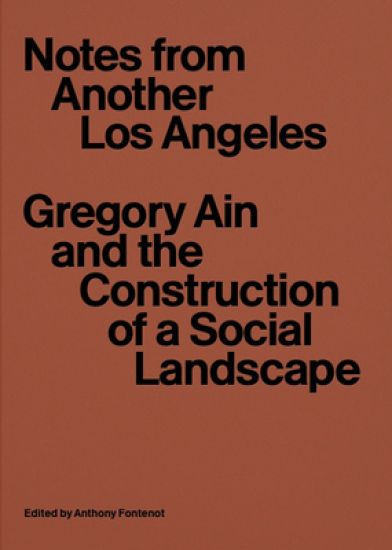
The first book to focus on California architect Gregory Ain's housing projects, which featured open kitchens, movable walls, and other design innovations. The Southern California architect Gregory Ain (1908-1988) collaborated with some of the most important figures of midcentury design, including Rudolph Schindler, Richard Neutra, and Charles and Ray Eames, and yet remains relatively unknown. Perhaps one reason for this anonymity is that although he designed private homes for wealthy liberals, Ain was more interested in finding ways to produce high-quality, low-cost houses in well-designed neighborhood settings for working-class families. This is the first book to examine the innovative housing projects that synthesized Ain's architectural and political ideals. The book is arranged through a quartet of "notes"--both textual and visual--akin to a police or surveillance file (which is no accident, given that among these notes is Ain's actual FBI file). The first presents a series of striking black-and-white photographs of four of Ain's built housing projects by celebrated architectural photographer Julius Shulman. These are followed by illustrated essays on Ain by contemporary architectural historians, an archival section of articles, including notes for a lecture on Ain by the distinguished architectural writer and critic Esther McCoy, and lastly project descriptions, drawings, and contemporary color photographs by Kyungsub Shin. Ain's housing projects represented a new paradigm in neighborhood design that celebrated the everyday life and diversity of ordinary people. Ain's innovations--including open kitchens and movable partition walls for a "flexible house"--aimed to solve specific problems rather than pursue arbitrary expressions of uniqueness. His high-density developments anticipate contemporary efforts to design building with a minimal footprint. Generously illustrated, this volume reintroduces Ain to a forgetful field. ContributorsGregory Ain, Anthony Denzer, Anthony Fontenot, Anali Gharakhani, Esther McCoy, Nicholas Olsberg, Kyungsub Shin, Julius Schulman
Notes on the Underground

Notes on the Underground

Rosalind Williams

MIT Press
2008
pokkari
Real and imagined undergrounds in the late nineteenth century viewed as offering a prophetic look at life in today's technology-dominated world.The underground has always played a prominent role in human imaginings, both as a place of refuge and as a source of fear. The late nineteenth century saw a new fascination with the underground as Western societies tried to cope with the pervasive changes of a new social and technological order. In Notes on the Underground, Rosalind Williams takes us inside that critical historical moment, giving equal coverage to actual and imaginary undergrounds. She looks at the real-life invasions of the underground that occurred as modern urban infrastructures of sewers and subways were laid, and at the simultaneous archaeological excavations that were unearthing both human history and the planet's deep past. She also examines the subterranean stories of Verne, Wells, Forster, Hugo, Bulwer-Lytton, and other writers who proposed alternative visions of the coming technological civilization. Williams argues that these imagined and real underground environments provide models of human life in a world dominated by human presence and offer a prophetic look at today's technology-dominated society. In a new essay written for this edition, Williams points out that her book traces the emergence in the nineteenth century of what we would now call an environmental consciousness-an awareness that there will be consequences when humans live in a sealed, finite environment. Today we are more aware than ever of our limited biosphere and how vulnerable it is. Notes on the Underground, now even more than when it first appeared, offers a guide to the human, cultural, and technical consequences of what Williams calls "the human empire on earth."
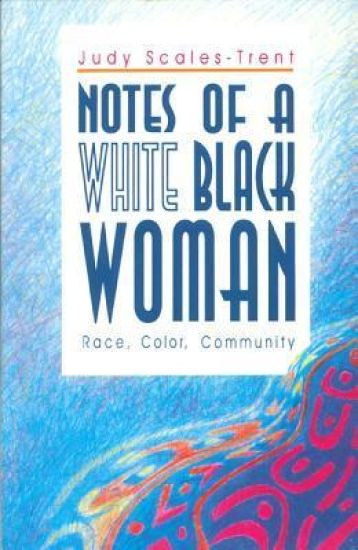
Notes of a White Black Woman

Notes of a White Black Woman

Scales-Trent Judy

Pennsylvania State University Press
1995
sidottu
While the "one-drop rule" in the United States dictates that people with any African ancestry are black, many black Americans have white skin. Notes of a White Black Woman is one woman's attempt to describe what it is like to be a "white" black woman and to live simultaneously inside and outside of both white and black communities.Law professor Judy Scales-Trent begins by describing how our racial purity laws have operated over the past four hundred years. Then, in a series of autobiographical essays, she addresses how race and color interact in relationships between men and women, within families, and in the larger community. Scales-Trent ultimately explores the question of what we really mean by "race" in this country, once it is clear that race is not a tangible reality as reflected through color.Scales-Trent uses autobiography both as a way to describe these issues and to develop a theory of the social construction of race. She explores how race and color intertwine through black and white families and across generations; how members of both black and white communities work to control group membership; and what happens to relations between black men and women when the layer of color is placed over the already difficult layer of race. She addresses how one can tell—and whether one can tell—who, indeed, is "black" or "white." Scales-Trent also celebrates the richness of her bicultural heritage and shows how she has revised her teaching methods to provide her law students with a multicultural education.
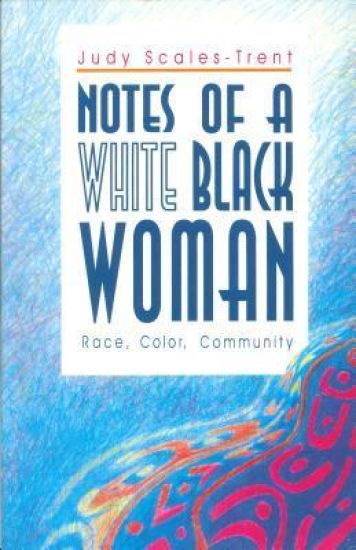
Notes of a White Black Woman

Notes of a White Black Woman

Judy Scales-Trent

Pennsylvania State University Press
1995
pokkari
While the "one-drop rule" in the United States dictates that people with any African ancestry are black, many black Americans have white skin. Notes of a White Black Woman is one woman's attempt to describe what it is like to be a "white" black woman and to live simultaneously inside and outside of both white and black communities.Law professor Judy Scales-Trent begins by describing how our racial purity laws have operated over the past four hundred years. Then, in a series of autobiographical essays, she addresses how race and color interact in relationships between men and women, within families, and in the larger community. Scales-Trent ultimately explores the question of what we really mean by "race" in this country, once it is clear that race is not a tangible reality as reflected through color.Scales-Trent uses autobiography both as a way to describe these issues and to develop a theory of the social construction of race. She explores how race and color intertwine through black and white families and across generations; how members of both black and white communities work to control group membership; and what happens to relations between black men and women when the layer of color is placed over the already difficult layer of race. She addresses how one can tell—and whether one can tell—who, indeed, is "black" or "white." Scales-Trent also celebrates the richness of her bicultural heritage and shows how she has revised her teaching methods to provide her law students with a multicultural education.
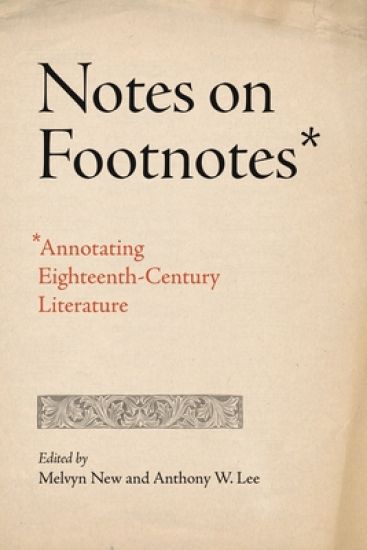
Notes on Footnotes

Notes on Footnotes

Pennsylvania State University Press
2022
sidottu
This collection presents fourteen essays on annotating eighteenth-century literature. Authored by editors and annotators of current standard editions—such as California’s Works of John Dryden, the Florida Edition of the Works of Laurence Sterne, and the Yale Edition of the Works of Samuel Johnson—this book explores theoretical perspectives on critical editing and the practical work of annotation. Through examples from their own editorial work, the contributors illuminate the personal dilemmas and decisions confronting the annotator of texts: What information in the text needs annotation? When does one stop annotating? How does one manage the annotation-versus-interpretation problem?Brimming with erudition, Notes on Footnotes showcases the precision and attentiveness of some of the world’s foremost editors and annotators. The book is necessary reading—not only for scholars of the eighteenth century but also for scholarly editors of texts of all historical periods, book historians, and book lovers in general.In addition to the editors, the contributors include Kate Bennett, Robert DeMaria Jr., Michael Edson, Robert D. Hume, Stephen Karian, Elizabeth Kraft, Thomas Lockwood, William McCarthy, Maximillian E. Novak, Shef Rogers, Robert G. Walker, and Marcus Walsh.
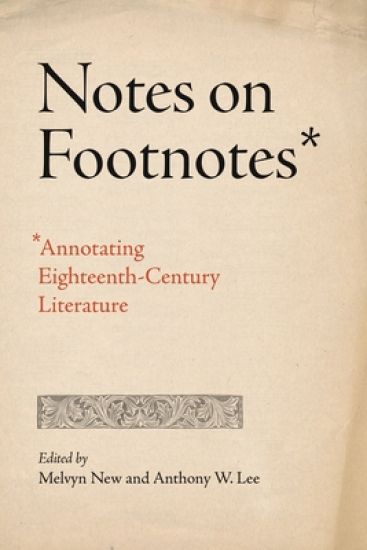
Notes on Footnotes

Notes on Footnotes

Pennsylvania State University Press
2023
pokkari
This collection presents fourteen essays on annotating eighteenth-century literature. Authored by editors and annotators of current standard editions—such as California’s Works of John Dryden, the Florida Edition of the Works of Laurence Sterne, and the Yale Edition of the Works of Samuel Johnson—this book explores theoretical perspectives on critical editing and the practical work of annotation. Through examples from their own editorial work, the contributors illuminate the personal dilemmas and decisions confronting the annotator of texts: What information in the text needs annotation? When does one stop annotating? How does one manage the annotation-versus-interpretation problem?Brimming with erudition, Notes on Footnotes showcases the precision and attentiveness of some of the world’s foremost editors and annotators. The book is necessary reading—not only for scholars of the eighteenth century but also for scholarly editors of texts of all historical periods, book historians, and book lovers in general.In addition to the editors, the contributors include Kate Bennett, Robert DeMaria Jr., Michael Edson, Robert D. Hume, Stephen Karian, Elizabeth Kraft, Thomas Lockwood, William McCarthy, Maximillian E. Novak, Shef Rogers, Robert G. Walker, and Marcus Walsh.
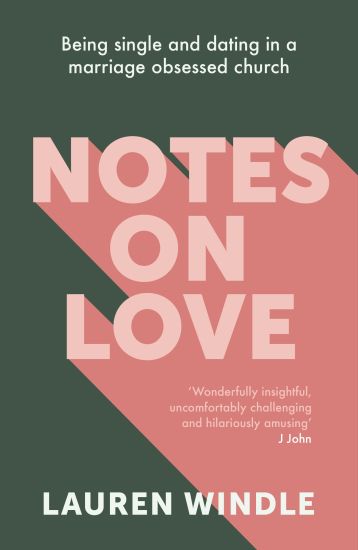
Notes on Love

Notes on Love

Lauren Windle

SPCK Publishing
2021
pokkari
In this delightfully witty and uplifting book, thirty-something Lauren Windle shines a light on the trials and tribulations - and sometimes also the triumphs - of the world of Christian dating. This is not a how-to guide. Like having a coffee with your mates while you pore over your profile matches, heartbreaks and hilarious mishaps, Notes on Love draws on Lauren's own experiences of being single and dating in the Church to offer a funny, insightful and open-hearted collection of musings on the absurdity, messiness, pain and joy of it all. With notes on 'How to first date' and 'A million ways to meet people' to 'Disappointment' and 'Schrodinger's boyfriend', as well as looking at how you can find true love with yourself, your friends and family and above all in Christ, Notes on Love is a thought-provoking exploration of Christian relationships in the Church today. This is a book for anyone who has struggled with dating in Church, or who has asked themselves how to be single as a Christian only to discover there's no right answer. Warm, generous and honest, Notes on Love is an invitation to laugh, cry and know that whether you are male or female, single, coupled up or somewhere in between, you are not alone.
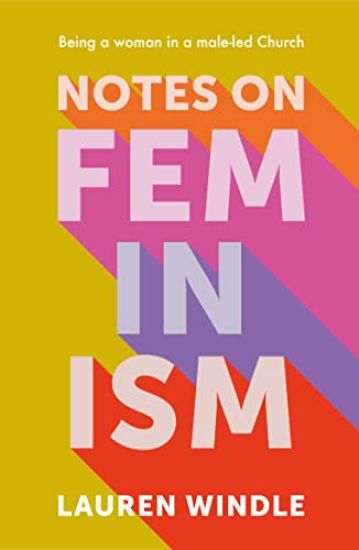
Notes on Feminism

Notes on Feminism

Lauren Windle

SPCK PUBLISHING
2024
pokkari
Is it possible to be a Christian and a feminist? The hot topic of feminism has been well documented and debated in mainstream media and yet, as Christians we come to the conversation from a slightly different vantage point. For starters, we have the benefit of a personal relationship with our creator plus the ultimate handbook in the Bible to work out what is right and just when it comes to equality. So why do many Christians feel the Bible presents a barrier rather than a boost when it comes to championing equality between the sexes? Lauren Windle draws upon her years as a journalist to weave together a wide range of voices on a subject that society has been wrestling with but, in the Church, few are brave enough to probe too deeply for fear of what they might find. This book isn't here to tell you what to think. The views it presents are intended to inform, not form, your opinion on key topics, including: defining feminism, the lessons we teach boys, female preachers, a woman's place in the household, beauty standards and #ChurchToo. Notes On Feminism features contributions from several high-profile women: - Writer and model Katie Piper on true beauty - Olympian Abigail Irozuru on women's bodies - Comedian Cassandra Maria on why people think women aren't funny - Author Tiffany Bluhm on why people don't believe women - Journalist Delphine Chui on why she isn't a feminist. If feminist stirrings feel like a barrier to your faith, let Notes on Feminism help you unpick the confusion and ongoing debate, while keeping God at the centre.
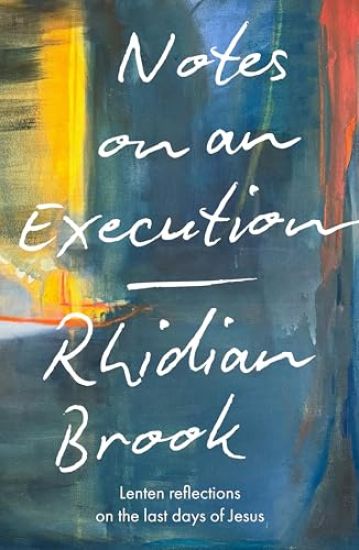
Notes on an Execution

Notes on an Execution

Rhidian Brook

SPCK PUBLISHING
2025
pokkari
This compelling sequence of reports on the events of Holy Week traces the journey Jesus made from his arrival in Jerusalem to his execution. The reports read as if contemporary to the events as they happened, enabling you to imagine them unfolding as though in real time, without relying on the after-the-event wisdom that we carry. The result is a moving experience in which you become a first-hand follower, not always knowing what comes next, or how it will end, and without possessing the weight or comfort of the theological and cultural understanding that has gathered over the centuries since. The book concludes with a personal reflection on the meaning of Easter, followed by a series of questions and prompts for further reflection or discussion. Contents Recognition (Palm Sunday) Confrontation (Monday) Interrogation (Tuesday) Anointing (Wednesday) Parting (Maundy Thursday) Noise (Good Friday - First Meditation) Silence (Good Friday - Second Meditation) Execution (Good Friday) Encounter (Easter)
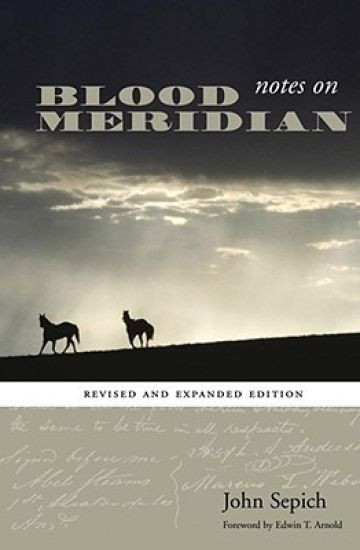
Notes on Blood Meridian

Notes on Blood Meridian

John Sepich

University of Texas Press
2008
pokkari
Blood Meridian (1985), Cormac McCarthy's epic tale of an otherwise nameless "kid" who in his teens joins a gang of licensed scalp hunters whose marauding adventures take place across Texas, Chihuahua, Sonora, Arizona, and California during 1849 and 1850, is widely considered to be one of the finest novels of the Old West, as well as McCarthy's greatest work. The New York Times Book Review ranked it third in a 2006 survey of the "best work of American fiction published in the last twenty-five years," and in 2005 Time chose it as one of the 100 best novels published since 1923. Yet Blood Meridian's complexity, as well as its sheer bloodiness, makes it difficult for some readers. To guide all its readers and help them appreciate the novel's wealth of historically verifiable characters, places, and events, John Sepich compiled what has become the classic reference work, Notes on BLOOD MERIDIAN. Tracing many of the nineteenth-century primary sources that McCarthy used, Notes uncovers the historical roots of Blood Meridian. Originally published in 1993, Notes remained in print for only a few years and has become highly sought-after in the rare book market, with used copies selling for hundreds of dollars. In bringing the book back into print to make it more widely available, Sepich has revised and expanded Notes with a new preface and two new essays that explore key themes and issues in the work. This amplified edition of Notes on BLOOD MERIDIAN is the essential guide for all who seek a fuller understanding and appreciation of McCarthy's finest work.
Notes on the Witt Classification of Hermitian Innerproduct Spaces over a Ring of Algebraic Integers
The lectures comprising this volume were delivered by P. E. Conner at the University of Texas at Austin in 1978. The lectures are intended to give mathematicians at the graduate level and beyond some powerful algebraic and number theoretical tools for formulating and solving certain types of classification problems in topology.
Notes in Banach Spaces

Notes in Banach Spaces

University of Texas Press
1981
pokkari
These lectures in functional analysis cover several aspects of Banach spaces, a conceptualization of complete normed linear spaces developed by Stefan Banach in 1932, and include a number of topics which had never before been treated in expository form. They were presented as a part of the University of Texas Mathematics Department Seminars in Analysis series in 1977–1979.
Notes from the Ground

Notes from the Ground

Cohen Benjamin R.

Yale University Press
2009
sidottu
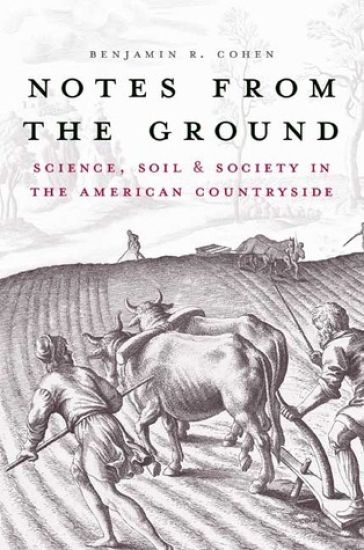
"Notes from the Ground" examines the cultural conditions that brought agriculture and science together in nineteenth-century America. Integrating the history of science, environmental history, and science studies, the book shows how and why agrarian Americans - yeoman farmers, gentleman planters, politicians, and policy makers alike - accepted, resisted, and shaped scientific ways of knowing the land. By detailing the changing perceptions of soil treatment, Benjamin Cohen shows that the credibility of new soil practices grew not from the arrival of professional chemists, but out of an existing ideology of work, knowledge, and citizenship.