Kirjahaku
Etsi kirjoja tekijän nimen, kirjan nimen tai ISBN:n perusteella.
1000 tulosta hakusanalla Oral Sumner Coad
New Testament scholars routinely claim that verbal agreement among parallel Synoptic pericopae is a reliable indicator of literary borrowing by the Synoptic Evangelists. In Oral Tradition and Synoptic Verbal Agreement, T. M. Derico presents a critical assessment of that claim through a consideration of the most recent empirical evidence concerning the kinds and amounts of verbal agreement that can be produced among independent performances of oral traditions.
This is the first book-length study to appear in English on the literary, cultural and political roots of modern Tibetan literature. While existing scholarship on modern Tibetan writing takes the 1980s as its point of “birth” and presents this period as marking a “rupture” with traditional forms of literature, this book goes beyond such an interpretation by foregrounding instead the persistence of Tibet’s artistic past and oral traditions in the literary creativity of the present. While acknowledging the innovative features of modern Tibetan literary creation, it draws attention to the hitherto neglected aspects of continuity within the new. This study explores the endurance of genres, styles, concepts, techniques, symbolisms, and idioms derived from Tibet’s rich and diverse oral art forms and textual traditions. It reveals how Tibetan kavya poetics, the mgur genre, life-writing, the Gesar epic and other modes of oral and literary compositions are referenced and adapted in novel ways within modern Tibetan poetry and fiction. It also brings to prominence the complex and fertile interplay between orality and the Tibetan literary text. Embracing a multidisciplinary approach drawing on theoretical insights in western literary theory and criticism, political studies, sociology, and anthropology, this research shows that, alongside literary and oral continuities, the Tibetan nation proves to be an inevitable attribute of modern Tibetan literature.

This is the first book-length study to appear in English on the literary, cultural and political roots of modern Tibetan literature. While existing scholarship on modern Tibetan writing takes the 1980s as its point of “birth” and presents this period as marking a “rupture” with traditional forms of literature, this book goes beyond such an interpretation by foregrounding instead the persistence of Tibet’s artistic past and oral traditions in the literary creativity of the present. While acknowledging the innovative features of modern Tibetan literary creation, it draws attention to the hitherto neglected aspects of continuity within the new. This study explores the endurance of genres, styles, concepts, techniques, symbolisms, and idioms derived from Tibet’s rich and diverse oral art forms and textual traditions. It reveals how Tibetan kavya poetics, the mgur genre, life-writing, the Gesar epic and other modes of oral and literary compositions are referenced and adapted in novel ways within modern Tibetan poetry and fiction. It also brings to prominence the complex and fertile interplay between orality and the Tibetan literary text. Embracing a multidisciplinary approach drawing on theoretical insights in western literary theory and criticism, political studies, sociology, and anthropology, this research shows that, alongside literary and oral continuities, the Tibetan nation proves to be an inevitable attribute of modern Tibetan literature.
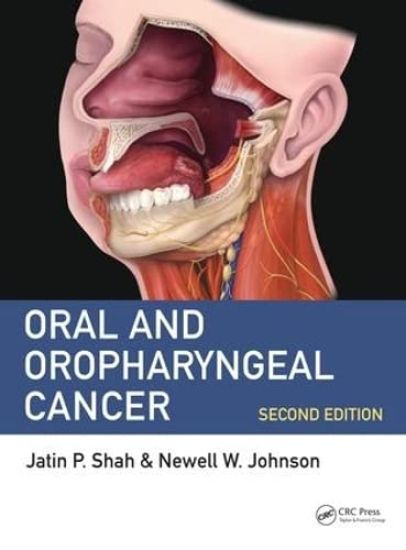
Oral and Oropharyngeal Cancer
Productivity Press
2018
sidottu
The prevalence of Oral and Oropharyngeal Cancer continues to rise worldwide, related to the increase in consumption of tobacco, alcohol and other carcinogenic products. However, there has also been a significant reduction in mortality due to increasing awareness, early diagnosis and advances in treatments. This second edition of a bestseller reviews every aspect of the diagnosis and treatment of the orofacial cancer patient. As with the first edition, the book is organized in three parts, covering Pathology and Biology, Clinical Management, and Outcomes and Follow-up.

Oral Mechanical Bowel Preparation for Colorectal Surgery: Comparative Effectiveness Review Number 128
Agency for Healthcare Resea And Quality; U. S. Department of Heal Human Services
Createspace Independent Publishing Platform
2014
nidottu

Oral Sex Positions: 101 Oral Sex Positions To Invigorate Your Bedroom Repertoire
Cynthia Stone
Createspace Independent Publishing Platform
2014
nidottu
Oral Fixation Presents: A Collection of New Voices from Tampa Bay
Createspace Independent Publishing Platform
2015
nidottu
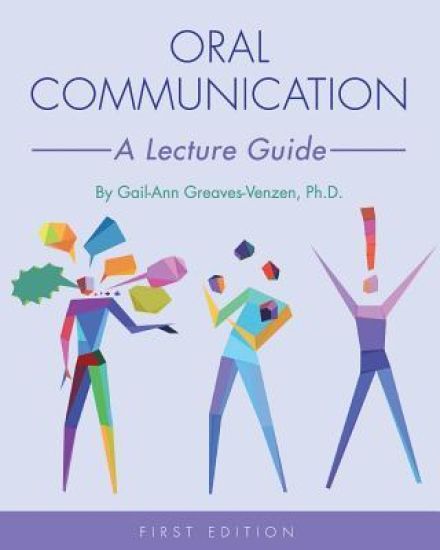
Oral Communication: A Lecture Guide provides students with a comprehensive yet accessible guide to effective communication and public speaking. The texts help readers understand their role, as well as the role of their audience, during the communication process. With this new knowledge, students learn how to present concepts and share ideas with confidence and efficacy.The book begins by introducing students to the concept of communication, highlighting that communication is a complicated, shared process that is composed of many variables and elements. Proceeding chapters teach readers how to prepare for a public address, organize a presentation to achieve maximum audience understanding and impact, and strategically practice the delivery of a speech. Additional topics include the disadvantages of memorizing a speech word-for-word, the impact of nonverbal communication on an address, and the advantages and disadvantages of different types of speeches or presentations. The text closes with a chapter dedicated to presentational aids and how their correct use can maintain audience engagement and increase understanding.Oral Communication is ideal for undergraduate courses in public relations, broadcast and radio journalism, and communication studies.

Oral Communication: A Lecture Guide
Gail-Ann Greaves-Venzen
Cognella Academic Publishing
2018
sidottu
Oral Communication: A Lecture Guide provides students with a comprehensive yet accessible guide to effective communication and public speaking. The texts help readers understand their role, as well as the role of their audience, during the communication process. With this new knowledge, students learn how to present concepts and share ideas with confidence and efficacy. The book begins by introducing students to the concept of communication, highlighting that
Oral Healthcare and Technologies: Breakthroughs in Research and Practice
IGI Global
2017
sidottu
Emerging innovations in the medical sector have created new opportunities for improved patient care and disease control. By optimizing current practices and procedures, improvements in healthcare delivery and quality can be achieved.Oral Healthcare and Technologies: Breakthroughs in Research and Practice is a comprehensive resource with the latest scholarly perspectives on the technological advancements and real-world applications for oral hygiene and medical care. Featuring extensive coverage across a range of relevant perspectives and topics, such as disease management, healthcare administration, and medical informatics, this multi-volume book is ideally designed for professionals, researchers, students, and practitioners seeking academic material on developments and innovations in oral medicine.

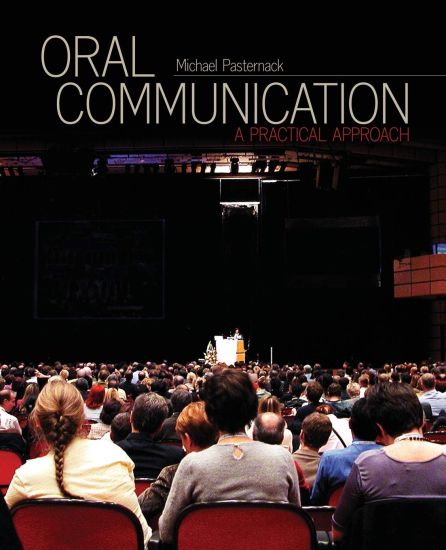
Oral Communication: A Practical Approach
Michael Pasternack
KENDALL/HUNT PUBLISHING CO ,U.S.
2019
pokkari

Oral infections mainly affect oral health, but can also affect people's general health in several ways. This book gives an overview of the scientific evidence for linkages between oral infections and other systemic diseases. Much research has been carried out to find the most plausible reasons for associations and possible causal mechanisms in this regard. The last 20-30 years have opened up the field of the infection hypothesis in cardiovascular disease that was first introduced in the nineteenth century. The book also provides a short overview of oral infections and symptoms due to systemic diseases.
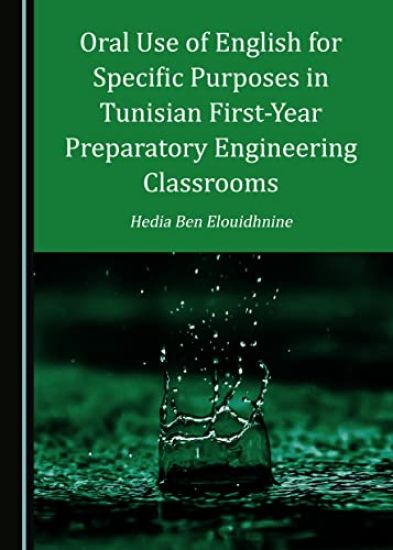
Oral Use of English for Specific Purposes in Tunisian First-Year Preparatory Engineering Classrooms
Hedia Ben Elouidhnine
CAMBRIDGE SCHOLARS PUBLISHING
2022
sidottu
Using English appropriately to communicate one's thoughts can seem like a challenging task for non-native-English-speaking students. This accessible guide provides the reader with an insightful approach through which to investigate such use through the analysis of the interactive conversational undertakings of a cohort of Tunisian First-Year Preparatory Engineering Students. The findings here provide insights into the different types of students' interactions with their teachers and peers, and shed light on their classroom exchangeable patterns, dynamics, and the main zones of their proficiencies and deficiencies. They are reflective of the overall spoken discourse that is processed in the Tunisian first-year preparatory engineering classroom.

Oral sex, the pros and cons: a love that kills
Cerinto
Createspace Independent Publishing Platform
2016
nidottu

This classic study is an introduction to ""oral poetry,"" a broad subject which Ruth Finnegan interprets as ranging from American folksongs, Eskimo lyrics, and modern popular songs to medieval oral literature, the heroic poems of Homer, and recent epic compositions in Asia or the Pacific. The book employs a broad comparative perspective and considers oral poetry from Africa, Asia, and Oceania as well as Europe and America. The results of Finnegan's vast research illuminate and suggest fresh conclusions to many current controversies: the nature of oral tradition and oral composition; the notion of a special oral style; possible connection between types of poetry and types of society; the differences between oral and written communication; and the role of poets in non-literate societies. Drawing on insights from anthropology and literary scholarship, Oral Poetry attempts to create a greater appreciation of the literary aspects of this fascinating form of poetry. Finnegan quotes extensively from a wide variety of sources, mainly in translation. The discussion is presented in non-technical language and will be of interest not only to sociologists and social anthropologists, but also to all those interested in comparative literature and in folk poetry from cultures around the world. The re-issue of this text, widely used in folklore, anthropology, and comparative literature courses, comes at an appropriate juncture in interdisciplinary scholarship, which is witnessing the breakdown of traditional disciplinary boundaries and an increase in the comparative study of oral poetry. For this volume Ruth Finnegan has provided a new foreword relating the text to more recent developments. Ruth Finnegan OBE, FBA, Emeritus Professor Open University. Her work has mainly been on oral performance, narrative, the ethnography of music, and communicating (including extra-sensory perception). Her publications include Oral Literature in Africa, The Hidden Musicians, Communicating: the Multiple Modes of Human Communication, Why Do We Quote? and, most recently, the novels Black Inked Pearl, Voyage of Pearl of the Seas, and The Helix Pearl. Born in Ireland, she now lives in Old Bletchley, southern England.

Oral Transmission and the Dream Narratives of Matthew 1-2
Alistair N Shaw
Pickwick Publications
2019
nidottu
The first Gospel has traditionally been considered a very Jewish work. Recent scholarship has suggested some Hellenistic influence. The issue is explored in this work with attention focused on the dream narratives of the first two chapters. An investigation is carried out using a new methodology. The memory techniques used in an oral or semi-literate society are explored. A search is made for such techniques in Matthew and these are then compared with similar devices in a wide range of literature, Old Testament, contemporary Jewish, Greek and Roman. The intention is that literary practice should help to clarify the cultural setting in which Matthew functions. This is a work which will interest New Testament scholars with a focus on Gospel studies and oral transmission. It may also appeal to some classical scholars or those with a specialized interest in Josephus.
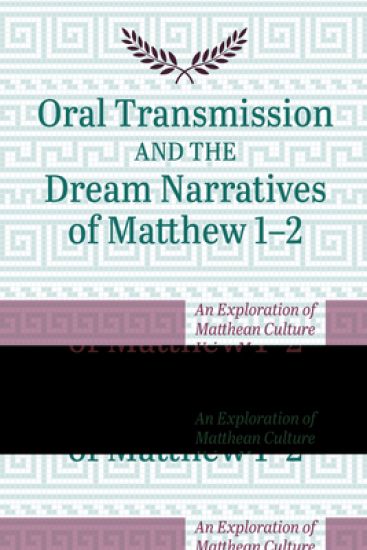
Oral Transmission and the Dream Narratives of Matthew 1-2
Alistair N Shaw
Pickwick Publications
2019
sidottu
The first Gospel has traditionally been considered a very Jewish work. Recent scholarship has suggested some Hellenistic influence. The issue is explored in this work with attention focused on the dream narratives of the first two chapters. An investigation is carried out using a new methodology. The memory techniques used in an oral or semi-literate society are explored. A search is made for such techniques in Matthew and these are then compared with similar devices in a wide range of literature, Old Testament, contemporary Jewish, Greek and Roman. The intention is that literary practice should help to clarify the cultural setting in which Matthew functions. This is a work which will interest New Testament scholars with a focus on Gospel studies and oral transmission. It may also appeal to some classical scholars or those with a specialized interest in Josephus.